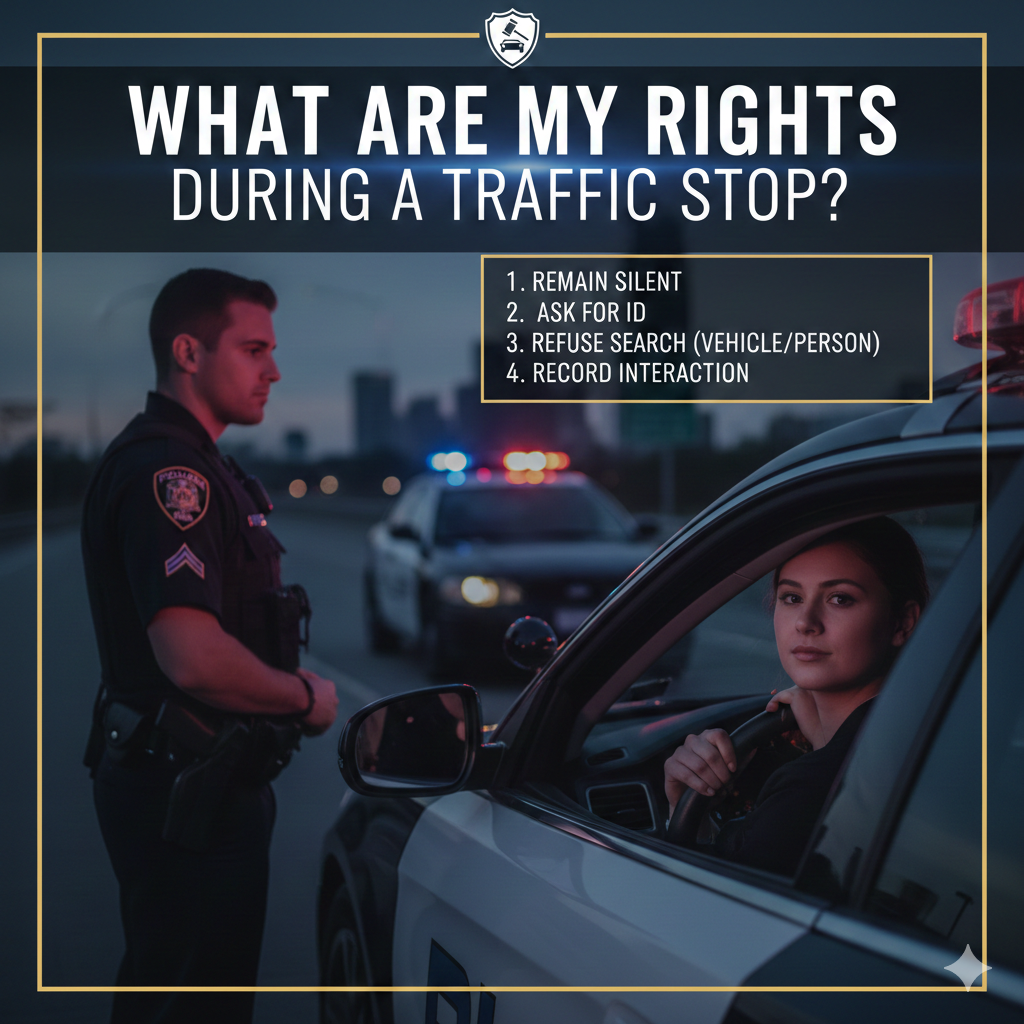
When pulled over by law enforcement, most drivers feel nervous or unsure of what to do or say. However, knowing your rights during a traffic stop can help ensure the interaction goes smoothly and lawfully. This article will guide you through your basic rights during a traffic stop in the U.S., focusing on ensuring you are treated fairly while respecting law enforcement.
Quick Facts Table: Understanding Your Rights
| Aspect | Details |
|---|---|
| Right to Remain Silent | You have the right to remain silent during questioning. |
| Right to Refuse Search | You can refuse consent for a search unless law enforcement has probable cause. |
| License and Registration | You must provide a driver’s license, registration, and proof of insurance. |
| Right to Ask for a Supervisor | If you feel your rights are being violated, you may ask for a supervisor. |
| Right to Leave | You can leave once the officer issues a citation or the stop is concluded. |
1. What Should You Do First During a Traffic Stop?
When you’re pulled over by a police officer, remain calm and stay inside your vehicle unless instructed otherwise. Turn on your hazard lights to indicate to the officer that you’re pulling over.
The officer will likely ask for your driver’s license, vehicle registration, and proof of insurance. You are required to provide these documents. If you don’t have them with you, the officer may issue a ticket or warning, but you are not under any obligation to consent to a search of your car unless there’s probable cause.
Do I Have to Provide My Driver’s License?
Yes, under state law, you are required to provide your driver’s license if requested by an officer during a valid traffic stop. Failing to do so could result in additional charges, including obstruction of justice.
2. Do You Have to Answer Police Questions?
While you are required to provide basic identifying information, such as your name and address, you do not have to answer all questions. This is where your right to remain silent comes in.
You can politely state that you choose not to answer further questions. However, remain respectful and understand that refusing to answer questions may sometimes lead to further questioning or a citation.
Example:
If asked, “Where are you headed?” you have the right to remain silent or simply give a basic response without elaborating.
3. Can the Officer Search My Car Without My Permission?
In most cases, you have the right to refuse a search of your vehicle. An officer may ask for your permission to search your car during a traffic stop. While they cannot search your vehicle without a valid reason or your consent, refusing a search may raise suspicion.
An officer can search your vehicle if:
- Probable cause exists (e.g., the officer sees something illegal in plain view).
- Search warrant: Officers with a warrant can search your vehicle.
- Consent: If you agree to the search, the officer is legally allowed to search your car.
Important Tip:
If you refuse a search, remain calm and respectful. Politely state, “I do not consent to a search,” and ask if you’re free to go. You are not obligated to consent to a search if the officer does not have a valid reason.
4. How Should You Handle a DUI Checkpoint?
DUI checkpoints are legal in most states, but officers cannot stop you arbitrarily. During a checkpoint, they typically check your license, registration, and proof of insurance, and may ask you brief questions about your driving ability.
However, you do not have to answer questions such as, “Have you been drinking tonight?” You can simply reply, “I prefer not to answer that.”
It’s also important to note that you have the right to leave once the officer has finished their questioning and issued a citation. If you are asked to step out of your car or undergo a test, you are required to comply.
5. When Can Police Arrest You During a Traffic Stop?
An officer cannot arrest you unless they have probable cause. Some common situations that could lead to an arrest during a traffic stop include:
- DUI violations
- Warrants for your arrest
- Possession of illegal substances found during a legal search
If you are arrested, the officer must inform you of the reason for your arrest. You have the right to remain silent and to ask for an attorney if necessary.
6. Can You Be Detained After a Traffic Stop?
In most situations, after the officer has issued a citation or warning, you are free to go. However, if the officer has reasonable suspicion or probable cause, they may detain you for a longer period or conduct further questioning.
If you feel that the officer is detaining you unlawfully, you can ask to leave once you’ve received your citation. If the officer refuses, calmly ask if you are free to go.
7. What Happens If You Feel Your Rights Are Violated?
If you believe the officer violated your rights during the stop, it is important to remain calm and not argue with the officer. Instead, you can:
- Note the officer’s badge number
- Take detailed notes about the stop
- File a formal complaint with the police department later
You have the right to ask for a supervisor if you believe the officer is violating your rights.
FAQ: People Also Ask
Can a police officer search your car during a traffic stop?
No, a police officer can only search your car if they have probable cause, a search warrant, or if you give them consent.
What if I don’t have my license on me during a traffic stop?
If you don’t have your license with you, you may still be cited for not having it on hand. However, you are not required to provide other personal information unless asked by the officer.
Can the officer arrest me at a traffic stop?
Yes, but only if they have probable cause, such as finding evidence of a crime or if you have an outstanding warrant.
What if I refuse to answer questions during a traffic stop?
You are not required to answer questions during a traffic stop, though refusing to answer may make the officer suspicious or cause further questioning.
Conclusion
Knowing your rights during a traffic stop is crucial to ensuring that you are treated fairly while also respecting law enforcement officers. Remember to remain calm, respectful, and cooperative where required, but also assert your rights when necessary. By understanding your legal protections, you can navigate a traffic stop confidently and protect your personal freedoms.
Author Bio:
Written by Justice faces team, a legal expert specializing in civil rights and law enforcement procedures. With over 5 years of experience in legal research and media, I strive to educate the public on their rights and legal protections.