Long before she became the most-watched personality in daytime television, Judith Sheindlin was a Brooklyn-born prosecutor known for showing up to family court with more patience for children than for excuses. Millions of Americans know her only as Judge Judy, the no-nonsense woman in the black robe who could end an argument with a single raised eyebrow. Fewer know that her television career only began after she had already spent more than two decades inside the real justice system, first as a corporate lawyer, then as a family-court prosecutor, and finally as a sitting judge in Manhattan.
This is the complete story of how she got there, and what happened after the cameras started rolling.
Who Is Judge Judy?
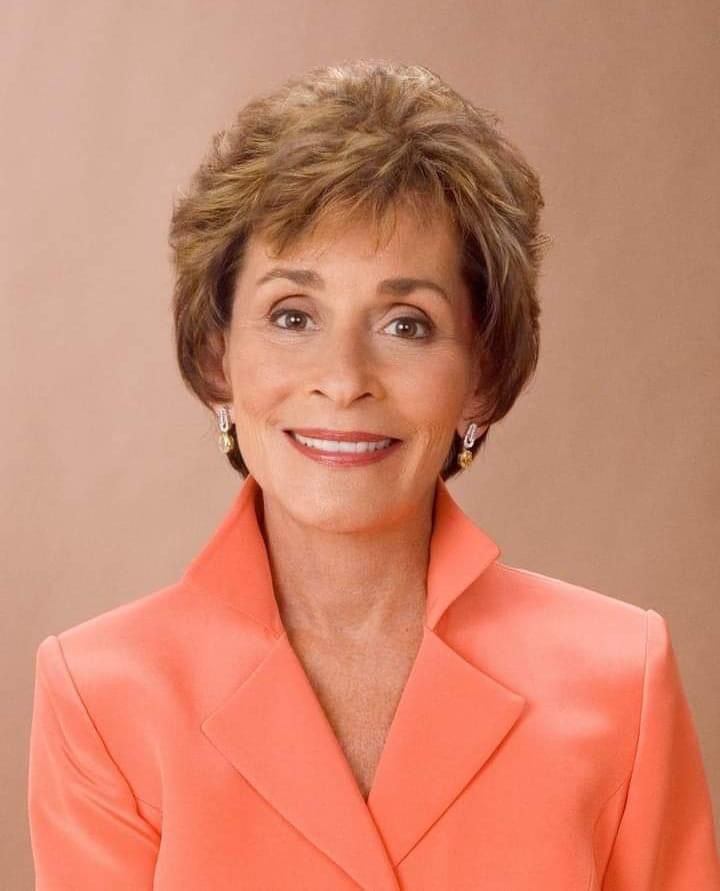
Judge Judy is the stage name of Judith Susan Sheindlin, an American attorney, retired family-court judge, and television producer best known for hosting the syndicated arbitration-based court show Judge Judy from 1996 to 2021. Over 25 seasons, the program became the highest-rated show in daytime television and first-run syndication, regularly drawing nine to ten million viewers a day. She currently presides over Judy Justice, a streaming spinoff that debuted on Amazon’s platform in November 2021.
Sheindlin was born Judith Susan Blum on October 21, 1942, making her 83 years old as of this year. She built her reputation on decades of real courtroom work before television ever entered the picture, which is part of why her rulings still carry weight with audiences who have never set foot in a courthouse.
Judge Judy Facts: Quick Reference
| Category | Details |
|---|---|
| Full name | Judith Susan Sheindlin (née Blum) |
| Born | October 21, 1942, Brooklyn, New York |
| Age | 83 |
| Education | American University (BA, Government); New York Law School (JD) |
| Known for | Judge Judy (1996–2021); Judy Justice (2021–present) |
| Years active | 1965–present |
| Spouse | Jerry Sheindlin (married 1978, divorced 1990, remarried 1991) |
| Children | 5 (2 biological, 3 stepchildren) |
| Political affiliation | Independent |
A Brooklyn Childhood That Shaped Her Voice
Judith Sheindlin grew up in Brooklyn, New York, the daughter of a dentist father, Murray Blum, and an office manager mother, Ethel Blum. Her parents came from German Jewish and Russian Jewish immigrant families, and their household was, by her own description, blunt and unsentimental. She has called her father “the greatest thing since sliced bread,” while describing her mother as a practical “meat and potatoes kind of gal.”
That directness followed her through James Madison High School in Brooklyn, from which she graduated in 1961. Anyone who has watched even one episode of her show will recognize the family resemblance between the Brooklyn household she describes and the woman who later refused to let litigants ramble their way around a straight answer.
From Government Major to Law School
Sheindlin attended American University in Washington, D.C., earning a Bachelor of Arts in government in 1963. She then enrolled at New York Law School, where she completed her Juris Doctor in 1965. That same year, she passed the New York state bar examination.
Her first job out of law school was as a corporate lawyer for a cosmetics company, a position she found unfulfilling almost immediately. Within two years she left the firm to raise her two young children, Jamie and Adam, a decision that briefly took her out of the legal profession altogether before her return to it reshaped the rest of her career.
The Family Court Years
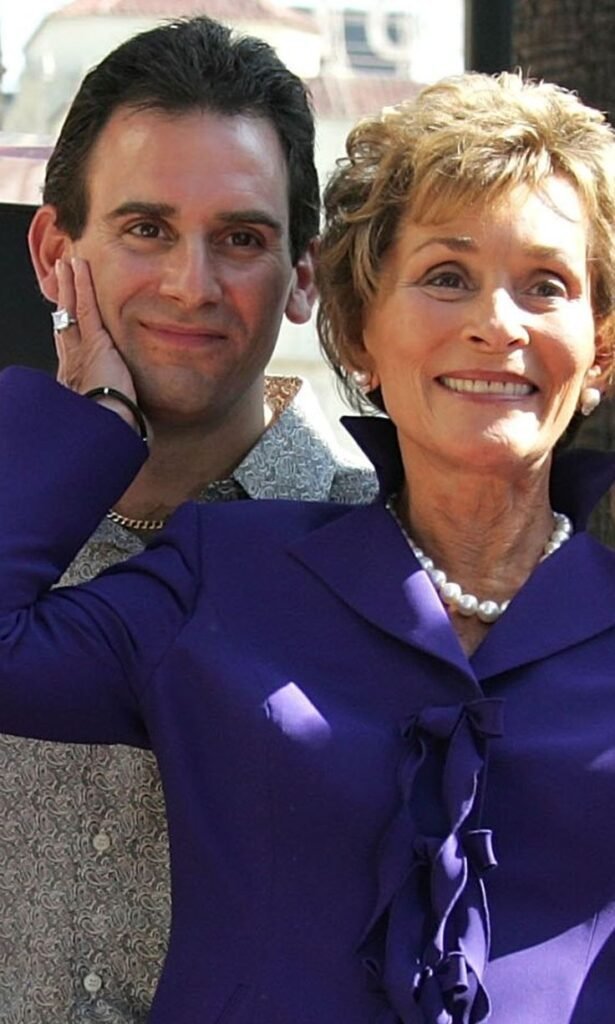
In 1972, a friend told Sheindlin about an opening in the New York family court system, and she became a prosecutor there. It was a demanding, often bleak corner of the legal world, handling cases involving neglected and abused children, custody disputes, and juvenile offenders. She built a reputation for cutting through evasive testimony fast, a skill that would define her entire public identity decades later.
By 1982, her approach had caught the attention of New York City Mayor Ed Koch, who appointed her a criminal-court judge. Four years after that, in 1986, she was promoted to supervising judge of the family court’s Manhattan division. She would go on to preside over more than 20,000 cases before retiring from the bench in 1996, a caseload that gave her more real-world courtroom experience than almost any television judge who came after her.
The Article That Changed Everything
In February 1993, Los Angeles Times reporter Josh Getlin profiled Sheindlin for a story about a judge determined to make the family court system actually work for the people who depended on it. Sheindlin has credited Getlin, and his wife Heidi, who first suggested the story, with setting her rise to fame in motion. The Times profile led to a segment on CBS’s 60 Minutes, which introduced her sharp courtroom style to a national audience for the first time.
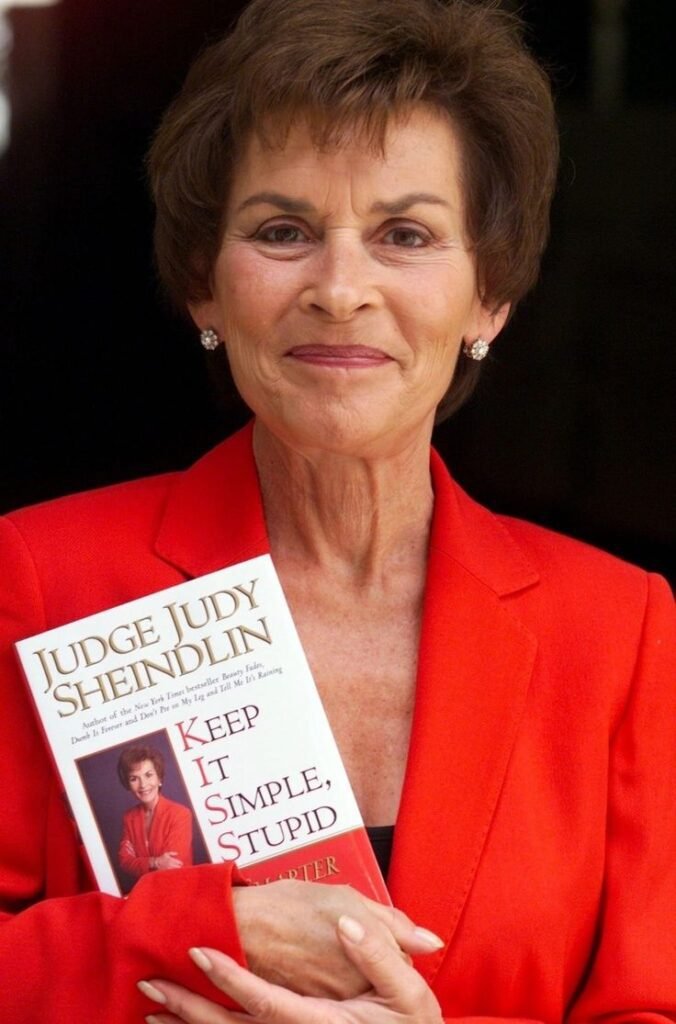
The exposure produced her first book, Don’t Pee on My Leg and Tell Me It’s Raining, published in 1996, the same year she retired from the bench. A little over a year after the 60 Minutes segment aired, producers approached her with an offer to host a new kind of program: a reality courtroom series built around real small-claims disputes and real, binding rulings.
25 Seasons at the Top
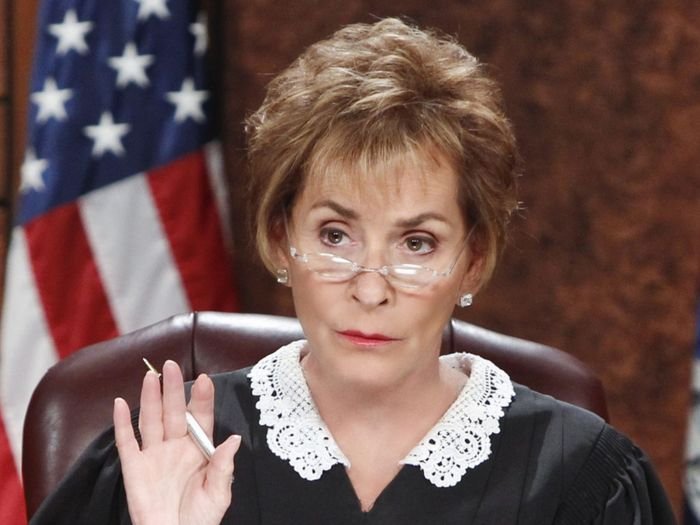
Judge Judy premiered in national syndication on September 16, 1996, and ran for 25 seasons until its finale on July 23, 2021. She was joined for almost the entire run by bailiff Petri Byrd, known on air simply as “Byrd,” whose working relationship with Sheindlin actually predated the show, going back to their years together in the Manhattan family court system.
The numbers behind the show’s success are hard to overstate. From 2009 until its finale, Judge Judy was the highest-rated program in all of daytime television and first-run syndication, at times outperforming even The Oprah Winfrey Show in the ratings. In 2015, Guinness World Records recognized her as the longest-serving judge or arbiter in the history of courtroom-themed programming.
Writing about the show’s popularity during its active run, author Brendan I. Koerner captured what made it different from a real courtroom.
Court-show viewers don’t seem to want moral conundrums or technical wrinkles. They love Sheindlin’s show because she offers them a fantasy of how they’d like the justice system to operate — swiftly, and without procedural mishaps or uppity lawyers.
That fantasy resonated widely enough that a 2013 Reader’s Digest poll found Americans trusted Judge Judy more than they trusted all nine justices of the U.S. Supreme Court combined, a statistic that says as much about public frustration with slow-moving courts as it does about her popularity.
Why Judge Judy Works
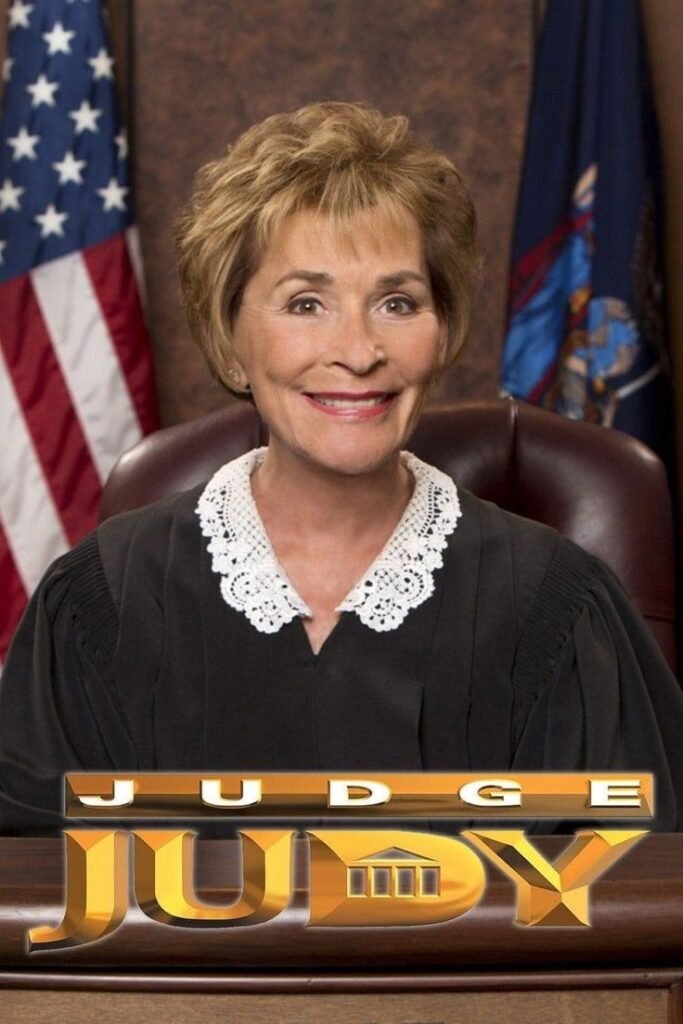
Sheindlin’s courtroom persona is built on speed, directness, and an almost total intolerance for excuses. She interrupts liars mid-sentence, demands evidence instead of stories, and rarely lets a case drag past its natural conclusion. She has pushed back on the labels “tough” and “harsh,” though she has never denied that she runs her courtroom with total control.
Unlike a real small-claims court, where cases can take months and appeals can drag on for years, a Judge Judy ruling is final the moment she delivers it, with no lengthy appeals process for viewers to sit through. That finality, paired with her refusal to let anyone waste her time, is the engine behind the show’s format and its lasting popularity across two and a half decades.
Awards, Honors, and Records
Sheindlin’s list of honors reflects both her television dominance and the seriousness with which the industry has treated her work over 25 years. She received a star on the Hollywood Walk of Fame in February 2006, was inducted into Broadcasting & Cable’s Hall of Fame in October 2012, and received a Lifetime Achievement Emmy in 2019.
Judge Judy won its first Daytime Emmy Award for Outstanding Legal/Courtroom Program in 2013 after 14 previous nominations, then won again in 2016 and 2017. When Judy Justice won the same award in 2022, Sheindlin became the only television arbitrator ever to win it for more than one court show. She also holds honorary Doctor of Laws degrees from Elizabethtown College and the University at Albany, SUNY, and was named vice-president of the law society at University College Dublin in 2013 for her work in family law.
Judge Judy’s Salary and Net Worth
Few television figures have been as openly, and consistently, well paid as Judge Judy. In early 2005, her salary was reported at roughly $25 million per year. By 2007, her net worth had reached an estimated $95 million, placing her at No. 13 on Forbes’ list of the richest women in entertainment.
Her pay only climbed from there. A 2008 contract renewal raised her salary to $45 million per year, and a 2011 extension pushed it to $47 million annually, which worked out to just over $900,000 for each of the 52 days a year she spent taping the show. By 2017, Forbes reported her pretax earnings at $147 million for the year, and TV Guide Magazine had already named her the highest-paid TV star in America back in 2013. In August 2017, she and CBS Television Distribution signed a further extension that carried the show through its 25th and final season.
Judy Justice, Hot Bench, and Life After the Original Show
Judge Judy production wrapped in April 2021, and Sheindlin moved almost immediately into a new project. Judy Justice premiered on November 1, 2021, first on IMDb TV and later on Amazon Freevee, making it the first standard court show to air exclusively through streaming. The new series leaned into longer, more detailed cases, added a stenographer to settle testimony disputes, and brought in Gen Z input from Sheindlin’s granddaughter, though it drew early criticism from longtime fans over the absence of bailiff Byrd, who was not asked to join the spinoff.
Sheindlin had already built a production footprint beyond her own show years earlier. In 2014, she founded Queen Bee Productions and launched Hot Bench, a series featuring a rotating three-judge panel, an idea she has said came from watching a three-judge bench during a trip to Ireland with her husband. In 2022, she added Tribunal Justice, a courtroom series that reunited bailiff Byrd with Hot Bench judges Patricia DiMango and Tanya Acker, alongside her son Adam Levy, a former district attorney.
Family Life: Marriages, Children, and Grandchildren
Sheindlin married her first husband, Ronald Levy, in 1964; the couple had two children, Jamie and Adam, before divorcing in 1976. Her son Adam later became a district attorney in Putnam County, New York, and now appears alongside her on Tribunal Justice.
In 1978, she married Jerry Sheindlin, a fellow judge who would later serve as an arbitrator on The People’s Court. The couple divorced in 1990, partly under the strain that followed the deaths of Judy’s mother in 1980 and her father in 1990, but remarried in 1991 and have remained together since. Through that marriage she gained three stepchildren, Gregory, Jonathan, and Nicole Sheindlin, and today has thirteen grandchildren and two great-grandchildren. Nicole, a lawyer, co-created the Her Honor Mentoring program alongside her stepmother to support young women.
Political Views and Public Positions
Sheindlin is a registered political independent who has said she dislikes being labeled by party lines. She has voted for candidates from both major parties over the decades, including Ronald Reagan, Bill Clinton, and Barack Obama, and has publicly supported same-sex marriage while favoring stricter requirements around gun ownership.
She has also stepped directly into presidential politics on occasion. In 2019, she wrote an op-ed endorsing Michael Bloomberg for the 2020 Democratic nomination before he had formally entered the race, and in 2024 she endorsed Nikki Haley, appearing alongside her at a campaign rally in New Hampshire.
Legal Disputes and Controversies
Sheindlin’s own legal battles have occasionally made headlines. In 2014, she sued a Connecticut personal-injury lawyer for using her television image in advertisements without consent, a case that settled in her favor later that year, with proceeds directed toward her Her Honor Mentoring scholarship program. A separate 2013 lawsuit involving a dispute over china and cutlery tied to her show’s executive producer was also settled out of court.
In 2017, the National Enquirer issued a formal apology to Sheindlin after publishing false claims that she had cheated on her husband and suffered from Alzheimer’s disease, and a separate false claim about her daughter Nicole having a criminal record. The retraction underscored how much scrutiny came with three decades in the public eye.
Cultural Impact and Legacy
Judge Judy’s influence reaches well beyond her own courtroom. She has been referenced or parodied on Saturday Night Live, The Simpsons, Will & Grace, and Curb Your Enthusiasm, and was named to VH1’s 200 Greatest Pop Culture Icons list in 2003. Her format essentially created the modern template for arbitration-based reality court television, a genre that shows like [[Judge Lauren Lake’s path from family law to television]] later built on with their own courtroom-personality formulas.
What separates her legacy from most television personalities is the two decades of actual judicial work that preceded the cameras. She did not become a convincing television judge; she was already a real one long before anyone thought to put her on air.
Frequently Asked Questions About Judge Judy
How old is Judge Judy? Judge Judy, born Judith Susan Blum on October 21, 1942, is 83 years old.
What is Judge Judy’s real name? Her legal name is Judith Susan Sheindlin. She was born Judith Susan Blum and adopted the surname Sheindlin after marrying her husband, Jerry Sheindlin.
How much is Judge Judy worth? Her net worth was estimated at $95 million as early as 2007 and has grown substantially since, driven by a television salary that reportedly reached $47 million a year during the final seasons of Judge Judy and continued earnings from Judy Justice and her production company.
Is Judge Judy a real judge? Yes. Before her television career, Sheindlin served as a family-court prosecutor starting in 1972, a criminal-court judge appointed by Mayor Ed Koch in 1982, and supervising judge of the Manhattan family court’s family division from 1986 until her retirement from the bench in 1996.
What show is Judge Judy on now? She currently presides over Judy Justice, a streaming courtroom series that premiered in November 2021 following the end of Judge Judy after 25 seasons.
Why did Judge Judy end? Sheindlin chose to end Judge Judy after its 25th season, telling interviewers that “25 is a good round number” to close on, while also navigating disagreements with ViacomCBS and a lawsuit connected to a library sale of the show’s catalog.
Final Thoughts
Judge Judy’s story is not really a Hollywood story. It is a courtroom story that happened to end up on television, built on more than two decades of real rulings before a single camera was ever switched on. That distinction is exactly why, more than four decades after she first became a judge in Manhattan, audiences still trust the voice behind the gavel.