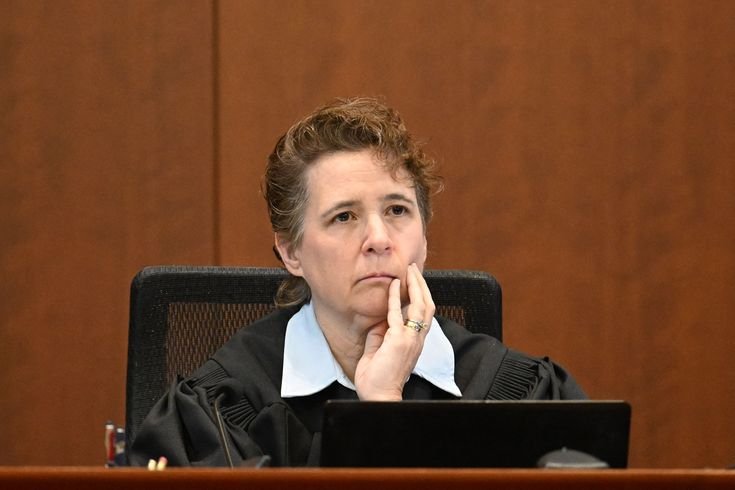
Introduction
Long before television cameras turned her Fairfax, Virginia courtroom into one of the most-watched legal venues on the planet, Penney Azcarate had already built a career defined by service. She spent four years as an active-duty United States Marine, deployed to Saudi Arabia during Operation Desert Storm, then went to law school part-time while raising a family, eventually becoming a prosecutor, a defense attorney, and finally a judge.
For most of her nearly two decades on the bench, Azcarate was known within Virginia’s legal community for a different kind of achievement: building the state’s first Veterans Treatment Docket, a specialty court that steered struggling former service members toward treatment instead of prison. That work made her respected among lawyers, judges, and veterans’ advocates across the Commonwealth.
Then, in the spring of 2022, the rest of the world found out who she was. As chief judge presiding over the closely watched defamation trial between actor Johnny Depp and his ex-wife, actress Amber Heard, Azcarate ran a courtroom that was livestreamed around the globe, dissected on social media in real time, and referenced everywhere from late-night television to South Park. Her rulings on evidence, her handling of a raucous public gallery, and her calm, no-nonsense demeanor became almost as scrutinized as the testimony itself.
Azcarate went on to become the first woman to serve as chief judge of the Fairfax County Circuit Court, a position she held until her retirement in the summer of 2026. This article traces her full story — her military service, her legal training, her rise through Virginia’s court system, her most consequential rulings, and the legacy she leaves behind in one of the busiest circuit courts in the state.
Quick Facts Table
| Category | Details |
|---|---|
| Full Name | Penney S. Azcarate |
| Profession | Judge (retired), Legal Educator, Mediator |
| Former Court | Fairfax County Circuit Court, 19th Judicial Circuit of Virginia |
| Current Role | Associate Professor of Law and Director of the Externship Program, Antonin Scalia Law School (George Mason University); Conciliator, The McCammon Group |
| Jurisdiction | Fairfax County, Virginia |
| Nationality | American |
| Years Active on the Bench | 2008–2026 (approximately 18 years) |
| Education | B.S., Criminal Justice, Old Dominion University (1988); J.D., George Mason University School of Law, now Antonin Scalia Law School (1998) |
| Judicial Positions Held | Judge, Fairfax County General District Court (2008–2015); Chief Judge, General District Court (2014–2015); Judge, Fairfax County Circuit Court (2015–2026); Chief Judge, Circuit Court (2021–2026) |
| Notable Cases | Depp v. Heard (2022); Commonwealth v. Banfield (2026) |
| Known For | Presiding over the Depp v. Heard defamation trial; founding Virginia’s first Veterans Treatment Docket |
| Military Service | United States Marine Corps, active duty and reserves; served in Operation Desert Storm; honorably discharged as Major |
| Marital Status | Married, to Eddy Azcarate |
| Children | Not publicly available in detail; Azcarate has said she raised her children before attending law school |
Early Life and Background
Publicly available information regarding Judge Azcarate’s early childhood, hometown, and family background before college is limited. What is well documented is that she pursued higher education through a military commitment from the start, enrolling at Old Dominion University in Norfolk, Virginia, on a full military scholarship tied to the school’s ROTC program. That decision — trading a conventional college experience for a service obligation — set the tone for a career that would repeatedly combine public duty with legal ambition.
Azcarate has spoken about the influence her Marine Corps service had on her sense of purpose, later telling the Washington Post that the relatively small share of Americans who serve in uniform, combined with the repeated deployments many of them face, shaped how she thought about the veterans who would later appear before her in court. That perspective would not become professionally relevant for years, but it reflects an early and lasting orientation toward service that appears throughout her biography.
Education and Legal Training
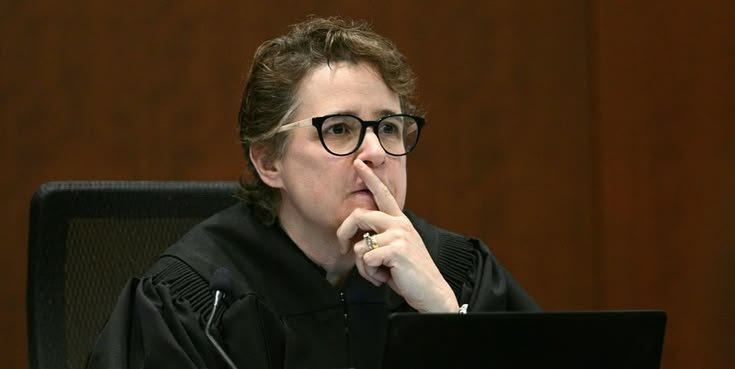
Azcarate earned a Bachelor of Science degree in Criminal Justice from Old Dominion University, graduating in 1988. Her undergraduate education was funded through a military scholarship connected to Old Dominion’s ROTC program, and upon graduation she was commissioned as an officer in the United States Marine Corps.
She completed six months of officer training at Marine Corps Base Quantico and served on active duty as a communications officer. She was stationed at Camp Pendleton, California, in the early 1990s and deployed to Saudi Arabia during Operation Desert Storm in the 1991 Gulf War. After four years of active duty, she transitioned to the Marine Corps Reserves, where she continued to serve — including providing legal assistance to fellow Marines on matters like contracts, divorces, and wills — until her honorable discharge at the rank of Major.
Following her active-duty service, Azcarate spent several years focused on raising her children before deciding to pursue law school. She enrolled in the part-time evening program at George Mason University School of Law (renamed the Antonin Scalia Law School in 2016), earning her Juris Doctor in 1998 while continuing her Reserve obligations. Balancing law school, military reserve duty, and family responsibilities became, by her own account, formative to the discipline she later brought to the bench.
Early Legal Career
After passing the Virginia Bar, Azcarate’s first legal job was as a staff attorney for the American Prosecutors Research Institute in Alexandria, Virginia, from 1998 to 2000. In that role, she trained prosecutors and judges nationwide on issues including vehicular homicide and impaired-driving prosecutions, as well as broader trial advocacy skills.
In 2000, she became an Assistant Commonwealth’s Attorney in Fairfax County, a position she held for five years. As a prosecutor, she tried hundreds of cases before both judges and juries, ranging from misdemeanors to serious felonies, including rape, robbery, and murder cases. It was during this period, watching judges preside over her own cases, that she began to envision herself on the other side of the bench.
After leaving the Commonwealth’s Attorney’s office, Azcarate entered private practice as a senior associate with the Fairfax firm Briglia & Hundley, P.C. Her practice there covered a broad range of litigation, including criminal defense, personal injury, contract disputes, and family law. During this period she also served as a substitute judge in Fairfax, Prince William, and Arlington counties, gaining bench experience before her formal judicial appointment.
Judicial Career
General District Court (2008–2015)
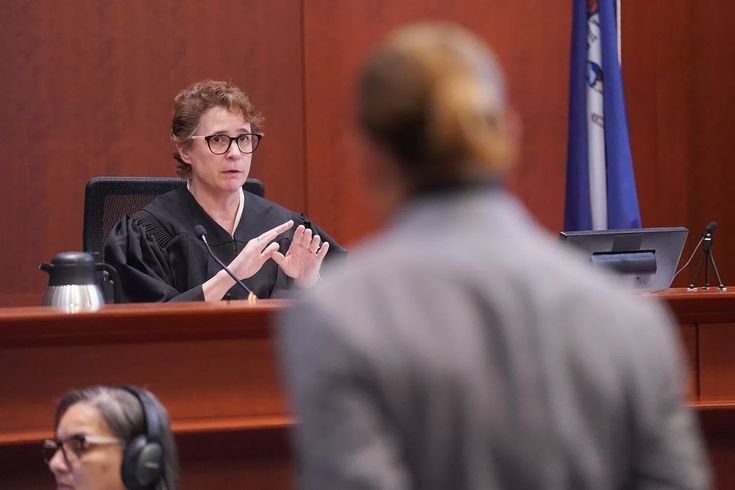
Azcarate’s formal judicial career began in 2006, when she started serving as a substitute judge in the Fairfax County General District Court. On June 6, 2008, she was formally invested as a judge of that court by the Virginia General Assembly, succeeding Judge Robert J. Smith. In January 2014, she was elevated to chief judge of the General District Court, becoming the first woman to hold that position in Fairfax County’s history — a milestone covered at the time by the Washington Post.
Elevation to the Circuit Court (2015)
On February 25, 2015, the Virginia General Assembly elected Azcarate to serve on the Fairfax County Circuit Court, part of the Commonwealth’s 19th Judicial Circuit. She was sworn in that June and took office on July 1, 2015. The circuit court handles a far broader and often more serious docket than the district court — everything from major felony trials and civil litigation to family law appeals and, as Azcarate’s own tenure would prove, defamation suits involving international celebrities.
Chief Judge of the Circuit Court (2021–2026)
In 2021, Azcarate again broke new ground, becoming the first woman to serve as chief judge of the Fairfax County Circuit Court — one of the largest and busiest circuit courts in Virginia. As chief judge, she was responsible for overseeing court operations and led a bench of roughly a dozen fellow judges. During her tenure in that role, she helped guide several administrative initiatives, including efforts to expand racial equity in court proceedings, move toward paperless case processing, expand remote access to court hearings, improve interpreter services for non-English speakers, and strengthen community outreach programs.
She also took on leadership roles at the state level, chairing the Supreme Court of Virginia’s Veteran Specialty Docket Council, which approves and trains veteran-focused courts throughout the Commonwealth, and serving as a member of the Judicial Council of Virginia, the body that studies and recommends improvements to the state’s judicial system. She additionally served as a mentor judge and facilitator peer coach through the Office of the Executive Secretary, helping train newer judges across Virginia.
Founding the Veterans Treatment Docket
Perhaps Azcarate’s most enduring institutional legacy predates her national fame. While serving on the General District Court, she noticed a recurring pattern: veterans with no prior criminal history were increasingly appearing before her on charges connected to post-traumatic stress and substance use tied to their military service. Rather than treat these cases as routine, she began pushing for an alternative.
After attending the first Justice for Vets Conference hosted by the National Association for Drug Courts, Azcarate was inspired by veterans’ treatment models used in other states and set out to build one in Northern Virginia. It took roughly a year of planning and coalition-building — bringing together a judge, prosecutor, public defender, veteran outreach officer, and probation officers into a single coordinated docket. In 2014, Fairfax County launched its Veterans Treatment Docket, the first standalone court of its kind in Virginia, aimed at non-violent misdemeanor and felony offenders who are also veterans. By 2016, thanks in large part to Azcarate’s advocacy, Fairfax County had established a Veterans Treatment Docket in each of its three court levels — General District, Juvenile and Domestic Relations, and Circuit Court.
The program, which can serve up to 30 participants at a time, runs for roughly two years and combines regular court check-ins, substance-abuse treatment, housing assistance, and mentorship, with the explicit goal of restorative justice rather than simple punishment. Azcarate later built on that model by helping establish Fairfax County’s Recovery Court Docket for non-violent drug offenders more broadly.
Judge Penney Azcarate and the Depp v. Heard Trial

Why the Case Became a Global Story
The defamation lawsuit John C. Depp II v. Amber Laura Heard was filed in Fairfax County Circuit Court in 2019, after Heard published a 2018 opinion piece in the Washington Post describing herself as a public figure representing domestic abuse — without naming Depp directly. Depp, who had previously lost a related libel case in the United Kingdom, argued the op-ed cost him work in Hollywood and damaged his reputation, and he sued for $50 million. Heard countersued, arguing that statements made by Depp’s own attorney calling her allegations a hoax were themselves defamatory.
The case attracted intense attention for several converging reasons: two famous movie stars, allegations of abuse on both sides, a #MeToo-era backdrop, and — critically — a Virginia court rule that allowed cameras in the courtroom. That last factor turned an ordinary defamation trial into a six-week global media event, streamed live and dissected in real time across YouTube, TikTok, and traditional news outlets.
Azcarate’s Role as Presiding Judge
Bruce D. White, Azcarate’s predecessor as chief judge, handled the case’s earliest pretrial motions, including a 2019 order narrowing some of the initial claims. As the matter proceeded toward trial, Azcarate took over as the presiding judge and issued several of the case’s most consequential procedural rulings.
In August 2021, she overruled Heard’s demurrer, holding that extrinsic evidence could be used to show the op-ed was defamatory by implication, even though it never named Depp outright — a ruling that allowed the core of the case to move forward. In May 2022, just before trial, she denied Heard’s motion for summary judgment and her motion to strike much of Depp’s evidence, finding that text messages, audio recordings, and other materials raised legitimate factual disputes about actual malice and falsity under Virginia defamation law.
Azcarate also made the decision to permit live-streaming of the trial beginning in April 2022, applying Virginia’s court rule on broadcast access. She allowed the cameras despite defense concerns that the publicity could taint the jury pool, reasoning that the public had a right to observe a civil proceeding of this nature, while prohibiting the identification of individual jurors to protect their privacy.
Courtroom Management
Presiding over a trial watched by millions required Azcarate to manage not just the attorneys and witnesses but an unusually engaged public audience — both inside the courtroom and online. She was firm about decorum, at one point warning spectators against outbursts, laughter, or other disruptive reactions to testimony, and threatening to have observers removed if the behavior continued. Throughout the trial, she ruled on a steady stream of objections related to hearsay and relevance, and she managed procedural disputes — such as questions over a juror substitution and the handling of a witness deposition — with the same level of scrutiny she applied to any other civil case on her docket.
The Verdict and Aftermath
After roughly six weeks of testimony, the seven-member jury deliberated for three days before reaching a verdict on June 1, 2022. Jurors unanimously found Heard liable on all three defamation counts tied to statements in her op-ed, awarding Depp $10 million in compensatory damages and $5 million in punitive damages — the latter reduced to $350,000 under a Virginia statutory cap on punitive awards. On Heard’s countersuit, jurors found in her favor on one count related to a statement made by Depp’s attorney, awarding her $2 million in compensatory damages with no punitive award.
The following month, Azcarate denied Heard’s post-trial motions seeking to have the verdict vacated or a new trial ordered, finding — among other things — that objections about the juror substitution issue had not been raised in a timely manner and that the evidence of malice presented at trial was legally sufficient.
The trial’s cultural footprint extended well beyond the Fairfax courthouse. It was referenced in national news coverage for months afterward and was even parodied on the long-running animated series South Park — an unusual level of pop-culture reach for a civil defamation case, and one that made Azcarate, almost overnight, one of the more recognizable sitting judges in the country.
Later High-Profile Cases
Azcarate continued to preside over serious matters after Depp v. Heard. In 2026, she oversaw the criminal prosecutions connected to the 2024 killings of Brendan Banfield’s wife and another man — cases that involved murder charges against Banfield and manslaughter charges against co-defendant Juliana Peres Magalhaes.
Judicial Philosophy and Courtroom Style
Colleagues and court observers have consistently described Azcarate as a disciplined, no-nonsense presence on the bench, unwilling to let high-profile status change how she managed a courtroom. She has spoken publicly about grounding her approach to every case — regardless of its size or notoriety — in three principles she calls the “three H’s”: honor, humanity, and humility. In her own description, that means treating every litigant’s case as significant even if it is the hundredth similar matter she has seen that year, and approaching the job with the awareness that judicial power is a responsibility rather than a status symbol.
That philosophy is visible in the specialty dockets she built. Rather than treating veterans or people struggling with addiction as simply case numbers moving through a system, she structured programs around long-term rehabilitation, coordinated support services, and personal accountability — an approach that reflects a broader commitment to what she has called the restorative side of justice, not merely its punitive side.
Personal Life
Judge Azcarate is married to Eddy Azcarate. Beyond confirming the marriage, reliable public sources provide limited additional detail about her family life. She has said publicly that after leaving active-duty military service, she spent several years focused on raising her children before enrolling in law school, indicating she is a mother, though the number of children and their current circumstances are not confirmed by reliable public sources. Consistent with the general practice of many sitting judges, Azcarate has kept most other aspects of her personal and family life out of the public record. Publicly available information regarding this aspect of Judge Azcarate’s life beyond what is noted here is limited.
Awards and Professional Recognition
Over her career, Azcarate received a number of formal honors reflecting her standing within Virginia’s legal community:
- Leader in Law, Virginia Lawyers Weekly (2017)
- Influential Woman in Law, Virginia Lawyers Weekly (2022)
- President’s Award, Fairfax Bar Association (2020)
- Distinguished Alumni Award, Old Dominion University (2022)
She has also been a frequent speaker at legal and judicial training events, presenting to organizations including the Fairfax Bar Association, the Virginia State Bar, Virginia New Judge Training programs, the Virginia Judges and Lawyers Assistance Program, various law schools and military organizations, the Judicial Council of California, and the Judicial Conclave of New Mexico. She also authored a chapter, discussing lessons from handling intensely publicized litigation, that was published in the legal reference book Challenging Cases.
Net Worth
Judge Azcarate’s personal net worth is not publicly disclosed. Unlike elected officials in some other roles, sitting Virginia judges are not required to make the kind of detailed personal financial disclosures that would allow for a reliable net worth estimate, and no verifiable figure has been published by a credible financial or legal source. Virginia circuit court judicial salaries are a matter of public record and are set annually through the state budget process, but translating a public salary into a net worth figure would require speculation about savings, investments, real estate, and other private financial matters that are simply not available to the public. Any specific net worth figure circulating online should be treated with skepticism, as it is not attributable to a verified source.
10 Interesting Facts About Judge Penney Azcarate
- She served as a communications officer in the U.S. Marine Corps and deployed to Saudi Arabia during Operation Desert Storm.
- She attended law school part-time, in the evening program at George Mason University, while continuing her Marine Corps Reserve service.
- She built Virginia’s first standalone Veterans Treatment Docket after noticing a pattern of veterans appearing in her courtroom with PTSD-related, non-violent charges.
- She was the first woman to serve as chief judge of both the Fairfax County General District Court and the Fairfax County Circuit Court.
- She presided over the globally livestreamed Depp v. Heard defamation trial in 2022.
- The trial she oversaw was referenced in mainstream pop culture, including a parody on South Park.
- She was honorably discharged from the Marine Corps Reserves at the rank of Major.
- Before becoming a judge, she prosecuted hundreds of criminal cases, including rape, robbery, and murder trials, as a Fairfax County Assistant Commonwealth’s Attorney.
- She chaired the Supreme Court of Virginia’s Veteran Specialty Docket Council, helping expand veterans’ courts statewide.
- Following her retirement from the bench in 2026, she joined the faculty of Antonin Scalia Law School as an Associate Professor and Director of the Externship Program, while also working as a mediator with The McCammon Group.
Legacy and Influence
Judge Azcarate’s legacy operates on two distinct levels. Within Virginia’s legal and veteran communities, she is remembered first as an institution-builder — the judge who translated her own military background into a lasting court program that has since become a model replicated across the Commonwealth. The Veterans Treatment Docket and the Recovery Court Docket she helped establish reflect a philosophy that courts can do more than adjudicate guilt; they can also connect people to the resources that keep them from returning.
To a much larger global audience, she will likely be remembered as the judge who managed one of the most publicly consumed trials of the streaming era with composure, procedural discipline, and firm control of her courtroom — all while the world watched. That combination of institutional and public-facing impact is unusual for a state trial court judge, and it places Azcarate among a small group of American jurists whose courtroom conduct became, however briefly, a subject of national conversation.
Her transition into academia and mediation after retirement suggests that her influence on Virginia’s legal system will continue in a different form, training a new generation of law students and helping resolve disputes outside the courtroom she once presided over.
Timeline of Major Milestones
- 1988 — Graduates from Old Dominion University with a B.S. in Criminal Justice; commissioned in the U.S. Marine Corps.
- Early 1990s — Serves on active duty as a communications officer, including deployment to Saudi Arabia during Operation Desert Storm.
- 1998 — Earns her J.D. from George Mason University School of Law; begins work at the American Prosecutors Research Institute.
- 2000–2005 — Serves as an Assistant Commonwealth’s Attorney in Fairfax County.
- 2005–2008 — Enters private practice at Briglia & Hundley, P.C.; serves as a substitute judge in several Virginia counties.
- June 6, 2008 — Invested as a judge of the Fairfax County General District Court.
- January 2014 — Becomes the first woman to serve as chief judge of the Fairfax County General District Court.
- 2014 — Launches Virginia’s first Veterans Treatment Docket in Fairfax County.
- February 25, 2015 — Elected by the Virginia General Assembly to the Fairfax County Circuit Court; takes office July 1, 2015.
- 2016 — Veterans Treatment Docket expands to all three Fairfax court levels.
- 2019 — Depp v. Heard is filed in Fairfax County Circuit Court.
- 2021 — Becomes the first woman to serve as chief judge of the Fairfax County Circuit Court.
- April–May 2022 — Presides over the Depp v. Heard trial.
- June 1, 2022 — Jury delivers its verdict in Depp v. Heard.
- 2026 — Presides over the high-profile Commonwealth v. Banfield case; retires from the bench and joins the faculty of Antonin Scalia Law School.
FAQ Section
Who is Judge Penney Azcarate? Penney S. Azcarate is a retired American judge who served nearly two decades on the Fairfax County, Virginia bench, most recently as the first woman to hold the position of chief judge of the Fairfax County Circuit Court.
What court does Judge Penney Azcarate serve? Before her retirement in 2026, she served on the Fairfax County Circuit Court, part of Virginia’s 19th Judicial Circuit. She previously served on the Fairfax County General District Court from 2008 to 2015.
Why is Judge Penney Azcarate famous? She became internationally known for presiding over the 2022 Depp v. Heard defamation trial, a case that was livestreamed and closely followed around the world. She is also recognized within Virginia’s legal community for founding the state’s first Veterans Treatment Docket.
What was her role in the Depp v. Heard trial? Azcarate was the presiding judge who issued key pretrial rulings, permitted the trial to be livestreamed, managed courtroom decorum throughout the six-week proceeding, and later denied post-trial motions seeking to overturn the jury’s verdict.
Where did Judge Penney Azcarate study? She earned a bachelor’s degree in Criminal Justice from Old Dominion University in 1988 and a Juris Doctor from George Mason University School of Law (now the Antonin Scalia Law School) in 1998.
Is Judge Penney Azcarate married? Yes. She is married to Eddy Azcarate. Additional details about her family life have not been widely publicized.
What is Judge Penney Azcarate known for? She is known both for founding Virginia’s first Veterans Treatment Docket and for presiding over the globally watched Depp v. Heard defamation trial.
What is Judge Penney Azcarate’s estimated net worth? No reliable, verified estimate of her net worth is publicly available. Sitting judges in Virginia are not subject to the kind of financial disclosure requirements that would make such a figure verifiable.
Conclusion
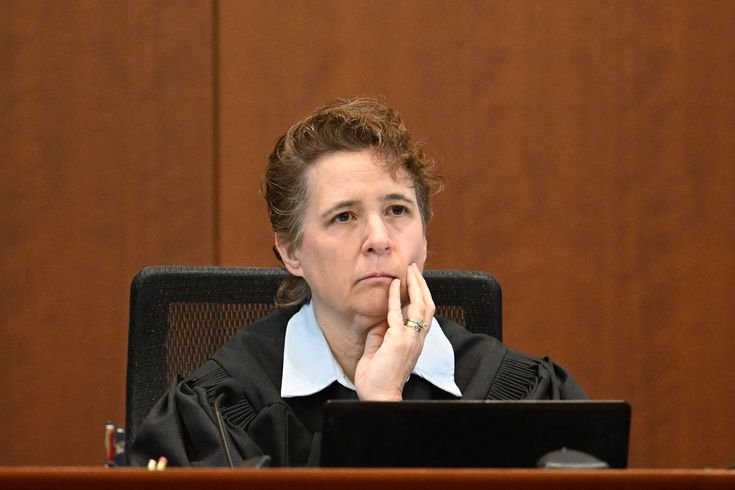
Penney Azcarate’s career resists a simple summary. She is a Marine veteran who deployed during the Gulf War, a former prosecutor who tried some of Fairfax County’s most serious felony cases, and a judge who quietly built a specialty court that has changed how Virginia treats veterans caught up in the criminal justice system. She is also, for an enormous global audience, the calm, exacting figure who kept order over one of the most-watched trials in recent American memory.
What connects those chapters is a consistent approach to public service — one grounded, in her own words, in honor, humanity, and humility. Whether she was helping a struggling veteran find treatment instead of a prison sentence, or managing a courtroom under the glare of worldwide media attention, Azcarate approached the job the same way: with discipline, restraint, and a clear sense that the position came with responsibility rather than celebrity. As she moves into the next phase of her career training future lawyers, that reputation for steady, principled leadership is likely to remain her defining legacy.