
Mablean Ephriam is the Los Angeles attorney America knows as Judge Mablean. She was the first presiding judge of the reality-based version of Divorce Court from 1999 to 2006, and since 2014 she has starred in Justice with Judge Mablean. Born in Hazlehurst, Mississippi, on April 23, 1949, she worked as a correctional officer and legal secretary, studied law at night, and spent two decades in prosecution and family law before television found her.
People search for her today because she is still on the air, still speaking publicly, and was inducted into the National Bar Association’s Fred D. Gray Hall of Fame in 2025. One clarification belongs up front. “Judge” is her television title, and the sources reviewed for this profile say she had not served as a judge before Divorce Court.
Quick Facts
| Detail | Verified information |
|---|---|
| Full name | Mablean Deloris Ephriam, Esq. |
| Pronunciation | “may-BLENE” |
| Profession | Attorney, television personality, public speaker |
| Known for | Presiding on Divorce Court (1999 to 2006); starring in Justice with Judge Mablean (2014 to present) |
| Date of birth | April 23, 1949 |
| Age | 77 (as of October 2026) |
| Birthplace | Hazlehurst, Mississippi |
| Raised in | Los Angeles, California, from 1955 |
| Undergraduate study | Pitzer College, Claremont, California (four-year academic scholarship) |
| Law school | Whittier College School of Law (then called Beverly Rubens College of Law), J.D. 1978, night program |
| Bar admission | State Bar of California, November 1978 (per her official biography) |
| Legal career | Los Angeles City Attorney’s Office prosecutor from 1978; own practice from July 1982 |
| Major TV programs | Divorce Court; Justice with Judge Mablean |
| Spouse | Reliable public sources do not provide enough information to confirm this detail. |
| Children | Four, according to a 2004 Mississippi House resolution and a 2018 TheGrio profile (Wikipedia lists three) |
| Notable honor | 2025 Fred D. Gray Hall of Fame, National Bar Association |
Who Is Judge Mablean Ephriam?

Judge Mablean Ephriam is an American attorney and television personality best known for two courtroom programs. On Divorce Court, she heard the marital disputes of real couples for seven seasons. On Justice with Judge Mablean, produced by Byron Allen’s company, she presides over half-hour small-claims style cases.
Her fame rests on a particular combination. She had trial experience in criminal and family courts, a plain-spoken delivery, and a catchphrase that viewers still quote: “Look deep before you leap.” She is also frequently described as a pioneer, because she was the first Black woman to preside over Divorce Court.
The title deserves a precise reading. A television judge is an arbitrator or host playing the judicial role inside a program, not an elected or appointed member of the judiciary. Wikipedia states that Ephriam had never served as a judge before Divorce Court, and her own official biography presents her career as that of a prosecutor and private lawyer.
Early Life and Family Background
Ephriam was the ninth of ten children born to Robert T. and Mable Ephriam in Hazlehurst, Mississippi. That detail appears in her official biography, republished by Charlotte’s WSOC-TV in 2015, and again in a 2004 resolution of the Mississippi House of Representatives that commended her as a native of Hazlehurst.

The family moved to Los Angeles in 1955, which means she started school in California. She graduated with honors from Thomas Jefferson High School in 1967 and received a four-year academic scholarship to Pitzer College in Claremont.
Her official biography says she wanted to be a lawyer from the age of thirteen. That is her own account, and it frames everything that follows, but no independent source confirms the motivation. Reliable public sources also do not provide enough information to confirm details of her childhood beyond the move west, so this profile does not guess at them.
How old is Judge Mablean?
Judge Mablean Ephriam was born on April 23, 1949, which makes her 77 years old as of October 2026. Several databases agree on the date, and Wikipedia lists the same birthday. The official biography reviewed for this article gives the birthplace but not the birthday.
Education and Legal Training
After her undergraduate studies, Ephriam married and became a mother, and she set the law aside for a time. Her official biography lists the jobs she held in those years: investment banking at First Western Bank, a correctional officer at the Federal Women’s Prison, and legal secretary work. Wikipedia and several entertainment databases say she began her career in the women’s division of the Federal Bureau of Prisons.
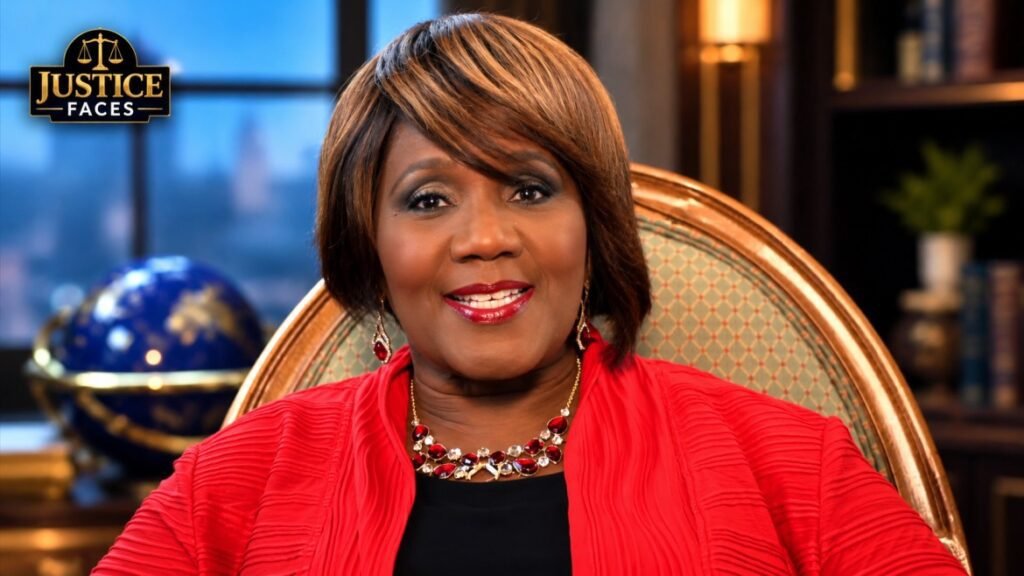
Whether she completed a degree at Pitzer is a point where sources differ in detail. The official biography confirms the scholarship, and Wikipedia lists her as a Pitzer graduate, but neither gives a degree or a graduation year. This profile therefore states the scholarship and leaves the degree unspecified.
In the fall of 1974 she began law school at night at Beverly Rubens College of Law, which later became Whittier College School of Law. She kept her daytime job as a legal secretary while she studied. In her third year she became a certified law clerk in the criminal division of the Los Angeles City Attorney’s Office, where she researched, wrote and argued misdemeanor appeals before the appellate division of the Los Angeles Superior Court.
Her law school team placed second in a statewide moot court honors program, according to the official biography. She earned her Juris Doctor degree in 1978 and was admitted to the California bar that November, having passed on her first attempt.
The sequence matters for her later career. A night student who clerks in a criminal appeals unit learns written advocacy early, and she walked into the City Attorney’s Office with courtroom exposure already behind her.
Mablean Ephriam’s Legal Career
The prosecutor years
Ephriam began as a prosecutor in the criminal division of the Los Angeles City Attorney’s Office in November 1978. She was assigned as a filing attorney at the Bauchet Street division, handling crimes against persons. Filing attorneys decide which police referrals become formal charges, so the job puts a lawyer in early contact with domestic violence cases.
Her official biography describes a pattern she found troubling. Women who were victims of domestic violence would call after a case was filed and ask that it be dismissed, and many were reluctant to testify. She discussed remedies with the presiding judge at Bauchet Street, Madge Watai, and the two devised a diversion approach.
Under that approach, if a reluctant victim sought dismissal and the defendant agreed to counseling and no further criminal behavior for six months, the judge would dismiss the case. Her biography says this informal practice was later codified by the California Legislature as the Domestic Violence Diversion and Prevention Act. That claim comes from her own biography and has not been checked against the statute for this article, so verify the legislative history before treating it as settled.
The same biography credits her work with the opening of a Family Law Center at 76th Street and Central Avenue. It describes women lawyers, then-Assemblywoman Maxine Waters, and the Brotherhood Crusade contributing legal representation, supplies and a building to help women obtain restraining orders. A 2025 Los Angeles Sentinel report on her Hall of Fame induction says she championed California laws on mandatory arrest in domestic violence cases.
Private practice and family law
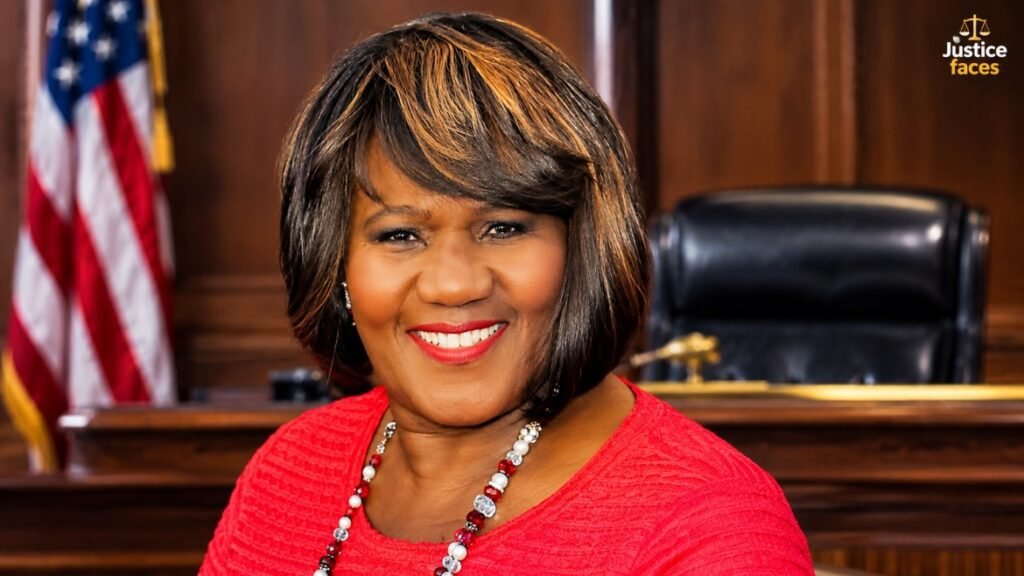
Her plan, as the official biography tells it, was to gain trial experience, build a reputation, meet the legal community, and then open her own office. She did that in July 1982, initially sharing space with a law school classmate. Her early practice covered criminal defense, personal injury and family law.
She found her niche in family law. According to her biography, she became known as the divorce attorney for police officers, judicial officers, doctors, lawyers and men. With two colleagues she formed a group called S.E.D.A., Support Enforcement Division Attorneys, which represented men in child support enforcement cases brought by the district attorney.
This is worth pausing on, because it shapes how her later courtroom persona should be read. A lawyer who represented many fathers in support disputes had seen both sides of divorce long before a camera did.
A chronology problem in other biographies
Wikipedia says she opened her own practice in 1982 and then “soon” became a Los Angeles County prosecuting attorney. Her official biography says the reverse: prosecutor from November 1978, private practice from July 1982. This article follows the official biography, which is more detailed and internally consistent, and notes that the Wikipedia ordering appears to be an error. It also says “Los Angeles County” where the biography says the city attorney’s office, which is a different employer.
Bar and community service

Ephriam was president of the Black Women Lawyers Association of Los Angeles in 1982 and 1983. Her biography says that during her tenure she co-founded the Harriet Buhai Center for Family Law, a pro bono legal services organization that began by serving domestic violence victims and later expanded to low-income residents across Los Angeles County. She also served on committees of the American Bar Association, the State Bar of California’s family law section, and the National Bar Association’s board of governors, and was the first Black woman on the board of the Union Rescue Mission.
In 1998 she formed a partnership with attorney Carolyn Makupson, and in 2004 the partnership dissolved as she shifted from law practice to entertainment and public speaking. Whether she maintains an active California law license today is not stated in the sources reviewed.
How Mablean Ephriam Became a Television Judge
To understand the move, it helps to know what courtroom television looked like in the late 1990s. Divorce Court was already old. Its original run in the late 1950s and 1960s, and a later revival in the 1980s, used dramatized reenactments of divorce cases, with actors and a judge figure. The format Ephriam joined in 1999 was different, because it featured real couples who had actually filed for divorce.
Her official biography says FOX’s Twentieth Television selected her in October 1998 to preside over the revised half-hour syndicated show. She did not seek the job. Word of her legal talents reached the company through colleagues and friends, especially fellow attorney Shirley Henderson, and through an entertainment attorney she did not know. She was interviewed and offered the position within seven days, which she attributes to divine intervention.
Her legal background translated in specific ways. A family lawyer knows how divorces break down over money, custody and trust, and a former prosecutor knows how to control a room. Those are the two skills a daytime divorce judge needs most.
Mablean Ephriam and Divorce Court
The role and the years

Ephriam presided over Divorce Court for seven seasons, from the 1999 to 2000 season through the 2005 to 2006 season. Wikipedia describes her as the first star of the reality-based version of the program and the first Black woman to preside over it. A Wikipedia entry on a sister program gives July 1999 as her start, while her biography and the 2004 Mississippi resolution refer to her presiding since 1998, which probably reflects the selection date rather than the first broadcast.
By early 2004 the show had reached its 1,000th episode, a milestone the Mississippi House noted in its resolution commending her. That official record, adopted in the 2004 session, also called her a nationally acclaimed motivational speaker and the mother of four.
How the program worked
Divorce Court is a nontraditional court show built around couples going through divorce. Each side presents its case, the judge questions them, and the judge rules. The rulings are described as legally binding, and in some cases the judge may hold back a decision to give a couple time to consider reconciliation.
The cases involved the disputes viewers expect from the genre: infidelity, money, jealousy, parenting, and the ordinary breakdown of trust. A common mistake in online summaries is to treat all television judges as interchangeable. Under Ephriam, the show’s value was in watching a trained family lawyer sort a real marital dispute in about half an hour.
Her courtroom persona
Documented elements of her style are limited to what appears in published profiles and program descriptions. Her trademark phrase was “Look deep before you leap,” which she used to urge couples to examine each other’s behavior before marrying. A TV One description of her Life After episode in 2012 characterizes her as known for tough love, witty comebacks and that phrase.
Wikipedia adds that she encouraged litigants to discuss sensitive issues but moved quickly to restore order when things got out of hand, and that she scolded disrespect. Those are descriptions by program writers and editors, not independent measurements, so the section on style later in this article separates them from audience reaction.
Reception
Audience attachment to her was strong enough that her successor faced it directly. Lynn Toler, who replaced her, told the Penn Gazette that Ephriam “was well loved” and that some viewers objected to the change. That is one witness’s account, but it comes from the person with the most direct reason to know.
Why Did Mablean Ephriam Leave Divorce Court?
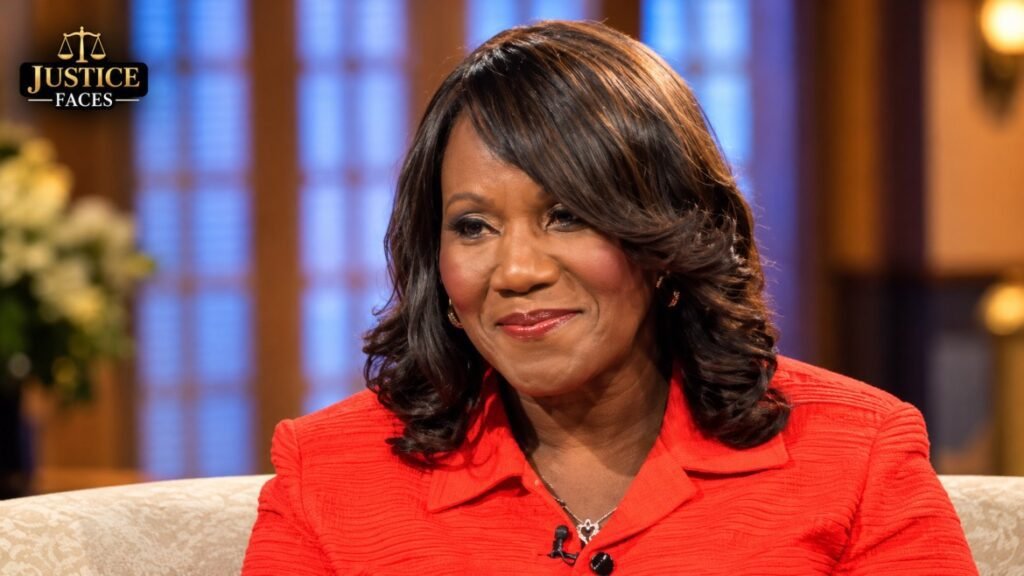
Several accounts exist, and they do not fully agree. The most neutral comes from a 2006 trade report by Broadcasting & Cable‘s online arm, which said Twentieth Television announced Lynn Toler as the new presiding judge and that Ephriam’s contract had expired after the show’s first seven seasons. A source close to the show told the publication the two sides could not agree on financial terms, and Twentieth declined to comment on the contract, while its president praised her contributions.
Wikipedia adds that in March 2006 it was announced she would leave at the end of the season, reportedly because she and the producers could not agree on a contract extension, and that she unsuccessfully sought a salary increase. It also reports her allegation that she was barred from changing her hairstyle for an entire television season because the network considered her styles too time-consuming for its hair and makeup team. A press-release statement attributed to her asked when FOX and America would accept cultural differences among African Americans, including hairstyles and textures.
Entertainment outlets framed this in April 2006 as a racism complaint, and at least one later explainer repeated that she had accused the show of racism. The network’s side of the hairstyle allegation does not appear in the sources reviewed, so it should be presented as her allegation, not as an established fact.
What the evidence supports is narrow. Her contract expired, the parties did not reach terms on a renewal, Twentieth announced a replacement, and Toler began on September 11, 2006. Anything beyond that, including whether she was fired or chose to leave, is not established by reliable public sources.
What Happened After Divorce Court?
Film and reality television
Ephriam had already appeared on film while on Divorce Court. She played a judge in a short appearance in Diary of a Mad Black Woman (2005) and the same judge in Madea’s Family Reunion (2006) and Madea Goes to Jail (2009). In those Tyler Perry films she plays a strict judge who handles Madea’s cases and, in the last film, sends Madea to therapy sessions with Dr. Phil.
She also appeared on the first season of VH1’s Celebrity Fit Club, and TV One’s Life After devoted a 2012 episode to her. That episode, which aired October 29, 2012, covered her path from Mississippi to Los Angeles, her work as a correctional officer, her domestic violence advocacy and her speaking.
Speaking and community work
After 2004 she shifted toward entertainment and public speaking. Her booking agency profile, last updated in August 2026, continues to list her for speaking engagements. She also runs the Mablean Ephriam Foundation, a nonprofit that works with underserved communities in the Los Angeles area, and hosts the Honoring Unsung Fathers Awards, a Father’s Day brunch that gives scholarships to students.
Returning to the bench
In November 2013 it was reported that Byron Allen’s Entertainment Studios, now Allen Media Group, had signed her to a new courtroom series. Justice with Judge Mablean premiered in syndication on September 15, 2014, and also airs on the company’s Justice Central network. It is filmed in Culver City, California.
The program differs from her earlier one. Wikipedia classifies it as a nontraditional or dramatized court show, featuring everyday small-claims disputes such as neighbors suing over property damage and friends fighting over unpaid loans. A first-person account in LA Material describes appearing on the show in a role and receiving a make-believe award of $420. Readers who assume it works like an arbitration show with real defendants should understand that distinction before comparing it with Divorce Court.
What Does Mablean Ephriam Do Now?
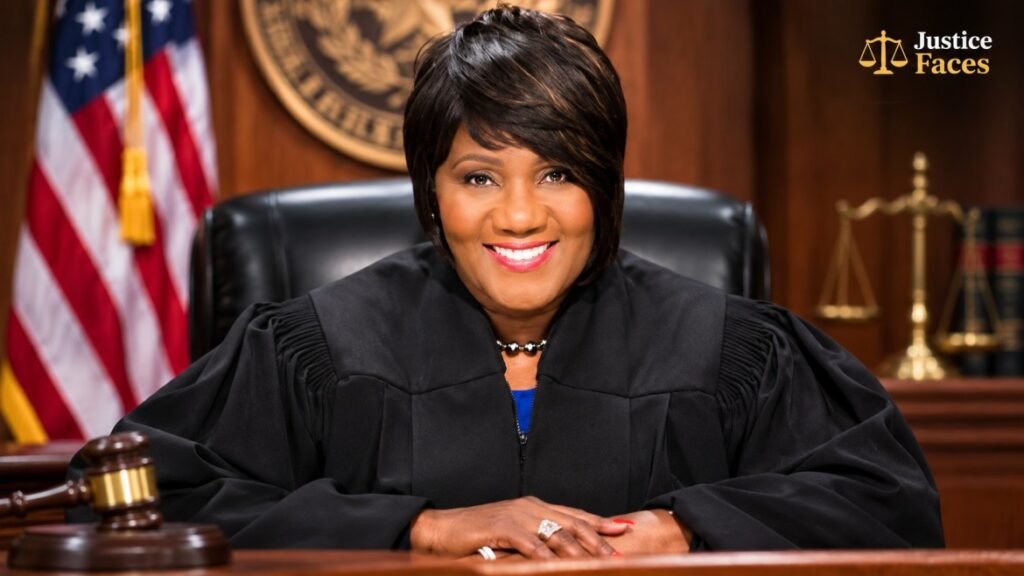
As of October 2026, the sources reviewed show her still attached to Justice with Judge Mablean. Wikipedia, citing a May 2025 report in Deadline, says Allen Media Group renewed all nine of its courtroom shows for two more seasons through the 2026 to 2027 season, which would be the thirteenth for her program. Streaming listings show the series in reruns on TheGrio network through the summer of 2026, and the Wikipedia article on the show lists twelve seasons and more than 800 episodes.
In July 2025 she was inducted into the National Bar Association’s Fred D. Gray Hall of Fame in Chicago, during the association’s 100th anniversary convention. The association says inductees have each practiced law for forty years or more. The Los Angeles Sentinel reported that she and Margo Bouchet are also inductees of the Langston Bar Association Hall of Fame.
Her daughter’s production company announced a scripted “family drama series” inspired by Ephriam’s early years as a family lawyer around 2019, according to coverage that cited Deadline. No reliable update on that project turned up in the research for this article. Her annual Father’s Day event has continued, including a virtual 2021 edition.
Mablean Ephriam’s Personal Life
Her official biography says she married after college and had children, and that she studied for the bar and worked “without neglecting her husband and children.” It does not name her husband. Reliable public sources do not provide enough information to confirm her spouse’s identity or her current marital status.
Several low-quality biography pages make specific claims about her marriage, including that she is currently unmarried and that she married at thirteen. None of them cite a source, one appears to mix her up with another person, and they should not be repeated.
On children, the sources differ. A 2004 resolution of the Mississippi House of Representatives calls her the mother of four, and a 2018 TheGrio profile describes her as a mother of four and grandmother of ten. Wikipedia’s infobox lists three children. Official records favor four, but the discrepancy remains unresolved in public sources.
Mablean Ephriam’s Daughter and Family
Her daughter is Tajamika “Taj” Paxton, a writer, director and producer born in Los Angeles on February 11, 1972, and a Georgetown University graduate. Paxton has won Emmy awards for her work in documentary and was Vice President of Documentaries at Logo TV when she and her mother were both nominated for Daytime Emmys in 2018.
In coverage of the planned scripted series, Paxton is reported to have worked as her mother’s legal secretary at the age of ten, while her older brothers served subpoenas and filed documents. That detail comes from a news summary of a Deadline report and describes the early years of her mother’s private practice. It also confirms that Ephriam has sons older than Paxton.
“I am following in my daughter’s footsteps.”
Ephriam said that to TheGrio after both nominations were announced, according to Ebony’s coverage. Reports at the time said they were believed to be the first Black mother and daughter nominated for Daytime Emmys in the same year, a claim that comes from TheGrio and has not been independently verified.
Reliable public sources do not provide names or details for her other children or for her grandchildren, and this profile respects that boundary.
Mablean Ephriam Net Worth
No reliable source establishes Judge Mablean’s net worth. Celebrity-wealth sites quote figures that range from about $13 million to $15 million and as high as $18 to $22 million, and the numbers appear to be generated rather than documented. One site published in 2026 attached a net-worth article to a Philippine judge with a similar name, which shows how little care some of these pages take.
A net worth is a person’s assets minus debts, and it cannot be derived from a television résumé. Salary from a television show, income from legal work, speaking fees, foundation activity and business ownership are separate categories, and none of the sources reviewed discloses any of them. The only documented financial fact is narrow: the 2006 trade report said she and Divorce Court could not agree on terms for a new contract.
Awards, Achievements and Career Milestones
| Year | Recognition or milestone | Source type |
|---|---|---|
| 1978 | Earned J.D., Whittier College School of Law; admitted to California bar in November | Official biography |
| 1982 | Opened private law practice; president of Black Women Lawyers Association of Los Angeles (1982 to 1983) | Official biography |
| 2004 | Mississippi House Resolution 49 commended her accomplishments and speaking | Mississippi Legislature |
| 2018 | Daytime Emmy nomination, Outstanding Legal/Courtroom Program, for Justice with Judge Mablean (Judge Mathis won) | TheGrio, Entertainment Tonight, IMDb |
| 2025 | Inducted into National Bar Association Fred D. Gray Hall of Fame | National Bar Association, Los Angeles Sentinel |
| Not dated | Langston Bar Association Hall of Fame inductee | Los Angeles Sentinel |
The 2018 nomination was for the series and not a personal acting or hosting award, though TheGrio and others described it as her first Emmy nomination. She did not win. Allen Media press materials also describe the series as Emmy-nominated.
Judge Mablean Ephriam’s Courtroom and Television Style
Documented facts. Her catchphrase, “Look deep before you leap,” is attested in multiple sources, including a TV One program description. Her official biography credits her legal reputation in family law and her prosecutorial work in domestic violence cases. She played a stern judge in the Madea films, but that is a scripted role and tells us nothing about her real temperament.
Audience perception. Wikipedia says viewers laughed at her voice and her reactions to couples’ behavior, and describes her as noted for humor. Allen Media promotional language and the Life After description use phrases like tough love and witty comebacks. Lynn Toler said viewers loved her. These are descriptions by writers, studios and a successor, and they reflect impressions, not measurements.
A balanced reading is that the persona combined the lawyer’s skill at structuring a dispute with a comic’s timing. That is an interpretation, and the evidence for it is the descriptions above, not any internal knowledge of her motives.
15 Interesting Facts About Judge Mablean Ephriam
- Her first name is pronounced “may-BLENE,” like the Chuck Berry song title, according to Wikipedia.
- She was the ninth of ten children, confirmed by both her official biography and a Mississippi House resolution.
- Her biography says she dreamed of being a lawyer from age thirteen.
- She attended law school at night while working as a legal secretary.
- In her third year of law school she argued misdemeanor appeals as a certified law clerk.
- Her moot court team took second place at the statewide honors program.
- She passed the California bar on her first attempt.
- She co-founded the Harriet Buhai Center for Family Law in 1982, per her biography.
- She was the first Black woman on the board of the Union Rescue Mission, per the same biography.
- FOX offered her the Divorce Court job within seven days of her first interview.
- Divorce Court reached its 1,000th episode during her tenure.
- She appeared in three Tyler Perry Madea films as a judge.
- She appeared on the first season of VH1’s Celebrity Fit Club.
- Her daughter has won Emmy awards and worked at Logo TV.
- In 2025 she was inducted into the National Bar Association’s Fred D. Gray Hall of Fame.
Judge Mablean Ephriam Timeline
| Year | Event |
|---|---|
| 1949 | Born April 23 in Hazlehurst, Mississippi |
| 1955 | Family moves to Los Angeles |
| 1967 | Graduates from Thomas Jefferson High School; four-year scholarship to Pitzer College |
| 1974 | Begins night law school |
| 1978 | Graduates with J.D.; admitted to California bar; begins as Los Angeles City Attorney prosecutor in November |
| 1982 | Opens her own practice in July; leads Black Women Lawyers Association of Los Angeles |
| 1998 | Selected in October to preside over Divorce Court |
| 1999 | First season as Divorce Court judge (1999 to 2000) |
| 2004 | Law partnership dissolves; Mississippi House commends her |
| 2005 | Appears in Diary of a Mad Black Woman |
| 2006 | Leaves Divorce Court after seven seasons; Lynn Toler begins September 11 |
| 2006 | Appears in Madea’s Family Reunion |
| 2009 | Appears in Madea Goes to Jail |
| 2012 | TV One’s Life After episode airs October 29 |
| 2013 | New court series reported in November |
| 2014 | Justice with Judge Mablean premieres September 15 |
| 2018 | Daytime Emmy nomination for her series |
| 2025 | Fred D. Gray Hall of Fame induction; series renewed through 2026 to 2027 |
| 2026 | Series continues in reruns and in renewed production according to available listings |
Mablean Ephriam’s Legacy
Her place in television history is secure but should be stated carefully. She helped establish the reality-based Divorce Court format that followed, and she is credited as the first Black woman to preside over the series. All three judges who followed her are also Black women, according to Wikipedia, which gives her tenure a lasting place in the show’s identity.
TV One has described her as the first Black woman to have a nationally televised court show. That depends on what counts as having a show, so this article treats it as a description and not a settled record. What is clearer is that she appeared in the national courtroom genre in 1999 at a time when it had few Black women in prominent roles.
Her legacy in law rests on a narrower base of documentation. Her official biography and the Los Angeles Sentinel connect her to domestic violence reforms and legal aid, and the National Bar Association’s 2025 induction recognizes four decades of practice and service. It would overstate the record to credit her alone with any statute, and the legislative claims deserve verification.
Frequently Asked Questions
Who is Judge Mablean Ephriam?
She is a Los Angeles attorney and television personality who presided over Divorce Court from 1999 to 2006 and stars in Justice with Judge Mablean.
How old is Judge Mablean Ephriam?
She was born April 23, 1949, so she is 77 as of October 2026.
Where was Mablean Ephriam born?
She was born in Hazlehurst, Mississippi, and her family moved to Los Angeles in 1955.
Where did Mablean Ephriam go to school?
She received a scholarship to Pitzer College and earned her law degree in 1978 from Whittier College School of Law, studying at night.
Is Mablean Ephriam a real judge?
She is a lawyer admitted to the California bar in 1978, and her “Judge” title comes from television. Wikipedia says she had not served as a judge before Divorce Court.
What law did Mablean Ephriam practice?
She worked in criminal prosecution, including domestic violence cases, and then in criminal defense, personal injury and especially family law.
Was Mablean Ephriam on Divorce Court, and for how long?
Yes, for seven seasons, from 1999 to 2000 through 2005 to 2006.
Why did Mablean Ephriam leave Divorce Court?
Her contract expired and the sides reportedly could not agree on financial terms. She also alleged a dispute over her hairstyles, which the network’s side does not address in the sources reviewed.
Who replaced Mablean Ephriam on Divorce Court?
Judge Lynn Toler, who began on September 11, 2006.
Is Mablean Ephriam married, and who is her husband?
Reliable public sources do not provide enough information to confirm this detail.
Does Mablean Ephriam have children?
Yes. A 2004 Mississippi House resolution and a 2018 TheGrio profile say four, while Wikipedia lists three. One daughter is producer Tajamika Paxton.
What is Mablean Ephriam’s net worth?
No verified figure exists. Online estimates vary widely and are not based on disclosed financial records.
What does Mablean Ephriam do now?
She stars in Justice with Judge Mablean, speaks publicly, hosts the Honoring Unsung Fathers Awards, and was inducted into the National Bar Association’s Hall of Fame in 2025.
What TV shows has Mablean Ephriam appeared on?
Divorce Court, Justice with Judge Mablean, VH1’s Celebrity Fit Club (first season) and TV One’s Life After (2012), plus roles in three Tyler Perry films.
Has Mablean Ephriam written a book?
No verified published book turned up in the research for this article.