Introduction
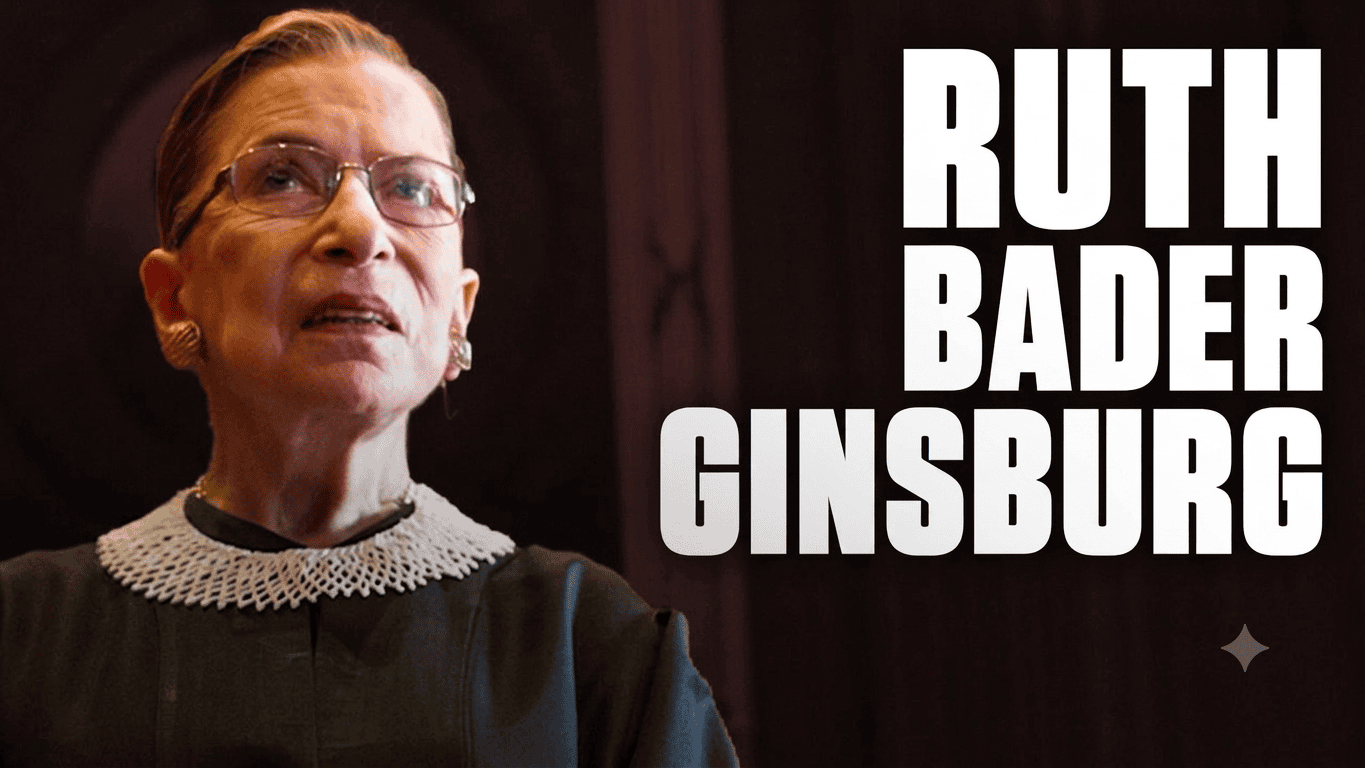
Ruth Bader Ginsburg spent nearly three decades on the Supreme Court, but her influence on American law took shape long before she ever wore a robe. As a litigator in the 1970s, she argued gender discrimination cases that reshaped how the courts treated men and women under the law. By the time she became the second woman to sit on the Supreme Court, she had already spent twenty years dismantling legal barriers from the outside.
This article covers Ruth Bader Ginsburg’s early life, her education at Cornell, Harvard, and Columbia, her legal career before the bench, her twenty-seven years as a Supreme Court justice, and her later status as a cultural icon known as the “Notorious RBG.” It also addresses her marriage to Martin Ginsburg, her family life, and what is publicly known about her estimated net worth. Where financial or personal details rely on estimates rather than confirmed figures, that distinction is noted directly.
Quick Facts Table
| Category | Details |
|---|---|
| Full Name | Joan Ruth Bader Ginsburg |
| Popular Name | Ruth Bader Ginsburg, RBG |
| Profession | Lawyer, jurist, Supreme Court justice |
| Date of Birth | March 15, 1933 |
| Date of Death | September 18, 2020 (age 87) |
| Birthplace | Brooklyn, New York, United States |
| Nationality | American |
| Education | Cornell University (B.A., 1954); Harvard Law School (1956–1958); Columbia Law School (LL.B., 1959) |
| Occupation | Associate Justice, Supreme Court of the United States (1993–2020) |
| Years Active | 1959–2020 |
| Known For | Second woman on the Supreme Court; landmark gender-equality rulings; “Notorious RBG” cultural icon status |
| Spouse | Martin D. Ginsburg (married 1954 until his death in 2010) |
| Children | Jane C. Ginsburg and James S. Ginsburg |
| Estimated Net Worth | Roughly $4 million to $9 million at time of death, based on financial disclosure forms |
Early Life and Background
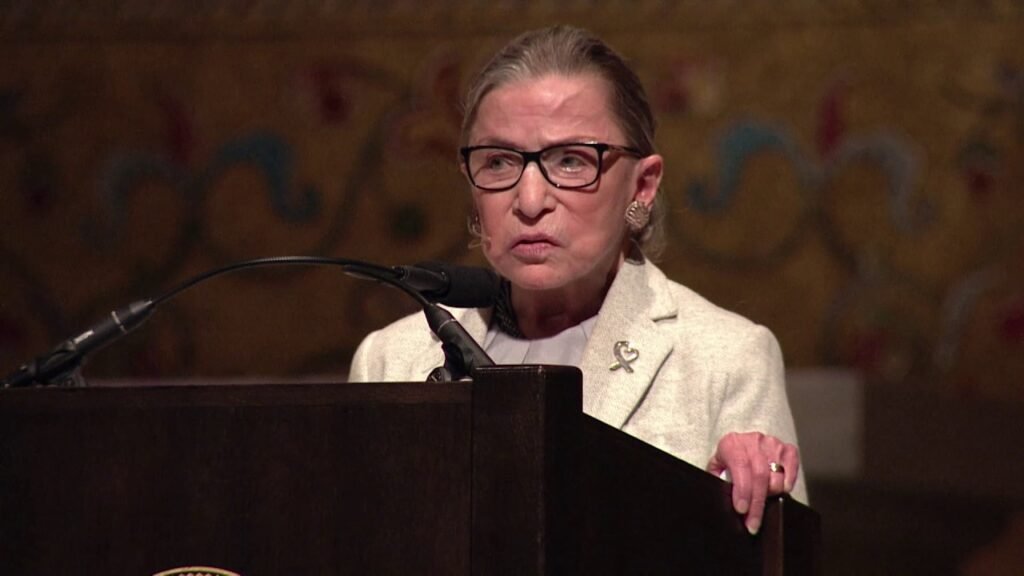
Ruth Joan Bader was born on March 15, 1933, in Brooklyn, New York, the second daughter of Nathan and Celia Bader. <cite index=”28-1″>Her family valued education and instilled in her a love of learning from an early age.</cite> <cite index=”37-1″>Her father worked as a furrier and her mother worked in a clothing factory, and the family lived in a low-income, working-class neighborhood.</cite>
Ginsburg’s childhood was marked by early loss. <cite index=”27-1″>Her mother battled cancer throughout Ruth’s teenage years and died the day before Ruth’s high school graduation.</cite> Despite that loss, <cite index=”32-1″>Ginsburg graduated from James Madison High School in Brooklyn at just fifteen years old, showing the academic drive that would define the rest of her career.</cite>
Education and Academic Journey
<cite index=”26-1,25-1″>Ginsburg graduated from Cornell University in 1954 with highest honors in government, and it was there that she met her future husband, Martin Ginsburg, on a blind date.</cite> After marrying and starting a family, she paused her academic path for two years while Martin completed military service, then enrolled at Harvard Law School.
<cite index=”26-1″>At Harvard, she was one of only nine women in a class of about five hundred men, and the school’s dean reportedly asked the female students to justify taking a place that could have gone to a man.</cite> When Martin took a job in New York City, <cite index=”26-1″>Harvard denied Ginsburg’s request to complete her final year there while attending Columbia Law School, so she transferred to Columbia outright.</cite> <cite index=”26-1″>The move made her the first person to serve on both the Harvard Law Review and the Columbia Law Review, and she graduated tied for first in her class at Columbia in 1959.</cite>
Legal Career Before the Supreme Court
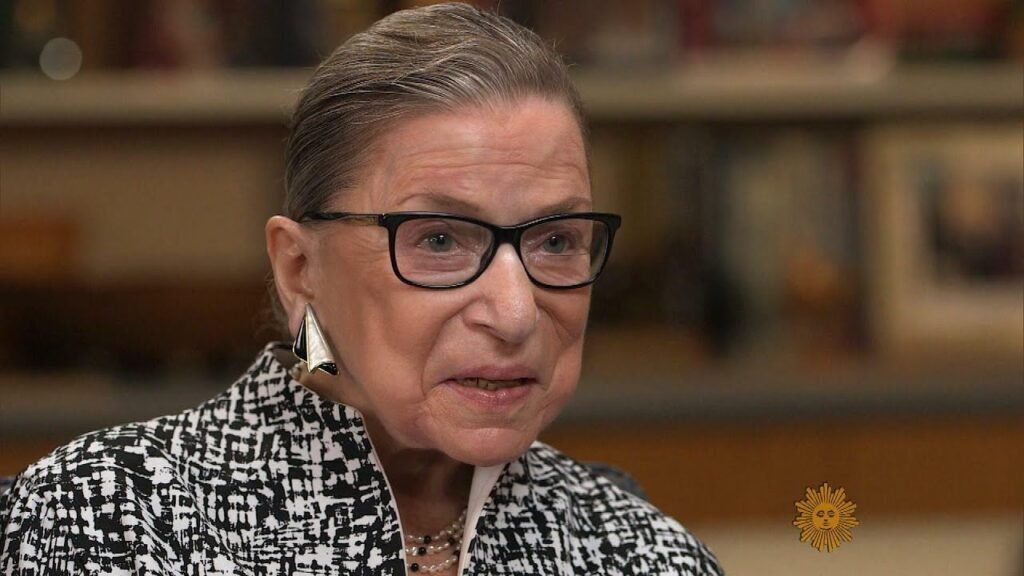
Despite her academic record, Ginsburg struggled to find work after law school. <cite index=”26-1″>In 1960, Supreme Court Justice Felix Frankfurter rejected her for a clerkship because of her gender.</cite> <cite index=”23-1″>She eventually clerked for Judge Edmund L. Palmieri of the U.S. District Court for the Southern District of New York from 1959 to 1961.</cite>
<cite index=”23-1″>She then worked as a research associate and later associate director of the Columbia Law School Project on International Procedure from 1961 to 1963.</cite> <cite index=”31-1″>She went on to teach at Rutgers University School of Law from 1963 to 1972, then at Columbia Law School from 1972 to 1980, where she became the school’s first female tenured professor.</cite>
During the 1970s, Ginsburg built the legal record that would define her career. <cite index=”23-1″>In 1971, she co-founded the Women’s Rights Project of the American Civil Liberties Union and served as the organization’s General Counsel from 1973 to 1980.</cite> <cite index=”30-1″>Of the six gender-discrimination cases she argued before the Supreme Court that decade, she won five, work that reshaped how federal agencies applied the law to men and women alike.</cite>
<cite index=”30-1″>In 1973, she argued her first case before the Supreme Court in Frontiero v. Richardson, challenging unequal military benefits between men and women, and won an 8–1 ruling.</cite> <cite index=”30-1″>In 1980, President Jimmy Carter appointed her to the U.S. Court of Appeals for the District of Columbia Circuit, a role that ended her teaching career and where she would serve for the next thirteen years.</cite>
Appointment to the Supreme Court
<cite index=”22-1″>President Bill Clinton nominated Ginsburg to the Supreme Court on June 14, 1993.</cite> <cite index=”22-1″>The Senate confirmed her on August 3, 1993, by a vote of 96 to 3, and she took her seat on August 10, 1993, becoming the second woman to serve on the Court after Sandra Day O’Connor.</cite>
<cite index=”26-1″>Ginsburg was also the first Jewish woman to serve on the Supreme Court, and at the time of her confirmation she was viewed as a moderate consensus-builder rather than a strict ideologue.</cite> <cite index=”24-1″>She replaced Justice Byron White and would go on to serve for twenty-seven years.</cite>
Landmark Rulings and Judicial Philosophy
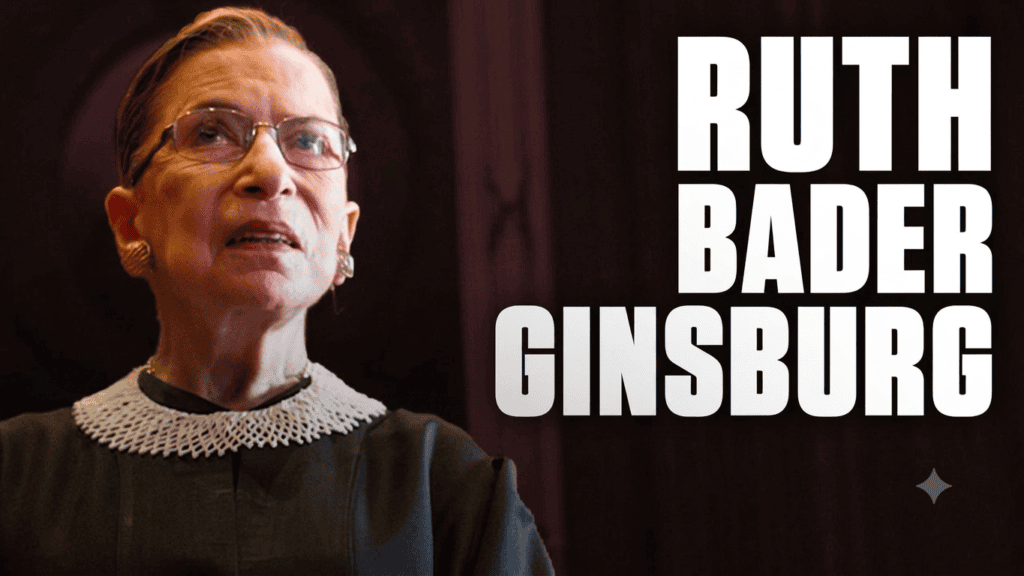
<cite index=”26-1″>During her tenure, Ginsburg authored the majority opinions in several major cases, including United States v. Virginia in 1996, which struck down the Virginia Military Institute’s male-only admissions policy.</cite> <cite index=”31-1″>That ruling held that the state-supported institute could not refuse to admit qualified women.</cite>
<cite index=”26-1″>She also wrote majority opinions in Olmstead v. L.C. (1999), Friends of the Earth, Inc. v. Laidlaw Environmental Services, Inc. (2000), and City of Sherrill v. Oneida Indian Nation of New York (2005).</cite> <cite index=”24-1″>She generally supported affirmative action programs and voting rights protections, and she often took a broad view of Fourth Amendment protections against unreasonable searches and seizures.</cite>
Later in her career, Ginsburg became better known for her forceful dissents than for her majority opinions. <cite index=”22-1″>She wrote and frequently read aloud strongly worded dissents, including in Ledbetter v. Goodyear Tire, a case concerning pay discrimination, and in Gonzales v. Carhart, which upheld a federal abortion restriction she called alarming.</cite> <cite index=”31-1″>Her dissent in Bush v. Gore, the case that effectively decided the 2000 presidential election, closed with an unusually blunt sign-off that departed from the Court’s tradition of closing dissents “respectfully.”</cite>
“I dissent.”
That two-word closing, a deliberate break from the customary “I respectfully dissent,” became one of the most recognized phrases of her later career and a symbol of the sharper, more public role she took on as she aged on the bench.
Personal Life
<cite index=”23-1″>Ginsburg married Martin D. Ginsburg in 1954, and the couple remained married until his death from cancer on June 27, 2010, a fifty-six-year marriage.</cite> <cite index=”29-1″>Their first child, Jane, was born shortly after Martin was drafted into the military, and the family later welcomed a second child, James, in 1965.</cite>
<cite index=”37-1″>Jane C. Ginsburg went on to become a professor at Columbia Law School, while James S. Ginsburg became a music producer and founder of Cedille Records.</cite> <cite index=”27-1″>Martin, a tax attorney, was described by Ruth as her strongest supporter at every stage of her life, and he was said to have taken pride rather than insecurity in his wife’s accomplishments.</cite>
Ginsburg’s personal interests extended beyond the law. <cite index=”37-1″>She was a devoted opera enthusiast who often attended performances at the Washington National Opera.</cite> Publicly available information regarding other personal hobbies and private interests beyond her professional and family life remains limited.
Ruth Bader Ginsburg Net Worth
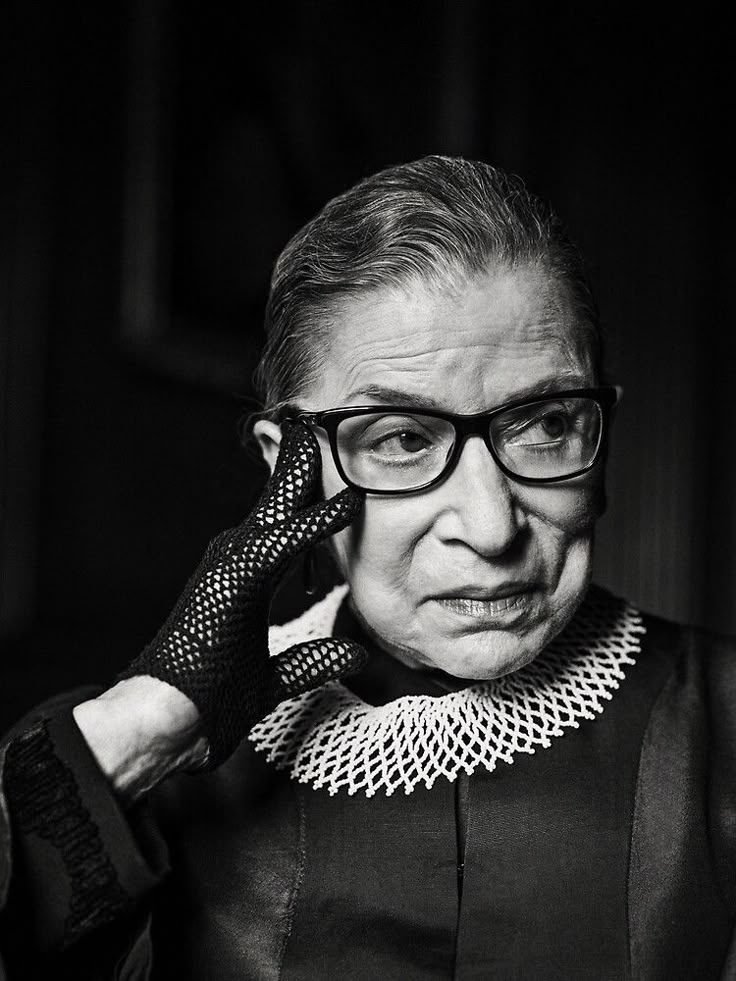
Because Supreme Court justices file financial disclosures using value ranges rather than exact figures, no single confirmed dollar amount exists for Ginsburg’s net worth. <cite index=”33-1″>Based on her most recent financial disclosure forms, analysts have estimated her net worth in a range of roughly $3.95 million to $9.22 million at the time of her death.</cite> Other outlets have cited narrower estimates closer to $4 million, so any specific figure should be treated as an approximation rather than a confirmed total.
Her income came from identifiable, modest sources rather than business ventures or endorsements. <cite index=”33-1″>Her largest single asset was her Columbia University retirement plan, valued between $500,001 and $1 million according to her 2019 disclosure.</cite> <cite index=”33-1″>Her 2019 annual salary as an associate justice was $258,900, and associate justices earned $265,600 annually as of 2020.</cite>
<cite index=”33-1″>She also earned income from her 2016 book “My Own Words,” a collection of her speeches and writings, which brought in more than $204,000 in royalties that year alone.</cite> <cite index=”33-1″>In 2019, she was awarded a $1 million prize from the Berggruen Institute for her work advancing gender equality, though she donated that prize money to charity rather than keeping it.</cite>
Awards and Recognition
<cite index=”31-1″>In 1999, Ginsburg received the American Bar Association’s Thurgood Marshall Award for her contributions to gender equality and civil rights.</cite> Her academic and professional record also included numerous honorary degrees and fellowships over the course of her career.
<cite index=”23-1″>She was a fellow at the Center for Advanced Study in the Behavioral Sciences in Stanford, California, from 1977 to 1978, and served on the Council of the American Law Institute from 1978 to 1993.</cite> Her broader recognition, however, came less from formal awards and more from the lasting effect of the legal precedents she authored and the public role she took on in her later years.
Ruth Bader Ginsburg in Popular Culture
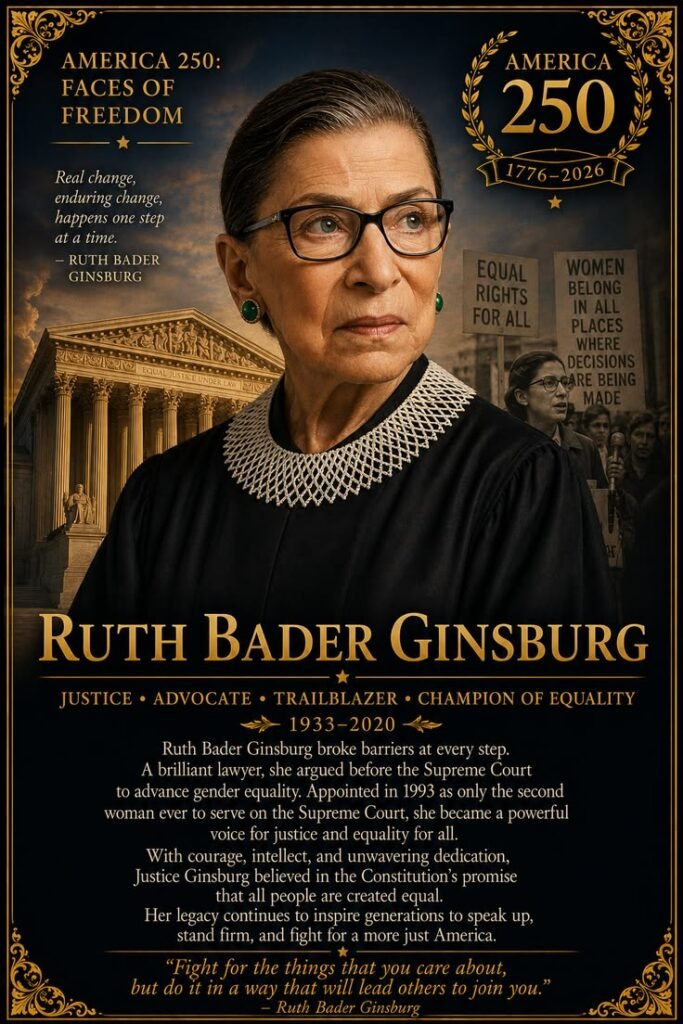
Ginsburg’s later years on the bench coincided with an unusual second act as a cultural figure among younger generations, largely built around the “Notorious RBG” persona. <cite index=”32-1″>Her image, including her distinctive jabot collar, has appeared across tattoos, T-shirts, and street art, and comedian Kate McKinnon portrayed her in recurring “Saturday Night Live” sketches.</cite> <cite index=”32-1″>She was also the subject of the Oscar-nominated documentary “RBG,” which chronicled her legal career and rise to cultural prominence.</cite>
<cite index=”26-1″>The 2018 biographical drama “On the Basis of Sex” focused on Ginsburg’s early career struggles fighting workplace gender discrimination, with actress Felicity Jones portraying her and Armie Hammer playing Martin.</cite> <cite index=”26-1″>Ginsburg herself appeared briefly in the film in a small cameo role.</cite> <cite index=”26-1″>Her likeness also reached younger audiences through a Lego minifigure that appeared in “The Lego Movie 2,” a project she personally approved before it went into production.</cite>
Interesting Facts About Ruth Bader Ginsburg
- <cite index=”26-1″>She and her husband Martin were the first pair to each serve on two major law reviews between them, with Ruth herself sitting on both the Harvard Law Review and the Columbia Law Review.</cite>
- <cite index=”26-1″>In 1960, Justice Felix Frankfurter declined to hire her as a clerk specifically because she was a woman, a rejection that came years before she would join the Court he once sat on.</cite>
- <cite index=”30-1″>Of the six gender-discrimination cases she argued before the Supreme Court in the 1970s, she won five.</cite>
- <cite index=”31-1″>In 1996, she authored the Court’s decision in United States v. Virginia, opening the Virginia Military Institute to female cadets.</cite>
- <cite index=”31-1″>Her closing line in her Bush v. Gore dissent, simply “I dissent,” broke from the traditional “respectfully dissent” language used by the Court.</cite>
- <cite index=”33-1″>She earned more than $204,000 in royalties in a single year from her 2016 book “My Own Words.”</cite>
- <cite index=”33-1″>She donated a $1 million prize from the Berggruen Institute to charity rather than keeping it for herself.</cite>
- <cite index=”37-1″>She was a longtime opera enthusiast who regularly attended performances at the Washington National Opera.</cite>
- <cite index=”32-1″>She was portrayed by Kate McKinnon in recurring “Saturday Night Live” sketches during the height of her “Notorious RBG” fame.</cite>
- <cite index=”26-1″>She personally approved a Lego minifigure of herself, which appeared in “The Lego Movie 2” in 2019.</cite>
Legacy and Influence
Ginsburg’s legal legacy rests on two distinct phases of her career: two decades spent dismantling gender discrimination as a litigator and law professor, followed by twenty-seven years shaping the law from the bench. <cite index=”24-1″>She became the senior member of the Court’s liberal bloc after Justice John Paul Stevens retired in 2010, a position that made her dissents carry particular symbolic weight in later years.</cite> Her early ACLU work reshaped how courts treated gender under the Constitution well before most Americans knew her name.
Her later-life status as a pop culture figure gave her legal legacy an unusually broad reach for a sitting judge. <cite index=”29-1″>She remained on the bench through failing health rather than retiring during a more politically favorable moment, a decision that drew criticism from some allies even as it reflected her characteristic determination.</cite> <cite index=”24-1″>Her death in September 2020 led directly to the rapid confirmation of Justice Amy Coney Barrett, a sequence of events that reshaped the ideological balance of the Court for years afterward.</cite>
Her influence also extended to a new generation of women entering the legal profession, many of whom cited her career as evidence that persistence could overcome institutional gender bias. Educational institutions and advocacy groups continue to reference her legal strategy and writings in ongoing debates over equal protection and civil rights. Her combination of legal substance and cultural visibility remains uncommon among Supreme Court justices, before or since.
Frequently Asked Questions
Who was Ruth Bader Ginsburg? Ruth Bader Ginsburg was an American lawyer and jurist who served as an Associate Justice of the Supreme Court of the United States from 1993 until her death in 2020, and the second woman to hold that position.
What is Ruth Bader Ginsburg’s full name? Her full name was Joan Ruth Bader Ginsburg.
How old was Ruth Bader Ginsburg? She was born on March 15, 1933, and died on September 18, 2020, at the age of 87.
Who was Ruth Bader Ginsburg married to? She was married to Martin D. Ginsburg, a tax attorney, from 1954 until his death in 2010.
Did Ruth Bader Ginsburg have children? Yes, she had two children: daughter Jane C. Ginsburg, a Columbia Law School professor, and son James S. Ginsburg, a music producer.
What was Ruth Bader Ginsburg’s career before the Supreme Court? She was a law professor at Rutgers and Columbia, co-founded the ACLU’s Women’s Rights Project, and served thirteen years as a judge on the U.S. Court of Appeals for the D.C. Circuit before her Supreme Court appointment.
What is Ruth Bader Ginsburg’s estimated net worth? Estimates based on her financial disclosure forms place her net worth at roughly $4 million to $9 million at the time of her death.
Was Ruth Bader Ginsburg a real judge? Yes. She served on the U.S. Court of Appeals for the D.C. Circuit for thirteen years before being confirmed to the Supreme Court in 1993.
What is Ruth Bader Ginsburg famous for? She is best known for her role in landmark gender-equality rulings, her later career as a prominent liberal dissenter, and her cultural status as the “Notorious RBG.”
Conclusion
Ruth Bader Ginsburg’s career spanned two distinct forms of legal influence: two decades spent building the legal architecture of gender equality as a litigator and professor, and twenty-seven years applying and defending that architecture as a Supreme Court justice. Her education at Cornell, Harvard, and Columbia gave her the academic credentials her early employers refused to recognize because of her gender, credentials she then used to reshape how the law treated women. Her marriage to Martin Ginsburg and her family life ran alongside a career that reached from ACLU litigation to majority opinions to widely read dissents. In her final years, she became an unlikely cultural icon, a status that extended her influence well beyond the legal profession and into a much broader public conversation about equality under the law.
On-Page SEO Deliverables
SEO Title: Ruth Bader Ginsburg Biography: Age, Husband, Career, Legacy and Net Worth
Meta Description: Ruth Bader Ginsburg biography: her education, Supreme Court career, husband Martin Ginsburg, family, landmark rulings, and estimated net worth.
Suggested URL: /ruth-bader-ginsburg-biography
10 SEO Tags: Ruth Bader Ginsburg, RBG, Ruth Bader Ginsburg biography, Ruth Bader Ginsburg net worth, Ruth Bader Ginsburg husband, Notorious RBG, Supreme Court justice, United States v. Virginia, ACLU Women’s Rights Project, Martin Ginsburg
15 Semantic Keywords: Associate Justice Supreme Court, gender discrimination law, Columbia Law School, Cornell University graduate, D.C. Circuit Court of Appeals, women’s rights advocate, landmark Supreme Court rulings, judicial dissent, Bill Clinton nominee, feminist icon, legal pioneer, second woman Supreme Court, first Jewish woman Supreme Court, judicial philosophy, civil rights litigation
5 Internal Linking Suggestions:
- A JusticeFaces.com explainer on how Supreme Court financial disclosures work and why exact net worth figures are rarely available
- A profile piece on other pioneering women in the federal judiciary
- An article breaking down landmark gender-discrimination cases in U.S. legal history
- A JusticeFaces.com piece on the Senate confirmation process for Supreme Court nominees
- A feature on how Supreme Court vacancies are filled and their long-term impact on the Court’s balance
5 External Authority Sources Suggestions:
- Supreme Court of the United States official biography page
- Encyclopaedia Britannica biography of Ruth Bader Ginsburg
- Wikipedia entry on Ruth Bader Ginsburg
- Justia U.S. Supreme Court Center justice profile
- National Women’s History Museum biography
Recommended Schema:
- Person Schema (name, birthDate, deathDate, jobTitle, alumniOf, spouse)
- Article Schema (headline, author, datePublished, dateModified)
- FAQ Schema (matching the Frequently Asked Questions section above)