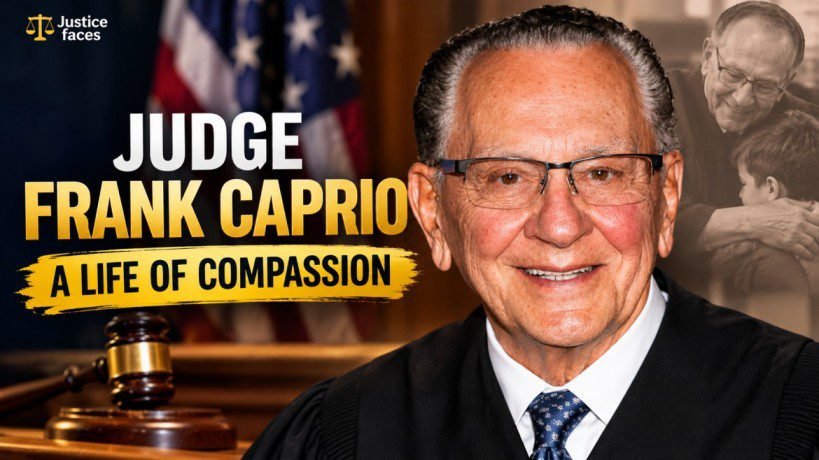
Frank Caprio spent 38 years hearing parking tickets, speeding citations and unpaid fines in a small municipal courtroom in Providence, Rhode Island — and became, improbably, one of the most widely watched judges on earth. He died on August 20, 2025, at age 88, after a battle with pancreatic cancer he had disclosed publicly in December 2023.
His fame came from Caught in Providence, a show his own brother started filming on local access television decades before anyone called it viral. Clips of Caprio asking a defendant about their job, their kids or their health — then deciding what the law should actually cost them — reached billions of views.
This article covers his upbringing on Federal Hill, his education and legal career, the judicial record behind the videos, his 2025 memoir, his family, his death and funeral, and what can and cannot be verified about his finances.
Who Was Judge Frank Caprio?
Frank Caprio was an American lawyer, politician and judge who served on the Providence Municipal Court from 1985 until his retirement in January 2023, most of that time as its chief judge. He was also a teacher, a wrestling coach, a city councilman, the longtime chairman of Rhode Island’s higher-education board, and in the last year of his life, a published author.
One correction is worth making early, because search traffic shows persistent confusion about it. Caprio was never a federal judge, never a state supreme court justice, and never presided over criminal trials. A municipal court is the lowest rung of the American court system. In Providence, it handles traffic violations, parking tickets, city ordinance violations and similar matters — the kind of case where the stakes are a fine of $50 or $300, a booted car, or a suspended license rather than a prison sentence.
That matters for understanding why his approach drew attention. Municipal courts process enormous volumes of low-level cases involving people who often cannot afford a lawyer and frequently cannot afford the fine. Caprio treated that volume as a series of individual circumstances rather than a queue. He asked people what was happening in their lives, factored the answer into the penalty, and explained his reasoning out loud.
His role also differed from most judges in how he got the job. Providence’s municipal judges are elected by the City Council to four-year terms, not appointed by a governor or elected by voters statewide. Caprio was first elected to the bench in 1985 and reappointed by successive councils for nearly four decades. It was a part-time position; he rotated courtroom duty with two other judges while maintaining a private law practice.
By the end of his career he had become something no municipal judge had been before: a global media figure with more than 20 million social-media followers, known in headlines as “the nicest judge in the world.”
Judge Frank Caprio’s Early Life and Childhood
He was born Francesco Caprio on November 24, 1936, in Federal Hill, the Italian-American neighborhood at the center of Providence. He was the second of three sons.
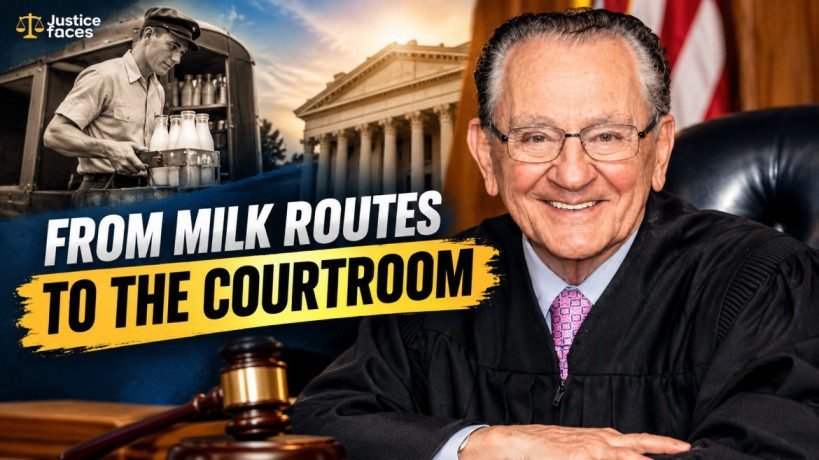
His father, Antonio “Tup” Caprio, had emigrated from Teano, in the Campania region of Italy. His mother, Filomena, was born in Providence to a family that had come from Naples. Antonio worked as a fruit peddler and a milkman; Filomena kept the home. Neither had an education past the eighth grade. The family lived in a cold-water flat in a tenement on Federal Hill.
Caprio returned to one detail about that childhood more than any other, including in his 2025 Providence College commencement address: being twelve years old, pulling on a wool hat at four in the morning, and going out with his father and brother to carry heavy glass milk bottles up and down tenement stairs before school. He recalled his father telling him in accented English that if he did not want to do this for the rest of his life, he should study and go to college.
Judge Frank Caprio Young: What His Early Years Reveal
The documented record of his youth is thinner than the biographical retellings suggest, but three things are well established by his own account and by institutional sources.
He worked throughout school. Providence College, CBS News and his own website all describe the same set of jobs: shining shoes, washing dishes, delivering newspapers, and working the milk route with his father.
He was a serious athlete. Providence College’s official profile records that he was an all-state wrestler at Central High School in Providence and was later inducted into the Rhode Island Wrestling Hall of Fame. Wrestling stayed with him — he would go on to coach the sport as a young teacher.
He was the first in his extended family to finish college. In his commencement address he described roughly fifty first cousins, all living in the same neighborhood, and said he was the first of the entire group to graduate from college.
One caution for readers encountering other biographies: widely circulated pages attach specific childhood anecdotes, dialogue and emotional turning points to Caprio that trace back to no identifiable source. The details above are the ones that appear in his own public statements or in institutional records.
Education and the Road to a Legal Career
Caprio attended Providence public schools and graduated from Central High School, where he wrestled. He then enrolled at Providence College, the Dominican-run Catholic college in his own city, and graduated in 1958 with a degree in political science. Providence College’s official record notes that he worked three jobs to pay for it.
Law school came later, and sideways. Rather than go straight from college to a full-time program, Caprio took a teaching job and studied at night — attending the evening program at Suffolk University School of Law in Boston while teaching American government at Hope High School in Providence, coaching the school’s wrestling team, and starting a family.

That combination is the single most load-bearing fact in his biography, and it is confirmed by both Providence College and ABC News. It explains the classroom cadence of his courtroom manner, and it is the experience he drew on when he talked about people with no margin for error in their schedules or their budgets.
He was admitted to practice and began his legal career in 1965. Over the following decades he built a Providence firm that eventually carried the family name, Caprio & Caprio.
The honorary degrees came much later, and three institutions awarded them:
- Suffolk University Law School — honorary doctor of laws, 1991
- Providence College — honorary doctor of civil law, 2008
- University of Rhode Island — honorary doctor of public service, 2016
He established scholarship funds at all three. In May 2025, three months before his death, Providence College brought him back as its commencement speaker — a graduate of the class of 1958 addressing the class of 2025 in the city where he had spent his whole life.
A note on a common error: several biography pages state that Caprio earned his law degree at Boston University or Boston College. He did not. Suffolk University School of Law is the institution named by Providence College, by ABC News, and by the Providence City Council’s own record of his service.
From Teacher and Lawyer to Judge
Caprio’s path to the bench ran through a classroom and a political career, not through a prosecutor’s office — a distinction several unreliable biographies get wrong by inventing a stint in the Rhode Island Attorney General’s office.
He served in the United States Army and the Rhode Island Army National Guard from 1954 to 1962. His first career was teaching: American government at Hope High School, where he also coached wrestling.
Politics came next. In 1962, at 25, Caprio was elected to the Providence City Council representing the 13th Ward, the Federal Hill seat. He served until 1968 and chaired the council’s committee on urban redevelopment, renewal and planning. He later sought Democratic nominations for Lieutenant Governor and Attorney General of Rhode Island without success.
His most substantial non-judicial public role was in education policy. For ten years he chaired the Rhode Island Board of Governors for Higher Education, the body then governing the University of Rhode Island, Rhode Island College and the Community College of Rhode Island.
In 1985, the Providence City Council elected him to the municipal court bench. He was 48, with twenty years of law practice, a teaching career, six years in elected office and a family of seven behind him.
Career timeline
| Year | Milestone |
|---|---|
| 1936 | Born November 24 in Federal Hill, Providence |
| 1954–1962 | U.S. Army and Rhode Island Army National Guard |
| 1958 | Graduates Providence College |
| early 1960s | Teaches American government and coaches wrestling at Hope High School; attends Suffolk Law at night |
| 1962–1968 | Serves on the Providence City Council, 13th Ward |
| 1965 | Begins legal career; later founds Caprio & Caprio |
| 1985 | Elected to the Providence Municipal Court |
| 1991 | Honorary doctor of laws, Suffolk University |
| 2008 | Honorary doctor of civil law, Providence College |
| 2016 | Honorary doctor of public service, University of Rhode Island |
| 2018 | Caught in Providence launches in national syndication |
| Jan 2023 | Retires from the bench; named Chief Judge Emeritus |
| Dec 2023 | Announces pancreatic cancer diagnosis |
| Feb 2025 | Publishes Compassion in the Court |
| May 2025 | Delivers the Providence College commencement address |
| Aug 20, 2025 | Dies in Providence at 88 |
Judge Frank Caprio’s Judicial Career in Providence
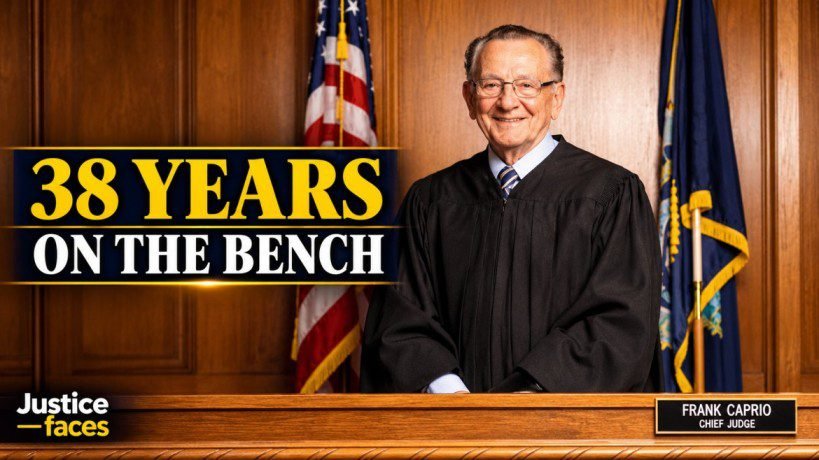
For 38 years Caprio heard the ordinary business of a city: speeding tickets, parking violations, expired registrations, red-light camera citations, unpaid fines that had grown into booted cars and suspended licenses. It was part-time work, rotated among three judges.
Compassion was not the same as dismissal
The most common misreading of Caprio’s record — amplified by clip compilations titled around him letting everyone off — is that he simply waived penalties. The documented pattern is more specific.
In many cases he found the defendant responsible and imposed the fine, then addressed the person’s ability to pay separately: a payment plan, extra time, or payment out of the Filomena Fund, a pool of donated money held in the court registry and named for his mother. In a widely circulated case reported by UNILAD, he imposed a $400 fine on a woman living in her car, directed $300 of it to the fund, gave her a month for the remaining $100, and ordered the boot removed from her car.
That distinction — finding against someone while refusing to let the penalty destroy them — is the actual mechanism behind most of the famous clips, and it is the one his book is built around. In his ABA Journal interview he described the problem of fines accumulating against people while they are incarcerated, leaving them saddled on release with debts they cannot clear.
He also described his working method plainly to CBS News: put yourself in the position of the person standing in front of you and ask how you would want to be treated. He attributed the instruction to his father.
Retirement in 2023 — and the scrutiny that preceded it
Most biographies describe his retirement as the graceful end of a four-decade run. The fuller account is a matter of public record and belongs in any serious profile.
In early January 2023, as Caprio’s four-year term came up for renewal, it emerged that he might not have the votes on the City Council to be reappointed. At the same time, WPRI 12’s Target 12 unit raised questions about Caught in Providence: the show was produced by members of Caprio’s family, filmed in a city courtroom, and city officials could not locate any agreement authorizing it or any payment to the city. Council President Rachel Miller asked the city solicitor to review how state, local and judicial ethics rules applied to the judge’s relationship with the program.
Caprio’s own answers to Target 12 and on WPRO radio are part of the record: he said he had never been paid anything in connection with the show’s syndication, and he said he was hurt by the suggestion that he might not be reappointed. A 2015 Rhode Island Ethics Commission opinion had cleared his brother to be compensated for filming, on the conditions that the judge himself was not paid and that the public had the same access to record proceedings — though Common Cause Rhode Island noted that the facts underlying that opinion had since changed.
On January 13, 2023, the City Council and Caprio issued a joint statement announcing his retirement after nearly 40 years. Six days later the council elected him Chief Judge Emeritus an unpaid, advisory role and approved a resolution renaming the municipal courtroom in his honor. John Lombardi succeeded him as chief judge. Providence Business News reported the ethics questions as settled with that vote; WPRI reported the courtroom renaming as taking effect in October 2023, which appears to reflect a later dedication.
Frank Caprio’s television success was part of a wider public interest in courtroom personalities, including Judge Judy, whose career also brought judicial proceedings and legal disputes to a large television audience.
Including this does not diminish the judicial record. It gives readers the context that a career of this length in elected municipal office actually had.
Caught in Providence: How Judge Frank Caprio Became Famous
The show that made Caprio famous was not conceived as a television property. His brother, Joseph Caprio, began videotaping cases in the Providence Municipal Court more than twenty years before national syndication. It aired first on Providence public access television, then was picked up by the local ABC affiliate, WLNE-TV (ABC 6), through longtime station employee John Methia.

Facebook changed its trajectory. According to Methia, when the platform began allowing video posts, the team uploaded some cases to the show’s page and drew roughly ten thousand viewers on the first attempt. The clips kept traveling.
In December 2017, Deadline reported that Fox Television Stations had acquired Caught in Providence for a fall 2018 national launch, co-produced by Lionsgate’s Debmar-Mercury and Joseph Caprio’s Citylife Productions, with carriage on Fox-owned stations in New York, Los Angeles, Chicago, Houston, Dallas, San Francisco, Washington, Phoenix, Orlando, Minneapolis and Charlotte. Methia has said Debmar-Mercury wanted to relocate production to New York or Los Angeles and that he argued successfully for keeping it in Providence.
The syndicated series premiered on September 24, 2018, was renewed, and later moved to cable on the Law&Crime Network. Providence College’s official profile records national syndication across more than 200 stations and four Daytime Emmy nominations. One inconsistency is worth flagging: BenBella’s author biography for Caprio says three Emmy nominations while the publisher’s own book description on the same page says four.
What the format actually did
The show’s structure explains much of its reach. Episodes were built from real cases with real defendants — not arbitration staged in a studio, which is how most American courtroom programs are produced. Participation was consent-based; the court administrator confirmed to Target 12 that defendants were asked on approach whether they wished to appear on camera, and that the judge knew who had declined.
Editing did the rest. A 40-minute docket became a three-minute clip built around one exchange: a single mother, an elderly man, a nervous teenager invited to the bench to bang the gavel. Short vertical video rewarded exactly that structure, and the clips moved from YouTube to Facebook to TikTok to Instagram over nearly a decade.
By the end, Providence College put his following above 26 million; his publisher said more than 20 million across platforms; Caprio himself told the 2025 graduating class the figure was over 25 million. The counts vary by date and by how platforms are totaled, which is why no single number should be treated as definitive.
Judge Frank Caprio’s Wife and Family
Caprio’s wife was Joyce Caprio, née Tibaldi. The Nardolillo Funeral Home obituary describes her as his wife of 62 years; the Associated Press and several broadcast obituaries said 60 or almost 60; Wikipedia gives a 1965 marriage. The safe statement is that they were married for about six decades, and the exact year is not consistently reported. She was with him when he died.
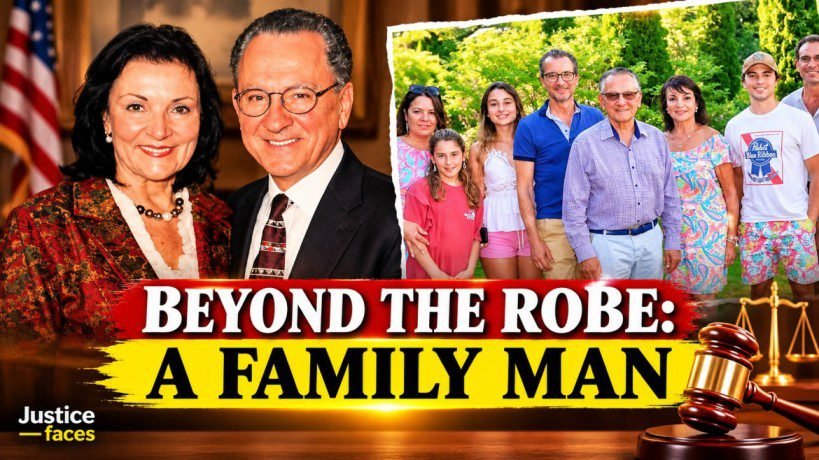
They had five children, named in the funeral home obituary as Frank T. Caprio, David Caprio, Marissa (Caprio) Pesce, John Caprio and Paul Caprio, along with seven grandchildren and two great-grandchildren.
Two of the sons have public records of their own. Frank T. Caprio served in the Rhode Island House of Representatives, was elected General Treasurer of Rhode Island in 2006, and was the Democratic nominee for governor in 2010. David Caprio served in the Rhode Island House and is a co-owner of City Life Productions, the company behind Caught in Providence.
The family also ran the public side of his final years. His son David confirmed his death to CBS News. His children spoke at length to WPRI 12 during the funeral week — his eldest son calling him the best father in the world, his daughter saying he was more than the nickname the internet had given him.
Beyond those public roles, the family’s private life is not extensively documented, and this article does not fill the gap with invention. Readers will find pages online naming a different wife entirely, assigning ages and occupations to the children, or describing family conflicts. None of that is supported by any credible source.
Judge Frank Caprio’s Book: Compassion in the Court
The full title is Compassion in the Court: Life-Changing Stories from America’s Nicest Judge. It was published by BenBella Books, which is distributed by Simon & Schuster, and released in hardcover on February 4, 2025 — when Caprio was 88.
Bibliographic details, from the publisher:
| Field | Detail |
|---|---|
| Title | Compassion in the Court: Life-Changing Stories from America’s Nicest Judge |
| Author | Judge Frank Caprio |
| Publisher | BenBella Books (distributed by Simon & Schuster) |
| Publication date | February 4, 2025 |
| Hardcover ISBN | 9781637746035 |
| E-book (ePub) ISBN | 9781637746042 |
| Category | Memoir / biography |
What Is Compassion in the Court About?
It is a memoir organized around cases rather than a legal treatise. The publisher’s description frames it as the written version of what viewers saw on the bench: stories from his life and from his courtroom between 1985 and his retirement in 2023.
The through-line is a distinction Caprio drew repeatedly. The people he helped were not given a free pass, in the publisher’s framing, but a chance to put their lives back in order — a break extended to those whose circumstances warranted it, not an abandonment of the penalty.
What Life Lessons Does the Book Explore?
The publisher lists several threads, and they map closely onto what he said publicly elsewhere:
- What he learned from his immigrant parents, and how it shaped his judgment
- Stories told to him from the other side of the bench by people of every age
- How he learned, over decades, to tell when someone was not being truthful
- The effect of growing up with an adult who believed in him, and his attempt to be that adult for the people in his courtroom
- The argument that a person’s worth is measured by what they learn from their mistakes rather than by the mistakes themselves
In his Providence College address he added a line the book circles: it is not enough to climb the ladder of success — he asked the graduates to “leave the ladder down for others to follow.”
Where Can Readers Find Judge Frank Caprio’s Book?
The publisher’s page at BenBella Books sells the hardcover and the ePub directly and links to Amazon, Barnes & Noble, Books-A-Million and Bookshop.org. Caprio’s own website links to the Amazon listing. Libraries can order it through the ISBNs above.
One point of care: Providence College’s profile calls it a bestselling memoir, and the college gave inscribed copies to its 2025 graduating class. No specific chart position, sales figure or award is documented in any source reviewed here, and none should be published without one.
Judge Frank Caprio Net Worth: What Is Known About His Wealth?
Short answer: no credible source establishes Judge Frank Caprio’s net worth, and this article does not publish an estimate.
That is an unsatisfying answer to a high-volume query, so it is worth explaining exactly why the figures circulating online fail.
Why the published figures are not usable
The numbers that dominate search results for this query range from about $1 million to $13 million, with $4 million, $5 million and $6.3 million all appearing as confident headline figures on different sites. Several of these pages attribute their estimate to unnamed “financial sources” or to influencer-earnings calculators that model social-media income from follower counts rather than from any disclosure.
The reliability problem is visible on the face of these pages. The same articles that assert a precise net worth also get checkable facts wrong — giving his birth date as October 10, 1949, naming his law school as Boston College, or describing a career start as a prosecutor in the Rhode Island Attorney General’s office. Pages that cannot get his birthday right are not sources for his balance sheet.
They also contradict each other on salary, which is the one component that should be easy. One site reports an annual judicial salary of $298,500; another reports $157,600. Neither matches the figure Providence actually paid.
What is actually documented
Four things are on the record, and together they sketch a comfortable but not spectacular financial picture:
His judicial salary was modest and part-time. WPRI 12’s Target 12 reported in January 2023 that Caprio was paid $56,823 for the part-time municipal court position, rotating duty with two other judges.
He said he earned nothing from the television show. Speaking on WPRO radio in January 2023, Caprio stated he had not made a single dime from the syndication of Caught in Providence. For context, his son David told the same program he received roughly $100,000 a year in dividends from his ownership stake in the production company — income belonging to the son, not the judge.
He practiced law for decades. He began his legal career in 1965 and built the Providence firm Caprio & Caprio. Private-practice earnings over roughly half a century are not disclosed anywhere and cannot be estimated responsibly.
He had real business interests. Providence College’s official profile describes him as an active real estate investor and a partner in the Coast Guard House, a landmark restaurant in Narragansett, Rhode Island. The funeral home obituary lists him as of Providence and Narragansett. These are documented interests of unknown value.
The limits of public information
Municipal court judges in Rhode Island are not subject to the kind of detailed federal financial disclosure that would settle this. No estate inventory has been reported publicly. Book royalties, any social-media revenue and the value of private business stakes are all undisclosed.
It is also worth separating two things that get conflated in these articles: career earnings and business interests are not the same as net worth. A person can hold real estate and a restaurant stake and have any net figure at all depending on debt, taxes and what has already been given away — and Caprio gave a good deal away, as the philanthropy section describes.
If a reader needs a defensible sentence for citation, it is this: Frank Caprio’s net worth has never been publicly verified, and figures published online are estimates from sources that do not document their method.
Is Judge Frank Caprio Still Alive?
No. Judge Frank Caprio died on August 20, 2025, at the age of 88, in Providence, Rhode Island. The reported cause was pancreatic cancer.
His death was announced the same day through a statement posted to his official social media accounts, and confirmed to CBS News by his son, David Caprio. The family’s statement said he died peacefully after a long battle with pancreatic cancer and described him as a husband, father, grandfather, great-grandfather and friend.
What happened to Judge Frank Caprio
The illness was public for the last twenty months of his life. In December 2023, shortly after his 87th birthday, Caprio posted a video disclosing that he had been diagnosed with pancreatic cancer. He called it an insidious form of the disease and asked followers to pray for him, saying prayer alongside his medical treatment was what he believed would help him survive it.
He completed a round of radiation treatment in May 2024, as WPRI 12 reported, and returned to public life through 2024 and early 2025 — publishing his memoir in February 2025 and delivering the Providence College commencement address in May 2025, where he told graduates directly that he was in his eighties and battling pancreatic cancer.
On August 19, 2025, he posted that he had suffered a setback and was back in the hospital. He died the following day.
Quick answers
- Is Judge Frank Caprio still alive? No. He died on August 20, 2025.
- How old was Judge Frank Caprio when he died? 88. He was born November 24, 1936, and would have turned 89 that November.
- What was Judge Frank Caprio’s cause of death? Pancreatic cancer, per his family’s public statement and reporting by CBS News, ABC News, Fox News and the Associated Press. No source reports a more specific immediate cause, and none should be invented.
- Where did he die? Providence, Rhode Island. The funeral home obituary says he was surrounded by his wife Joyce, family and close friends.
Rhode Island Governor Dan McKee ordered flags at state buildings flown at half-staff in his memory, calling him a state treasure.
Judge Frank Caprio’s Last Words and Final Public Message
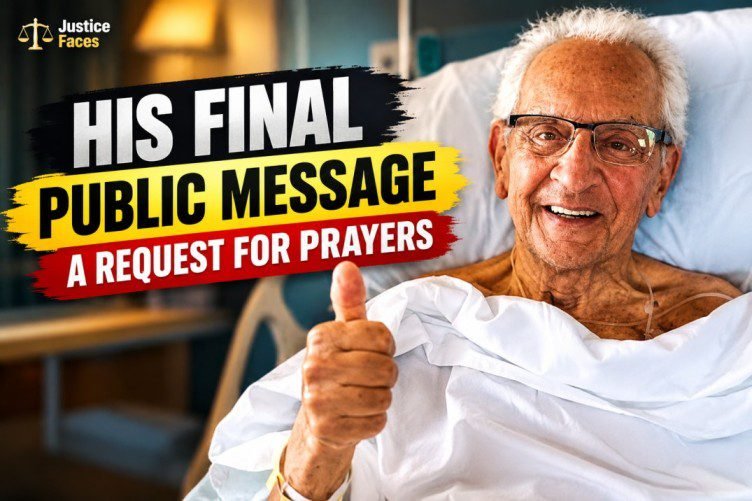
This query deserves a careful answer, because what circulates as his “last words” is usually something else.
His literal final words are not publicly documented. No credible report names what he said last, to whom, or when. Any page presenting a farewell quotation as his dying words is not working from a verifiable source.
What is documented falls into three distinct categories, and conflating them is the error most articles make.
1. His final public video — August 19, 2025
The day before he died, Caprio posted a video recorded from a hospital bed to his Instagram account. In it he recalled asking for prayers the previous year and said it had plainly worked, because he had come through a difficult period. He said he had suffered a setback, was back in the hospital, and was coming to his followers again to ask them to <em>remember me in your prayers</em>. He described himself as a believer in the power of prayer. The post was captioned with a line about prayers lifting his spirit during the battle.
This is his final public message. It is not the same thing as his last words.
2. Remarks he gave to CBS News
CBS News, in its obituary coverage, reported advice Caprio offered in his final period: to enjoy every minute of life, stay close to family and friends, and show compassion and understanding toward other people. This was given in an interview, not as a deathbed statement.
3. His last major public address — May 18, 2025
Three months before he died, Caprio delivered the commencement address at Providence College, which has published the full transcript. It is the most substantial statement of his worldview on the public record, and it is the piece most biographies miss entirely.
In it he told the graduates that although he wore a robe like any judge, there was no badge under it — there was a heart. He spoke about his father’s milk route, about being the first in fifty cousins to finish college, and about the obligation that comes with success. He closed with the idea that people are judged not by what they earn but by what they give, and by the hope they create in others.
If a publisher wants to quote “Judge Caprio’s final words,” the honest framing is: his final public message was an Instagram video on August 19, 2025, asking for prayers; his last major public address was his Providence College commencement speech in May 2025.
Anything beyond that — a tender farewell to his wife, a closing line to his children, a parting message about kindness — is unverified, and in several cases demonstrably a repackaging of older social media captions.
Judge Frank Caprio’s Funeral and Burial Place
The funeral arrangements were announced publicly by the family on August 25, 2025, and handled by Nardolillo Funeral Home. Three separate events should not be confused with one another.
Public visitation — Thursday, August 28, 2025. A public remembrance and visitation was held from 3 p.m. to 7 p.m. at the Rhode Island Convention Center in downtown Providence, in Hall A. The family said it had received thousands of requests from people around the world wanting to attend; his son David told reporters mourners traveled from as far as the Philippines.
Funeral Mass — Friday, August 29, 2025. A Mass of Christian Burial was celebrated at 10 a.m. at the Cathedral of Saints Peter and Paul in Providence, with Archbishop of Boston Richard G. Henning presiding. The Mass was livestreamed on Caprio’s own social media pages and carried live by WPRI 12. Rhode Island officials, sitting and former judges and large public crowds attended. Afterward a procession carried him down Atwells Avenue through Federal Hill, the neighborhood where he grew up.
Burial — private. The family stated in advance that the burial would be private, and NBC 10 WJAR reported that a private burial service for the immediate family followed the two days of public commemoration.
Where is Judge Frank Caprio buried?
The burial location has not been publicly confirmed. No reliable source reviewed for this article names a cemetery or plot. Given the family’s explicit decision to keep the burial private, that absence appears to be deliberate rather than an oversight in reporting.
This article does not name a cemetery, and readers should be skeptical of pages that do — guessing from his hometown or his place of death is not reporting. Anyone with a legitimate reason to locate the grave should contact Nardolillo Funeral Home rather than rely on an unsourced web page.
The scale of the public events was itself notable: Rhode Island Public Radio’s coverage described the services as the state’s version of a state funeral, with flags at state buildings at half-staff by order of Governor Dan McKee.
Judge Frank Caprio’s Philanthropy and Contributions to Education
Caprio’s charitable work followed a consistent logic: remove the specific financial obstacle in front of a specific person.
The Antonio “Tup” Caprio Scholarship Fund
At Suffolk University School of Law, Caprio founded a scholarship named for his father. According to his own website and WPRI 12, it is awarded to Rhode Island students committed to improving access to legal services in underserved neighborhoods — aimed, in other words, at producing more lawyers for the kind of people who appeared in his courtroom.
He established further scholarships in his father’s name at Providence College and at Central High School, his own high school. Providence College’s profile records that he founded scholarships at all three institutions that gave him honorary degrees.
The Filomena Fund
Named for his mother, the Filomena Fund is the philanthropic project most directly tied to his judicial work. Its origin, as Caprio described it to the ABA Journal, was unplanned: a letter arrived from a viewer enclosing a check for twenty dollars, asking that it be used for someone in need. He read the letter from the bench, it was broadcast, and unsolicited donations followed from around the world.
The money was deposited into the court’s registry, and Caprio would sometimes direct a fine to be paid from it after finding a defendant responsible. That structure is worth understanding precisely: the fund did not nullify the penalty, it paid it — which is why the practice fit within the court’s process rather than around it.
Other causes
He supported the Rhode Island Community Food Bank and Boys Town of Italy, and in 1983 he co-chaired the Rhode Island arm of the fundraising campaign to restore the Statue of Liberty and Ellis Island — a cause with obvious resonance for the son of a man who arrived through that system.
The overall scale of his giving has not been publicly quantified, and this article makes no claim about totals. What can be said is that the pattern was consistent across more than four decades: education for people from neighborhoods like his, and direct relief for people in front of him.
Why Judge Frank Caprio’s Courtroom Videos Resonated With Millions
“He was kind” explains the appeal of the clips about as well as “it was sad” explains a funeral. Several more specific factors were at work, and they are worth separating into what is documented and what is interpretation.
The stakes were universal. Almost everyone has received a parking ticket or a speeding citation. Viewers were not watching a murder trial they would never experience; they were watching the one encounter with a courtroom most people actually have. That recognition is why clips translated across countries with entirely different legal systems.
The defendants were real. As the Catholic Weekly noted in comparing his program with other courtroom shows, Caught in Providence filmed genuine municipal court cases rather than arbitration staged in a studio. Viewers were watching people, not participants.
He explained himself. The clips show reasoning, not just outcomes. He would state the violation, say what the law required, and then say what he was going to do about it and why. That is unusual on camera and it gave the audience something to agree or disagree with.
He inverted an expected power relationship. The authority figure asked questions and listened. Children were invited to sit beside him on the bench. The format let an institution that usually feels impersonal behave like a neighbor.
He addressed the real problem with fines. A fixed penalty is not a fixed burden. Caprio’s recurring point — that a small fine can be a crushing one depending on the household it lands in — is a substantive argument about how low-level enforcement works, and it landed during a decade of broader public debate about fines, fees and court debt.
Two things the clips cannot prove
It is worth being honest about the limits of this evidence, which most coverage is not.
First, a clip is an edited selection. Thousands of cases were filmed over two decades; what reached social media was chosen for emotional impact by people who had every reason to choose well. The clips are a fair record of what Caprio could be at his best. They are not a statistical sample of his docket, and no published study has audited his dispositions.
Second, visibility was partly a production achievement rather than a judicial one. The show had a professional distributor, carriage on major-market stations and a family-run production company optimizing for exactly the moments that traveled. That does not make the warmth false — it was recorded over many years, including long before anyone was watching — but it does mean the fame and the record are two different things.
Judge Frank Caprio’s Legacy and Influence
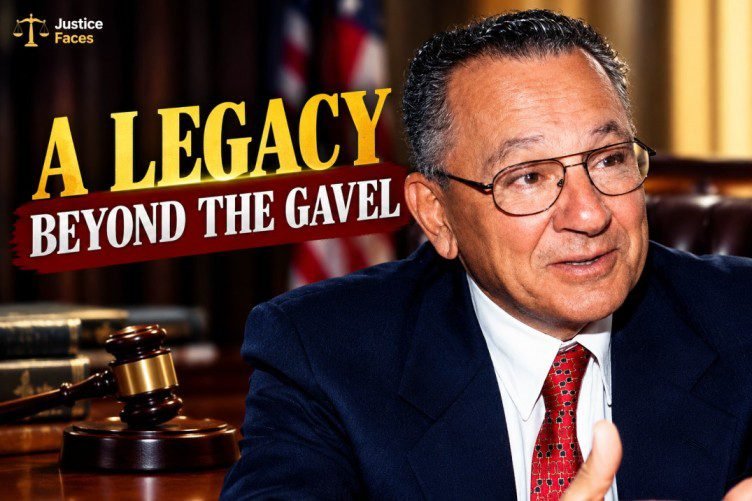
Caprio’s most measurable legacy is one of attention. Before him, the American municipal court — where the overwhelming majority of citizens actually encounter the justice system — was effectively invisible in popular culture. Televised justice meant arbitration shows or high-profile criminal trials. He made the traffic docket legible to a global audience.
That has a practical dimension. Millions of viewers learned, from watching, that a judge has discretion at this level: that penalties can be adjusted, that payment plans exist, that it is worth explaining your circumstances rather than failing to appear. For a system in which non-appearance and unpaid fines spiral into suspended licenses and lost jobs, that is a non-trivial public education.
His influence on the profession is harder to measure and should not be overstated. There is no evidence that any jurisdiction changed its sentencing practices because of him, and no credible source claims he reformed American law. What he demonstrated — and what judges, bar associations and law schools repeatedly cited after his death — is that procedural respect and legal rigor are not in tension. He applied the law and treated people decently while doing it.
There is also a tension in the legacy worth naming. Caprio’s method depended on individual judicial discretion, applied case by case by one person with an unusual temperament. That is a strength when the judge is Frank Caprio. It is less obviously a model, since the same discretion in other hands produces inconsistency rather than mercy. The systemic version of his argument is not “be a nicer judge” but “stop building penalty structures that punish poverty” — and that is a legislative question, not a judicial one.
The institutional recognition was real and local. Providence named its municipal courtroom after him and made him Chief Judge Emeritus. Three universities gave him honorary doctorates and carry scholarships in his father’s name. The state flew its flags at half-staff. Thousands of people, including some who traveled from other continents, stood in line at a convention center to pay respects to a part-time traffic judge.
What the record supports is this: Frank Caprio changed how a very large number of people picture a courtroom, and he did it from the smallest bench in the system.
Frequently Asked Questions About Judge Frank Caprio
Who was Judge Frank Caprio? An American judge who served on the Providence Municipal Court in Rhode Island from 1985 to 2023, mostly as chief judge, and became internationally known through the courtroom program Caught in Providence.
Is Judge Frank Caprio still alive? No. He died on August 20, 2025.
What was Judge Frank Caprio’s cause of death? Pancreatic cancer, which he had publicly disclosed in December 2023.
How old was Judge Frank Caprio when he died? 88. He was born on November 24, 1936.
Where was Judge Frank Caprio from? Providence, Rhode Island. He was born and raised in the Federal Hill neighborhood and lived in Rhode Island his entire life.
What book did Judge Frank Caprio write? Compassion in the Court: Life-Changing Stories from America’s Nicest Judge.
When was Compassion in the Court published? February 4, 2025, by BenBella Books.
What was Judge Frank Caprio’s net worth? It has never been verified. Online figures ranging from about $1 million to $13 million are undocumented estimates. What is on record: a part-time judicial salary of $56,823 as of 2023, a long private law practice, real estate interests and a partnership in the Coast Guard House restaurant in Narragansett.
Who was Judge Frank Caprio’s wife? Joyce Caprio, née Tibaldi. They were married roughly six decades; sources differ between 60 and 62 years.
How many children did Judge Frank Caprio have? Five: Frank T., David, Marissa (Caprio) Pesce, John and Paul. He also had seven grandchildren and two great-grandchildren.
When did Judge Frank Caprio retire? He announced his retirement on January 13, 2023, after 38 years on the bench, and was named Chief Judge Emeritus — an unpaid role — six days later.
What was Caught in Providence? A courtroom program built from real cases in his municipal courtroom. It started on Providence public access television, moved to WLNE-TV, entered national syndication through Fox stations in 2018 via Debmar-Mercury and Citylife Productions, and later aired on the Law&Crime Network.
What were Judge Frank Caprio’s last words? His literal final words are not documented anywhere credible. His final public message was an Instagram video posted August 19, 2025, from a hospital bed, asking followers to remember him in their prayers.
Where was Judge Frank Caprio’s funeral held? A Mass of Christian Burial on August 29, 2025, at the Cathedral of Saints Peter and Paul in Providence, with Archbishop Richard G. Henning presiding. A public visitation was held the previous day at the Rhode Island Convention Center.
Where is Judge Frank Caprio buried? The burial was private and the location has not been publicly confirmed.
Why did Judge Frank Caprio become famous? Because clips of his municipal court hearings — in which he asked defendants about their circumstances before deciding penalties — spread widely on social media and then on syndicated television.
What can readers learn from Compassion in the Court? The book collects stories from his life and courtroom around a central argument: that people should be measured by what they do with their mistakes, and that penalties should account for the circumstances of the person paying them. More famous judge profiles