
Introduction
Seven days of deliberation. Eleven jurors leaning one way. One who would not move. That is how the murder trial of Lindsay Clancy, the former Massachusetts labor and delivery nurse accused of killing her three young children in 2023, ended on September 4, 2026, when Plymouth Superior Court Judge William Sullivan declared a mistrial.
Clancy was never on trial over whether she caused her children’s deaths. She did not dispute that she strangled them in the basement of the family’s Duxbury home. The trial was about something narrower and far harder to resolve: whether severe mental illness deprived her of the legal capacity to be held criminally responsible for what she did.
The jury could not answer that question unanimously. Now the case moves into a new and uncertain phase, with a status hearing scheduled for September 29, 2026, where the defense will ask the court to end the case entirely.
Case Background
Lindsay Clancy, now 36, worked as a labor and delivery nurse at Massachusetts General Hospital before the events that made her a national story. She and her husband, Patrick Clancy, had three children: Cora, born in December 2017; Dawson, born in September 2019; and Callan, born in May 2022.
On the evening of January 24, 2023, Duxbury police responded to a 911 call reporting that a woman had jumped from a window at the family’s home on Summer Street. That woman was Lindsay Clancy. Officers found her three children in the basement.

Cora and Dawson were pronounced dead at the scene. Callan was taken to Boston Children’s Hospital and died three days later, on January 27, 2023. Prosecutors say all three children died of asphyxia and that Clancy used exercise bands to strangle them.
Clancy survived her fall from the second-story window but suffered spinal injuries that left her permanently paralyzed. She was arraigned in February 2023 on three counts of murder and three counts of strangulation and pleaded not guilty. A Plymouth County grand jury indicted her on the same six counts in September 2023.
Ahead of trial, prosecutors dropped the three strangulation charges, telling the court in July 2026 that those counts were duplicative because the murder charges already rested on the theory that Clancy killed her children by strangulation. That left three counts of first-degree murder as the charges the jury would ultimately consider.
What Happened During the Trial
Jury selection began on July 20, 2026, and the trial ran for roughly five weeks before closing arguments. According to court reporting, the jury was asked to sift through more than 80 witnesses and roughly 300 exhibits.
Prosecutors Jennifer Sprague and Shanan Buckingham argued that Clancy sent Patrick out of the house, specifically to pick up takeout food, and then killed the children in sequence before attempting suicide. They characterized her as someone who understood what she was doing and carried it out deliberately.
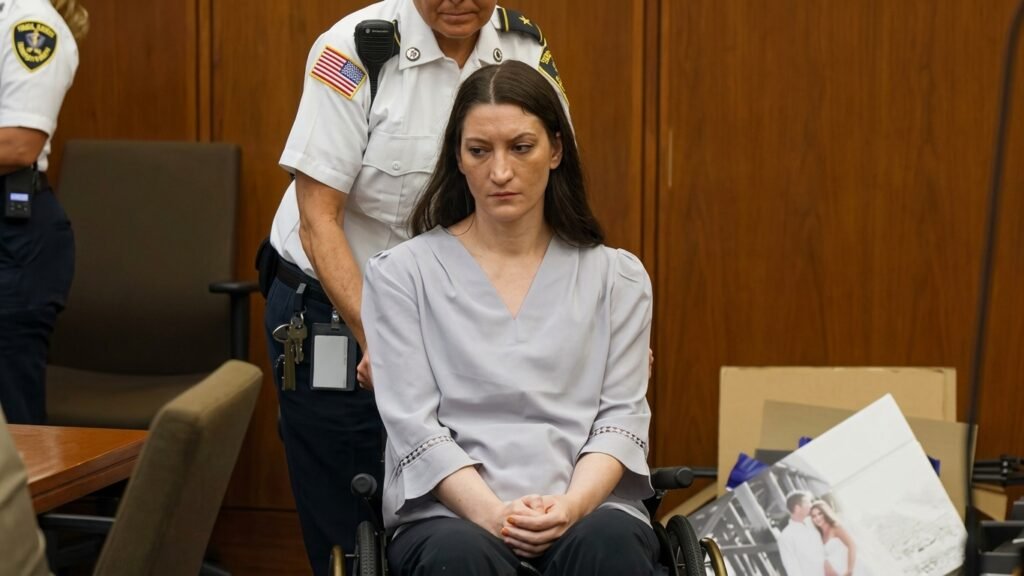
Defense attorney Kevin Reddington argued the opposite: that Clancy was in the grip of a psychiatric crisis, including postpartum psychosis, at the time of the killings, and that a regimen of roughly 13 different psychiatric medications had worsened her condition to the point of “homicidal ideation” as her attorney has previously described it.
Patrick Clancy testified during the trial. His account mattered to both sides. Prosecutors pointed to his description of Lindsay functioning normally in the days before the killings. The defense pointed to his description of her monthslong psychological decline following Callan’s birth.
Lindsay Clancy: The Complete Timeline, Evidence & Unanswered Questions
Key Evidence and Testimony
The medical evidence was the center of the case. Court testimony indicated Clancy had received more than 30 prescriptions across roughly five months leading up to January 2023, involving numerous psychiatric drugs. The defense argued that the volume and frequency of medication changes contributed to her deterioration.

Clancy had also been a voluntary inpatient at McLean Hospital, a major psychiatric facility, shortly before the killings, and was discharged after a short stay. The defense pointed to that discharge as part of a broader argument that her treatment providers underestimated the severity of her condition. The prosecution disputed that characterization.
The 911 call Patrick made after finding the children was played for the jury and was described by those present as one of the most difficult moments of the trial. Jurors who later spoke publicly said the recording had a lasting emotional effect on them.
Expert psychiatric witnesses for both sides testified extensively, and according to the defense’s later court filing, experts called by both prosecutors and the defense agreed that Clancy suffered from a serious mental illness. Where they disagreed was on whether that illness deprived her of the legal capacity to appreciate the wrongfulness of her conduct or to control it.
The Prosecution’s Argument
The Commonwealth’s theory did not require proving that Clancy was mentally healthy. It required proving that she retained enough capacity to be held legally responsible despite whatever illness she had.

Prosecutors argued that the sequence of events on January 24, 2023, showed planning: Clancy arranged for Patrick to leave the house, killed the children while he was gone, and then attempted to take her own life. District Attorney Timothy Cruz said after the mistrial that his office believed the evidence and the law supported first-degree murder charges.
The Defense’s Argument
Reddington’s defense did not dispute that Clancy caused her children’s deaths. Instead, it argued that organized-seeming behavior does not rule out psychosis, since people experiencing a psychotic episode can still perform routine tasks while suffering delusions or hallucinations.

The defense built its case around postpartum psychosis, a rare but severe psychiatric condition distinct from more common postpartum depression, along with the medication history and the McLean Hospital stay. Reddington has also argued that Clancy may have had an undiagnosed bipolar-spectrum condition connected to the postpartum period, though that point was contested by prosecutors’ experts.
Judge Sullivan’s Role and the Jury Deadlock
The jury began deliberating in late August 2026 and spent roughly 36 hours over seven days without reaching a verdict. On more than one occasion, jurors told Judge Sullivan they were deadlocked, and each time he sent them back to keep working, at one point issuing what is known in Massachusetts as a Tuey-Rodriguez instruction urging jurors to reconsider their positions in light of each other’s views.
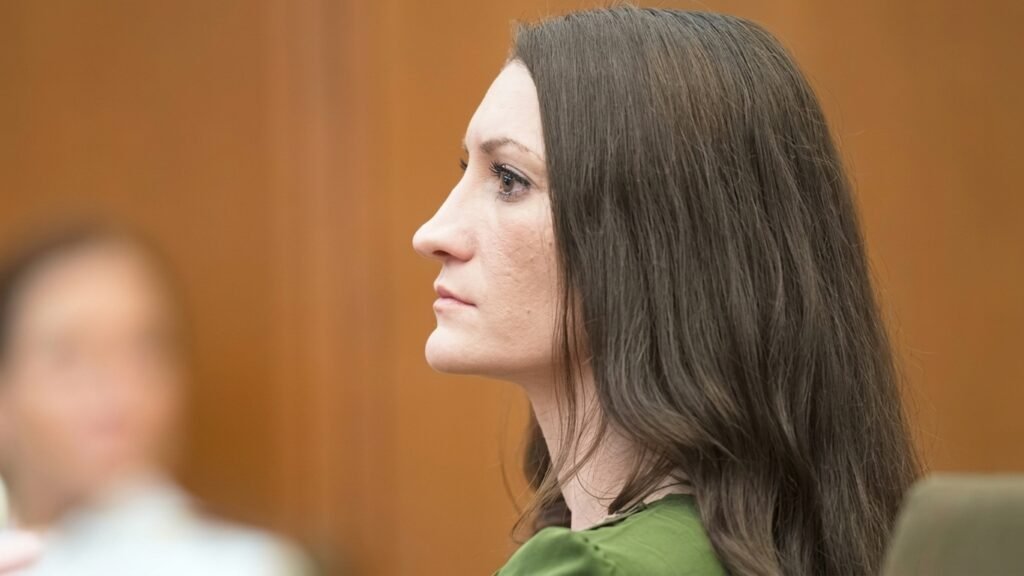
By September 3, the tension inside the jury room had become visible in court. Reddington asked Sullivan to remove a juror he said was refusing to follow instructions on reasonable doubt. Sullivan declined, saying there was no indication the juror had refused to deliberate.
The next day, the jury sent a final note saying it could not reach a unanimous decision and would not be able to. Jury notes indicated the panel, made up of nine women and three men, was split 11 to 1, with eleven jurors prepared to find Clancy not guilty by reason of lack of criminal responsibility.
Reddington asked the Massachusetts Supreme Judicial Court for an emergency order either questioning the holdout juror further or removing him from the panel. The Supreme Judicial Court denied that request. Sullivan then declared a mistrial.
The Foreperson Describes a Near Miss
Jury foreperson Ronni Carlson later told reporters that she believed, at one point, the panel had reached an acquittal. She had begun filling out the verdict forms before the holdout juror told her he still would not agree.
“He admitted he had reasonable doubt.”

Carlson and two other jurors, Paula Devlin and Kellie Farina, described the holdout as unwilling to explain his position or engage with what other jurors, including several who work as nurses, told him about the medical evidence.
A Verdict That Never Came
Because the jury never reached a unanimous decision, there is no verdict in the case. Clancy has not been convicted, and she has not been acquitted. The mistrial simply means the trial ended without resolving the central question the jury was asked to decide.
Legal Issues Explained
Massachusetts does not ask jurors to decide whether a defendant has a mental illness. It asks whether, because of a mental disease or defect, the defendant lacked substantial capacity to appreciate the wrongfulness of her conduct or to conform her conduct to the requirements of the law.
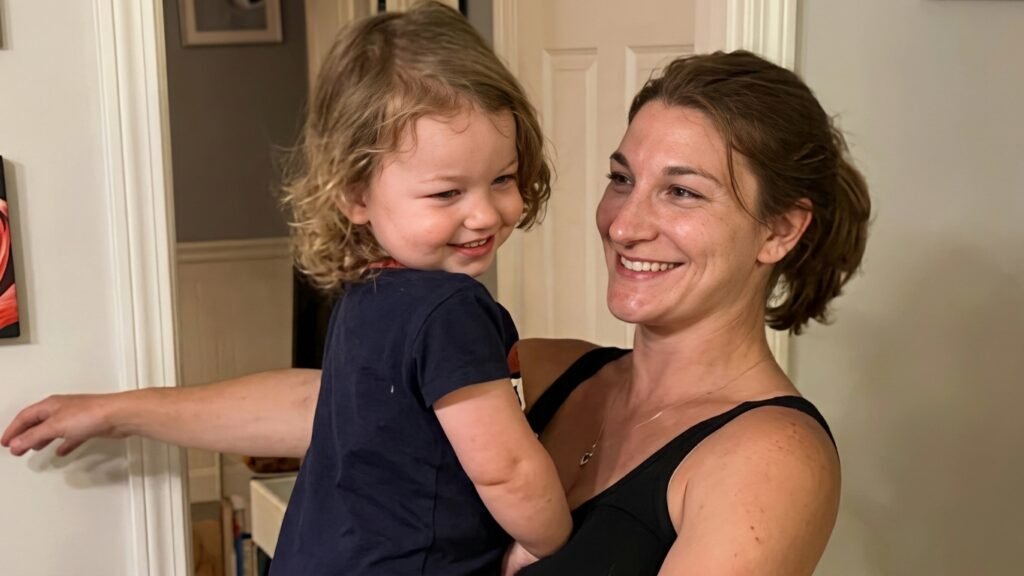
That standard matters because a diagnosis alone does not resolve the legal question. A person can suffer from depression, anxiety, or even psychosis and still be found criminally responsible if the evidence shows they retained the required capacity at the time of the offense. That distinction was the entire fight at trial.
A mistrial caused by a hung jury is also legally different from an acquittal. Double jeopardy protections generally do not bar a retrial after a genuine deadlock, because no verdict was reached in either direction.
What Happens Next
Reddington has filed two significant motions ahead of the September 29 hearing. The first is a renewed motion under Massachusetts Rule of Criminal Procedure 25(b)(2), asking Judge Sullivan to enter a required finding of not guilty by reason of lack of criminal responsibility on each count, arguing the prosecution’s evidence was legally insufficient to prove Clancy retained criminal responsibility.

The second is a motion to dismiss on double jeopardy grounds, arguing there was no “manifest necessity” for declaring a mistrial and that Sullivan should have questioned or removed the holdout juror instead. Legal analysts who have reviewed the filing have described it as a long-shot argument, since courts are generally reluctant to second-guess a trial judge’s finding of a genuine deadlock.
District Attorney Cruz has said he will not decide quickly whether to seek a retrial. Prosecutors indicated in court after the mistrial that they would prefer to retry the case later this fall, though no trial date has been set.
Current Case Status
As of this writing, Lindsay Clancy remains charged with three counts of first-degree murder. She is being held at a psychiatric facility, Tewksbury Hospital, where she has remained throughout the proceedings.
No trial date for a potential retrial has been scheduled. The September 29 hearing will address the defense’s pending motions, and the outcome of that hearing will shape whether the case proceeds to a second trial, ends in a court-ordered finding, or moves toward a negotiated resolution.

Separately, both Lindsay Clancy and Patrick Clancy have filed civil lawsuits against medical providers who treated Lindsay before the killings, alleging negligent psychiatric care and medication management. Those lawsuits are proceeding independently of the criminal case and involve a different legal standard than the criminal charges.
Frequently Asked Questions
What is the Lindsay Clancy case about? Lindsay Clancy is charged with first-degree murder in the deaths of her three children, Cora, Dawson, and Callan, at the family’s Duxbury home in January 2023. Her defense argues she was not criminally responsible due to postpartum psychosis and medication effects.
Was Lindsay Clancy found guilty or not guilty? Neither. Her 2026 trial ended in a mistrial after the jury could not reach a unanimous verdict. No conviction or acquittal has occurred.
Why did the jury deadlock? Jury notes indicated 11 of 12 jurors were prepared to find Clancy not guilty by reason of lack of criminal responsibility, while one juror would not agree, resulting in a hung jury.
Does a mistrial mean Lindsay Clancy is free? No. Clancy remains charged with murder and is being held at a psychiatric facility while the court decides on next steps.
Can prosecutors retry Lindsay Clancy? Generally, yes. A mistrial from a deadlocked jury does not typically bar a retrial, though Clancy’s defense has filed a motion arguing that a retrial should not be allowed in this case.
What is postpartum psychosis? It is a rare and severe psychiatric condition distinct from postpartum depression, involving symptoms such as hallucinations, delusions, and a loss of touch with reality. The defense argued Clancy was experiencing this condition at the time of the killings.
What happens at the September 29 hearing? Judge Sullivan is expected to hear arguments on the defense’s motion for a required finding of not guilty and its separate motion to dismiss the case on double jeopardy grounds.
What were the original charges against Lindsay Clancy? She was originally charged with three counts of murder and three counts of strangulation. Prosecutors dropped the strangulation charges in July 2026 as duplicative ahead of trial.
Conclusion
The mistrial did not resolve the question at the heart of the Lindsay Clancy case. It only confirmed that eleven of twelve jurors could not convince a single holdout, and that the legal line between severe mental illness and criminal responsibility remains as difficult to draw in this case as it is in the law generally.
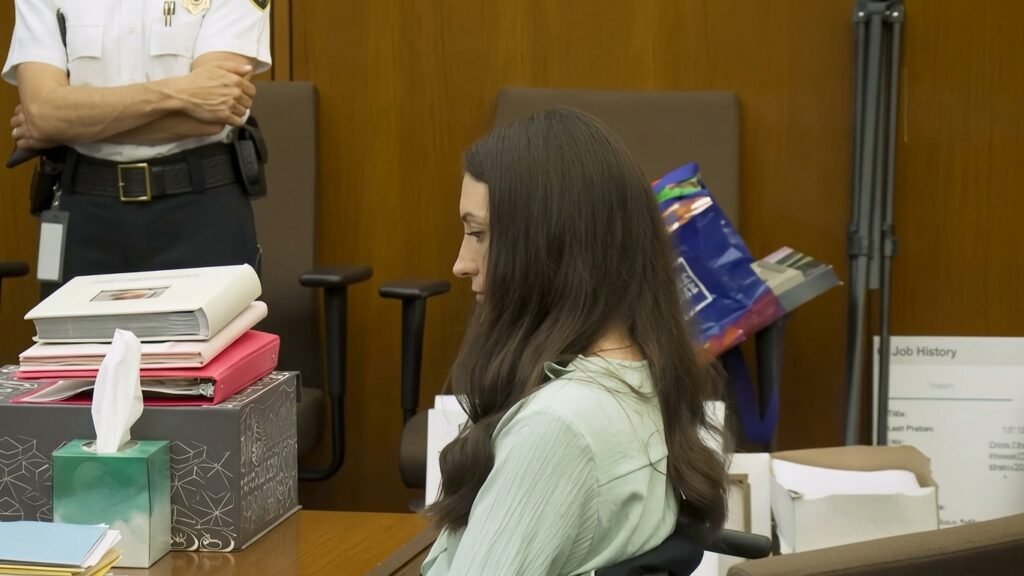
What happens on September 29 will determine whether that question is decided in a courtroom a second time, resolved by a judge’s ruling, or settled through negotiation. For now, the case that began with the deaths of three children in a Duxbury basement in January 2023 remains exactly where it was before the trial started: unresolved.