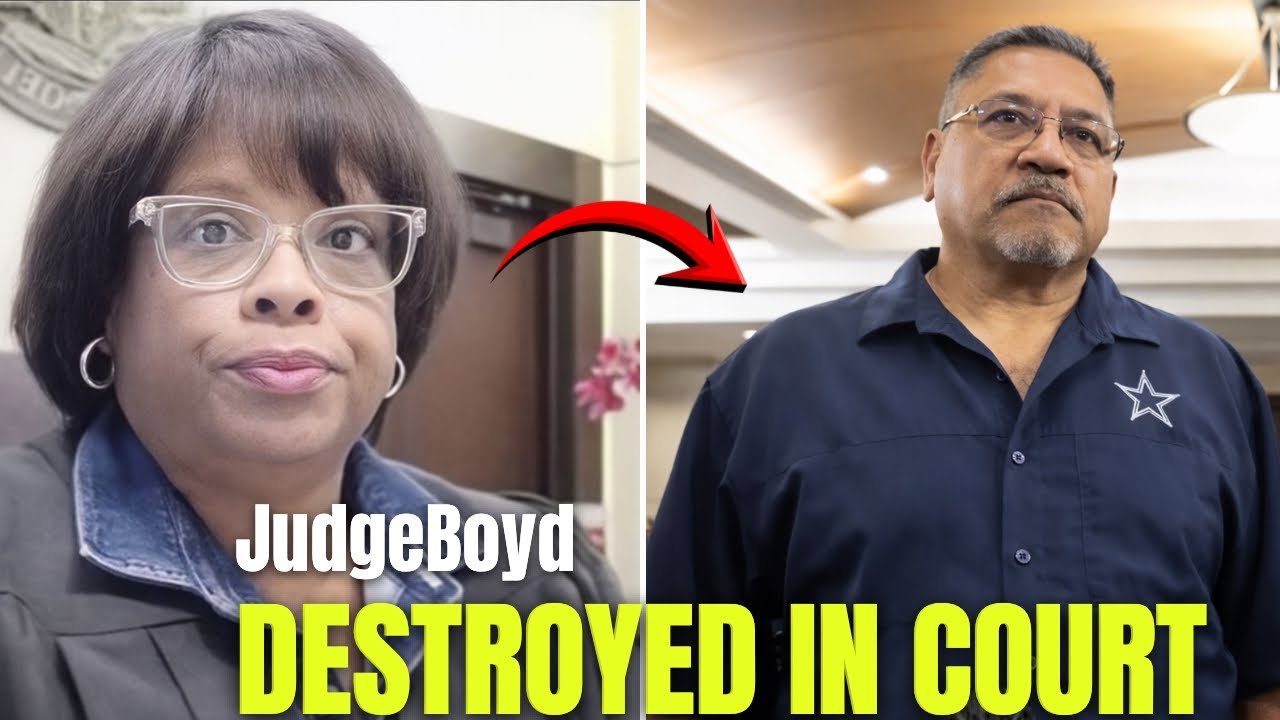
There is a thin line between transparency and spectacle in a court of law. One sits at the heart of democracy. The other threatens it. The story of Judge Stephanie Boyd of San Antonio, Texas walks that line, and ultimately, according to the Texas State Commission on Judicial Conduct, crossed it.
This is not just a story about a judge and a YouTube channel. It is a story about what happens when the ancient institution of a courtroom collides with the attention economy of the internet, and what the law says when those two worlds stop playing nicely together.
Where Transparency Became Something Else
Judge Boyd livestreamed her proceedings, hosted a book club with viewers, and let an online audience post comments in real time as defendants stood before her. Texas DWI Site
Let that settle for a moment. While a person is standing before a judge, possibly hearing the outcome of a criminal case that will determine the next twenty years of their life, strangers on the internet are typing their reactions in a live comment box. They are judging the defendant. They are judging the defense attorneys. And they are doing so with no legal training, no knowledge of the full facts, and no accountability whatsoever.
The commission found that viewers were allowed to leave comments and messages in real time about proceedings and participants. News4SanAntonio
This is the moment where transparency curdled, to borrow a phrase from legal observers, into something more troubling. A livestream that informs the public is one thing. A live comment section that invites the public to react to a defendant in real time, while the case is still being decided, is another thing entirely.
The Complaints from Defense Attorneys
Defense attorneys started noticing something deeply uncomfortable. Their clients, people who are legally presumed innocent until proven guilty, were being targeted online. Not just criticized in general public discourse, but actively identified, mocked, and subjected to abusive commentary while standing in the middle of active court proceedings.
Defense attorneys complained to KSAT, and in at least one formal complaint to the State Commission on Judicial Conduct, that Judge Boyd enabling commenters had subjected them and their clients to be targeted with abusive and disparaging remarks from people watching online. KSAT
Robert Featherston, a veteran San Antonio defense attorney, took the rare step of filing a formal motion asking Judge Boyd to shut the channel down entirely. He argued that recording court proceedings and leaving them online tainted the judicial process and could lead to chaos, especially if jury members ignored the judge’s order not to look at anything on media. AbusiveDiscretion
Another defense attorney, Alex Scharff, raised similar concerns. He expressed worry that jurors and witnesses may access outside media, including Boyd’s YouTube channel, and read what commenters think should happen, which could jeopardize natural trial outcomes. AbusiveDiscretion
These are not minor procedural gripes. These are constitutional alarm bells. The Sixth Amendment guarantees defendants the right to a fair trial. When the jury pool, or the witnesses, or even a victim’s family can read what hundreds of internet commenters think should happen before the verdict is reached, that right is in serious jeopardy.
Three Cases Removed from Her Courtroom
The fallout was swift in the legal community. An administrative judge granted recusals in three felony cases being heard by Judge Boyd, following complaints about her decision to stream courtroom proceedings. The recusals granted by visiting Judge Sid Harle moved future proceedings in an injury to a child causing serious bodily injury case and two indecency with a child cases out of Judge Boyd’s courtroom. KSAT
Read that again. Cases involving child victims were removed from her court. That is not a slap on the wrist. That is a significant judicial intervention that signals how seriously the broader legal system viewed what was happening in that courtroom.
When the Judge Entered the Negotiation
Beyond the YouTube controversy, investigators focused on a specific courtroom moment that became central to the formal proceedings against Judge Boyd. It happened on July 6, 2023, in the case of State of Texas v. Willberth Villamil.
After rejecting a plea agreement submitted by the parties and being informed that Villamil was withdrawing his plea, Boyd improperly injected herself into the plea bargaining process by asking if Villamil was willing to accept a 20-year prison sentence offered by the court. The commission also said Boyd remarked that the case against Villamil was a life-sentence worthy case. News4SanAntonio
This is a significant legal problem. Plea bargaining is a negotiation between the prosecution and the defense. A judge’s role in that process is strictly limited. When a judge steps into those negotiations and starts suggesting sentence numbers, or signals how she views the seriousness of a case before it has been properly adjudicated, the neutrality of the bench is compromised. The defendant now knows what the judge thinks. That knowledge can pressure a defendant into a plea, or undermine trust in the impartiality of the proceedings entirely.
The Commission’s Findings: A Formal Public Warning
On June 3, 2026, the Texas State Commission on Judicial Conduct made its findings official. Criminal District Court Judge Stephanie Boyd was issued a public warning, finding that her conduct in multiple cases and on her court’s YouTube channel violated judicial standards. KSAT
The commission’s conclusions were pointed and comprehensive. The commission found Boyd failed to maintain professional competence in the law, failed to be patient and courteous toward defendants, performed judicial duties with bias or prejudice, and made public comments about pending or impending proceedings in a manner that could suggest how she might rule in a case. KSAT
The overall determination was stark. The commission determined the conduct constituted willful and persistent behavior inconsistent with the proper performance of judicial duties and cast public discredit on the judiciary and administration of justice. KSAT
A public warning is a formal sanction that lands on a judge’s permanent disciplinary record. It does not, by itself, remove a judge from the bench. But it is far from nothing. It is a permanent mark. It is a public record that this judge, in this court, crossed lines that judicial ethics require every judge to respect. Texas DWI Site
What Judge Boyd Said in Her Defense
Judge Boyd did not stay silent. In her sworn response to the commission, she maintained that her intentions were rooted in transparency and public access to justice. She stated she has never reviewed or responded to viewers’ comments or messages during proceedings. News4SanAntonio
There is something genuinely complicated here. The instinct to open courtrooms to the public, to let people see how criminal justice actually works, is not a bad one. Courts that operate in darkness invite corruption. Judges who are invisible to the public are less accountable. The idea of livestreaming proceedings connects to real democratic values.
But good intentions do not automatically produce good outcomes. The road between transparency and trial contamination, it turns out, can be shorter than it looks.
The Bigger Legal Question This Case Raises
What Judge Boyd’s case really forces us to think about is a question that courts, legal scholars, and lawmakers are going to be wrestling with for years: where exactly does courtroom transparency end and due process harm begin?
Social media has rewritten our understanding of public access. Forty years ago, allowing the public to observe a trial meant a few seats in the gallery. Today, it can mean a live comments section with thousands of people opining in real time, potentially influencing witnesses, jurors, and even the defendant’s willingness to testify.
Canon 3B(10) of the Texas Code of Judicial Conduct bars a judge from public comment on a pending or impending case in a way that signals a probable decision, and that canon exists for exactly this reason. Courts depend on the perception of impartiality as much as impartiality itself. When a judge comments, even subtly, about how serious a case is, or allows an online audience to do the same without restraint, that perception erodes. ABA Journal
Where Things Stand Now
Judge Boyd lost her latest bid to remain on the bench through the Democratic primary, and her current term ends at the end of 2026. The public warning will follow her professional record regardless of what comes next. KSAT
The three felony cases removed from her courtroom will proceed before other judges. The defendants in those cases, including those involving allegations of crimes against children, will have their matters heard in a courtroom without a live comment section weighing in on their fates.
And the 187th Criminal District Court YouTube channel stands as a case study that law schools will likely use for years: a vivid, real-world example of what happens when transparency, technology, and judicial ethics collide without a clear framework to guide them.
A Final Thought from the Gallery
Courts are not entertainment. They are not content. They are the place where the full weight of the state meets the full vulnerability of a human being, and where the outcome can mean freedom or decades behind bars. That gravity deserves protection.
Judge Boyd opened a door that she believed would bring people closer to justice. What the commission found was that the door, left wide open without limits, let something in that the law could not permit. That is a lesson worth understanding, not just for judges, but for anyone who believes that more access is always, automatically, better.
Sometimes the most powerful thing a courtroom can offer is not a camera. It is the slow, careful, protected silence in which justice can actually be done.