
Long before she became a household name in syndicated television, Judge Karen was already changing lives in a Miami courtroom. Today, millions of viewers know her as the no-nonsense arbitrator in the burgundy robe. Fewer know the full story of how she got there — the years as a public defender, the historic judicial election, and the personal losses that shaped her sense of justice.
Judge Karen, born Karen Mills-Francis, built her reputation on two very different stages. First, as a twice-elected Miami-Dade County judge known for fairness and compassion. Second, as the host of three separate courtroom television shows that brought her blend of tough love and empathy into homes across America.
This article covers everything people search for when they look up Judge Karen: her age and background, her education, her legal career before television, her rise to fame, her family life, and what is publicly known about her net worth. Wherever verified information is limited, that will be stated clearly rather than guessed at.
Quick Facts Table
| Category | Details |
|---|---|
| Full Name | Karen Mills-Francis |
| Popular Name | Judge Karen |
| Profession | Former county court judge, television personality, author, public speaker |
| Date of Birth | Sources commonly cite August 11, 1960, though this date is not confirmed by an official biography and should be treated as unverified |
| Age | Mid-60s, based on the commonly cited birth year (unverified) |
| Birthplace | Miami / Miami Beach, Florida (sources vary on the exact city) |
| Nationality | American |
| Education | Bowdoin College (undergraduate); Levin College of Law, University of Florida (J.D., 1987) |
| Occupation | Judge (retired from the bench), TV arbitrator, author |
| Years Active | Legal career from the late 1980s; television career from 2008 to present |
| Television Shows | Judge Karen (2008–09), Judge Karen’s Court (2009–), Supreme Justice with Judge Karen |
| Spouse | Publicly reported as a widow; her late husband was Jamaican. Beyond that, publicly available information regarding her marital history remains limited |
| Children | Has fostered and taken in children, including an 11-year-old Jamaican foster child; details on any biological children are not publicly confirmed |
| Estimated Net Worth | Various outlets estimate figures ranging from roughly $5 million to $20 million; none of these figures are independently verified |
| Known For | Judge Karen, Judge Karen’s Court, advocacy for foster children and domestic violence survivors |
Early Life and Background
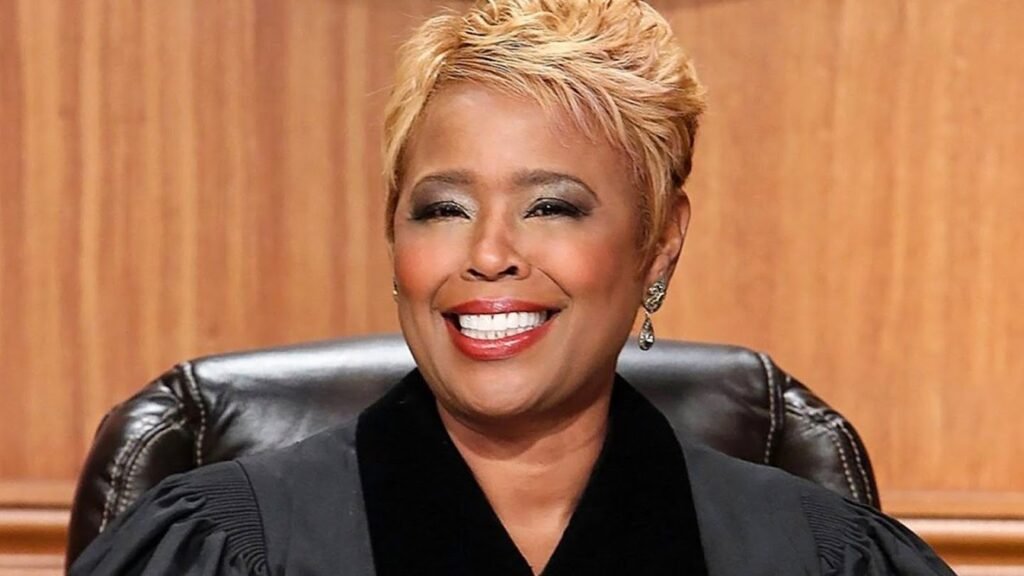
Judge Karen was raised in the Miami area of Florida, though different sources place her childhood specifically in Miami Beach or in Miami proper. <cite index=”3-1″>She was the oldest of five children</cite> in a household that valued education and hard work.
From an early age, she showed the kind of drive that would later define her legal and television career. <cite index=”2-1″>She graduated as valedictorian of her high school class</cite>, a distinction that hinted at the discipline and ambition that would carry her through law school and, eventually, an elected judgeship.
Community mattered deeply to her family. That grounding in service and responsibility to others would later resurface again and again — first in her choice of law as a career, then in the causes she championed from the bench, and finally in the foster children she welcomed into her own home.
Publicly available information regarding the specifics of her childhood — such as her parents’ occupations or early family struggles — remains limited. What is well documented is the trajectory that followed: an academically gifted student who turned that promise into a full scholarship at one of the country’s top liberal arts colleges.
Education and Academic Journey
Judge Karen’s academic record is one of the best-documented parts of her biography, and it explains a great deal about how she approached both her legal career and her television persona.
<cite index=”2-1″>She completed her undergraduate education at Bowdoin College in Maine on a full scholarship, and she spent summers studying at the University of Wisconsin.</cite> Leaving Miami for a small liberal arts college in New England was a significant leap, both geographically and culturally, for a young woman from South Florida — and it speaks to the scale of the opportunity the scholarship represented.
After finishing her undergraduate studies, she did not go straight into law. <cite index=”2-1″>She first worked in the public welfare sector, in areas such as job training and helping welfare recipients find employment.</cite> That hands-on experience with people navigating difficult circumstances would later shape her approach to the law — and it’s often cited as the reason she eventually decided to pursue a legal career in the first place.
<cite index=”2-1″>She graduated from the Levin College of Law at the University of Florida in 1987</cite>, earning her Juris Doctor and setting the stage for more than a decade of legal practice before she ever stepped in front of a television camera.
Legal Career Before Television
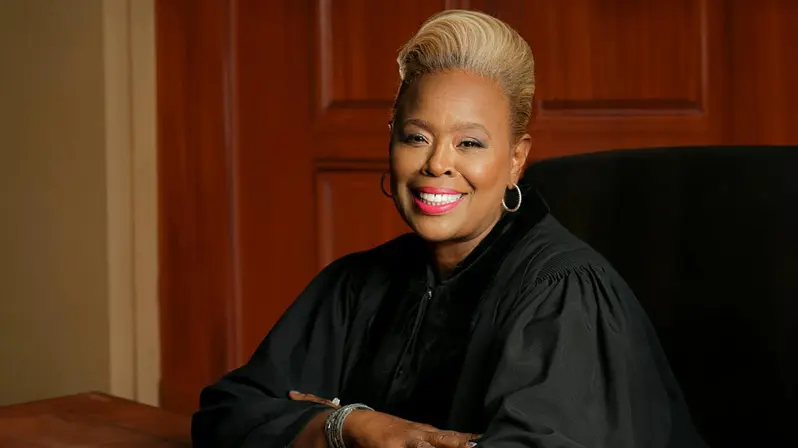
Judge Karen’s legal career is the foundation of her entire public identity — and it’s a career built on public service, not private wealth.
<cite index=”3-1″>She practiced criminal defense law for thirteen years, both in private practice and as a public defender.</cite> Working inside the Office of the Public Defender exposed her directly to defendants who often couldn’t afford legal representation, and by several accounts, her time in the juvenile division of that office had a lasting impact on her priorities as a judge.
<cite index=”2-1″>In 1998, she became a Traffic Magistrate, hearing non-criminal traffic cases</cite> — a role that gave her a first taste of presiding over a courtroom rather than arguing inside one.
That taste was enough. <cite index=”2-1″>Driven by the lack of diversity in the court system, she decided to run for a judgeship in 2000, winning her first election by defeating a longtime incumbent and becoming the second Black woman to serve on the bench in Miami-Dade County.</cite> It was a significant political and cultural milestone, achieved by ousting an entrenched incumbent rather than simply filling an open seat.
<cite index=”3-1″>She went on to be elected twice as a Miami-Dade County Judge.</cite> During her time on the bench, she became known for two consistent priorities: protecting children caught up in the legal system, and taking domestic violence cases seriously. <cite index=”2-1″>She became an ardent backer of children’s advocacy programs and domestic violence prevention, regularly calling on lawyers to act as guardians for children in families affected by domestic violence.</cite>
Her commitment to those causes went beyond the courtroom. <cite index=”2-1″>She became a foster mother to a child she first encountered in her own court, and over the years she has repeatedly opened her home to people in need.</cite> Few sitting judges take that step, and it became a defining part of her public story once she moved to television.
By the mid-2000s, Judge Karen had spent nearly two decades inside Florida’s legal system — first defending the accused, then presiding over cases with a reputation for fairness mixed with genuine empathy. That combination is exactly what television producers came looking for.
Rise to Television Fame

<cite index=”2-1″>In April 2008, Judge Karen stepped down from the bench to bring her passion for the law and her desire to help others into homes across America as the host of a new syndicated series, Judge Karen.</cite> Leaving a stable, elected judgeship for the uncertainty of first-run syndication was a real gamble — but it paid off, positioning her among a wave of court shows that dominated daytime television in the 2000s.
<cite index=”5-1″>Her show launched in first-run syndication, debuting on September 8, 2008, in 48 of the top 50 U.S. markets.</cite> That kind of distribution meant near-instant national visibility, putting her in the same conversation as established courtroom hosts like Judge Judy.
What set her apart wasn’t just her background as an actual elected judge — it was her presentation. <cite index=”5-1″>Rather than wearing the traditional black judicial robe, Mills-Francis wore a burgundy red robe instead, a choice that became a signature part of her on-screen identity.</cite> <cite index=”5-1″>The show’s opening sequence captured her presiding over cases while an announcer described her as tough, fair, and caring.</cite>
She also built in features that differentiated her courtroom from the crowded field of daytime arbitration shows. <cite index=”5-1″>She permitted litigants to cross-examine witnesses, and each episode closed with a segment called “Ask Judge Karen,” in which she answered videotaped questions submitted by viewers.</cite>
Her audience appeal came from a mix of authority and warmth. Viewers weren’t just watching a TV personality play a judge — they were watching a real judge who had spent years inside an actual courtroom, translating that experience into an accessible, occasionally funny, often moving hour of television.
Judge Karen Television Shows
Judge Karen’s television career spans three distinct series, each building on the reputation established by the last.
Judge Karen (2008–2009): Her debut series and the one that introduced her to a national audience. <cite index=”5-1″>Produced and distributed by Sony Pictures Television and filmed at the Chelsea Studios in New York City</cite>, the show ran for a single season. <cite index=”5-1″>It was announced on January 10, 2009, that the show would not be renewed for a second season</cite>, though reruns later found a home on BET and TV One.
Judge Karen’s Court (2009–): <cite index=”5-1″>On November 16, 2009, Litton Entertainment announced it would bring Mills-Francis back to television with Judge Karen’s Court</cite>. She kept the format that had worked for her — including, at least initially, the unconventional burgundy robe — while continuing to build her brand as one of the genre’s most respected hosts.
Supreme Justice with Judge Karen: <cite index=”5-1″>In November 2012, Entertainment Studios announced it would launch Supreme Justice with Judge Karen as its fourth court show, premiering in the fall of 2013.</cite> This time, <cite index=”5-1″>she moved away from the burgundy robe and appeared in a traditional black judicial robe.</cite>
Beyond her own shows, IMDb credits her with additional television appearances, including a stint on the celebrity edition of Who Wants to Be a Millionaire, showing her reach extended into mainstream entertainment television, not just legal programming.
Interestingly, her wardrobe choice left a mark on the broader genre. <cite index=”5-1″>Judy Sheindlin later adopted a similar burgundy-colored robe for her streaming series Judy Justice, a move that traces back to the robe Mills-Francis originally debuted on Judge Karen.</cite> That’s a rare example of a courtroom-show host influencing the visual language of the entire genre.
Judge Karen’s Courtroom Style
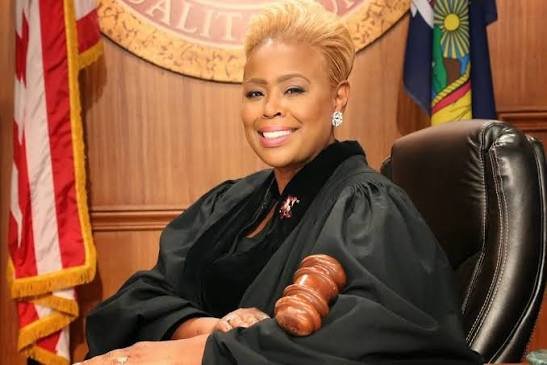
What made Judge Karen stand out in an already crowded field of TV arbitrators wasn’t volume or theatrics — it was substance backed by real judicial experience.
Her communication style leaned direct but rarely cruel. She built her reputation on the idea that fairness and compassion aren’t opposites; a judge can hold people accountable while still caring about the circumstances that brought them to court. That philosophy is captured neatly in her show’s own tagline, which described her as tough, fair, and caring.
Her decision-making approach reflected years of real courtroom experience rather than a made-for-TV persona. Allowing litigants to cross-examine witnesses — an unusual choice for the genre — gave her show a more procedurally realistic feel than many of its competitors, while still keeping episodes tight enough for syndicated television.
Viewers responded to the sense that they were watching someone who had actually lived the job. She wasn’t performing legal knowledge; she was applying thirteen years of criminal defense experience and eight years on the county bench to real disputes, even in an arbitration format. That authenticity became her defining trait across all three of her shows.
Personal Life
Judge Karen has kept much of her personal life private, even as her professional life played out on national television.
<cite index=”7-1″>She was married to her late husband, who was Jamaican, and who passed away years before more recent reporting on her life.</cite> It is not publicly confirmed whether she has remarried or is currently in a relationship. Publicly available information regarding the full details of her marriage and her husband’s identity remains limited.
Family, however, has clearly remained central to her life in a broader sense. <cite index=”2-1″>She became a foster mother to a child she first met in her own courtroom</cite>, and <cite index=”7-1″>she is described as a longtime foster parent, having taken in an 11-year-old Jamaican child among others.</cite> <cite index=”2-1″>Over the years, she has repeatedly opened her home to people in need</cite>, extending the same advocacy she practiced professionally into her private life.
Outside of her legal and television work, <cite index=”2-1″>she supports multiple child advocacy programs, including the Whyspers Program for Girls, the GEMS Program for Girls, the 5000 Role Models Program, the Roving Leaders Program, and the North Miami Athletic Program for boys.</cite>
She’s also described as an avid traveler. <cite index=”2-1″>She has a particular affinity for Latin American language and culture, which has taken her on immersion Spanish-language trips to Mexico, Ecuador, and Colombia, with Argentina next on her list.</cite> <cite index=”9-1″>She also uses her public platform for child advocacy, profiling missing children on her Facebook page and lecturing around the country on family issues, particularly those affecting women and children.</cite>
Publicly available information regarding her children — whether she has any biological children in addition to the foster children she’s taken in — remains limited.
Judge Karen Net Worth
Judge Karen’s income has come from two very different careers: more than a decade as a practicing attorney and elected judge, followed by nearly two decades as a syndicated television host.
Her earnings as a judge would have followed standard Miami-Dade County judicial salary scales of the era, not private-sector legal fees. Her television income is harder to pin down. Syndicated court-show hosts are typically paid per episode, with earnings scaling alongside a show’s market reach and how many seasons it runs — factors that varied considerably across her three series, given that Judge Karen ran for one season while Judge Karen’s Court and Supreme Justice with Judge Karen had longer runs.
Beyond television, she has generated income through public speaking engagements on family law, domestic violence, and child advocacy topics, along with authorship. <cite index=”7-1″>She wrote the book “Stay in Your Lane: Judge Karen’s Guide to Living Your Best Life,”</cite> which added book sales and related speaking opportunities to her income streams.
As for a precise net worth figure, estimates online vary widely and are not independently verified. Some sources put the figure <cite index=”6-1″>at around $5 million</cite>, while others suggest <cite index=”7-1″>a broader range between $5 million and $20 million</cite>. Given that spread, and the fact that none of these figures come from a verified financial disclosure, readers should treat any specific net worth number as an estimate rather than a fact. Publicly available information regarding her precise finances remains limited.
Awards and Recognition

Judge Karen’s most significant recognition came not from an awards show but from the historic nature of her own judicial career. <cite index=”2-1″>Winning her first judicial election in 2000 by defeating a longtime incumbent made her the second Black woman to serve on the Miami-Dade County bench</cite> — a milestone that stands as one of the defining achievements of her career, regardless of her later television success.
Her later re-election to the same judgeship further cemented her standing as a respected figure within Miami’s legal community, at a time when the bench remained far less diverse than the population it served.
On the media side, her influence is best measured by longevity and industry impact rather than trophies: three separate court shows over more than a decade, a wardrobe choice that later influenced one of the genre’s biggest stars, and a body of syndicated work that reached dozens of major U.S. media markets. Publicly available information regarding any formal industry awards (Emmys, NAACP Image Awards, or similar honors) remains limited, and no verified record of such awards should be assumed.
Interesting Facts About Judge Karen
- She was the valedictorian of her high school graduating class before ever setting foot in a courtroom.
- She attended Bowdoin College in Maine on a full scholarship — a long way from her Florida roots.
- She spent summers during college studying at the University of Wisconsin.
- Before law school, she worked in public welfare, helping people find jobs and job training.
- She earned her law degree from the University of Florida’s Levin College of Law in 1987.
- She spent 13 years practicing criminal defense law, both as a public defender and in private practice.
- She won her first judicial election in 2000 by unseating a longtime incumbent.
- She became the second Black woman ever elected to the Miami-Dade County bench.
- She famously ditched the traditional black robe for a burgundy one — a choice Judy Sheindlin later borrowed for Judy Justice.
- She’s a longtime foster parent who has taken children into her own home after meeting them in her courtroom.
Legacy and Influence
Judge Karen’s legacy operates on two levels: what she achieved as an elected official, and what she represented on screen.
As a judge, her 2000 election broke real ground in a Miami legal system that had historically lacked diversity on the bench. Her advocacy for children and domestic violence survivors while in office set a tone that continued into her television work, where those same causes remained central themes.
As a television personality, she helped prove that courtroom TV could be both entertaining and grounded in genuine legal experience. Her decision to let litigants cross-examine witnesses, and her insistence on treating people with dignity even while ruling firmly, distinguished her from hosts without real judicial backgrounds. Her burgundy robe — copied years later by one of the genre’s most famous names — is a small but telling sign of how much influence she had on the format itself.
More broadly, she stands as a visible example of a woman of color who reached the bench through hard work and persistence, then used a national television platform to keep advocating for the same vulnerable populations she served as a public defender and judge. That combination of legal credibility and genuine advocacy is likely to remain her most lasting contribution to courtroom television.
Frequently Asked Questions
Who is Judge Karen? Judge Karen, whose real name is Karen Mills-Francis, is a former Miami-Dade County Court judge and public defender who became a television personality hosting several syndicated courtroom shows.
What is Judge Karen’s real name? Her full name is Karen Mills-Francis.
How old is Judge Karen? Several sources list her birth date as August 11, 1960, which would put her in her mid-60s as of 2026. This date is not confirmed through an official source, so it should be treated as an estimate.
Who is Judge Karen married to? Publicly available reports indicate she was married to a Jamaican man who has since passed away. Details about her current marital status are not publicly confirmed, so publicly available information on this remains limited.
Does Judge Karen have children? She is known as a longtime foster parent who has taken in children she encountered through her courtroom work, including an 11-year-old Jamaican foster child. Information about biological children is not publicly confirmed.
What TV shows has Judge Karen appeared in? She has hosted Judge Karen (2008–09), Judge Karen’s Court (2009–), and Supreme Justice with Judge Karen. She has also made other television appearances, including a celebrity edition of Who Wants to Be a Millionaire.
What is Judge Karen’s estimated net worth? Estimates vary widely across sources, ranging from around $5 million to as much as $20 million. None of these figures are independently verified, so they should be treated as rough public estimates rather than confirmed facts.
Was Judge Karen a real judge? Yes. She was twice elected as a Miami-Dade County Court judge in Florida, after 13 years practicing criminal defense law as both a public defender and in private practice.
What is Judge Karen famous for? She’s best known for hosting syndicated courtroom television shows, for her signature burgundy judicial robe, and for her real-world legal career and advocacy work on behalf of children and domestic violence survivors.
Conclusion
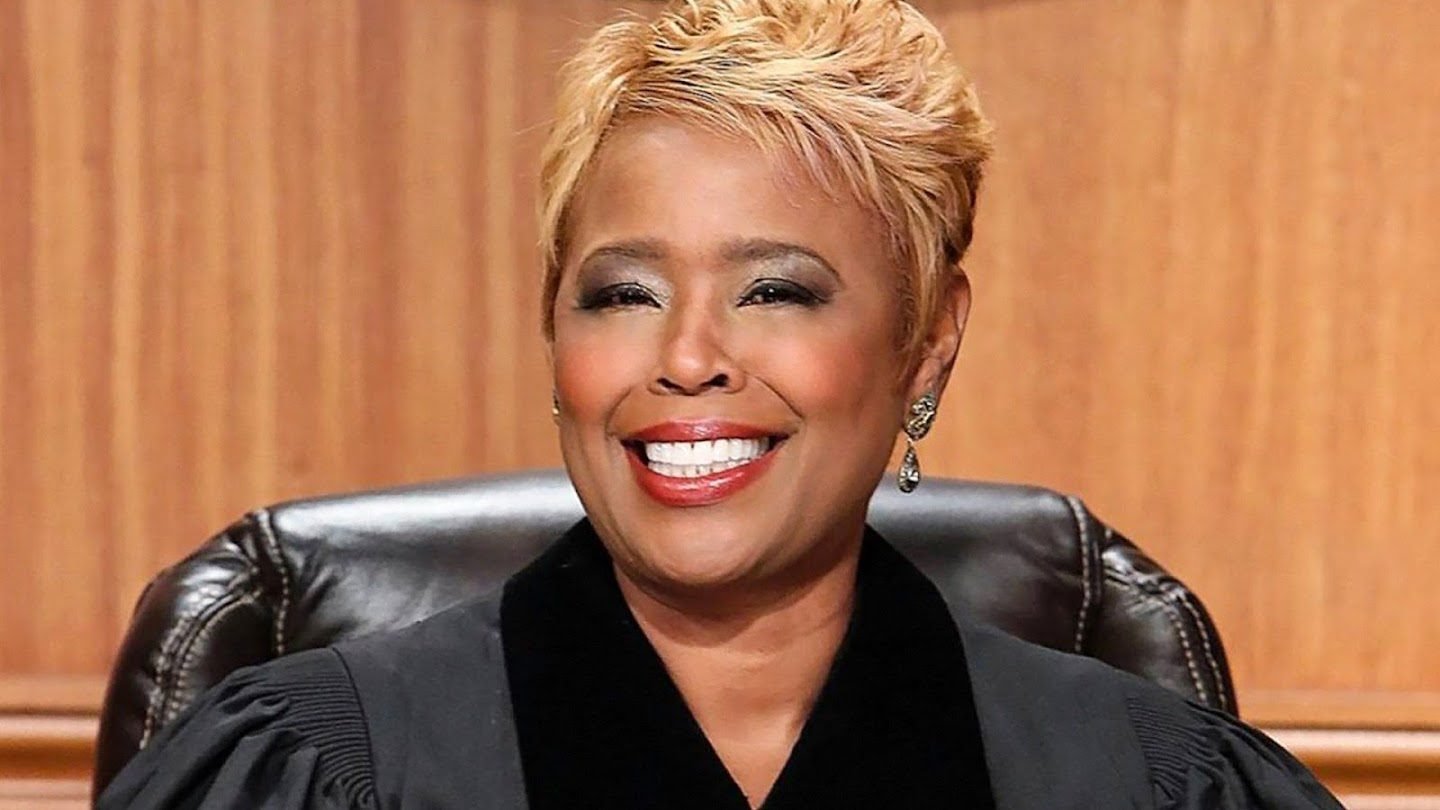
Judge Karen’s story is really two success stories layered on top of each other. First came the legal career: a valedictorian from Miami who earned a scholarship to Bowdoin, went on to law school in Florida, spent 13 years as a defense attorney, and then made history by winning election to the Miami-Dade County bench. Then came the television career, built on the credibility of that legal record — three syndicated court shows, a wardrobe choice that influenced the entire genre, and a platform she used consistently to advocate for children and domestic violence survivors.
Her personal life has stayed largely private, marked mostly by her long-standing role as a foster parent to children she’s met through her work. Her exact net worth remains unconfirmed, with estimates spanning a wide range depending on the source.
What’s clear, regardless of the unanswered details, is her influence on courtroom television and her standing as one of the genre’s most credentialed hosts — a judge first, and a TV personality second. That order, more than anything else, is what has defined her legacy.
On-Page SEO Deliverables
SEO Title: Judge Karen Biography: Age, Husband, Career, TV Shows & Net Worth
Meta Description: Judge Karen (Karen Mills-Francis) biography: her age, education, legal career, TV shows, family life, and net worth — the full story of the courtroom icon.
Suggested URL: /judge-karen-biography
10 SEO Tags:
- Judge Karen
- Karen Mills-Francis
- Judge Karen biography
- Judge Karen net worth
- Judge Karen husband
- Judge Karen TV show
- Judge Karen age
- Miami-Dade County judge
- courtroom television
- women in law
15 Semantic Keywords:
- American television judge
- courtroom personality
- TV courtroom host
- legal commentator
- television personality
- judicial career
- court show
- public speaker
- media personality
- women in law
- Miami-Dade County Court
- syndicated television
- public defender
- foster parent advocate
- domestic violence advocacy
5 Internal Linking Suggestions:
- A profile page on other TV court show hosts (e.g., Judge Judy, Judge Mathis) for comparison content
- An explainer article on “How Arbitration-Based Court Shows Work”
- A roundup piece on “Notable Black Women in the American Judiciary”
- A feature on syndicated daytime television history
- A page on domestic violence advocacy resources or organizations
5 External Authority Source Suggestions:
- Florida Bar official attorney directory profile
- Wikipedia entry on Judge Karen (the television series)
- IMDb biography page for Karen Mills-Francis
- Publisher page (Penguin Random House) for her book, “Stay in Your Lane”
- BET News profile on Judge Karen Mills-Francis
Recommended Schema Markup:
- Person Schema (name, jobTitle, alumniOf, worksFor/knowsAbout)
- Article Schema (headline, author, datePublished, description)
- FAQPage Schema (matching the FAQ section above)