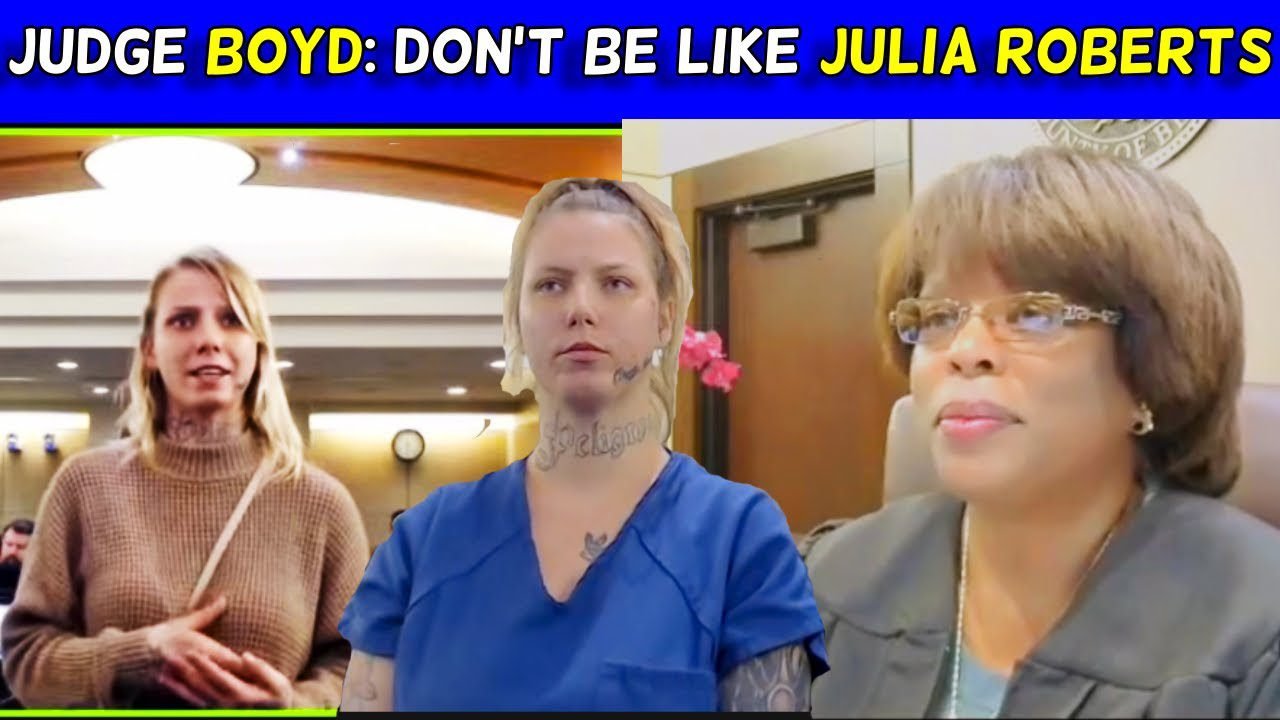
Stephanie Boyd presides over the 187th Criminal District Court in San Antonio, Texas. For several years, she has also run something no other Bexar County judge has attempted at the same scale: a YouTube channel broadcasting her own courtroom, hearing by hearing, to tens of thousands of subscribers.
The channel was provided through the Office of Court Administration, built around the idea of public transparency. Texas court proceedings are, with narrow exceptions, already open to the public. Boyd’s channel simply moved that openness onto the internet, where anyone could watch a docket call, a plea hearing, or a probation revocation from a phone screen.
That is the framing Boyd herself has offered when the channel has drawn criticism. She has characterized the pushback against her livestreams as overstated, and has said her rulings come solely from the evidence and the law in front of her.
But a courtroom broadcast is not a passive window. Boyd’s channel allowed live comments and messages to run underneath active proceedings, meaning viewers could react in real time to defendants, attorneys, and witnesses while a case was still being decided. That single design choice is what eventually brought Boyd before the Texas State Commission on Judicial Conduct.
On June 3, 2026, the Commission issued a formal Public Warning against Boyd. It is not a removal from the bench, and it does not overturn any ruling she has made. It is, however, a permanent mark on her judicial disciplinary record, and the four-page order behind it lays out, in granular detail, exactly where the Commission believes her channel and her courtroom conduct went wrong.
The timing adds weight to the story. Boyd lost her bid for another term in the March 2026 Democratic primary, running unopposed by a Republican in a race her challenger built almost entirely around the YouTube channel. Her current term ends December 31, 2026. The Public Warning arrived a few months into her final year on the bench, closing out a controversy that first became public in 2023.
The Book Club That Blurred the Line
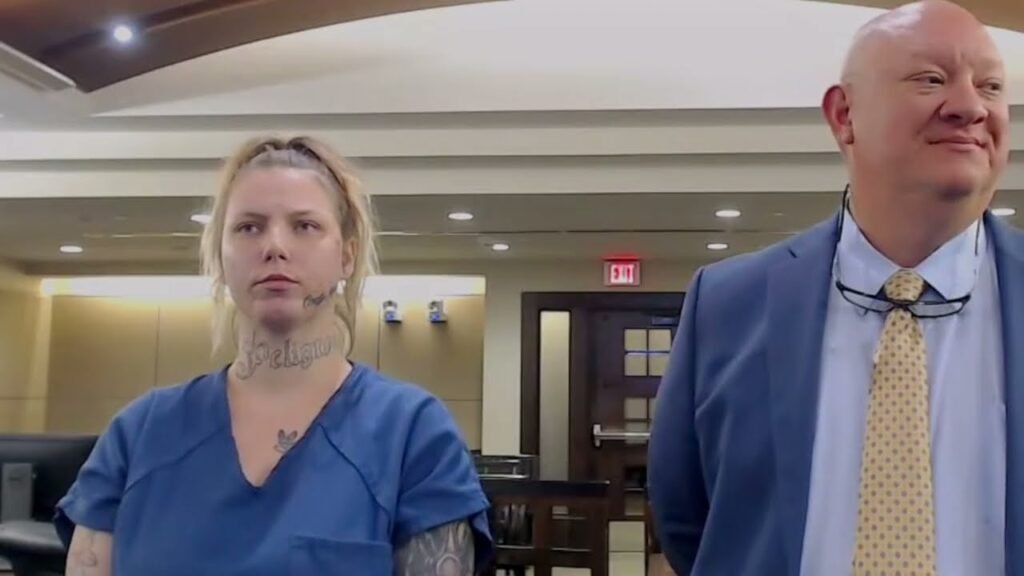
Before addressing specific hearings, the Commission’s order took aim at something less dramatic but, in its view, no less problematic: a “book club” Boyd hosted through the court’s own YouTube channel. It let Boyd interact directly with her online audience outside the context of any actual case being heard.
The Commission’s concern was not that a judge enjoys reading. It was that a court-branded platform, built with public infrastructure, had become a space for a judge to cultivate a personal following. Judges are bound by the Texas Code of Judicial Conduct to keep judicial business separate from private engagement with the public in ways that could compromise, or appear to compromise, impartiality.
Boyd told the Commission she had participated in the book club but no longer does. She confirmed, though, that she continues to livestream her proceedings. The channel itself was not the violation; the mixing of a personal fan community with the court’s identity is what drew scrutiny.
The Evidentiary Focus: The Villamil Plea Intervention
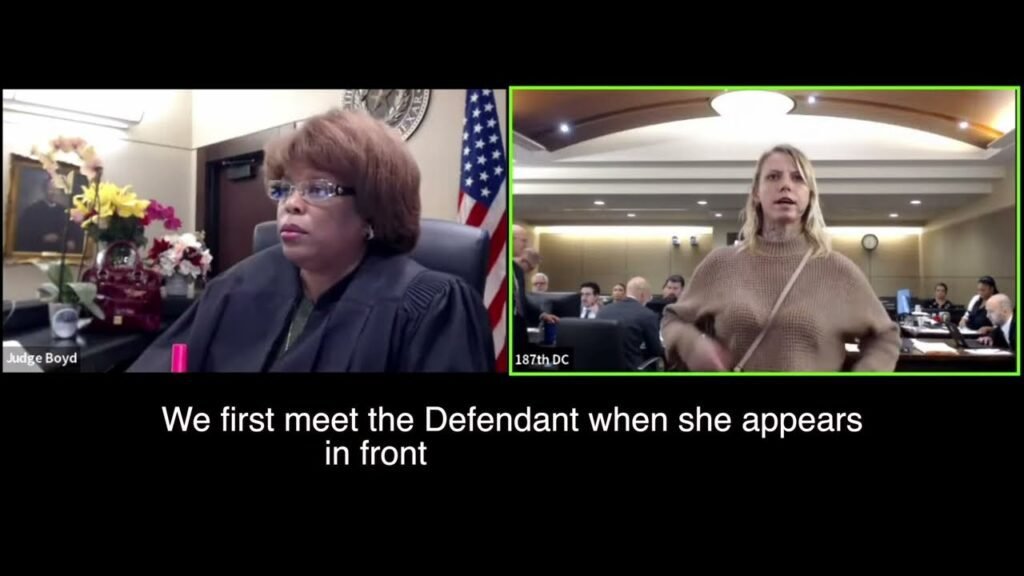
The most serious finding in the Commission’s order concerns a July 2023 hearing involving defendant Willberth Villamil, who faced an aggravated sexual assault charge. Prosecutors and Villamil’s defense had negotiated a plea agreement calling for a 15-year sentence.
According to the Commission’s findings, Boyd did not simply accept or reject that negotiated deal on the record in a routine way. She rejected the terms, described the case as “life-sentence worthy,” and then asked Villamil directly whether he would instead accept a 20-year sentence offered by the court.
That sequence matters because of what Texas judicial rules actually require of a judge sitting in a plea hearing. A judge may accept or reject a plea agreement. What a judge is not supposed to do is step into the negotiation itself, effectively counter-offering a harsher term than the one the parties reached on their own.
The Commission’s order describes this as Boyd improperly injecting herself into the plea-bargaining process. That phrase carries specific weight in judicial ethics. Plea bargaining is meant to remain a negotiation between the state and the defense; the bench’s role is to review the outcome, not author it.
Boyd’s channel had an active comment section running throughout the Villamil hearing. Commentary from viewers, some of it hostile toward the defendant, was visible in real time while the case was still open. The Commission’s order ties this directly to Canon 3B(10) of the Texas Code of Judicial Conduct, which bars a judge from making public comment on a pending case in a way that suggests a probable outcome.
Boyd, for her part, told the Commission under oath that she has never reviewed viewer comments during a hearing and that her rulings are based solely on the evidence and the law. The Commission’s finding does not require proof that she read a specific comment. The standard it applied was broader: whether the public could reasonably question whether the proceeding was actually decided in the courtroom, rather than shaped by an audience watching along.
Code Violations: “Off the Record” but On the Air
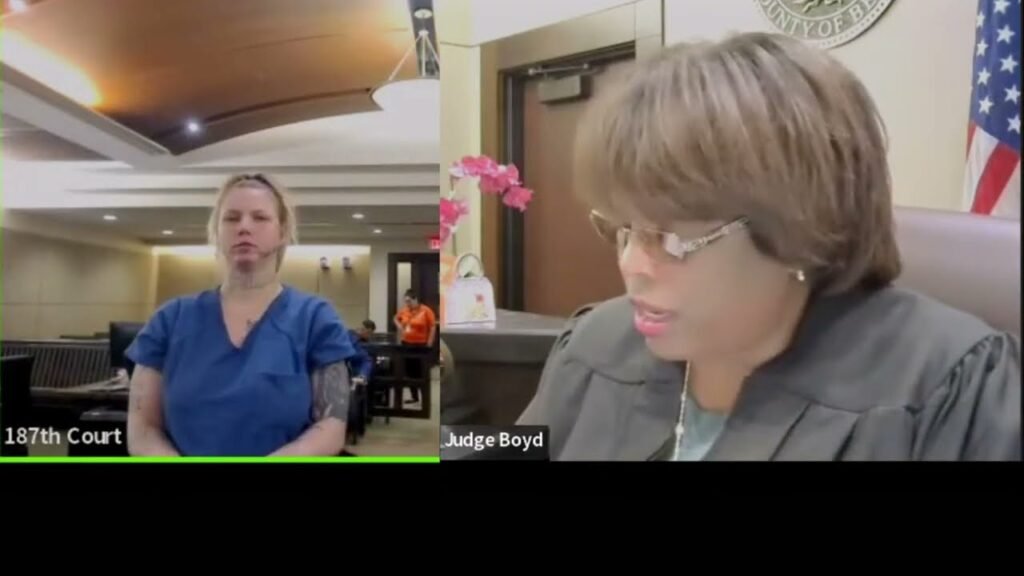
The second hearing at the center of the Commission’s warning took place in October 2024, during a probation revocation proceeding for defendant Thomas Henson. Boyd told Henson he was facing 20 years in prison. At some point in the hearing, she directed the court reporter to go “off the record.”
The official transcript stopped there. The YouTube livestream did not.
What Boyd said next, still broadcasting to her channel’s audience, is quoted directly in the Commission’s order:
“So it appears that you want to go to prison to be passed around for cigarettes or dessert. Because that’s what’s going to happen to you. Because you’re young. And they will think you are attractive at the prison.”
The phrase “off the record” describes a courtroom mechanism, not a public one. It signals to a court reporter that a comment will not become part of the official transcript, often used for brief, informal exchanges that both sides understand won’t carry legal weight. It says nothing about a public livestream running in parallel.
The Commission found that this remark reflected bias and prejudice toward Henson and failed the basic requirement that a judge remain patient, dignified, and courteous toward everyone appearing before the bench. The order does not treat the comment as an isolated lapse. It treats the mismatch between “off the record” and “still on YouTube” as evidence that Boyd understood the remark was inappropriate for the official record, yet made it publicly anyway.
In her sworn response to the Commission, Boyd said she believed Henson was not taking his charges or his probation seriously and that her comment reflected the seriousness of what he faced. The Commission’s order did not accept that explanation as justification for the specific language used.
Institutional Fallout Before the Warning
The Public Warning issued in June 2026 was not the first sign of trouble for Boyd’s YouTube courtroom. In late 2023, defense attorneys in multiple felony cases filed complaints arguing that live viewers were using the comment sections to harass defendants and, in some instances, opposing counsel, while cases were actively being litigated.
Administrative Judge Sid Harle responded by granting recusals that moved three felony cases out of Boyd’s court entirely. Some of those cases involved child victims, raising the stakes of any perceived prejudice tied to public commentary running alongside the proceedings. The recusals amounted to an acknowledgment, well before the Commission’s formal warning, that Boyd’s channel had created a real risk to the fairness of specific cases.
That episode drew local investigative coverage in San Antonio well ahead of the 2026 ruling, and it set the tone for how closely Boyd’s courtroom conduct would be watched afterward. The Villamil and Henson hearings, both cited in the Commission’s order, took place after the 2023 recusals had already flagged the underlying problem.
Boyd’s Political and Judicial Standing
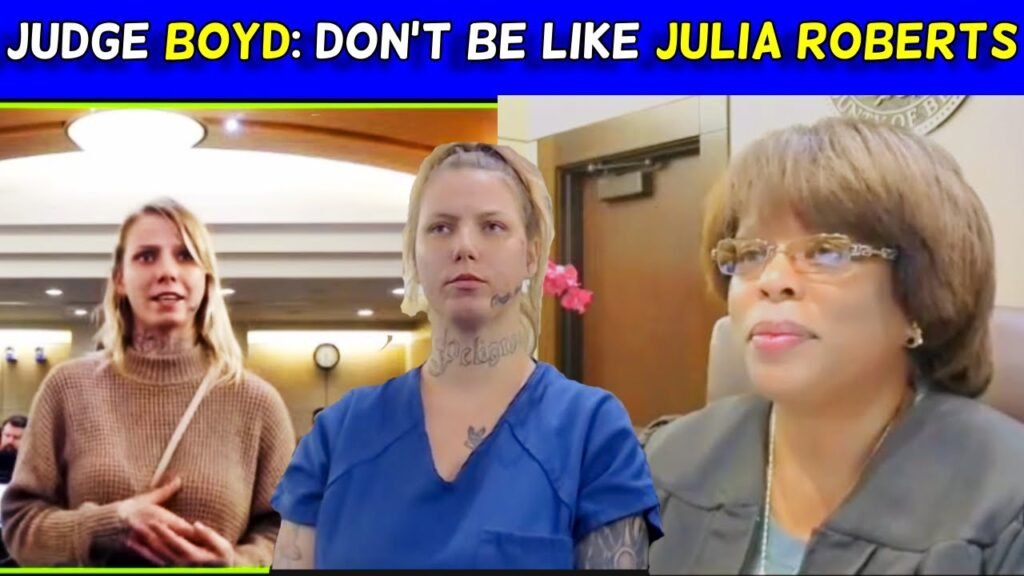
Boyd’s YouTube channel became a central issue in her bid for re-election. Her Democratic primary challenger, Stephanie Franco, built a campaign platform criticizing the livestreams directly, arguing that using courtroom proceedings, particularly those involving victims, as recurring video content undermined the dignity the process is supposed to protect for the people involved.
Franco won the March 2026 primary. Because no Republican candidate filed for the seat, that primary result effectively decided the race. Boyd’s term on the 187th Criminal District Court bench ends December 31, 2026.
Through her attorney, Boyd declined to comment on the June 2026 warning beyond saying she remains focused on fulfilling her duties to Bexar County residents through the end of her term. She continues to livestream her court’s proceedings.
What the Case Signals for Digital-Age Courts
Boyd’s case sits at an unusual intersection. Texas courts are already open by law, and video access to public proceedings is not, on its own, a violation of judicial ethics. What the Commission’s order draws out is the difference between opening a courtroom to public view and running an active, commentable, real-time audience alongside cases still being decided.
The Villamil finding illustrates the plea-bargaining boundary: a judge can review a deal, but stepping into the negotiation itself, especially with a live audience reacting to the defendant in real time, invites exactly the appearance-of-bias problem judicial conduct rules exist to prevent. The Henson finding illustrates a narrower but sharper boundary: language that a judge herself apparently understood didn’t belong on the official record still reached a public audience through a parallel broadcast.
Neither finding required proving that Boyd was actually influenced by her viewers, and neither claims she was. The Commission’s standard turned on public confidence, not provable bias. That distinction is likely to matter well beyond Bexar County, as more courts nationwide experiment with livestreaming and other judges weigh how much of a courtroom’s daily texture belongs in front of an audience that can talk back while the case is still open.
For now, Judge Stephanie Boyd remains on the bench through the end of 2026, carrying a formal Public Warning into the final months of a tenure that helped define what a livestreamed courtroom can look like, and what it can cost a sitting judge.