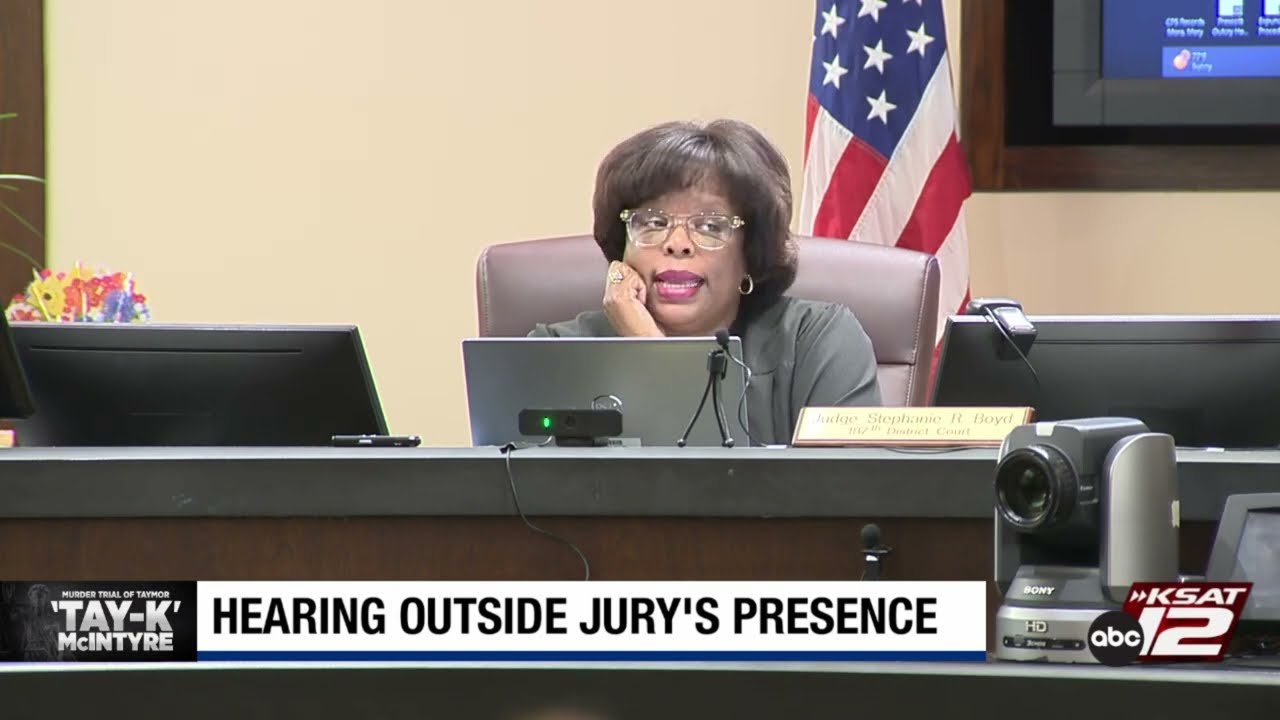
Taymor McIntyre, the rapper known as Tay-K, stood trial for capital murder in San Antonio’s 187th District Court in the spring of 2025. The case centered on the April 2017 shooting death of 23-year-old photographer Mark Anthony Saldivar in a Chick-fil-A parking lot near North Star Mall.
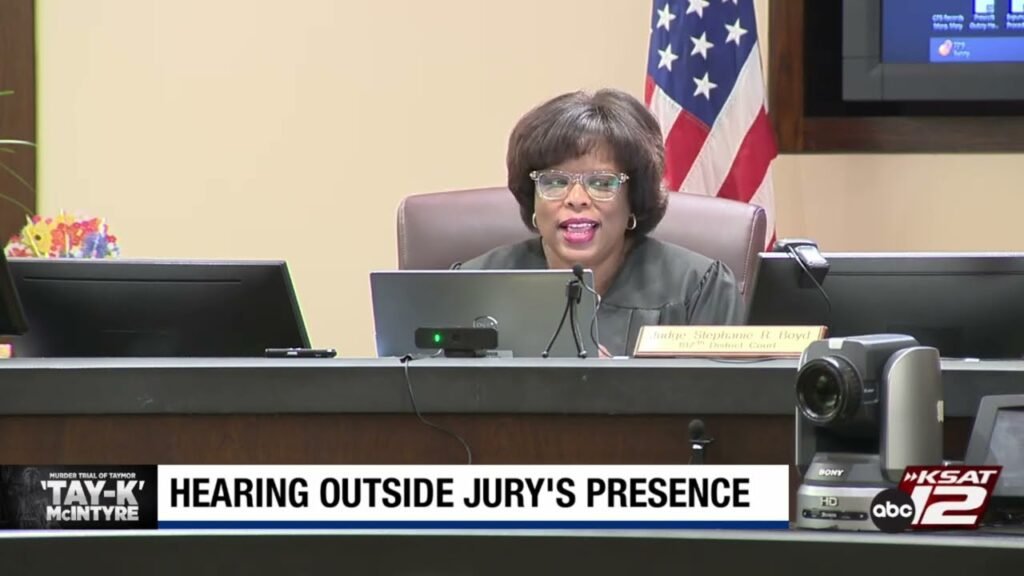
Presiding over the trial was Judge Stephanie Boyd, a jurist known in Bexar County legal circles for tight control over her courtroom. Midway through testimony, that reputation was tested directly. A defense attorney’s line of questioning crossed a line both sides had already agreed not to cross, and Boyd stopped the trial to address it in open court.
The moment did not end the case. But it offers a clear window into how a judge enforces a pretrial agreement once a party breaches it, and what options a court has short of declaring a mistrial.
Anatomy of a Legal Boundary: The Motion in Limine Explained
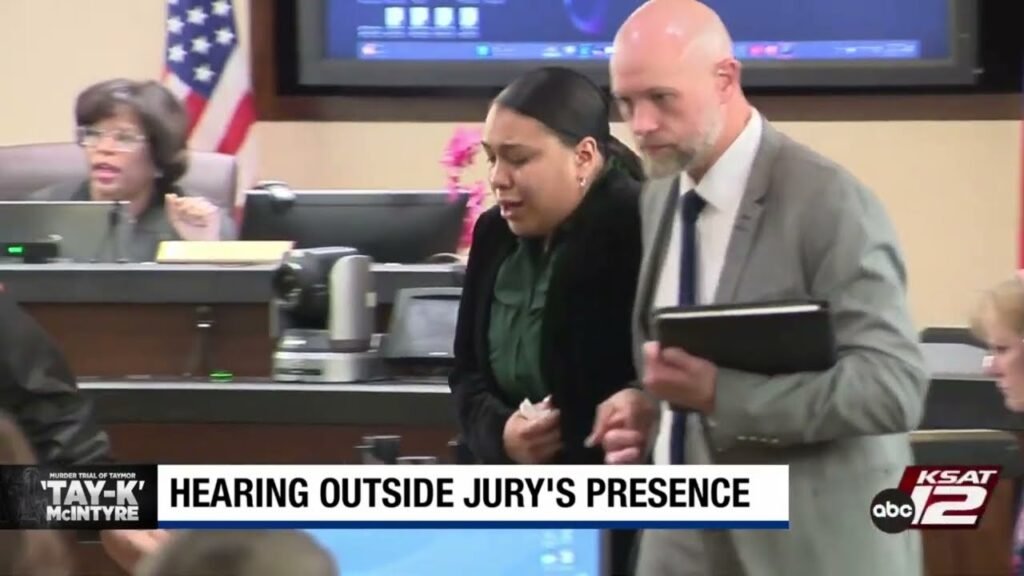
A motion in limine is a pretrial request asking a judge to bar the opposing side from raising specific evidence or accusations in front of a jury without first getting permission at the bench. It is not a permanent ban. It simply moves the decision about whether certain material comes in from the middle of a live cross-examination to a private conversation with the judge.
In McIntyre’s case, prosecutors sought and received an order covering the victim’s character. Both sides agreed to the terms. <cite index=”4-1″>The motion specified that any accusations of “crimes, wrongs or bad acts” involving Saldivar had to be raised with the judge before either side mentioned them to the jury.</cite>
The purpose of that kind of order in a case like this is straightforward. Saldivar could not testify in his own defense. A motion in limine protecting his character from unvetted allegations is meant to keep the trial focused on admissible, relevant evidence rather than unsubstantiated claims that could prejudice a jury before a judge has ruled on their relevance.
The Violation and the Bench Rebuke
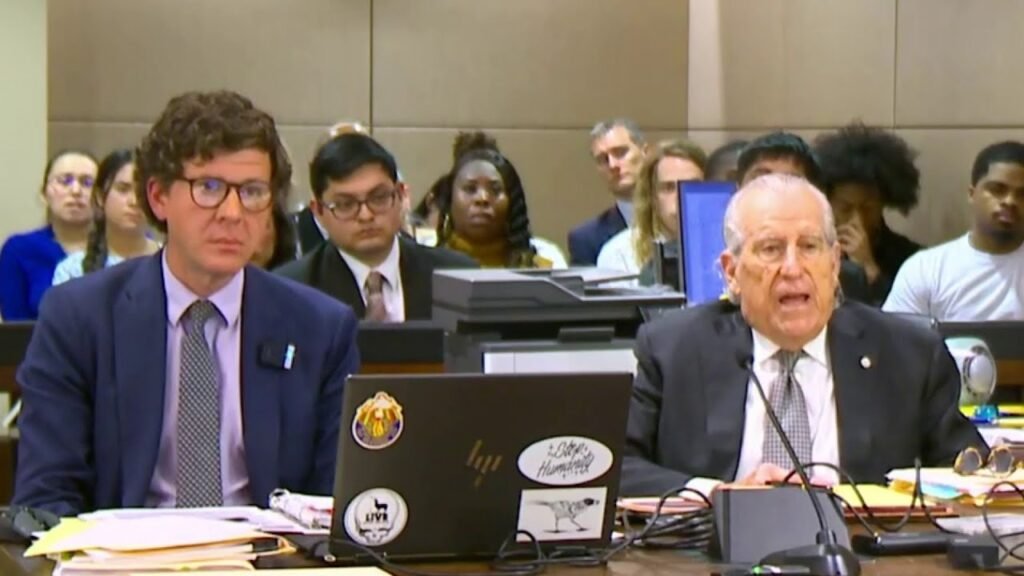
The breach happened during the cross-examination of Joanna Reyes, <cite index=”7-1″>who had testified that she was driving the vehicle on the day Saldivar was killed and that she saw McIntyre pull the trigger</cite>. Defense attorney John Hunter had already begun questioning Reyes when he raised an allegation involving Saldivar that fell squarely within the scope of the barred material.
According to KSAT’s courtroom reporting, <cite index=”4-1″>Hunter suggested to Reyes that she had told people in the vehicle that Saldivar was “into child pornography” and had done “creepy things” toward her in high school</cite>. Prosecutors objected immediately. The jury was removed from the courtroom.
Judge Boyd did not mince words once the jury had left. <cite index=”4-1″>She told the defense it appeared they had violated the motion in limine, adding pointedly that Hunter would need to argue that possession of child pornography was not a “bad act” if he wanted to claim otherwise</cite>. Hunter began to respond and then stopped himself mid-sentence.
Boyd went on to explain her role in the process rather than simply issuing a warning. <cite index=”4-1″>She stated that determining whether the material could come in front of the jury was her call to make, and that she needed to rule on its relevance and admissibility before either side raised it</cite>. It was less a reprimand for its own sake than a reassertion of who controls that gatekeeping function in a felony trial.
“That’s me. That’s my job.”
The consequence fell short of a mistrial, which either side could plausibly have requested given the severity of the alleged breach. Instead, <cite index=”7-1″>Boyd instructed jurors to disregard any mention of child pornography once they returned to the courtroom, and testimony continued</cite>. Reyes remained on the stand for the balance of the afternoon and, according to the same reporting, denied a separate defense suggestion that she had placed the gun in McIntyre’s hand.
Available courtroom coverage does not indicate that the defense faced any additional sanction beyond the on-record admonishment and the curative instruction to the jury. Whether the exchange factored into the jury’s eventual verdict is not something the public record can answer with any precision.
How the Case Reached Trial
McIntyre’s path to a Bexar County courtroom was unusually long, spanning roughly eight years from the shooting to a verdict. <cite index=”14-1″>Saldivar was killed on April 23, 2017, while McIntyre was already a fugitive, having cut off a court-ordered ankle monitor from an unrelated Tarrant County case weeks earlier</cite>. <cite index=”11-1″>Prosecutors alleged that McIntyre and an associate lured Saldivar into a vehicle under the pretext of stealing his photography equipment, that Saldivar tried to escape and was struck by the accelerating car, and that he was shot once after climbing onto the hood in an attempt to stop it</cite>.
At the time, San Antonio police could not release many details because McIntyre was processed as a juvenile in the Bexar County system. <cite index=”12-1″>He was 16 years old on the date of the shooting</cite>. The case did not move toward an adult capital murder indictment until years later, following McIntyre’s conviction in a separate Tarrant County matter.
That separate case looms over the entire Bexar County proceeding. <cite index=”14-1″>McIntyre had already been convicted in July 2019 of murder and aggravated robbery for a 2016 home invasion in Mansfield, Texas, that killed 21-year-old Ethan Walker, and was sentenced to 55 years in prison for that offense</cite>. He was serving that sentence when Bexar County prosecutors formally indicted him for Saldivar’s death. <cite index=”10-1″>He was extradited to the Bexar County Jail in August 2019 to await the capital murder trial</cite>.
McIntyre’s evasion of authorities after the Saldivar shooting also became part of his public identity before it became part of his legal case. <cite index=”14-1″>He fled to New Jersey, released the song “The Race” while still a fugitive, and was arrested by U.S. Marshals in Elizabeth, New Jersey, the same day the song’s music video went online</cite>. The song’s viral success, built partly on lyrics referencing his own alleged crimes, became a recurring point of public fascination with the case well before trial.
The Charges, in Plain Terms
McIntyre faced a capital murder charge, the most serious homicide offense under Texas law. A capital murder conviction generally requires proof of an intentional killing committed alongside another qualifying felony, such as robbery. <cite index=”6-1″>Because he was tried as an adult on that charge, a conviction would have carried an automatic life sentence</cite>.
Texas law allows a jury to consider lesser-included offenses alongside a capital murder charge when the evidence supports it. <cite index=”6-1″>In this case, jurors were given the option of murder or manslaughter as alternatives to capital murder before reaching a verdict</cite>. That structure matters because it gives a jury room to reject the state’s most serious theory of the case while still holding a defendant criminally responsible for the underlying killing.
Trial, Verdict, and Sentencing
Jury selection began March 31, 2025, with testimony starting the following day. The trial ran roughly two weeks, encompassing testimony from Reyes and other witnesses, forensic evidence, and closing arguments before the case went to the jury.
<cite index=”8-1″>The jury acquitted McIntyre of capital murder and instead found him guilty of the lesser offense of murder</cite>. Under Texas sentencing law, a murder conviction carries a punishment range between five and 99 years. The case then moved into a separate punishment phase before the same jury.
During that phase, jurors heard from family members on both sides. <cite index=”6-1″>McIntyre’s sister described their father as physically abusive toward McIntyre during childhood, including an account of him being tied to an ironing board over comparatively minor infractions such as poor grades</cite>. Prosecutors, for their part, argued that McIntyre retained choices and opportunities that Saldivar no longer had. <cite index=”6-1″>Prosecutor Jason Garrahan told jurors that McIntyre would still have his life and the ability to make himself better, while Saldivar would not be able to choose anything at all</cite>.
<cite index=”6-1″>After roughly three and a half hours of deliberation, the jury set McIntyre’s punishment at 80 years in prison</cite>. <cite index=”6-1″>Judge Boyd ordered that sentence to run concurrently with the 55-year sentence from the Tarrant County case, meaning McIntyre serves both terms at the same time rather than consecutively</cite>. <cite index=”8-1″>Under Texas parole rules, a person sentenced to 80 years for murder becomes eligible for parole after serving 30 years of that sentence</cite>.
<cite index=”8-1″>McIntyre’s attorney has indicated he intends to appeal the conviction</cite>. Public dockets available at the time of writing do not yet reflect the specific grounds an appeal would raise, and it would be speculative to assume the motion in limine incident will factor into it.
Why the Bench Exchange Still Matters
Cases like this one are useful less for their outcome than for what they show about how a judge manages risk mid-trial. A motion in limine violation during a capital case creates real exposure: a defendant who is convicted can point to it on appeal, and a defendant who is acquitted can be accused of having benefited from prejudicial material the jury was never supposed to hear either way.
Judge Boyd’s choice to correct the record in front of the defense, remove the jury before addressing it, and issue a curative instruction rather than a mistrial reflects a fairly standard judicial toolkit for handling this kind of breach. Available reporting does not indicate that either side moved for a mistrial at that point, and the trial proceeded to verdict roughly a week later.
Whether that particular exchange shaped the jury’s eventual decision to convict on the lesser charge rather than capital murder is not something the trial record answers, and it would be inaccurate to draw a direct line between the two events without more than what has been publicly reported.