Introduction
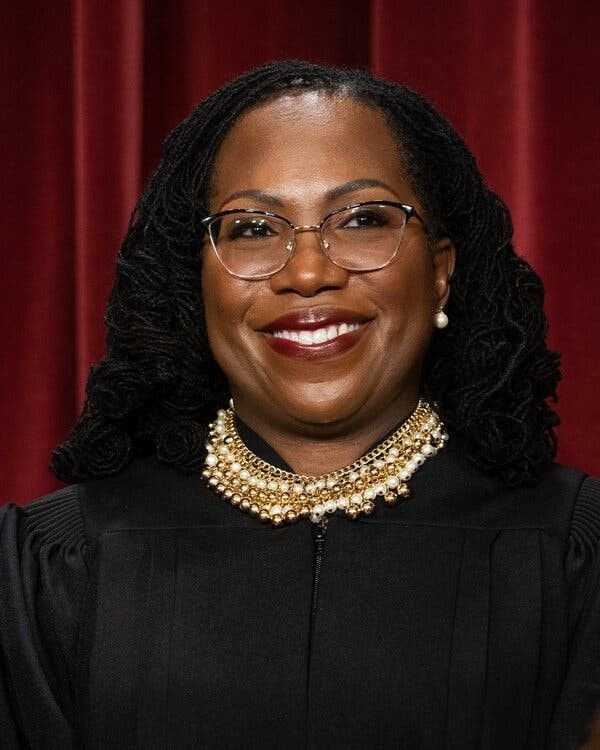
On June 30, 2022, a Harvard-trained lawyer who had once represented indigent clients as a public defender walked into the Supreme Court building and became an Associate Justice of the United States. Ketanji Brown Jackson is the 116th person, and the first Black woman, to sit on the nation’s highest court in its more than two-century history. That single fact would be enough to secure her a place in American history books. But it is far from the only reason people search for her name.
Readers come looking for Justice Ketanji Brown Jackson’s age, her husband and children, her Harvard education, and the winding legal career that took her from a federal public defender’s office to the Supreme Court bench. Others want to understand her judicial philosophy, her most notable opinions, and the estimated value of her assets now that she is a bestselling author. This biography brings all of it together in one place: her childhood in Miami, her years at Harvard, her clerkship for the justice she would eventually replace, her rise through the federal judiciary, and the historic confirmation battle that made her a household name.
What follows is a comprehensive, fact-checked account of her life and career — written for readers who want more than a quick summary, and who want to understand not just what Justice Jackson has done, but why it matters.
Quick Facts Table
| Category | Details |
|---|---|
| Full Name | Ketanji Onyika Brown Jackson |
| Current Position | Associate Justice, Supreme Court of the United States |
| Born | September 14, 1970 |
| Age | 55 (as of July 2026) |
| Birthplace | Washington, D.C. |
| Nationality | American |
| Education | Miami Palmetto Senior High School; Harvard-Radcliffe College (A.B., Government, 1992); Harvard Law School (J.D., 1996) |
| Law School | Harvard Law School |
| Political Appointment History | U.S. Sentencing Commission (Vice Chair, 2010–2014); U.S. District Court for D.C. (2013–2021); U.S. Court of Appeals, D.C. Circuit (2021–2022); U.S. Supreme Court (2022–present) |
| Spouse | Dr. Patrick G. Jackson (married 1996) |
| Children | Two daughters, Talia and Leila |
| Religion | Protestant (publicly documented) |
| Years Active | 1996–present |
| Current Court | Supreme Court of the United States |
| Sworn Into Supreme Court | June 30, 2022 |
| Predecessor | Justice Stephen G. Breyer |
| Notable Achievements | First Black woman on the Supreme Court; first former federal public defender to serve as a Justice; #1 New York Times bestselling author of Lovely One |
Early Life and Family Background
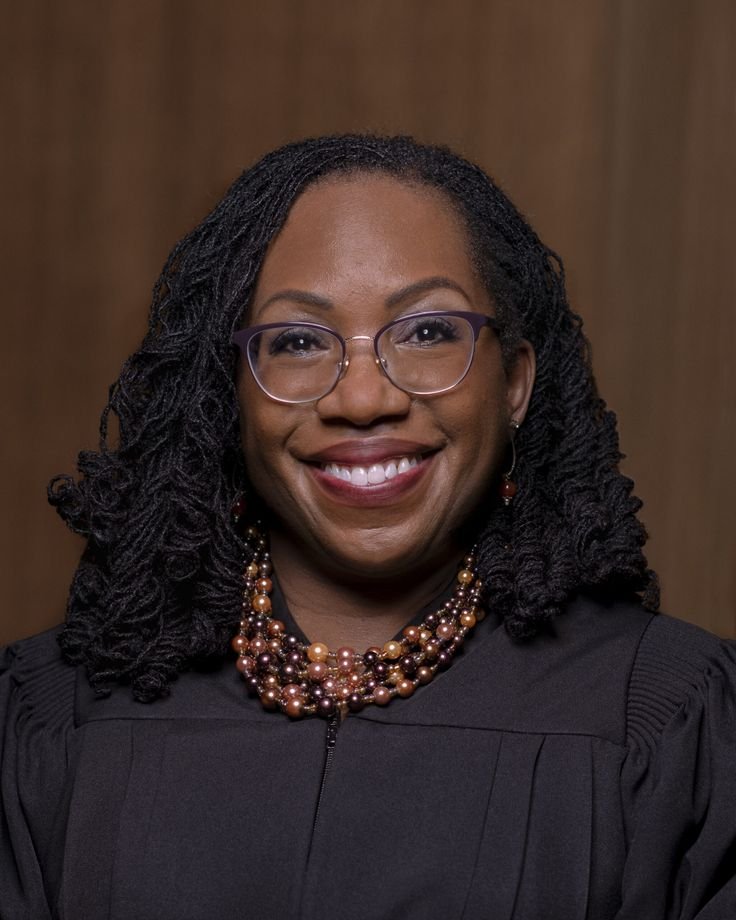
Ketanji Onyika Brown was born on September 14, 1970, in Washington, D.C., to Johnny and Ellery Brown, both public school educators who had come of age during the segregated South and gone on to attend historically Black colleges and universities. Her parents chose her first name deliberately. They wrote to a relative serving in the Peace Corps in West Africa and asked for a list of names that reflected African heritage; the name they selected, Ketanji Onyika, is often translated as “lovely one” — a phrase that would later become the title of her memoir.
Shortly after her birth, the family relocated to Miami, Florida, where her father eventually earned a law degree from the University of Miami and became chief attorney for the Miami-Dade County School Board, while her mother became a school principal at Miami’s New World School of the Arts. Jackson has described growing up in a household where public service and education were treated as the highest callings, an environment that shaped both her ambition and her worldview.
Jackson attended Miami Palmetto Senior High School, where she thrived far beyond the classroom. She served as class president, was voted “most likely to succeed,” and became a standout on the school’s competitive speech and debate team, eventually winning a national oratory championship. According to accounts of her high school years, she wrote in her yearbook that she hoped one day to earn a judicial appointment — a striking and specific ambition for a teenager that would, decades later, prove prophetic. A visit to Harvard University for a debate competition during high school reportedly inspired her to apply to the Ivy League school, setting the next chapter of her life in motion.
Family has remained central to Jackson’s public identity throughout her career. She has spoken about extended relatives who worked in law enforcement and about the broader Brown family’s emphasis on discipline, faith, and community responsibility — themes she would return to repeatedly in her later writing and public speaking.
Education
Jackson enrolled at Harvard University in 1988, where she studied government. Away from Cambridge’s competitive intensity, she found an outlet in the performing arts, participating in musical theater and improvisational comedy groups — interests she has said helped her navigate homesickness and moments of self-doubt as one of relatively few Black students on campus at the time. She graduated magna cum laude with a Bachelor of Arts in Government from Harvard-Radcliffe College in 1992.
After graduation, Jackson spent roughly a year working as a staff reporter and researcher for Time magazine before returning to Harvard to pursue a law degree. At Harvard Law School, she served as an editor on the Harvard Law Review, one of the most competitive and prestigious credentials available to a law student, and she graduated cum laude in 1996.
Her legal education did not end with her degree. Following law school, Jackson completed three consecutive federal clerkships — an unusually rigorous sequence that is often considered a marker of top legal talent. She clerked for Judge Patti B. Saris of the U.S. District Court for the District of Massachusetts, then for Judge Bruce M. Selya of the U.S. Court of Appeals for the First Circuit, and finally, during the 1999 Supreme Court term, for Associate Justice Stephen G. Breyer — the very justice she would succeed on the Supreme Court more than two decades later. That clerkship placed her inside the building where she would eventually sit, and it forged a mentorship with Breyer that Jackson has described as one of the most formative relationships of her professional life.
Early Legal Career
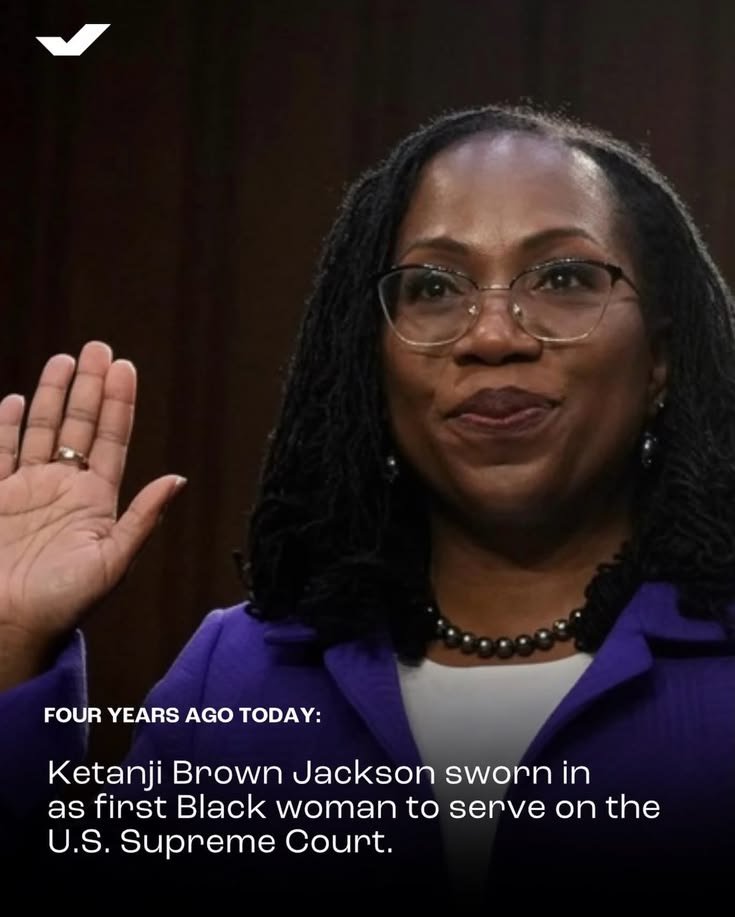
After her clerkships, Jackson moved into private practice, working for several years at law firms in Washington, D.C., including a stint focused on appellate and Supreme Court litigation. In 2003, she joined the U.S. Sentencing Commission as an attorney, immersing herself in the technical and often politically fraught world of federal sentencing policy.
From 2005 to 2007, Jackson served as an assistant federal public defender in Washington, D.C. — a role that would later become one of the defining features of her identity as a jurist. As a public defender, she represented clients who could not afford private counsel, including individuals facing serious federal charges, giving her a firsthand view of the criminal justice system from the defense side of the courtroom. This experience was historically significant: no sitting Supreme Court justice had previously spent time working as a public defender.
She returned to private practice from 2007 to 2010, then came back to public service when President Barack Obama nominated her to the U.S. Sentencing Commission, where she served as vice chair and commissioner from 2010 to 2014. During her tenure, the commission worked on reforms addressing sentencing disparities, including changes tied to federal drug sentencing guidelines — work that gave Jackson deep expertise in an area of law that would recur throughout her judicial career.
Rise Through the Federal Judiciary
In September 2012, President Obama nominated Jackson to the U.S. District Court for the District of Columbia. She was confirmed by the Senate in March 2013 and sworn in that May — notably, by Justice Breyer, her former boss. Over the next eight years on the district court, Jackson built a reputation as a meticulous, methodical judge who wrote lengthy, carefully reasoned opinions.
Several of her district court rulings drew national attention, particularly cases involving the executive branch during the Trump administration. In a widely covered 2019 decision spanning more than 100 pages, Jackson ordered former White House Counsel Don McGahn to comply with a congressional subpoena, rejecting the administration’s claim of near-absolute immunity for senior aides. The ruling was later appealed and became part of a broader legal battle over the balance of power between Congress and the executive branch.
In March 2021, President Joe Biden nominated Jackson to the U.S. Court of Appeals for the District of Columbia Circuit — widely regarded as the second most influential court in the country and a frequent launching pad for Supreme Court nominees — to fill the seat vacated by Merrick Garland. The Senate confirmed her in June 2021 by a bipartisan vote. Her time on the D.C. Circuit was brief, lasting less than a year, but it further cemented her reputation among legal observers as a leading candidate for a future Supreme Court vacancy.
Nomination to the U.S. Supreme Court
That opportunity arrived quickly. On January 27, 2022, Justice Stephen Breyer announced his intention to retire from the Supreme Court. President Biden, who had pledged during his 2020 campaign to nominate a Black woman to the Court if given the chance, formally nominated Jackson on February 25, 2022.
The Senate Judiciary Committee held four days of confirmation hearings in March 2022. Senators questioned Jackson extensively on her sentencing record as a trial judge, her approach to constitutional interpretation, her recusal from a major affirmative action case involving Harvard due to her prior service on the university’s Board of Overseers, and broader questions about judicial philosophy. The hearings, like most modern Supreme Court confirmations, were intensely partisan, but Jackson’s demeanor throughout — composed, detail-oriented, and unflappable under sustained questioning — drew praise even from some skeptical observers.
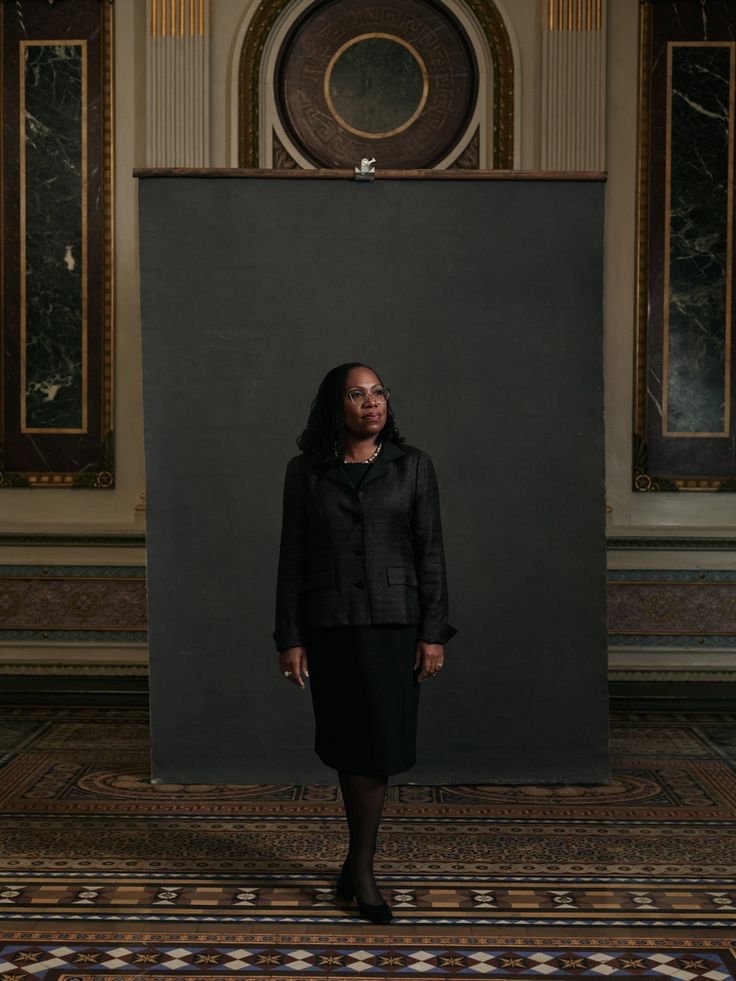
On April 7, 2022, the full Senate confirmed Jackson by a vote of 53–47, with three Republican senators joining every Democrat in support. She was sworn in on June 30, 2022, immediately after Breyer’s retirement took effect, becoming the 116th justice in the Court’s history and the first Black woman ever to serve on it. She is also only the third Black American to sit on the Supreme Court, following Thurgood Marshall and Clarence Thomas, and the first former federal public defender to reach the bench. Media coverage of the milestone was extensive and largely framed the moment as a watershed in American legal and civil rights history, even as commentators across the political spectrum debated the broader politics surrounding her nomination.
Justice Ketanji Brown Jackson’s Judicial Philosophy
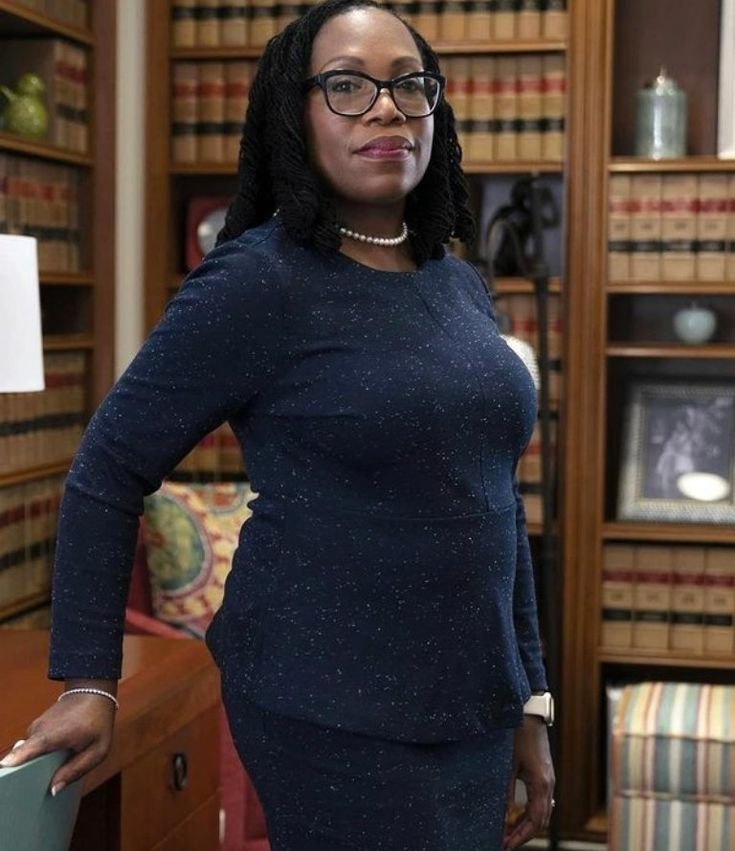
Jackson has generally been characterized by court observers as belonging to the Supreme Court’s liberal wing, frequently voting alongside Justices Sonia Sotomayor and Elena Kagan. But characterizing her judicial philosophy requires more nuance than a simple left-right label.
Jackson has described her interpretive approach as rooted in careful, exhaustive engagement with text, history, and precedent — a method shaped by her years as a trial judge, where she developed a habit of producing long, thoroughly documented opinions that anticipate and address counterarguments. Legal analysts have noted that her writing style tends to be direct and accessible relative to some of her colleagues, favoring plain language over dense doctrinal jargon, even while grounding her reasoning in extensive citation to history and legal scholarship.
She has placed particular emphasis on the practical, real-world consequences of the Court’s rulings — an approach sometimes described as pragmatic or consequentialist, in contrast to the strict originalism favored by some of the Court’s conservative justices. At the same time, Jackson has shown a willingness to engage seriously with originalist arguments on their own terms, often responding to them directly in her opinions rather than dismissing them outright. She has generally shown strong respect for the doctrine of stare decisis, favoring stability in precedent, while also being willing to dissent sharply when she believes the majority has departed from established legal principles or historical understanding.
As with any sitting justice, characterizations of her philosophy remain contested, and reasonable legal scholars disagree about how best to categorize her jurisprudence. This overview reflects general patterns identified by court watchers rather than a definitive ideological label.
Important Opinions and Cases
Jackson wrote her first Supreme Court opinion in November 2022, a dissent from the Court’s decision not to hear the capital case Chinn v. Shoop, joined by Justice Sotomayor, arguing that the Court should have taken up the appeal.
Her most widely discussed opinion came in June 2023, in the consolidated affirmative action cases brought by Students for Fair Admissions against Harvard College and the University of North Carolina. Because of her prior service on Harvard’s governing board, Jackson recused herself from the Harvard case but participated fully in the UNC case. When the Court’s conservative majority ruled that race-conscious college admissions programs violated the Constitution’s equal protection guarantees, Jackson wrote a forceful dissent. She argued that the ruling ignored the lingering, measurable effects of historical discrimination on wealth, health, and opportunity, and she criticized the majority’s approach as unrealistic about how race continues to shape American life. Her dissent drew extensively on historical and economic scholarship, including work by legal scholar Mehrsa Baradaran on the racial wealth gap, which she cited numerous times. The dissent was widely covered by national media and is regarded as one of the defining opinions of her early tenure.
Jackson has also written notably in cases involving criminal sentencing and habeas corpus, areas where her background as a public defender and her years on the Sentencing Commission give her a distinctive voice. She has frequently dissented in cases where she believed the majority was too quick to deny relief to criminal defendants or too deferential to prosecutorial and executive authority. Beyond criminal law, she has participated in major rulings touching on administrative law, voting rights, and the scope of federal agency power, generally aligning with the Court’s more restrained approach to curbing agency authority relative to her conservative colleagues.
Because Supreme Court case law develops continuously, readers seeking a complete, up-to-date list of every opinion Jackson has authored should consult primary sources such as the Supreme Court’s official website or SCOTUSblog’s case archive.
Leadership Beyond the Bench
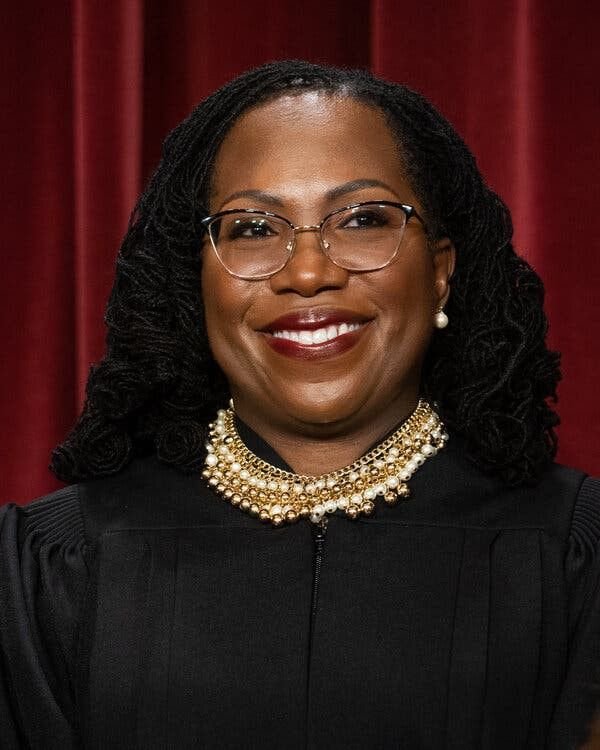
Justice Jackson has remained active in legal education and public engagement since joining the Court, participating in speaking events, judicial conferences, and interviews that reach well beyond the traditionally insular world of the judiciary. She has spoken at law schools and civic organizations about judicial independence, the role of courts in American democracy, and her own path to the bench, often encouraging young people — particularly young women of color — to pursue careers in law.
In 2026, Jackson drew public attention for remarks warning about the Supreme Court’s perceived partisanship, part of a broader and ongoing public conversation among sitting justices about the Court’s institutional legitimacy. She has also continued a robust public speaking schedule tied to the release and promotion of her memoir, including a multi-city book tour that took her to venues such as the Kennedy Center in Washington, D.C.
Jackson has additionally used her platform to discuss mentorship, citing her own clerkship under Justice Breyer and her admiration for pioneering Black legal figures such as Constance Baker Motley, the first Black woman to argue a case before the Supreme Court, as significant influences on her career.
Personal Life
Jackson has been married since 1996 to Dr. Patrick G. Jackson, a surgeon who works at MedStar Georgetown University Hospital. The two met as undergraduates at Harvard. Through her husband’s family, Jackson has a notable political connection: her husband’s twin brother is married to the sister-in-law of former House Speaker Paul Ryan, making Jackson and Ryan relatives by marriage — a detail that received attention during her confirmation hearings given Ryan’s prominent role in Republican politics.
The couple has two daughters, Talia and Leila. In her memoir, Jackson has written candidly about the challenges of balancing an intensely demanding legal career with motherhood, including openly discussing one daughter’s neurodivergence — a topic she has said she addressed only after obtaining her children’s consent to share their stories publicly.
Outside of her professional life, Jackson has spoken about her enduring interests in musical theater, improv comedy, and needle and fiber arts, hobbies that trace back to her college years. She has described debate and public speaking, activities that shaped her adolescence in Miami, as foundational to the communication skills she relies on both on the bench and in public appearances. The family has lived in the Washington, D.C. area for most of Jackson’s judicial career; public records show the couple purchased a home in the district in 2013, which they later sold in 2024.
Awards and Honors
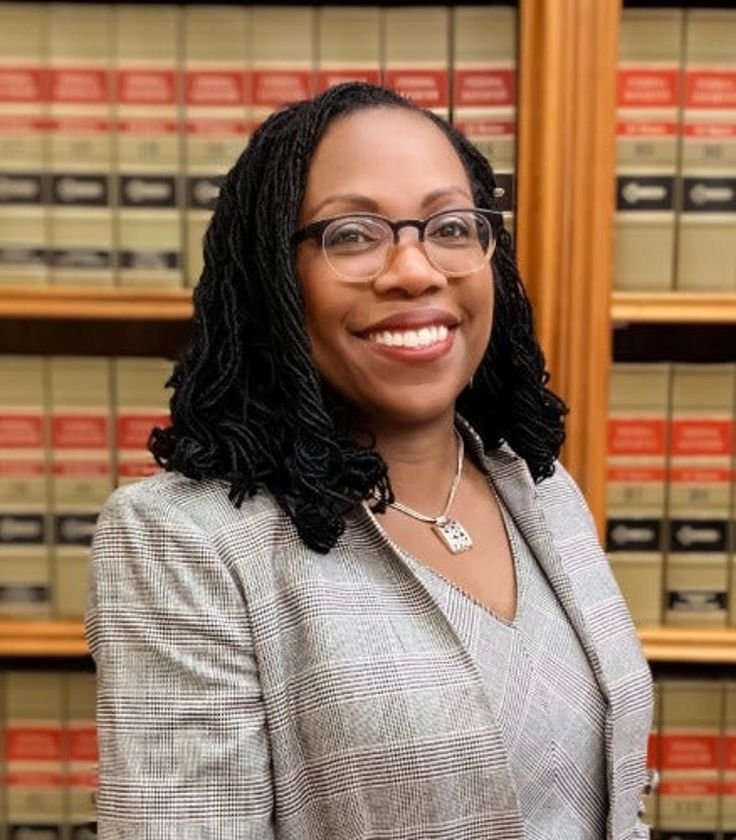
Jackson’s most significant professional distinction is, of course, her appointment to the Supreme Court itself — an honor that stands apart from traditional awards. Beyond her judicial appointments, she has received recognition from numerous legal and civic organizations for her historic achievement as the first Black woman on the Court, along with academic distinctions earned throughout her education, including her magna cum laude and cum laude honors from Harvard College and Harvard Law School, respectively, and her selection as an editor of the Harvard Law Review.
Her memoir, Lovely One, received significant literary recognition, debuting atop the New York Times bestseller list in September 2024 and later being named among the best books of the year by outlets including The New York Times Book Review and The New Yorker. The audiobook edition, narrated by Jackson herself, received a Grammy Award nomination in the Best Audio Book, Narration, and Storytelling category for the 2026 ceremony.
Publicly available information on additional honorary degrees or institutional awards specific to Jackson beyond those noted here is limited, and readers seeking a comprehensive list should consult official biographical sources such as the Supreme Court Historical Society or the Federal Judicial Center.
Net Worth
Estimating a sitting Supreme Court justice’s net worth is inherently imprecise, since justices are required to file only annual financial disclosure reports rather than complete net-worth statements, and those reports disclose asset ranges rather than exact figures. That said, public reporting offers a reasonably clear picture of Jackson’s finances.
As an Associate Justice, Jackson earns a federal salary of roughly $306,700 per year, a figure set by statute for the Court’s associate justices. Her husband, Dr. Patrick Jackson, works as a surgeon and reportedly earns approximately $400,000 annually, though surgeon compensation can vary considerably based on specialty and workload. Financial disclosures filed after her 2022 confirmation showed personal assets around $400,000, including retirement and brokerage investments in index funds.
The largest recent addition to Jackson’s finances has come from her writing career. According to financial disclosures released by the Supreme Court’s Administrative Office, Jackson received a book deal from Penguin Random House for her memoir, Lovely One, that has paid out roughly $2.9 million across 2023 and 2024, including an initial advance and subsequent royalty payments tied to the book’s bestseller status. Based on these combined income sources and reported assets, financial analysts and outlets such as Celebrity Net Worth have estimated the Jacksons’ combined household net worth at approximately $4.5 million, though such estimates should be treated as informed approximations rather than official figures, since complete details of the couple’s assets, debts, and real estate holdings are not fully public.
10 Interesting Facts About Justice Ketanji Brown Jackson
- Her first name, Ketanji Onyika, was chosen by her parents from a list of African names suggested by a relative serving in the Peace Corps in West Africa, and is commonly translated as “lovely one.”
- She is the first Supreme Court justice in history to have previously worked as a federal public defender.
- She clerked for Justice Stephen Breyer during the Supreme Court’s 1999 term — the same justice she would later succeed on the Court.
- In high school, she reportedly wrote in her yearbook that she hoped to become a judge one day.
- She won a national oratory championship as a member of her high school’s speech and debate team.
- She performed in musical theater and improv comedy groups as an undergraduate at Harvard.
- She is related by marriage to former House Speaker Paul Ryan, through her husband’s twin brother.
- She is only the third Black American to serve on the Supreme Court, after Thurgood Marshall and Clarence Thomas.
- Her memoir, Lovely One, became a #1 New York Times bestseller within weeks of its 2024 release.
- The audiobook version of her memoir, which she narrated herself, earned a Grammy nomination for the 2026 awards.
Legacy and Historical Impact
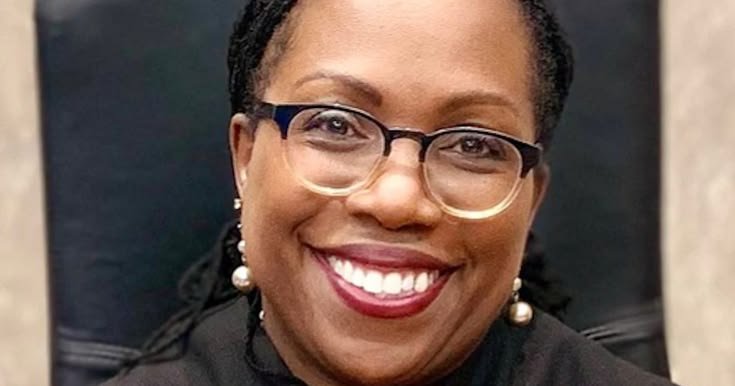
Justice Ketanji Brown Jackson’s confirmation to the Supreme Court in 2022 closed a 233-year gap in American judicial history — the length of time the Court existed before a Black woman ever sat on its bench. That milestone alone secures her a permanent place in the historical record, but her legacy is likely to extend well beyond the symbolism of a historic first.
As the Court’s first justice with direct experience representing indigent criminal defendants, Jackson has brought a distinctive perspective to the Court’s docket in criminal justice and sentencing cases, an area where her professional background differs meaningfully from that of any of her predecessors. Legal scholars have also pointed to her opinion-writing style — thorough, historically grounded, and accessible — as an influence on how younger lawyers and law students approach legal writing.
Her presence on the Court has also had a broader cultural resonance, inspiring commentary about representation in the American legal profession and serving as a visible symbol for aspiring lawyers, particularly women of color, who see in her career path evidence that the traditionally narrow routes to the nation’s highest court can widen. Her bestselling memoir has extended that influence beyond the legal community into mainstream popular culture, introducing her personal story to readers who might never otherwise engage with Supreme Court jurisprudence.
As a jurist still early in what could be a tenure spanning decades, Jackson’s ultimate legal legacy will be defined by opinions she has not yet written and cases the Court has not yet heard. But her historic ascension, her distinctive professional background, and her emerging voice on the Court’s liberal wing have already ensured her a significant and lasting place in the story of American constitutional law.
Timeline of Major Life Events
- September 14, 1970 — Born in Washington, D.C.
- 1988 — Enrolls at Harvard University after growing up in Miami, Florida.
- 1992 — Graduates magna cum laude from Harvard-Radcliffe College with a degree in Government.
- 1996 — Earns her J.D. cum laude from Harvard Law School; marries Patrick G. Jackson.
- 1996–1998 — Clerks for Judge Patti B. Saris and Judge Bruce M. Selya.
- 1999–2000 — Clerks for Justice Stephen Breyer at the Supreme Court.
- 2003–2005 — Works as an attorney for the U.S. Sentencing Commission.
- 2005–2007 — Serves as an assistant federal public defender in Washington, D.C.
- 2010–2014 — Serves as Vice Chair and Commissioner of the U.S. Sentencing Commission.
- 2013 — Confirmed to the U.S. District Court for the District of Columbia.
- 2021 — Confirmed to the U.S. Court of Appeals for the D.C. Circuit.
- February 25, 2022 — Nominated to the Supreme Court by President Biden.
- April 7, 2022 — Confirmed by the Senate, 53–47.
- June 30, 2022 — Sworn in as Associate Justice, becoming the first Black woman on the Supreme Court.
- June 2023 — Writes a widely covered dissent in the affirmative action case Students for Fair Admissions v. UNC.
- September 2024 — Publishes her memoir, Lovely One, which debuts as a #1 New York Times bestseller.
- 2026 — Lovely One audiobook receives a Grammy Award nomination.
Frequently Asked Questions
Who is Justice Ketanji Brown Jackson? She is an Associate Justice of the Supreme Court of the United States, appointed by President Joe Biden in 2022. She is the first Black woman and the third Black American to serve on the Court.
How old is Justice Ketanji Brown Jackson? She was born on September 14, 1970, making her 55 years old as of July 2026.
Who is her husband? She has been married since 1996 to Dr. Patrick G. Jackson, a surgeon at MedStar Georgetown University Hospital.
How many children does she have? She has two daughters, Talia and Leila.
Where did she study? She earned her undergraduate degree from Harvard-Radcliffe College in 1992 and her law degree from Harvard Law School in 1996.
When did she join the Supreme Court? She was confirmed by the Senate on April 7, 2022, and sworn in on June 30, 2022.
What is her judicial philosophy? Jackson is generally regarded as part of the Court’s liberal wing, emphasizing careful textual and historical analysis, respect for precedent, and attention to the practical consequences of legal rulings.
What is she best known for? She is best known for being the first Black woman to serve on the Supreme Court and the first justice with prior experience as a federal public defender.
Has she written any books? Yes. Her memoir, Lovely One, was published in 2024 and became a #1 New York Times bestseller; a young-adult adaptation followed.
What is her estimated net worth? Reported estimates place her and her husband’s combined net worth at roughly $4.5 million, based on judicial salary, her husband’s income, and book earnings.
Conclusion
Ketanji Brown Jackson’s path to the Supreme Court runs through a Miami debate stage, the halls of Harvard, a public defender’s office in Washington, and the demanding grind of federal trial and appellate courts. It is a career built as much on rigorous preparation as on historic opportunity — a combination that culminated in her confirmation as the first Black woman ever to serve on the nation’s highest court.
In her opinions, she has emerged as a distinctive voice on questions of criminal justice, civil rights, and the practical stakes of constitutional interpretation, drawing on a professional background unlike that of any justice before her. Beyond the bench, her bestselling memoir has introduced her personal story — one shaped by educator parents, a name chosen to honor African heritage, and a lifelong ambition first written down in a high school yearbook — to millions of readers.
Justice Jackson’s tenure on the Court is still in its early chapters. But her historic confirmation, her growing body of judicial opinions, and her public voice on the role of courts in American life have already secured her a lasting place in the ongoing story of the United States Supreme Court.
On-Page SEO Deliverables
SEO Title: Ketanji Brown Jackson Biography: Career, Family & Legacy
Meta Description: Explore the complete biography of Justice Ketanji Brown Jackson — her education, career, Supreme Court nomination, judicial philosophy, and family life.
Suggested URL: /ketanji-brown-jackson-biography
15 SEO Tags:
- Ketanji Brown Jackson
- Supreme Court Justice
- Ketanji Brown Jackson biography
- Ketanji Brown Jackson husband
- Ketanji Brown Jackson children
- Ketanji Brown Jackson education
- Ketanji Brown Jackson career
- Ketanji Brown Jackson judicial philosophy
- Ketanji Brown Jackson net worth
- Ketanji Brown Jackson Supreme Court
- First Black woman Supreme Court
- Harvard Law School alumni
- Federal public defender
- Lovely One memoir
- U.S. Supreme Court justices
20 Semantic Keywords: U.S. Supreme Court; Associate Justice; Constitutional Law; Federal Judiciary; Harvard Law School; Federal Judge; Judicial Nominee; Judicial Confirmation; Civil Rights; American Legal History; Supreme Court Decisions; Federal Courts; Public Defender; Legal Scholar; Judicial Leadership; Sentencing Commission; D.C. Circuit Court of Appeals; Senate confirmation hearing; judicial dissent; affirmative action ruling
10 Long-Tail Keywords:
- Who is Justice Ketanji Brown Jackson
- Ketanji Brown Jackson Supreme Court confirmation vote
- Ketanji Brown Jackson public defender background
- Ketanji Brown Jackson Harvard Law Review
- Ketanji Brown Jackson affirmative action dissent
- Ketanji Brown Jackson memoir Lovely One
- Ketanji Brown Jackson husband Patrick Jackson
- Ketanji Brown Jackson judicial philosophy explained
- how old is Ketanji Brown Jackson
- Ketanji Brown Jackson net worth 2026
8 Internal Linking Suggestions:
- Guide to all current U.S. Supreme Court justices
- Explainer: How Supreme Court confirmation hearings work
- Profile of Justice Stephen Breyer
- Overview of the Students for Fair Admissions affirmative action rulings
- History of Black Americans on the federal judiciary
- Guide to the U.S. Sentencing Commission and federal sentencing guidelines
- Book review: Lovely One by Ketanji Brown Jackson
- Explainer: How Supreme Court financial disclosures work
8 External Authority Source Suggestions:
- SCOTUSblog — scotusblog.com
- Oyez (Supreme Court case and justice database) — oyez.org
- Supreme Court Historical Society — supremecourthistory.org
- Federal Judicial Center biographical directory — fjc.gov
- The Washington Post
- The New York Times
- Britannica
- Congress.gov (official nomination and confirmation records)
Recommended Schema:
- Person Schema — name, birthDate, jobTitle (“Associate Justice, Supreme Court of the United States”), alumniOf (Harvard University), spouse, children, awards
- Article Schema — headline, author, datePublished, dateModified, publisher, mainEntityOfPage
- FAQ Schema — structured markup for the Frequently Asked Questions section above
- Breadcrumb Schema — Home > Biographies > Supreme Court Justices > Ketanji Brown Jackson