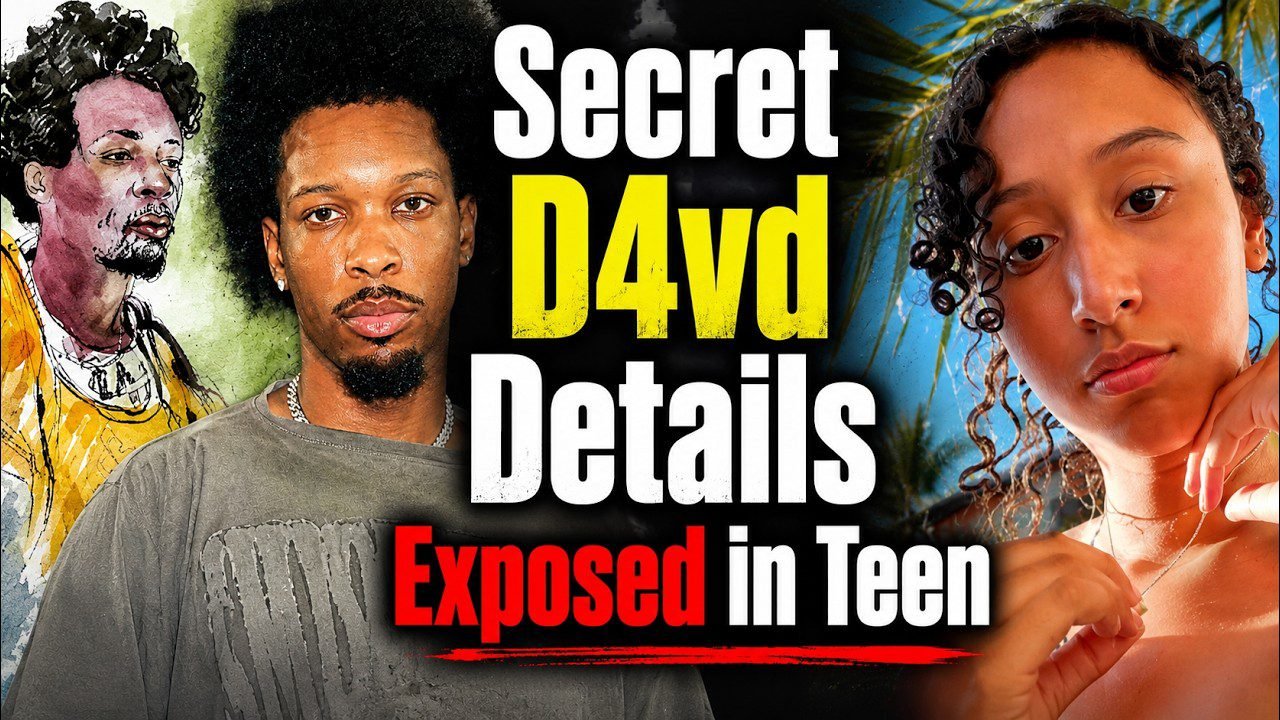
LOS ANGELES — For eight months, the Tesla Model X sat quietly on Bluebird Avenue in the Hollywood Hills, ticketed, ignored, and slowly decomposing around a secret only its registered owner allegedly knew. When tow yard workers finally reported a foul odor coming from the impounded SUV on September 8, 2025, officers pried open the front trunk and found what would become one of the most closely watched criminal cases in recent memory: the dismembered remains of 14-year-old Celeste Rivas Hernandez, a Lake Elsinore middle schooler who had been missing, on and off, for more than a year.
The car belonged to David Anthony Burke, the 21-year-old singer-songwriter known to millions of streaming listeners as d4vd. Seven months after that discovery, on April 16, 2026, LAPD officers arrested Burke at a Hollywood Hills residence and booked him at the 77th Street Station. Four days later, Los Angeles County District Attorney Nathan Hochman formally charged him with first-degree murder, continuous sexual abuse of a child under 14, and unlawful mutilation of human remains — charges that carry special-circumstance allegations of lying in wait, murder of a witness, and murder for financial gain, which together make Burke ineligible for bail and could expose him to a death-penalty sentence.
Burke has pleaded not guilty to every count. Now, as attorneys on both sides prepare for a preliminary hearing scheduled for July 21, court filings unsealed over the past several weeks have begun to sketch out, in granular and often disturbing detail, the case prosecutors say they will bring against him — and the case his defense team insists will collapse under scrutiny.
The Motive
According to prosecutors, the relationship between Burke and Rivas Hernandez did not begin in the spring of 2025, when investigators believe she died. It began, they allege, years earlier and long before she was legally old enough to consent to anything resembling a relationship at all.
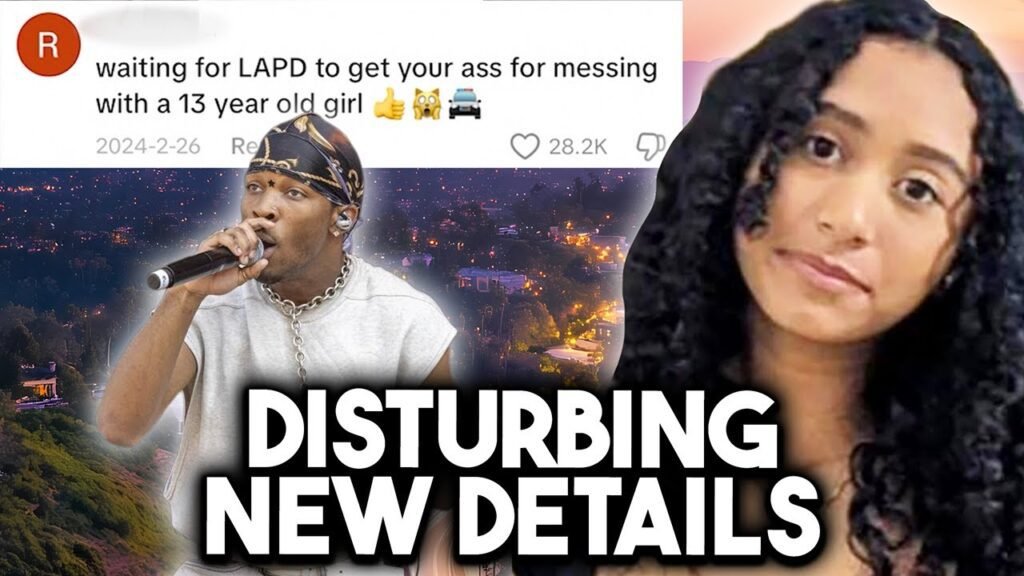
Court filings claim Burke met Rivas when she was just 11 years old and that a sexual relationship began when she turned 13. That timeline is central to the continuous sexual abuse charge and, prosecutors argue, to the motive behind her death. In February 2024, Rivas’s family reported her missing as part of a string of runaway reports filed with the Riverside County Sheriff’s Department; during that period, police conducted a welfare check and explicitly told Burke that Rivas was a 13-year-old runaway, according to court records reviewed by Fox 26 Houston. It was, prosecutors say, a moment that should have ended whatever contact existed between a rising musician and a middle schooler. Instead, according to the filings, it marked an escalation. Rolling Stone + 2
Rather than cut ties, prosecutors allege Burke paid a junior high classmate of Rivas’s $1,000 to deliver a secret cellphone after her parents confiscated her original device, allowing the pair to keep communicating outside her family’s knowledge. Data pulled from iCloud backups, according to the filings, turned up messages between Burke and Rivas discussing sex, pregnancy, abortion, and the use of emergency contraception. Investigators also allege the two traveled together to Las Vegas, London and Texas over the course of 2024 — trips that friends of Burke reportedly assumed involved an adult companion, since several people close to him believed Rivas was a 19-year-old USC student rather than a 13-year-old with, prosecutors say, multiple fake IDs used to gain entry to age-restricted venues. FOX 26 HoustonFOX 26 Houston
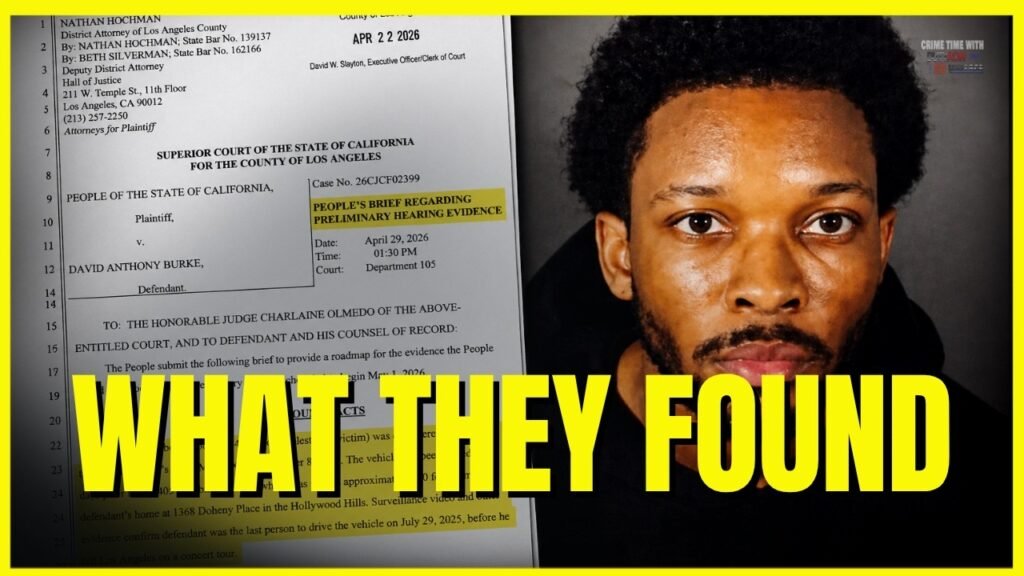
By April 2025, prosecutors say, Burke’s career and his alleged secret were on a collision course. His debut album, Withered, was two days from release and poised to debut in the Billboard 200’s Top 20. According to the district attorney’s nine-page evidentiary brief, filed April 29, tensions between Burke and Rivas boiled over the night before her death, with the teenager allegedly threatening to go public with details of their relationship. Prosecutors say that threat is what turned an alleged pattern of abuse into an alleged act of homicide — that Rivas, in their telling, had become not just a secret but a liability capable of ending everything Burke had built.
The Forensic Trail

The timeline prosecutors have laid out is granular almost to the hour. On the night of April 23, 2025, according to the DA’s filing, Burke arranged for an Uber driver to bring Rivas from her family’s home in Lake Elsinore — more than an hour outside Los Angeles — to his rental house in the Hollywood Hills. She arrived at approximately 10:10 p.m. It was, prosecutors say, the last time anyone outside that house saw her alive.
What happened next is the crux of the state’s case, and its most graphic allegation. The evidentiary brief states that Burke, knowing he needed to “silence the victim before she ruined his music career as she had threatened,” stabbed Rivas multiple times shortly after her arrival and then stood by as she bled out. The Los Angeles County Medical Examiner’s office later ruled her death a homicide, listing the cause as multiple penetrating injuries consistent with a sharp object or objects. AceShowbiz
Prosecutors allege Burke’s conduct in the hours immediately following her death was calculated. Cellphone records show he began texting Rivas’s phone — messages asking where she was — starting around 10:30 p.m., after investigators believe she was already dead; the DA’s office has characterized these messages in court filings as acts “calculated and planned to set up his defense within a very short timeline after the victim’s vicious murder.” Later that night, according to cellphone tower data cited by prosecutors, Burke drove to an isolated stretch of road off State Route 154 in Santa Barbara County, where investigators later recovered items belonging to Rivas, including identification. Prosecutors allege this trip was an attempt to dispose of evidence tying her to his home. ABC News
In the days and weeks that followed, according to purchase records cited in court filings, Burke allegedly went shopping — for a shovel, ordered the day after Rivas’s death; then, between May 1 and May 5, for chainsaws, a body bag and an inflatable pool, several of them purchased under the alias “Victoria Mendez.” By July, prosecutors allege, he had also ordered a metal burn cage. Investigators say DNA evidence recovered from Burke’s garage, where a search warrant executed in September 2025 turned up blood evidence, matched Rivas Hernandez. The dismemberment, prosecutors allege, took place there, using the chainsaws and the inflatable pool as a makeshift containment area.
Surveillance footage cited in the state’s filing shows Burke parking the Tesla near his rental home on July 29, 2025, before departing for a national concert tour — the vehicle, prosecutors say, remaining essentially untouched afterward for weeks. It was eventually reported abandoned, ticketed, and towed to a Hollywood impound lot, where the smell that would ultimately break the case open began several days before workers called police. Investigators have said Rivas’s remains, discovered in two separate bags in the vehicle’s front trunk, were missing several fingers, including her left ring finger — a detail that has drawn particular attention because, according to investigators, it was tattooed with the word “shhh,” a marking similar to one Burke reportedly has himself.
Separately, court filings unsealed in connection with the case have alleged that a forensic review of Burke’s iPhone, part of more than 40 terabytes of digital data seized during the investigation, turned up child sexual abuse material — an allegation prosecutors have raised in the broader context of the continuous sexual abuse charge, though it has not yet been the subject of a standalone count. As with every other element of the state’s case, it remains, at this stage, an allegation to be tested in court rather than an adjudicated fact.
The Defense
Burke’s legal team — led by veteran Los Angeles criminal defense attorney Blair Berk, alongside co-counsel Marilyn Bednarski — has mounted a defense built, so far, on precision rather than volume. Their public statement following his arraignment was brief and, according to at least one legal commentator who has covered the case, deliberately narrow: “The actual evidence in this case will show that David Burke did not murder Celeste Rivas Hernandez and he was not the cause of her death.” ABC News
That sentence has become something of a Rorschach test for observers of the case. It does not deny that Burke and Rivas knew each other, nor that her body was found in his vehicle. What it denies, specifically, is that Burke killed her or caused her death — a distinction some legal analysts believe signals the defense may eventually argue that someone else was responsible for the killing, the dismemberment, or both. Prosecutors have themselves suggested in public statements that they believe more than one person may have been involved in disposing of Rivas’s remains, though no second suspect has been named or charged as of this writing.
Berk has largely declined to elaborate outside the courtroom, telling reporters little as she has come and gone from status conferences. At Burke’s April 23 hearing, he sat quietly in an orange jail uniform and waist shackles, nodding along as Berk reiterated that her client is presumed innocent. At a subsequent hearing, when a judge asked whether he understood he was waiving his right to a scheduled preliminary hearing date, Burke answered simply, “Yes, your honor,” before being led back into custody.
His family has echoed the defense’s posture. In a statement released after the charges were filed, Burke’s parents said they “support and stand by him one hundred percent.” Family members, who live in Texas, separately filed petitions earlier this year seeking to avoid testifying before the Los Angeles grand jury, though those efforts do not appear to have prevented the case from moving forward to formal charges. ABC News
The defense has repeatedly sought — and been granted — additional time to review the prosecution’s evidence, pushing the preliminary hearing from an original May 1 date to May 26, then to June 29, and now to July 21. Los Angeles County Superior Court Judge Charlaine F. Olmedo has granted each continuance after finding “good cause,” including, most recently, after reviewing a sealed declaration from Bednarski explaining the defense’s need for more preparation time. It is a strategy consistent with the scale of the evidence prosecutors say they intend to present: a nine-page evidentiary brief, tens of terabytes of digital records, and what is expected to be several days of witness testimony once the hearing finally begins.
Celeste Rivas Hernandez’s family, for their part, has largely stayed out of the legal sparring, choosing instead to keep the focus on their daughter. In a statement released through their attorney after Burke was charged, they described her simply: “Celeste was a beautiful, strong girl who loved to sing and dance. Every Friday night was movie night and we spent wonderful times together.” ABC News
What’s Next

The case now heads toward its first major test: the preliminary hearing, currently set for July 21 and expected to stretch across roughly five days of testimony. At its conclusion, Judge Olmedo will decide whether prosecutors have presented sufficient evidence for Burke to stand trial on the full slate of charges — first-degree murder, continuous sexual abuse of a child under 14, and unlawful mutilation of human remains, along with the special-circumstance allegations that currently keep him held without bail.
The stakes of that determination are significant. Should the case proceed to trial and end in conviction on the charges as filed, Burke would face a sentence of life without parole at minimum. The district attorney’s office has not yet announced whether it will seek the death penalty, a decision that typically comes later in a capital case’s pretrial process and one that legal observers are watching closely given the special-circumstance allegations already on the books.
In the meantime, both sides are working through an unusually dense evidentiary record — digital forensics, DNA analysis, cellphone tower data, purchase histories under an alleged alias, and testimony expected from witnesses including Robert Morgenroth, general manager of Burke’s management company Mogul Vision, who has already testified before the grand jury about the singer’s movements during the period in question. A status conference is scheduled for July 7, roughly two weeks before the preliminary hearing itself, where attorneys are expected to finalize logistics for what promises to be a lengthy and closely covered proceeding.
For now, Burke remains in custody, his once-rising music career effectively frozen since he canceled the remainder of his 2025 tour dates in September, and his case proceeding through a legal system that has, so far, moved in months-long increments — status conference by status conference, filing by filing — toward a hearing that will determine whether the allegations laid out by Los Angeles prosecutors ever reach a jury at all.