Parents who hire a babysitter are handing over something they cannot get back if it goes wrong: unsupervised time with their child. Most of the time, that trust is well placed. In Ocean County, New Jersey, prosecutors say a 25-year-old babysitter named Victoria Anne Cranmer betrayed it in the worst way imaginable, and that the proof was sitting in her own phone’s memory.

Cranmer was arrested on July 8, 2026, and booked into the Ocean County Jail, where she remains held without bail. She now faces four felony-level charges tied to the alleged abuse of a child under the age of 13. The case did not begin with a police raid or a tip line. It began with a phone a friend gave her as a birthday present.
The Trail of Discovery

According to an affidavit of probable cause obtained by Jersey Shore Online, the investigation opened on May 20, 2026, after the New Jersey Division of Child Protection and Permanency referred the matter to the Little Egg Harbor Police Department and the Ocean County Prosecutor’s Office Special Victims Unit. The referral traced back to a mother identified in court records as Ms. H, whose young son had been in Cranmer’s care. Ms. H told investigators she ended the babysitting arrangement after learning of a recording that concerned her.
Ms. H said she learned about that recording from Ms. P, a longtime friend who had let Cranmer stay with her for roughly three months. Cranmer had also babysat Ms. P’s daughter during that stretch. Ms. P had bought Cranmer a cellphone as a birthday gift, but growing concerned about what she described as Cranmer’s mental health, she asked Cranmer to move out and to leave the phone behind.
Once the phone was back in her possession, Ms. P searched it and found a 14-second video saved in Cranmer’s Snapchat “Memories” folder, allegedly recorded May 6, 2026. She immediately preserved the clip so it could not be deleted, logged out of Cranmer’s account, and turned the device over to investigators. Ms. P told detectives she recognized Cranmer in the footage by her voice, her distinctive tattoos, and the bathroom where it was filmed.
A subsequent forensic search of the phone, conducted under warrant, reportedly uncovered additional videos preserved in Snapchat’s Memories feature involving Cranmer and the same child. Investigators have not detailed the full contents of every clip in public filings. What has been alleged is enough to support the felony charges now pending against her.
The Severity of the Charges
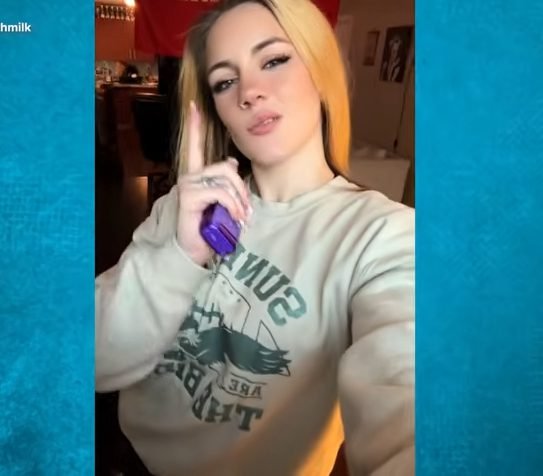
The Ocean County Prosecutor’s Office approved four charges on July 7, one day before Cranmer’s arrest: second-degree sexual assault, second-degree manufacturing of child sexual abuse material, third-degree endangering the welfare of a child, and third-degree possession of child sexual abuse material. All four charges stem from conduct allegedly involving one victim under the age of 13. Cranmer is presumed innocent unless and until a court finds otherwise.
She is currently being held without bail at the Ocean County Jail, and no attorney has been publicly listed on her behalf as of this writing. Investigators have said a distinctive tattoo visible in the recordings helped confirm Cranmer’s identity, a detail that will likely matter as much to the defense’s authentication fight as to the prosecution’s case-in-chief.
The Legal Battle Ahead

Video evidence feels irrefutable to a jury, but it rarely walks into a courtroom unchallenged. Legal analysts on the Law & Crime Network, including former prosecutor Marian Bracha, have pointed out that any modern defense team will likely raise questions about whether footage like this can be manipulated, altered, or generated artificially before a jury ever sees it.
That authentication hurdle is precisely why prosecutors in cases built on digital recordings increasingly plan for the possibility of calling the child victim to testify in open court, despite the trauma that entails, because a defense built around doubting the footage’s authenticity is far harder to sustain against a witness who lived it.

Cranmer’s own public history may also shape her defense’s strategy. She has spoken on TikTok about a difficult childhood, including her father’s death on Christmas Day when she was 13, being separated from her parents at age 11, and having moved 36 times growing up. Combined with reported ongoing mental health struggles before her arrest, that history gives her legal team an obvious avenue: a mental-illness-based defense, whether that means a formal “guilty but mentally ill” plea or simply mitigation evidence aimed at sentencing if the case does not go to trial.
Any plea negotiations are unlikely to move quickly. Bracha and other analysts note that formal talks in cases like this typically wait until the defense completes its own independent forensic review of the phone extraction and receives full discovery from the state, a process that in New Jersey can stretch on for months given the technical complexity of a full Snapchat and device forensic dump.
A Case Built on a Phone No One Was Supposed to Search

What makes this case unusual is how ordinary its origin was. No wiretap, no undercover sting, just a roommate checking a returned phone. That accident of discovery is now the foundation of a four-count felony indictment and a child victim whose life has been upended by evidence Cranmer herself allegedly created.
As the case moves toward pretrial motions, the real fight will not be about whether the footage exists. It will be about whether a jury ever gets to see it, who is made to testify to explain it, and whether Victoria Cranmer’s own documented mental health history is enough to change how New Jersey holds her accountable. For now, she sits in Ocean County Jail, presumed innocent, waiting for a legal process that has barely begun.