More than a decade after the death of UNC-Chapel Hill student Faith Hedgepeth, a jury is now hearing the case against the man prosecutors say is responsible. Miguel Enrique Salguero-Olivares is on trial for the September 7, 2012 killing of the 19-year-old, who was a member of the Haliwa-Saponi Native American tribe.
He is charged with first-degree murder, first-degree burglary, first-degree rape and first-degree sexual offense. He has not been convicted of any of these charges, and the first two days of trial have laid out a clear divide. Prosecutors are leaning on DNA and forensic evidence. The defense is questioning memory, timelines and what happened inside the apartment over the long gap between the crime and the trial.
This article walks through the first two days: the courtroom ground rules, both opening statements, and the testimony of roommate Karena Rosario and friend Jordan McCrary.
Case Background
Faith Hedgepeth was a student at the University of North Carolina at Chapel Hill. According to prosecutors, she was an ambitious young woman who was set to be the first person in her family to graduate from college.
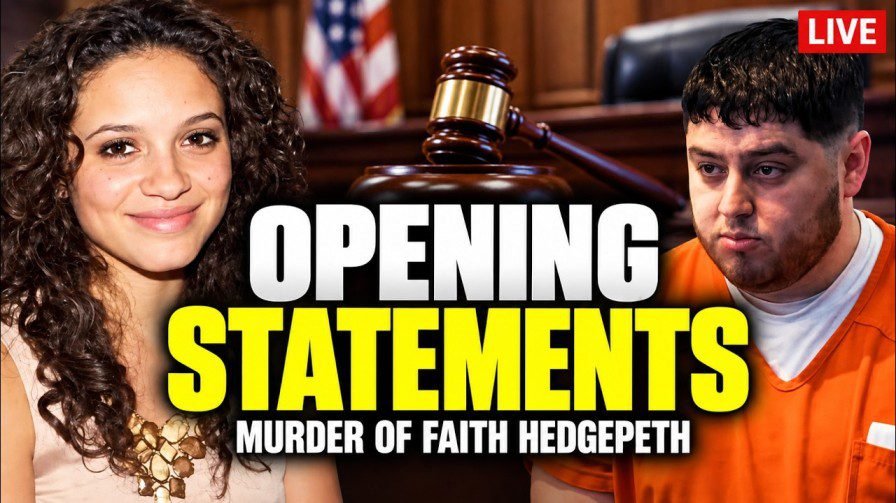
The crime was committed on September 7, 2012. The case then went unsolved for nine years. A DNA match led to the arrest of Salguero-Olivares in September 2021, which turned the investigation from a cold case into a prosecution.
Because so much time passed between the crime and the trial, the length of that gap has become part of the courtroom conversation. Defense counsel has pointed to roughly 14 years of elapsed time when questioning witness recall and the condition of the scene.
The charges are serious, and the burden rests with the State. Charges and allegations are not proof, and the jury was reminded of the burden of proof in its opening instructions.
The trial began in October 2026, with prosecutors emphasizing forensic evidence and the defense challenging whether that evidence proves the allegations. Read the Faith Hedgepeth murder trial began in October 2026 report for additional courtroom context.
Day 1: Courtroom Rules and Jury Instructions
Before any evidence was presented, Judge Gregory set strict rules for the courtroom. Only a single agreed pool camera, operated by Court TV, was allowed. Media audio devices were barred from counsel tables, members of the public could not record, and a dress code and standards of decorum applied.
The jury received standard instructions. They were told about the burden of proof, to disregard media and internet coverage, and to use any notes only to refresh their own memory. Jurors were also required to power off their phones.
None of this is dramatic, but it matters in a case that has drawn public attention for years. Rules like these exist so a verdict rests on what is said in court and not on outside commentary.
The Prosecution’s Opening Statement
Prosecutors began by describing Faith as a student with a future, setting out who she was before moving on to the forensic case.
They then laid out the timeline of the night. Faith and her roommate, Karena Rosario, went to a nightclub called “The Thrill.” They returned to their apartment, and Rosario left around 4:20 to 4:30 AM, according to the prosecution’s account, leaving Faith asleep.
The DNA Evidence Prosecutors Previewed
The centerpiece of the State’s opening was DNA. According to prosecutors, a single male DNA profile matching the defendant was found in several key places:
- Semen and sperm inside the victim, in the vaginal and rectal areas
- A bloody Bacardi rum bottle left at the scene, which prosecutors described as the murder weapon and which they said contained tissue and blood
- The victim’s boxer shorts
- A discarded, bloodied tampon found beside the bed
- A blue Listerine bottle, which also carried the defendant’s palm print and left thumbprint
Prosecutors stressed that the profile was a single, solitary male profile, not a mixture of several people. That is a deliberate choice of emphasis. A single profile is harder to attribute to innocent contact or to several people.
The Neighboring Community
Prosecutors also told jurors that a community of workers from Guatemala, including relatives and co-workers, lived in the same apartment complex, across the parking lot from Faith and Karena. The material provided does not spell out how the State intends to connect that fact to its case, so it is best read as background that jurors were given at this stage.
The Defense’s Opening Statement
The defense did not try to match the State’s forensic detail point by point. Its strategy centered on reasonable doubt in three areas:
- How someone physically entered the apartment. The defense questioned how entry occurred, which ties directly to the burglary charge.
- The timeline. It challenged the sequence of events on the night in question.
- Witness credibility and scene contamination. It argued that, over 14 years, memories fade and a scene can be altered or contaminated.
The defense did not need to prove anything. The State carries the burden, and the defense openly aimed to show jurors that the story is less certain than the DNA headlines suggest.
Day 2: Key Testimony and Evidence
Karena Rosario, the Victim’s Roommate
Rosario was the first major witness and is a central figure because she was the last known person to see Faith alive, according to the timeline described in court.
She described the trip to “The Thrill” on the night of September 6 into September 7, 2012. She said she felt sick and intoxicated at the club, which was why the two returned home earlier than planned. After they got back, she left the apartment around 4:20 to 4:30 AM with a male acquaintance, Jordan McCrary, leaving Faith asleep in her bed.
State’s Exhibit 22 was a five-page handwritten statement Rosario made shortly after the incident. The jury was given time to read it individually, with both sides allowing that.
Rosario also clarified that the specific times in her statement came from her cell phone call logs and text history, not from unaided memory. That matters for both sides. For the State, it anchors the timeline in records. For the defense, it highlights how much of the timeline depends on documents and not on what a witness can recall years later.
Jordan McCrary
McCrary confirmed that he picked Rosario up from the apartment complex at about 4:30 AM after she called for a ride. He described her as visibly upset and intoxicated.
One detail drew particular attention. McCrary testified that while they were in the car, Rosario was playing with her hand and noticed a small red mark or spot on her finger. She was unsure what it was. According to his testimony, the possibilities discussed were vomit or a slushy mix, or blood.
The material provided does not say what, if anything, was later concluded about that mark, so nothing should be read into it beyond what McCrary said.
How the Defense Cross-Examined
According to the summary of the proceedings, defense counsel pressed witnesses on several points:
- The condition of the apartment
- Whether doors were unlocked
- Interactions with former boyfriends, including Eriq Takoy Jones
- Small timeline discrepancies that crept in across 14 years
The defense also tried to draw attention to the behavior of household members and visitors, in an effort to raise alternative theories. This is often called a third-party culprit approach, though the supplied material describes it as an attempt to raise doubt and not as a formal accusation against any named person.
The prosecution stayed focused on its core point: one male DNA signature, belonging to the defendant, found on the victim and on key items at the scene.
Key Physical Evidence in the Case
Besides DNA, the evidence discussed so far includes:
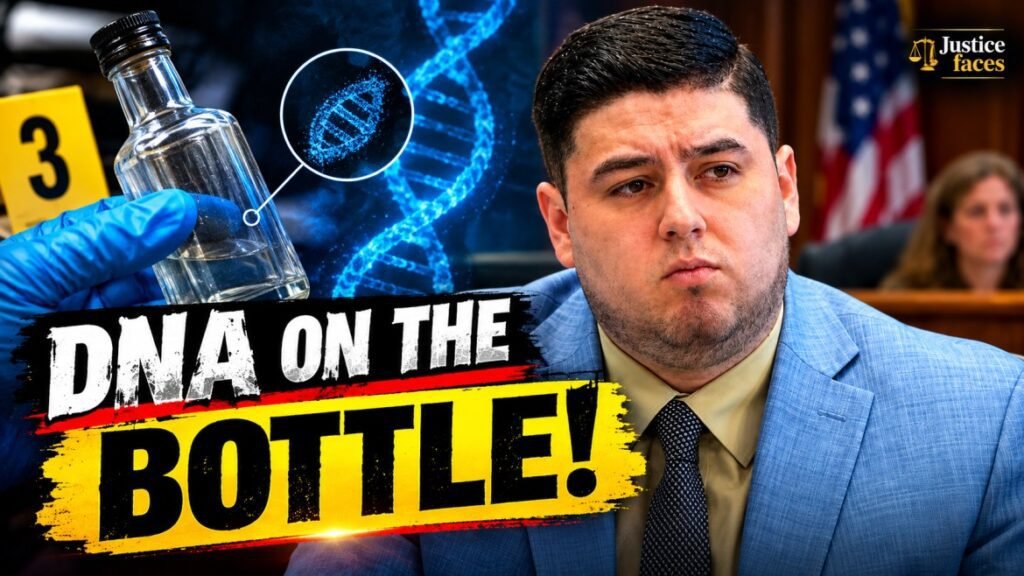
- The Bacardi rum bottle, described by prosecutors as the murder weapon, with blood, tissue and DNA
- The blue Listerine bottle, with a left thumbprint, a palm print and DNA
- A fast-food bag carrying a written message, which the notes record as “I’M NOT STUPID B****” and “JEALOUS”
- The victim’s clothing and the semen and sperm evidence
The material provided does not explain who prosecutors say wrote the message on the bag or how it will be tied to the defendant, so it should not be treated as attributed to anyone yet.
Legal Issues Explained
First-degree murder is the most serious homicide charge. It generally requires proof of specific elements set by state law, and the State has to prove them beyond a reasonable doubt.
First-degree burglary concerns unlawful entry into a dwelling, which is why the defense’s focus on how someone got into the apartment is legally relevant and not just a side issue.
Reasonable doubt is the standard of proof in a criminal trial. The defense does not have to prove innocence. It only has to give jurors a reason to doubt that the State has proven each element.
Cold case refers to a case that went unsolved for a long period. Here, the DNA match nine years later was the breakthrough that led to the arrest.
For readers who want to explore related legal concepts in more detail, our additional legal resources and explanations offer a starting point for understanding courtroom procedure and legal terminology.
What Happens Next
The trial is continuing. The material provided covers Days 1 and 2 only, so further witnesses, additional forensic testimony, the defense case and any verdict are not known at this point. No future dates or outcomes should be assumed.
As proceedings continue, readers can follow the latest reporting on the Faith Hedgepeth trial for additional developments beyond the first two days covered here.
Current Case Status
Miguel Salguero-Olivares has been charged and is on trial. He has not been convicted or acquitted. Everything described above reflects what was said and presented in court, with the State’s allegations remaining allegations unless and until the jury decides otherwise.
Frequently Asked Questions
Who is Faith Hedgepeth?
She was a 19-year-old UNC-Chapel Hill student and member of the Haliwa-Saponi tribe, killed on September 7, 2012.
Who is on trial?
Miguel Enrique Salguero-Olivares, who is charged with first-degree murder, first-degree burglary, first-degree rape and first-degree sexual offense.
How was the case solved?
A DNA match ended a nine-year cold case and led to his arrest in September 2021.
Who is the judge?
Judge Gregory is presiding.
What did prosecutors say in their opening?
They said a single male DNA profile matching the defendant was found in multiple places, including on a rum bottle described as the murder weapon.
What is the defense arguing?
The defense is focusing on reasonable doubt over how entry occurred, the timeline, witness credibility and possible contamination over 14 years.
Who testified on Day 2?
Roommate Karena Rosario and friend Jordan McCrary.
Has there been a verdict?
No. Based on the material available, the trial is ongoing.
Conclusion
After two days, the shape of the trial is clear. The State is asking jurors to trust forensic science, with a single DNA profile tied to the victim and to several items at the scene. The defense is asking them to look at the gaps: a 14-year-old timeline, witnesses recalling a night from 2012, and questions over how the apartment was entered.
What remains unresolved is how the remaining evidence will connect those two accounts, and how the jury weighs them. For now, the central question is whether the forensic evidence satisfies the State’s burden on every charge.
Readers following this case can explore our coverage of Other courtroom cases and trial analysis to better understand how evidence and legal arguments are presented in court.