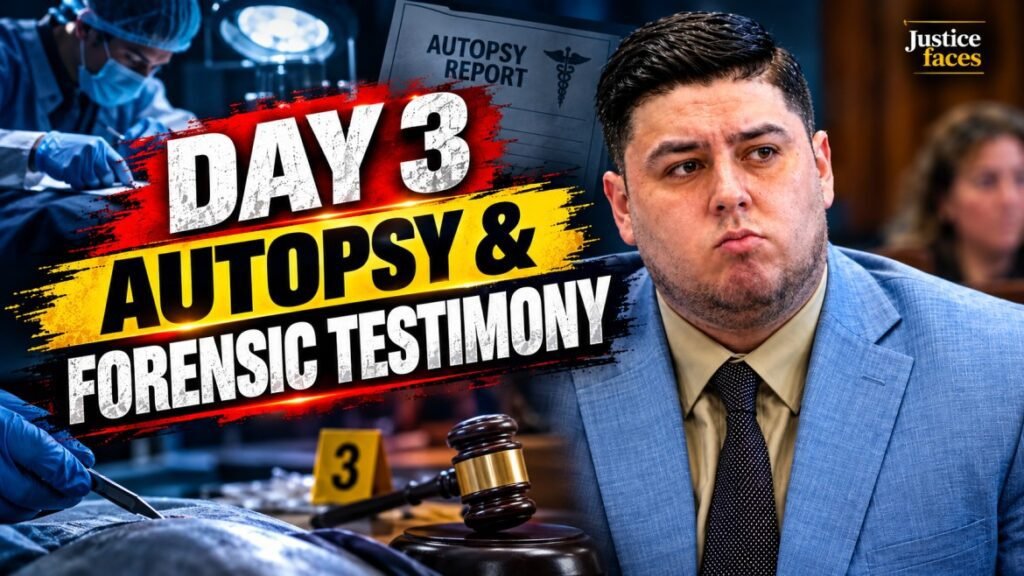
Jurors in the Faith Hedgepeth murder trial heard Day 3 testimony from a Chapel Hill police evidence technician and from a senior medical examiner who described the injuries that killed the 19-year-old UNC student. The defense used its cross-examination to test how physical evidence was collected, sealed and stored. Miguel Salguero-Olivares is on trial in a Durham courtroom before Judge Keith Gregory, charged in connection with Faith’s death in 2012.
He has not been convicted of anything. What follows describes what was said and shown in court, and the State’s allegations remain allegations unless the jury finds otherwise.
Case Background
Faith Hedgepeth was a sophomore at the University of North Carolina at Chapel Hill when she was found dead in her off-campus apartment in September 2012. The Associated Press reported she was found beaten to death, and prosecutors have described her as a caring friend who was on track to become the first person in her family to graduate from college. The case stayed unsolved for years. ny1
Authorities said the 2021 arrest came after a DNA sample submitted to the state crime lab matched a profile found at the original crime scene. Chapel Hill police announced the arrest and charges on September 16, 2021. Salguero-Olivares is charged with first-degree murder, first-degree burglary, first-degree rape and first-degree sexual offense, according to the case summary supplied for this article. News reports have listed the charges slightly differently, so readers should check the indictment itself for the exact counts. wuncabc11
If you missed the earlier days, our Days 1 and 2 recap of the Faith Hedgepeth trial covers the opening statements and the testimony of roommate Karena Rosario.
How the Case Reached Day 3
The trial opened on Wednesday, October 7, 2026. In her opening statement, Assistant District Attorney Angela Garcia-Lamarca said the defendant left his DNA on a rum bottle she called the murder weapon, inside Hedgepeth’s body, and on a note written on a fast-food bag. Prosecutors have not yet shown, in the material supplied for Day 3, how they will connect the bag’s message to the defendant, so that point remains open. wunc
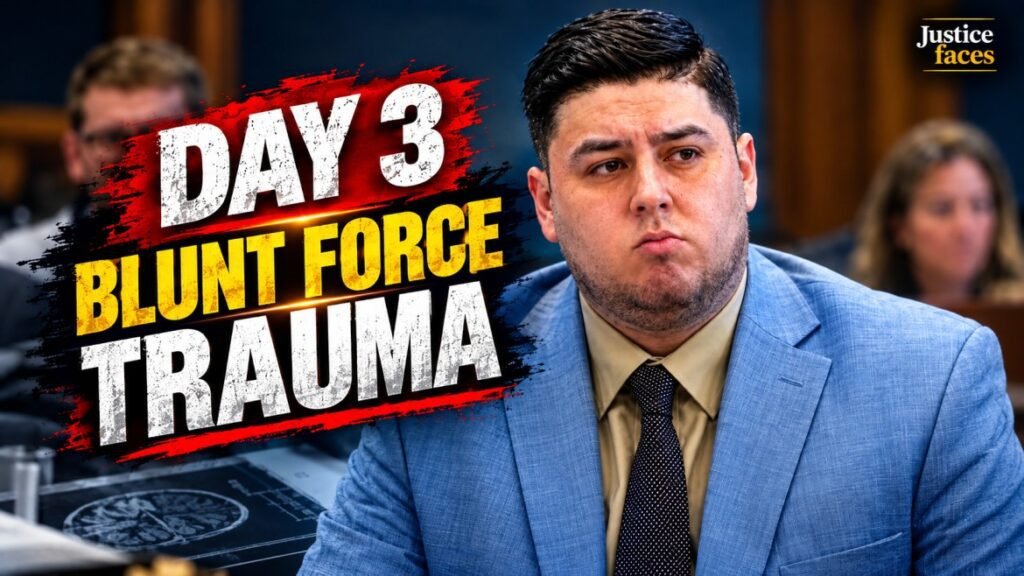
The defense has taken a different line. Defense attorney James Rainsford told jurors that prosecutors left out key details and asked them, “Where’s the rest of the evidence?” He also argued that finding DNA does not by itself show what happened. That framing explains why Day 3 mattered: the defense spent much of it probing the paper trail behind the physical evidence. wunc
What Happened During Day 3
The day began with housekeeping. Judge Gregory resumed court under strict decorum rules and gave the jury standard advisements about handling and reviewing exhibits. He also repeated the court’s limits on autopsy photographs and on how media may broadcast the proceedings. The supplied summary does not spell out those limits in detail.
Two witnesses carried the day. The first dealt with how evidence was gathered and kept, and the second with what the evidence showed about Faith’s death. Together they moved the trial from the story of the night toward the forensic record.
Key Testimony and Evidence
Evidence Technician Tamika Price
Tamika Price, an evidence technician with the Chapel Hill Police Department, testified about the protocols and policies her department follows when collecting, logging and securing physical evidence. Prosecutors walked her through how swabs, clothing and personal items were secured, sealed and sent on to forensic laboratories.
This kind of testimony is rarely dramatic, but it does real work. Before jurors can weigh a lab result, they need to know the item tested is the same one that was collected, and that it was handled in a way that protects it from contamination or mix-ups.
The Medical Examiner
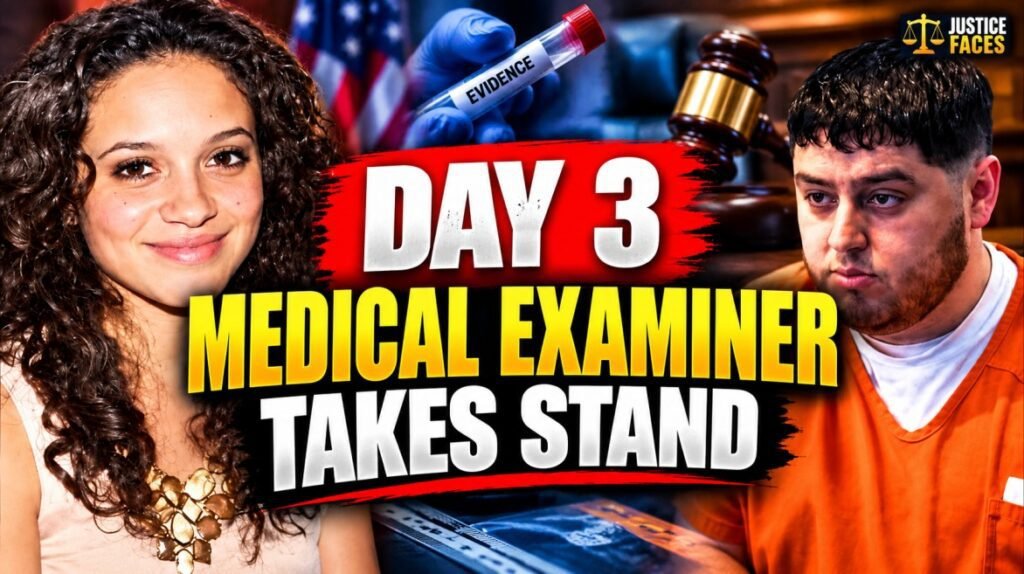
The State’s next major witness was an associate chief medical examiner with the North Carolina Office of the Chief Medical Examiner. The summary supplied for this article does not include the doctor’s name, so it is not given here. The witness was presented as a board-certified forensic pathologist who has performed thousands of autopsies.
The examiner confirmed that Faith died of severe blunt-force trauma to the head. Exhibits 68 through 84, which were admitted into evidence, supported that testimony. According to the summary, the injuries included:
- Multiple deep lacerations to the scalp, forehead and face
- Extensive bruising over both eyes, the right arm, fingers, knees and lower legs
- Internal bleeding around and inside the brain, with severe skull fractures on the right and bottom portions of the skull
- A chipped left front tooth, described as consistent with violent blunt force
The summary links the bruising on the arm, hands and legs to defensive struggles and impact. Because the exact wording of the testimony was not supplied, readers should treat that description as the examiner’s findings as summarized, not as a quotation.
Why does this testimony matter? A medical examiner establishes how a person died, which is a necessary element of any homicide case. It does not, by itself, say who caused the injuries, and nothing in the Day 3 material suggests it was offered for that purpose.
The Prosecution’s Position
Day 3 was primarily a foundation day for the State. By having a police technician explain evidence handling and a pathologist explain cause of death, prosecutors laid groundwork for the forensic evidence they previewed in opening statements.
That evidence centers on DNA. Prosecutors told jurors the defendant left his DNA on the bottle, on the note and inside the victim, and described the killing as an act committed “in a fit of rage” by a stranger. Those are the State’s claims. The jury will decide whether the evidence proves them. wunc
The Defense’s Position
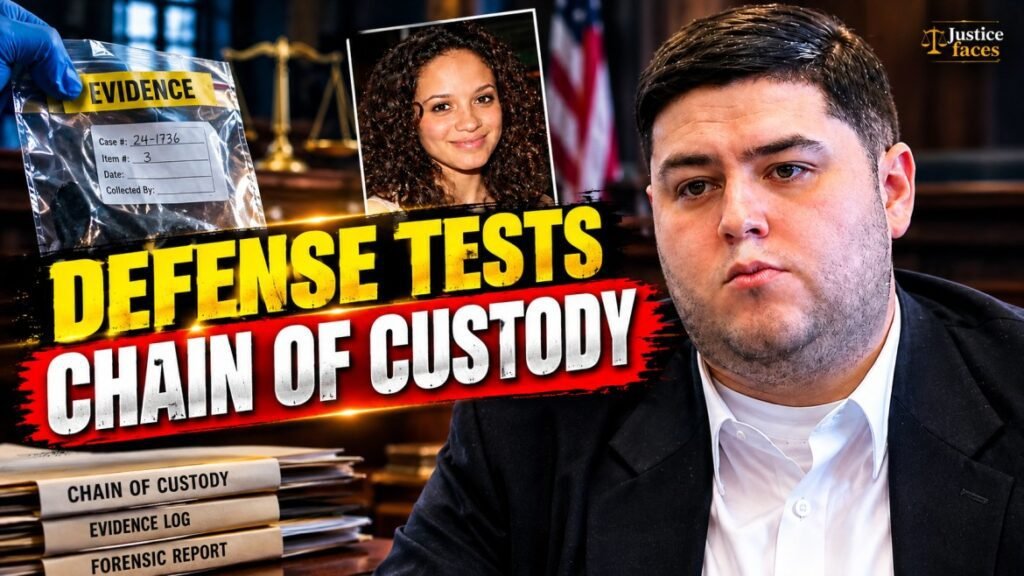
The defense used cross-examination to question the collection, handling and storage of evidence. According to the summary, the attorneys pressed on technical methods and on exact location markers for swabs and trace evidence taken from the scene. The apparent aim was to find gaps or vulnerabilities in the State’s timeline and physical exhibits.
This fits the approach Rainsford outlined in his opening. He said of the DNA evidence, “Finding something doesn’t mean a crime occurred. You have to connect them.” The AP’s account of the opening statements also reported that police later lost evidence related to what appeared to be blood in the apartment’s bathroom. The Day 3 material does not say whether that issue came up with these witnesses. wunc
The defense does not have to prove anything. Its cross-examination was aimed at giving jurors reasons to question whether the State has met its burden.
The Judge’s Role
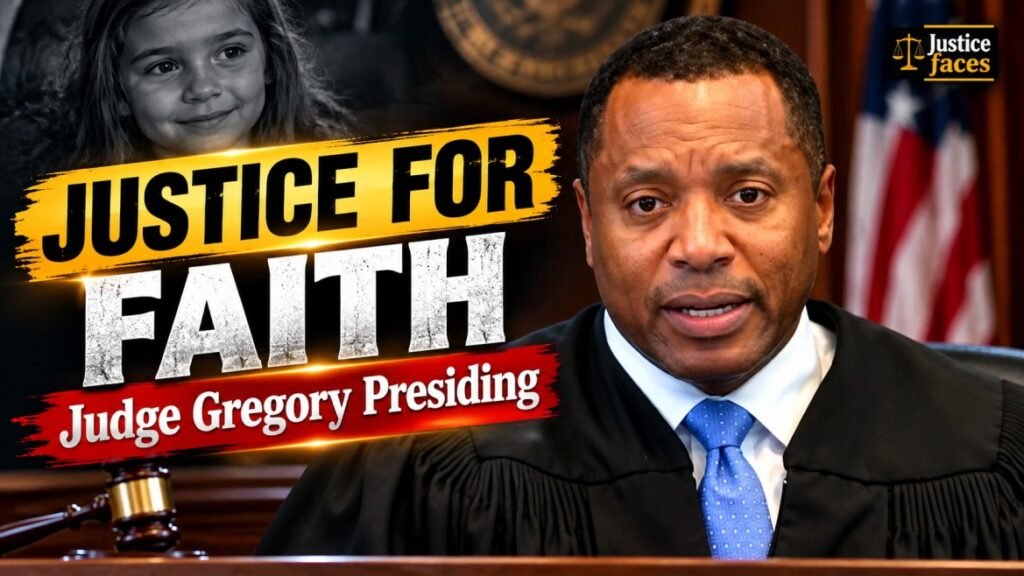
Judge Gregory’s role on Day 3 was procedural. He set the ground rules for handling exhibits, repeated the restrictions on autopsy photographs and broadcasting, and presided as Exhibits 68 through 84 were admitted. The supplied material does not record any contested rulings or notable remarks from the bench, so nothing should be read into his demeanor.
The Most Important Moments From Day 3
The Medical Examiner Confirms the Cause of Death
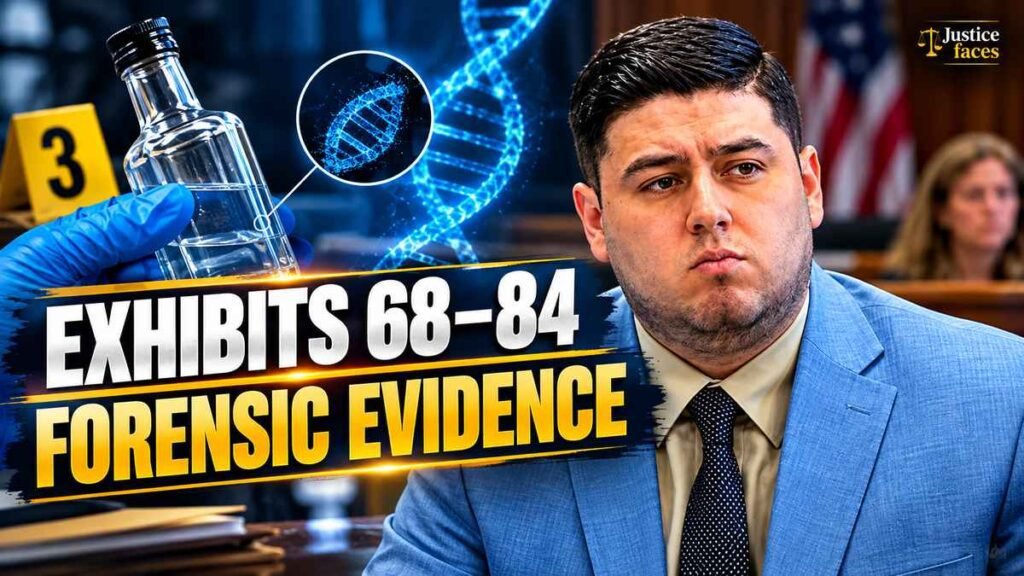
The central moment was the examiner’s confirmation that Faith died of severe blunt-force trauma to the head. The admission of Exhibits 68 to 84 put the detailed findings in front of the jury and into the record.
The Defense Tests the Chain of Custody
The defense’s questions about swabs, markers and storage were the main contest of the day. The exchanges did not, based on the summary, produce a ruling or a concession. They did show where the defense intends to push as the State moves toward its DNA witnesses.
Legal Issues Explained
Chain of custody is the documented record of who handled a piece of evidence, when, and what they did with it. It is meant to assure the court that the evidence is authentic, meaning the same evidence that was seized at the scene. A gap in that record does not automatically make evidence inadmissible, but it gives the defense something to argue about its reliability. statpearls
Cross-examination is the opposing side’s chance to question a witness after direct examination. In this case it is how the defense tests the State’s forensic process without calling witnesses of its own.
Exhibits admitted into evidence are items the judge has allowed the jury to consider. Admission means the exhibit can be weighed. It does not mean the exhibit proves what the party offering it says it does.
Burden of proof rests on the State. In a criminal trial, prosecutors must prove each element of each charge beyond a reasonable doubt, and the defendant is presumed innocent throughout. For a broader grounding in these terms, see our legal resources section.
What Happens Next
The trial is continuing. The material supplied covers Day 3 only, so the next witnesses, any further forensic or DNA testimony, the defense case and any verdict are not known. No schedule or outcome should be assumed.
Readers can follow developments through news coverage such as the Associated Press report published by WUNC, and through the earlier background reporting from ABC11 on the trial date.
Current Case Status
Miguel Salguero-Olivares has been charged and is on trial. He has not been convicted or acquitted, and no verdict has been reached. The jury has heard from the State’s evidence witnesses and a medical examiner, and the defense has begun testing the forensic record through cross-examination.
Frequently Asked Questions
What is the Faith Hedgepeth case about?
It concerns the 2012 killing of Faith Hedgepeth, a 19-year-old UNC-Chapel Hill student. Miguel Salguero-Olivares is on trial for charges connected to her death.
Who is the judge in the trial?
Judge Keith Gregory is presiding.
Who testified on Day 3?
Tamika Price, an evidence technician with the Chapel Hill Police Department, and an associate chief medical examiner from the North Carolina Office of the Chief Medical Examiner.
What did the medical examiner say caused Faith’s death?
The examiner confirmed that she died of severe blunt-force trauma to the head. Exhibits 68 through 84 documenting her injuries were admitted into evidence.
What did the defense do on Day 3?
Defense attorneys cross-examined witnesses on evidence collection, handling and storage, including the location markers for swabs and trace evidence.
Why does chain of custody matter?
It helps show that evidence presented in court is the same evidence collected at the scene and that it was not altered or mixed up along the way. Gaps in the record give the defense room to challenge reliability. A general explainer on chain of custody is available for readers who want more background.
Has there been a verdict?
No. Based on the material available, the trial is ongoing.
Is there similar coverage on this site?
Yes. Our coverage of the David Prevatte murder trial shows how medical and forensic testimony unfolds in another North Carolina case, and the Caleb Flynn sentencing report shows where such a case can end.
Conclusion
Day 3 was a day of foundations. A police technician explained how evidence is meant to be protected, and a medical examiner gave the jury a clinical account of how Faith Hedgepeth died. The defense, for its part, signaled that it will keep testing the paths the evidence took from the scene to the lab.
What is still unresolved is the question the jury was seated to answer: whether the forensic evidence, taken together, proves each charge beyond a reasonable doubt. For more trial reporting, browse our court cases coverage.