The murder trial of Lindsay Clancy ended on September 4, 2026, without a verdict. After seven days of deliberations, jurors in Plymouth County Superior Court in Massachusetts told Judge William Sullivan they could not reach a unanimous decision on any count, and he declared a mistrial.
Clancy, a former nurse, was charged with three counts of first-degree murder in the deaths of her children, Cora, 5, Dawson, 3, and Callan, 8 months, at the family home in Duxbury on January 24, 2023. She pleaded not guilty. As of October 10, 2026, she has not been convicted or acquitted, and prosecutors have not publicly said whether they will retry her.
What makes the case unusual is that the central fight was not about whether she caused the deaths. It was about her mental state. The jury had to decide whether prosecutors could prove beyond a reasonable doubt that she was criminally responsible under Massachusetts law.
Case Background
On January 24, 2023, Patrick Clancy left the family home to run errands. Prosecutors say that while he was gone, the three children were strangled with exercise bands in the basement. Lindsay Clancy then jumped from a second-story window in what authorities described as an apparent suicide attempt, and she survived with severe spinal injuries that left her paralyzed from the waist down, according to published reporting.

The defense did not dispute at trial that she caused the deaths. Its position was that a severe psychiatric crisis, which it described as postpartum psychosis, meant she was not criminally responsible. Prosecutors argued she understood what she was doing and should be held accountable.
Both sides leaned heavily on her history in the months before the incident. Callan was born on May 26, 2022, and trial coverage described her mental health worsening after the birth. Jurors heard about diary entries and messages describing her feeling overwhelmed and frightened, as well as testimony from relatives who saw her struggle.
She was treated with several medications in late 2022 and expressed fears about their effects. From January 1 to January 5, 2023, she was an inpatient at McLean Hospital in Belmont. Dr. Alia Goodheart testified that she initially diagnosed severe major depressive disorder without psychotic features, and that she did not observe psychosis or consider Clancy a danger to herself or others at that time, according to trial reporting.
That history matters, but it settles very little on its own. Prior distress does not prove a lack of criminal responsibility, and a clinician’s observations on one day do not automatically describe a patient’s mind weeks later. Those gaps were exactly where the two sides collided.
What Happened During the Trial
Jury selection began on July 20, 2026, and opening statements followed on July 27. The proceedings fell into four phases, which the dated courtroom video archive makes easy to follow.
The prosecution’s case (July 27 to August 7)

Patrick Clancy testified first, describing the day of the incident and his wife’s struggles in the preceding months. A CVS manager and a restaurant hostess gave evidence about the timing of his errands, and witnesses described finding the children in the basement.
Over the following days, first responders and emergency physicians described the scene and the efforts to save the children. Jurors also visited the family home, the CVS and the restaurant on July 31. Police testified about a search warrant and the collection of medication bottles, a forensic scientist discussed toxicology, and medical examiners described the autopsies.
Nanny Elaine Rossi described Lindsay Clancy as attentive to the children. The prosecution rested on August 7.
The defense case (August 10 to August 21)
The defense opened with psychiatric treatment. Dr. Jennifer Tufts, who held telehealth appointments with Clancy, reportedly said she had not observed psychosis during their sessions. A psychiatric nurse practitioner discussed symptoms and medication adjustments.
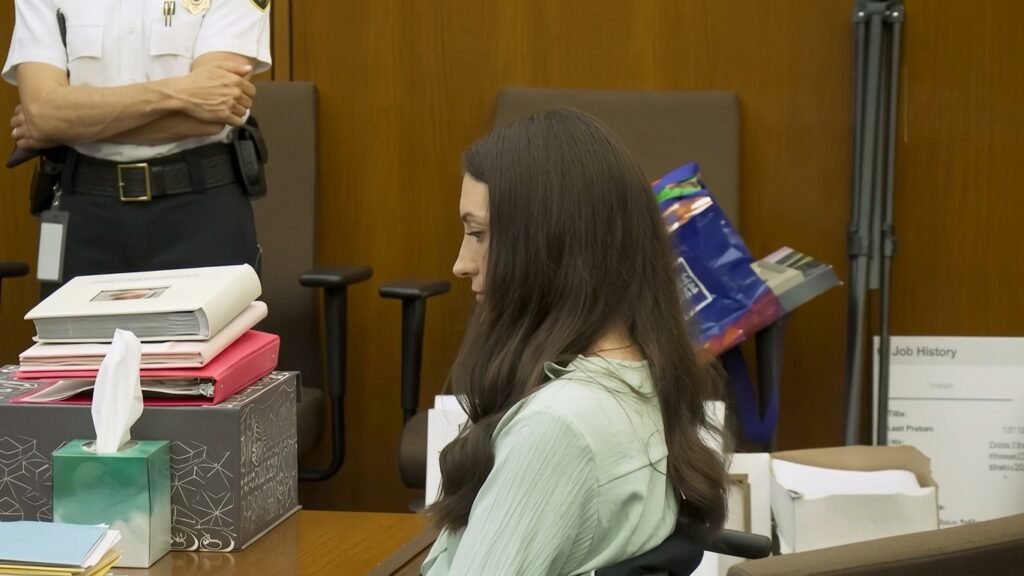
On August 12, Clancy became visibly distressed during graphic testimony, and the judge briefly cleared jurors from the courtroom. Her reaction was not evidence of her mental state on January 24, and it should not be read as such.
Digital evidence came next, including searches and private notes recovered from her devices. Family members, including her parents and mother-in-law, described the changes they had seen. On August 19, a clinical psychologist gave extensive testimony about postpartum psychosis, and on August 20 a hospital chaplain discussed statements Clancy had made about voices.
The defense’s key expert came on August 21. Psychiatrist Dr. Phillip Resnick testified that he believed Clancy was psychotic on the day of the deaths, and he discussed command hallucinations and what he described as a delusion of influence. The defense then rested.
The rebuttal (August 21 to August 26)
Prosecutors called their own experts to challenge that interpretation. Rebuttal testimony offered an alternative explanation involving what forensic literature calls altruistic filicide, which is a parent’s belief that killing a child is somehow beneficial. This was an expert theory presented in court, not a finding the jury accepted.
On August 24, the defense moved for a mistrial after a witness referred to religion. Judge Sullivan denied the motion and reprimanded the prosecution, according to the trial archive. Forensic psychologist Kirk Heilbrun then discussed the difference between dissociation and psychosis, and Dr. Gregory Saathoff testified about inconsistencies he identified in Clancy’s accounts.
Closings and deliberations (August 27 to September 4)
Closing arguments and the judge’s legal instructions came on August 27. Deliberations began that day and stretched across seven days of jury work. On September 1, jurors reported they were unable to agree, and the judge sent them back. On September 3, he again instructed them on reasonable doubt and directed them to continue.
Key Testimony and Evidence

The evidence fell into a few broad categories, and each cut in more than one direction.
Patrick Clancy’s testimony established the sequence of events and the family’s background. He reportedly testified that his wife had not told him she was hearing voices. That speaks to what he knew, but it cannot prove whether psychosis was present.
Medical and forensic evidence described the children’s condition, their treatment and the findings of the autopsies. A medical examiner’s conclusions about cause of death answer a different question from a psychiatrist’s opinion about criminal responsibility.
Digital searches and private writings were presented through investigators. CBS News reported that jurors heard about searches related to suicide and mental health, including some in the days before the incident. Prosecutors could argue such material pointed to awareness or planning, while the defense could argue it reflected suicidal distress and a deteriorating mind. A search query is not a confession, and its meaning depends on timing and context.
Treating providers testified that they had not observed psychosis in their encounters with Clancy. That supported the prosecution’s challenge to the defense diagnosis. The defense answered that mental states change and that one appointment does not describe a later day.
The Prosecution’s Argument
Prosecutors argued that Clancy understood her actions and was criminally responsible for killing her children. Their case combined the physical and medical evidence, her digital activity, the testimony of providers who did not see psychosis, and the rebuttal experts.
Their experts disputed the defense’s reading of psychosis and command hallucinations. Heilbrun distinguished dissociation from psychosis, and Saathoff pointed to inconsistencies in her accounts. These are allegations and expert opinions presented to a jury that never returned a verdict, so none of it has been established as fact by the court.
The Defense’s Argument
The defense argued that Clancy’s condition on January 24, 2023, was so severe that she lacked criminal responsibility. It did not frame this as ordinary depression or simply being overwhelmed. It argued the illness had progressed into psychosis.
Resnick was central to that argument. According to published trial reporting, he described Clancy as “frankly psychotic” and said she believed an outside force was controlling her actions. Her mother, Paula Musgrove, testified that Clancy had disclosed thoughts of harming the children in December 2022, and relatives described medication concerns and visible decline.
The defense’s position, as framed in its arguments, was that a depression diagnosis at an earlier clinic visit did not rule out a later break from reality. Prosecution experts contested that, and it remains an expert dispute, not a ruling.
The Judge’s Role and Key Statements

Judge Sullivan managed a long and emotionally heavy trial. He cleared the jury briefly during distressing testimony on August 12, denied the defense mistrial request on August 24 while reprimanding the prosecution, and instructed jurors on the law before deliberations.
During deliberations he twice sent the jury back to continue, including after a note about reasonable doubt on September 3. A defense effort to remove the lone holdout juror was unsuccessful, and he declined a request to poll jurors on lesser offenses before declaring a mistrial. The court record supplied for this article does not include his full reasoning on those decisions, so this report does not characterize it.
The Most Important Moments From the Trial
Dueling Experts on the Same History
The trial turned on how experts read the same record. Resnick, for the defense, saw psychosis. Heilbrun and Saathoff, for the prosecution, offered different explanations and questioned the consistency of Clancy’s accounts.
A Mistrial Motion Over a Religious Reference
On August 24, a witness’s reference to religion prompted a defense request for a mistrial. The judge denied it, but reprimanded the prosecution, which shows how closely the court watched what jurors heard.
Deadlock After Seven Days
On September 4, jurors reported they could not agree on any count. The defense’s attempt to have the holdout removed failed, and the case ended without a verdict.
Legal Issues Explained
Massachusetts does not use the word “insanity” as the name of its test. The standard comes from Commonwealth v. McHoul, and it asks whether, because of a mental disease or defect, a defendant lacked substantial capacity to appreciate the wrongfulness of her conduct or to conform her conduct to the law. The Supreme Judicial Court’s model jury instruction on criminal responsibility explains that once the issue is raised, the Commonwealth must prove beyond a reasonable doubt that the defendant was criminally responsible.
In plain terms, the defense did not have to prove Clancy was not responsible. Prosecutors had to convince every juror that she was. A diagnosis alone does not settle that, and neither does the fact that a person committed an act.
The same instruction also tells jurors what a verdict of not guilty by reason of lack of criminal responsibility means. It notes that prosecutors or another authority may, and generally do, ask the court to commit the person to a mental health facility. That is why such a verdict is not a simple release.
Postpartum depression and postpartum psychosis are different conditions. Mass General’s Center for Women’s Mental Health describes postpartum psychosis as the most severe form of postpartum psychiatric illness and a psychiatric emergency. Whether Clancy had it, and whether it met the legal test, was the contested question for the jury.
Why the Jury Deadlocked
Post-trial reporting described the split as 11 to 1. Reddington has said eleven jurors voted not guilty by reason of lack of criminal responsibility, with one juror, Michael P. Desronvil, holding out, according to Boston 25 News.
Several jurors have since accused Desronvil of not following the law on reasonable doubt, of disengaging from deliberations and of sometimes looking at his phone, as reported by CT Insider. Desronvil, through his lawyer and in a video statement, has said he had no doubts about her guilt. These are competing accounts of jury conduct, not findings by the court.
It would be speculation to say any single exhibit or expert caused the deadlock. The jury gave no verdict explaining how individual jurors weighed the evidence.
What Happens Next

Several post-trial matters are pending. At a hearing on September 29, Clancy’s lawyers argued for a required finding of not guilty, and on October 1 Judge Sullivan denied it in a five-page written order, according to ABC News. The order concluded that prosecutors had presented enough evidence to:
“permit a rational trier of fact to find beyond a reasonable doubt the elements of the charge of murder.”
The ruling does not decide guilt. Per the Associated Press report, Sullivan said the jury, not the judge, decides whether to believe the defense experts.
The defense has also moved to dismiss the case on double jeopardy grounds, arguing the mistrial was not necessary because the judge could have inquired about the holdout juror instead. Boston.com notes that hung-jury mistrials generally do not count as double jeopardy. Boston University law professor emeritus David Rossman told WBUR that either side is likely to appeal however that motion is decided.
On October 7, the defense asked for an evidentiary hearing on the holdout juror and the double jeopardy claims, and it has asked that the matter be considered at the next scheduled hearing on November 2, 2026. That hearing has not yet taken place. Plymouth County District Attorney Timothy Cruz has said no decision has been made on a retrial or on lesser charges.
Current Case Status
Clancy has not been convicted and has not been acquitted. The criminal charges were not resolved because the jury deadlocked, and a mistrial is neither a finding of innocence nor a finding of guilt.
Her lawyer has said she remains under supervision at Tewksbury State Hospital. No retrial date has been set. For more courtroom reporting, see our true crime and legal journalism coverage, including our day-by-day recap of the Faith Hedgepeth murder trial.
Frequently Asked Questions
What is the Lindsay Clancy case about?
Lindsay Clancy is charged with three counts of first-degree murder in the January 24, 2023 deaths of her children, Cora, Dawson and Callan, in Duxbury, Massachusetts. She pleaded not guilty. The key issue at trial was whether she was criminally responsible.
Was Lindsay Clancy convicted?
No. The jury could not reach a unanimous verdict, and Judge William Sullivan declared a mistrial on September 4, 2026.
Who is the judge in the Lindsay Clancy trial?
Judge William Sullivan of Plymouth County Superior Court presided over the trial and the post-trial proceedings.
What did the defense argue?
The defense argued that postpartum psychosis and a severe psychiatric crisis meant Clancy lacked criminal responsibility on the day of the deaths. It relied on her treatment history, her writings, family testimony and expert psychiatric opinions, including Dr. Phillip Resnick.
What did prosecutors argue?
Prosecutors argued she understood her actions and was criminally responsible. They relied on medical and forensic evidence, digital searches, treating providers who did not observe psychosis, and rebuttal experts.
Why did the jury deadlock?
Reporting described an 11 to 1 split, with one juror holding out. The reasons for the split are disputed, and the jury gave no explanation of its reasoning.
What does a mistrial mean?
A mistrial means the trial ended without a verdict. It is not an acquittal, and it does not prove guilt or innocence.
Will Lindsay Clancy be retried?
That has not been announced. The district attorney has said no decision has been made, and the defense is seeking dismissal on double jeopardy grounds.
What is the next hearing in the case?
A hearing is scheduled for November 2, 2026, where the court is expected to take up pending motions, including the double jeopardy argument and the request related to the holdout juror.
Conclusion
The Clancy trial asked jurors to weigh competing medical explanations against a legal test that is narrower than many people assume. Eleven of twelve jurors reportedly leaned one way, and one did not, and the result was no verdict at all.
What remains unresolved is substantial. The court has yet to rule on double jeopardy, prosecutors have not announced a retrial decision, and the juror dispute is still contested. Until the court acts, the charges stand unresolved and the central question of criminal responsibility has not been answered by any jury.