
Twenty-one-year-old James Madron stood in a Bexar County courtroom expecting another conversation about second chances. He got a final answer instead.
“I’m going to prison for eight years?” he asked, his voice cracking as the weight of the moment finally landed.
The judge did not soften the blow. The response was calm, brief, and absolute: the matter was, in the court’s own words, “a done deal.”
For Madron, that exchange closed a chapter that began nearly five years earlier on a dark San Antonio road. It also raised a harder question that extends well beyond this single defendant. When does judicial mercy run out, and what does it actually take for a court to decide a young offender has burned through every chance he was given?
This is the story of how a horrific 2021 hit-and-run, an unusually forgiving plea deal, and a documented pattern of broken promises collided in a Texas courtroom this year — and why a judge ultimately decided that a decade of leniency had reached its limit.
The Digital Trail of a Broken Promise
James Madron’s case never should have reached a revocation hearing at all. He was handed one of the most generous outcomes available in Texas criminal law: deferred adjudication, a legal arrangement that lets a defendant avoid a felony conviction entirely if they complete probation cleanly. It is designed for people the system believes can still change course.
Madron did not take that opportunity seriously. Court records reviewed ahead of his 2026 hearing describe years of missed obligations, incomplete programs, and long stretches where he simply disappeared from his probation officer’s radar. The state’s Motion to Revoke Probation didn’t allege one mistake. It alleged a pattern.
That pattern is what ultimately mattered most to the court. A single missed class or a late check-in might be forgivable. A sustained, years-long refusal to engage with a court-ordered rehabilitation plan is something else entirely — and it is exactly what prosecutors laid out point by point when they asked the judge to send Madron to prison.
The Night at Donkey Lady Bridge
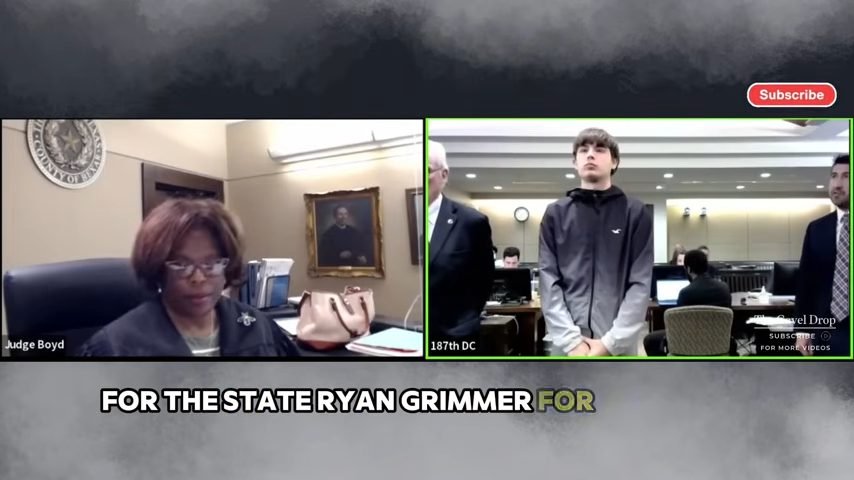
To understand why the state pushed so hard for prison time, the story has to rewind to 2021. Madron, then only 16 or 17, was behind the wheel of a car packed with friends in San Antonio.
Their plan that night was mundane, even a little cliché for teenagers in the area: a visit to the Donkey Lady Bridge, a local haunted-house legend on the city’s South Side. They never got there.
Instead, the group ended up driving aimlessly through the city. Court records point to excessive speed, with alcohol heavily implied as a contributing factor. At some point, Madron lost control of the vehicle entirely.
The crash that followed was catastrophic. The car came apart on impact, leaving two passengers trapped inside the mangled frame with severe injuries. One of them was a young woman named Alise Pettis.
What happened next is the detail that would define Madron’s legal fate for years to come. He did not call 911. He did not attempt to pull his injured friends from the wreckage. He got out of the car, and he walked home, leaving Pettis and another passenger trapped and bleeding in the wreckage behind him.
Charged as a Teenager, Sentenced as an Adult
By the time the case reached formal resolution on March 21, 2022, Madron was still a very young man, and the state extended him extraordinary leniency given his age and lack of a significant prior record. He was convicted of Failure to Stop and Render Aid Resulting in Serious Bodily Injury.
In plain terms, this Texas statute exists specifically for drivers who cause an accident involving injury and then flee rather than stopping to help or notify authorities. It is treated as a third-degree felony, a category that can carry substantial prison time on its own. Rather than sending Madron directly into the Texas Department of Criminal Justice, the court instead offered him 10 years of deferred adjudication probation.
That sentence was, in essence, a bet. It bet that a teenager who had made a devastating choice on one night could still be rehabilitated if given structure, therapy, and time. For that bet to pay off, Madron needed only to follow the conditions the court laid out. According to the record built over the following years, he consistently didn’t.
A Pattern the Court Could No Longer Ignore
The Motion to Revoke Probation filed by the State of Texas in 2026 did not describe a single lapse. It described a defendant who had treated a decade of court supervision as optional.
Prosecutors pointed to three specific rehabilitation requirements Madron had failed to complete. He never finished Moral Reconation Therapy, a structured cognitive-behavioral program aimed at correcting the kind of decision-making that led to his original offense. He also failed to complete the CATS Theft Course, a class connected to a separate, unadjudicated burglary allegation the court was factoring into his supervision.
Then there was the drug testing requirement. When the judge asked directly, Madron admitted that if he were tested that same afternoon, the result would come back positive for marijuana.
Serious as those failures were, none of them was the detail that ultimately triggered revocation proceedings. That distinction belonged to Condition Number Four: the basic requirement to check in with a community supervision officer. The state’s records showed Madron went completely dark for December 2023 and January 2024, filing no reports at all. When asked to respond to that specific violation in court, Madron entered a plea of “True.”
The Statute Behind the Sentence
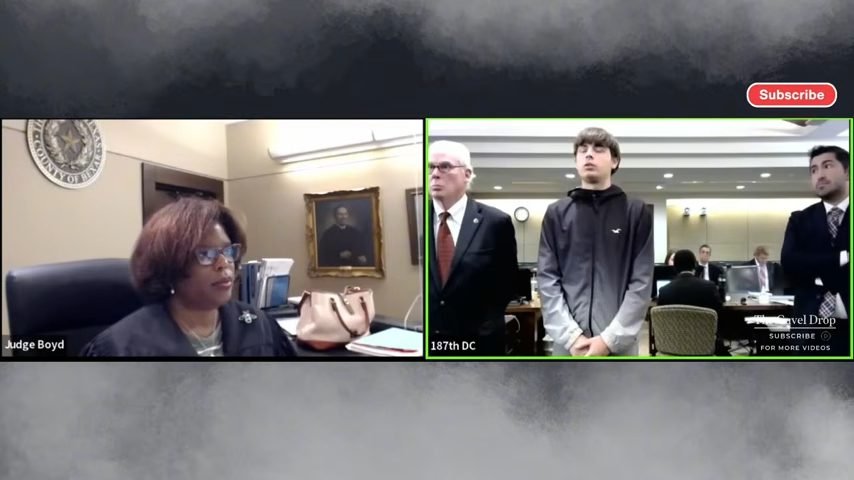
For readers unfamiliar with how deferred adjudication actually works, the mechanics matter here. Deferred adjudication is not a conviction. It is a pause. A defendant pleads to the underlying offense, but the court withholds a final finding of guilt while the person completes probation.
If probation goes well, the case can eventually be dismissed, and in many circumstances the record can be sealed. If it doesn’t, the court can revoke that status at any point during the supervision period, enter a formal conviction, and impose any sentence within the original punishment range.
That is precisely the mechanism at play in Madron’s case. His original charge, Failure to Stop and Render Aid Resulting in Serious Bodily Injury, exposed him to a punishment range attached to a third-degree felony under Texas law. When the judge revoked his deferred status this year, that range came back into play in full — meaning years, not months, were realistically on the table the moment the “True” plea was entered.
A Victim’s Unexpected Grace
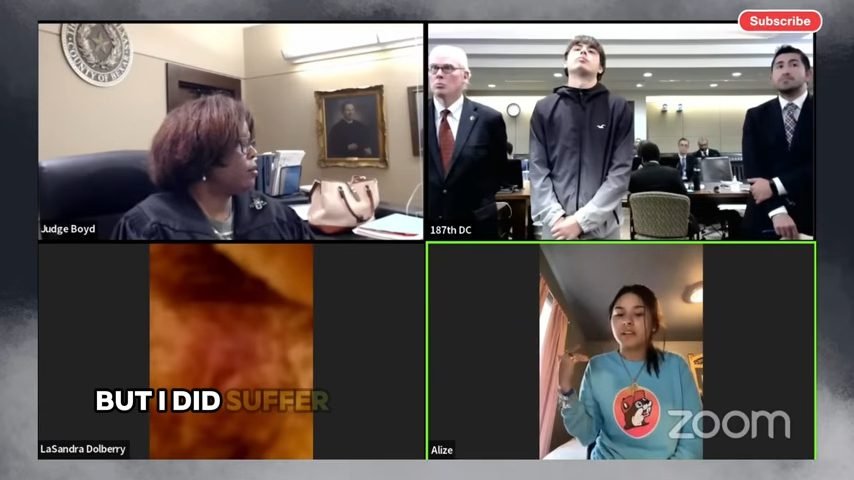
The emotional center of the hearing arrived not through argument, but through a Zoom call. Alise Pettis, one of the passengers Madron had left behind in the wreckage in 2021, appeared virtually to deliver her victim impact statement.
She spoke quietly but directly, describing physical and emotional trauma from the crash that she said would follow her for the rest of her life. Then she said something almost nobody in that courtroom expected.
“I don’t think that you should be in prison.”

Pettis was clear that forgiveness did not mean she believed Madron should face nothing. She told the court she still felt he deserved some form of real consequence for what happened that night. But she closed her statement looking directly at the man who had left her trapped in the wreckage, and she told him she forgave him completely.
It is rare for a victim in a case this severe to argue against incarceration. It is rarer still for that request to come from someone who lived through the exact abandonment at the center of the charge. Her statement gave Madron’s defense team something concrete to build on — and they used it.
The Defense’s Case for Another Chance
With the victim herself arguing against prison, Madron’s attorney pushed for an alternative: a strict “zero tolerance” probation arrangement, featuring intensive supervision and weekly drug screening rather than incarceration.
To explain away the missed check-ins, the defense laid out a genuinely difficult life circumstance. Madron had dropped out of school in the 11th grade to become the primary caregiver for his 13-year-old brother, after his mother became severely ill and came under investigation by Child Protective Services. At the same time, he was working as a dishwasher while supporting two toddlers of his own, ages three and one.
The defense also raised a transportation argument that, on its face, sounded reasonable. Madron testified that he lived near Lackland Air Force Base and that VIA, the local transit authority, had eliminated the specific bus route connecting his home to the probation office on Bandera Road.
Taken together, it was a portrait of a young man stretched between caregiving, poverty, and a transportation system that had failed him. The defense hoped it would be enough to keep Madron out of prison and preserve his ability to support his children.
Where the Defense’s Logic Fell Apart
The court did not dismiss Madron’s hardships outright, but it identified a contradiction the defense could not answer. Somehow, despite the same “transportation and financial barriers,” Madron had managed to log onto the internet regularly enough to complete online parenting classes and earn community service credit.
The judge pressed the point directly:
“How can you do parenting classes online, but you can’t report to probation online?”
That question became the fulcrum of the entire hearing. If internet access was reliable enough for one court-ordered obligation, the same access should have been available for virtual check-ins with a supervision officer. A canceled bus route might explain a missed in-person visit. It did not explain two entire months of total silence.
The court’s reasoning was straightforward. A probationer who genuinely respected the opportunity he’d been given would have picked up a phone and called his officer the moment a barrier appeared. Madron didn’t call. He didn’t send a text. According to the record, he simply stopped engaging with the system that was supervising him.
The Verdict and Its Conditions
The State of Texas asked for the maximum: a full 10 years in prison, arguing that Madron had treated his decade of probation as an optional suggestion rather than a binding court order.
The judge ultimately landed between the two positions, weighing the seriousness of Madron’s noncompliance against the mitigating reality of his young family and caregiving responsibilities. The court accepted his plea of “True” to the reporting violation, formally revoked the deferred adjudication, and entered a conviction of guilty on the original 2021 felony charge.
The sentence: eight years in the Texas Department of Criminal Justice, with credit for time already served. The judge also ordered that Madron have no unsupervised contact with minors going forward and recommended he be placed in a prison-based therapeutic community program during his incarceration.
Available records leave a gap regarding the exact date the sentence will conclude or whether Madron’s attorneys have signaled an intent to appeal. What is documented is the moment the sentence was handed down, and Madron’s stunned, one-line response to hearing it.
What This Case Signals Going Forward
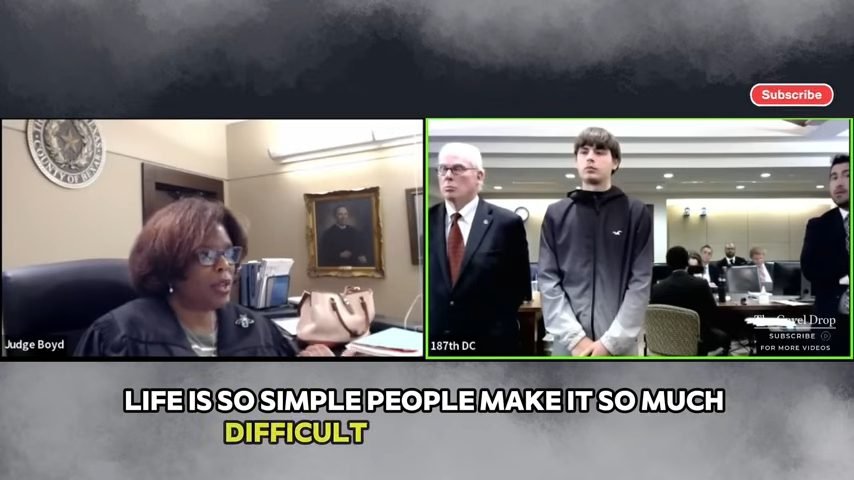
Beyond one defendant’s fate, the Madron case is a fairly stark illustration of how Texas courts weigh deferred adjudication violations when the underlying offense is serious. A hit-and-run involving serious bodily injury already sits near the upper end of what a judge can forgive with probation alone. Years of documented noncompliance made that forgiveness increasingly difficult to justify.
It’s also a reminder that victim testimony, even deeply sympathetic testimony asking for leniency, does not automatically override a court’s independent assessment of a defendant’s conduct. Alise Pettis’s forgiveness was real, and the court acknowledged it. It simply wasn’t the only factor on the table.
For James Madron, the eight-year sentence means his children will grow through much of their early years without him. For the broader system, the case stands as a plain answer to the question of what happens when a defendant is handed a rare second chance and, by the court’s own account, chooses again and again not to take it seriously.