Case No. 2024-CR-012617, Bexar County District Court, San Antonio, Texas
This analysis is based on the case summary and record excerpts provided for review. It has not been independently verified against the Bexar County District Clerk’s docket or a trial transcript, and no direct quotations are attributed beyond what appears in that summary. Readers seeking the underlying filings should consult the Bexar County District Clerk’s office directly.
Overview
In Bexar County District Court, Jessica Nicole Doberman entered a plea of no contest to a third-degree felony charge of Evading Arrest or Detention in a Vehicle. The court accepted a plea agreement placing her on three years of Deferred Adjudication Probation, with an unusually sweeping condition: a prohibition on operating any motor vehicle without the court’s express written permission.
The case is a useful window into how Texas courts handle a cluster of issues that come up together more often than people expect — a low-level traffic stop that escalates into a felony, an unrelated property-damage incident folded into the same proceeding, and a licensing violation that, on its own, would ordinarily be a minor infraction but here became central to the court’s sentencing decision.
Why a Vehicle Changes Everything

Under the Texas Penal Code, evading arrest or detention is generally a Class A misdemeanor the first time a person is charged with fleeing on foot or otherwise refusing to comply with a lawful order to stop. The moment a vehicle is used to flee, however, the offense is automatically elevated to a third-degree felony, regardless of whether anyone is injured or whether the flight is prolonged.
The reasoning behind this jump in severity is straightforward from a public-safety standpoint: a fleeing vehicle turns a routine encounter into a hazard for everyone on the road, not just the person being detained. Speed, unpredictable maneuvers, and the possibility of a chase mean the risk profile of the offense changes the instant a car — rather than a pair of legs — becomes the instrument of flight. Texas law treats that risk as serious enough to warrant felony-level consequences even for a first offense.
A third-degree felony under Texas law carries a punishment range of 2 to 10 years in the Texas Department of Criminal Justice, along with a discretionary fine of up to $10,000. That range gives a judge considerable latitude — from a relatively short prison term up to a decade-long sentence — depending on the facts of the case, the defendant’s criminal history, and any aggravating or mitigating circumstances raised at sentencing.
The Incident: A Traffic Stop That Became a Felony
According to the record, the underlying incident began as an ordinary traffic hazard call. A San Antonio police officer came across Doberman’s vehicle stopped on a public roadway in a way that was creating a danger to other drivers. The officer approached to investigate, and Doberman told him the vehicle had run out of gas.
What happened next is the crux of the felony charge. Rather than waiting for the officer’s help, Doberman put the truck in gear and drove off the moment assistance was offered, prompting a pursuit. The specific timing described in the record — that she fled at the exact moment help was extended, rather than at the moment she was confronted or accused of wrongdoing — is notable, because it undercuts the most common defense theory in evading cases: that the driver was reacting to a perceived threat or aggressive show of force. An offer of roadside assistance is about as far from a threatening police encounter as a traffic stop can get.
The “Panic” Defense and How Courts Typically Treat It
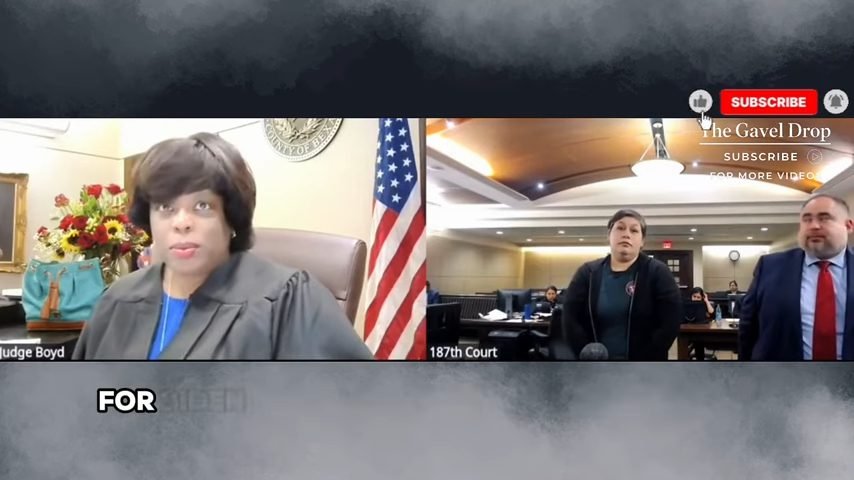
When asked by the court why she fled from an officer who was trying to help her, Doberman said she “panicked,” citing severe personal and financial stress — including a recent job loss and general economic instability — as context for her state of mind that day.
Stress-based justifications like this are common in evading cases, and Texas courts have generally been unreceptive to them as a legal defense, as opposed to a mitigating factor at sentencing. The reason is structural: evading arrest is not a crime that requires proof of a particular emotional state beyond the intent to flee once a person knows a peace officer is attempting to detain them. Whether the underlying motivation was panic, fear, poor judgment, or something else does not change whether the elements of the offense were met — it can, however, factor into a judge’s or prosecutor’s assessment of what an appropriate sentence looks like, since it speaks to the likelihood of the behavior repeating rather than to guilt itself. That distinction — mitigating factor versus legal defense — appears to be exactly how the “panic” explanation functioned in this case: it did not prevent a felony plea, but it likely played some role in the decision to offer probation rather than push for active prison time.
The Licensing Violation and the Ancillary Property Damage Case
A separate thread in the record concerns Doberman’s driving status. Under questioning, she admitted that she did not hold a valid driver’s license at the time of either the evading incident or a second, unrelated incident: a collision at her apartment complex in which she backed her truck into a parked vehicle belonging to a neighbor, Nina Lopez, causing $1,946.55 in documented property damage. She explained that her license had simply expired and that she had not renewed it, and said she had only been driving that day to reach a nearby store for fuel.
That second incident was processed separately as an “at-large” intake case (Case No. 2024-AL-001123) but was folded into the negotiations and sentencing for the felony evading charge — a common prosecutorial practice when a defendant has more than one pending matter, since it lets a court resolve related conduct in a single proceeding rather than requiring separate hearings.
Driving without a valid license is ordinarily a low-level offense on its own, often resolved with a fine. Here, though, it took on more weight because it appeared twice — once in a felony flight from police and once in a property-damage collision — establishing a pattern the court could point to when deciding what conditions were necessary to protect public safety going forward.
The Plea, the Waiver, and What Deferred Adjudication Means
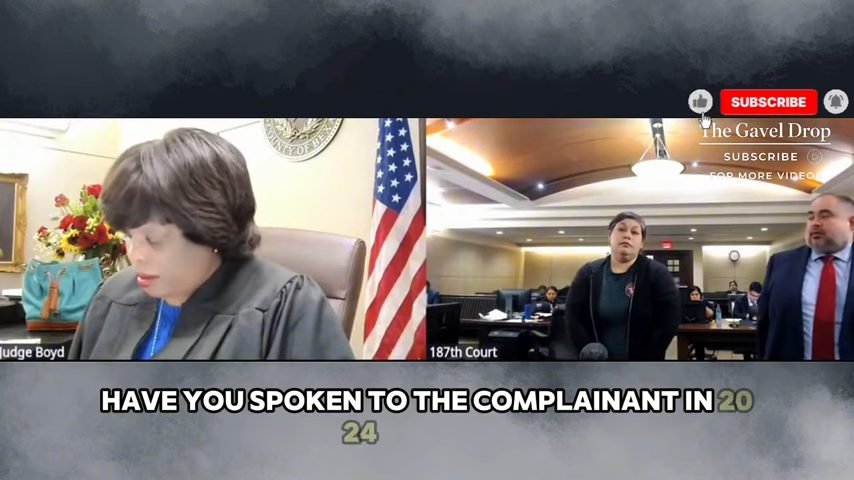
Doberman entered a plea of no contest, or nolo contendere, to the felony evading charge. A no-contest plea is legally distinct from a guilty plea in one important respect: the defendant does not admit guilt, but does concede that the state has enough evidence to prove the charge beyond a reasonable doubt if the case went to trial. For most practical purposes in the criminal proceeding itself — including sentencing — a no-contest plea is treated the same as a guilty plea. As part of the agreement, she waived her right to appeal the outcome.
The court granted her application for Deferred Adjudication Probation, a mechanism unique to Texas criminal procedure. Rather than entering a formal judgment of guilt, the court defers that finding while the defendant serves a term of community supervision. If the defendant successfully completes every condition of probation without violation, the case can be dismissed without ever becoming a final felony conviction on her record. If she violates the terms, however, the court can proceed directly to an adjudication of guilt and sentence her anywhere within the full statutory range — in this case, up to 10 years in prison — since none of that range was foreclosed by the original agreement.
This structure gives judges a tool to extend a real second chance while still holding a substantial penalty in reserve as leverage for compliance. Defense counsel’s argument — that roughly four to five months of pretrial detention had already given Doberman time to reflect, and that she needed to remain available to care for her three minor dependents — is a standard mitigation argument in cases where a defendant has a caretaking role and no extensive prior record apparent in the summary provided.
The Sentence and Its Conditions
The court placed Doberman on three years of Deferred Adjudication Probation, with several standard and several unusually pointed conditions:
She was ordered to complete 200 hours of community service, to pay the full $1,946.55 in restitution to Nina Lopez, and to have no further contact with her under a protective order. She was also required to complete parenting classes and to submit to random drug testing throughout the probationary term.
The most significant condition, however, was the driving restriction. The court barred Doberman from operating any motor vehicle during her probation without explicit written permission from the court — a step beyond a routine license suspension, since it places the authority to restore any driving privilege directly in judicial hands rather than with the Texas Department of Public Safety’s normal licensing process. Given that Doberman had already been found to be driving without a valid license on two separate occasions — once during a felony flight from police and once during a property-damage collision — the condition reads as a direct response to that specific pattern rather than a generic probation term.
Why This Case Is Instructive

Individually, none of the elements here are unusual: evading arrest in a vehicle is a common third-degree felony charge in Texas, deferred adjudication is a routine sentencing tool, and driving without a valid license is one of the most frequently cited traffic violations in the state. What makes the case worth examining is how they interacted. A stopped, out-of-gas vehicle and an officer’s offer of help turned into a felony the instant the truck was put in gear. A second, seemingly unrelated fender-bender became relevant not because of the property damage itself, but because it revealed the same underlying licensing problem. And a judge’s sentence, rather than simply following a standard probation template, was shaped specifically around closing off the exact behavior — unlicensed driving — that had produced both incidents in the first place.
For anyone facing a similar charge, the practical lesson from the record is narrow but important: the difference between a misdemeanor traffic problem and a felony prosecution in Texas often comes down to a single decision made in the seconds after an officer approaches — not to the severity of whatever prompted the stop in the first place.