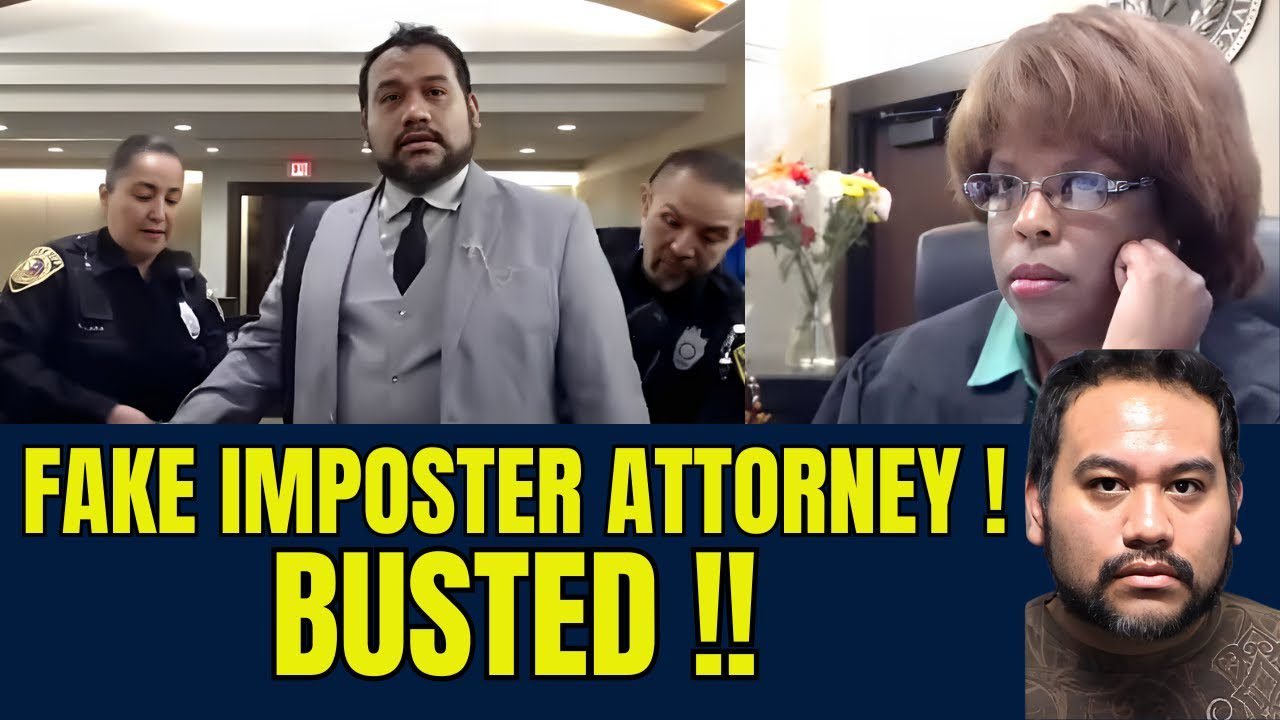
A kidnapping trial was ready to move forward in the 187th District Court in Bexar County, San Antonio, Texas. Jury selection was underway, and prospective jurors were milling in the courthouse hallways, waiting to be called. It was, by every appearance, an ordinary day in a busy Texas courthouse — until a man in a gray suit began working the room.
That man was later identified as Henry Berrocal, and by the time the day was over, a felony trial had been derailed, a defense attorney had gone public about being harassed and legally impersonated, and a county jail’s video visitation system had been exposed as vulnerable to exactly the kind of fraud Berrocal is accused of committing.
The Courthouse Encounter and the Collapse of a Jury Pool
Court officials observed Berrocal approaching and speaking with potential jurors in the hallway outside Judge Stephanie Boyd’s courtroom. It’s unclear exactly what he said to them, but it was enough to draw the attention of court staff and, eventually, the judge herself.
Judge Boyd called Berrocal forward to the bench to explain himself. According to the account of the proceeding, when questioned about his conversations with the jurors, he claimed to be a “US Executive of the United States” representing the federal government. It’s a title that doesn’t correspond to any actual federal position, and when the judge pressed him for identification or documentation to back up the claim, he reportedly stumbled over his own name and produced nothing.
For a sitting judge in the middle of jury selection, this was not a minor irritation — it was a direct threat to the trial itself. A jury pool that has been approached, however briefly, by an unauthorized party carries the risk of contamination: jurors may form impressions, feel intimidated, or simply become aware that something irregular occurred, any of which can undermine the impartiality the process is designed to protect. Judge Boyd stated she could not, in good conscience, proceed with that panel. She excused the jurors, effectively resetting the kidnapping case back to square one, and had Berrocal removed from the courthouse and banned from the premises.
The legal stakes of this kind of interference are not abstract. Jury tampering statutes exist because the right to a fair trial — for both the prosecution and the defense — depends on jurors reaching a verdict based only on evidence presented in court, free of outside influence. Even contact that doesn’t rise to overt coercion can be disqualifying, because the appearance of impropriety is often enough to poison a jury pool. When a judge resets a trial over this kind of incident, it isn’t an overreaction; it’s often the only way to preserve the defendant’s constitutional right to an impartial jury and avoid a conviction that could later be overturned on appeal.
Exposing the Impostor Attorney
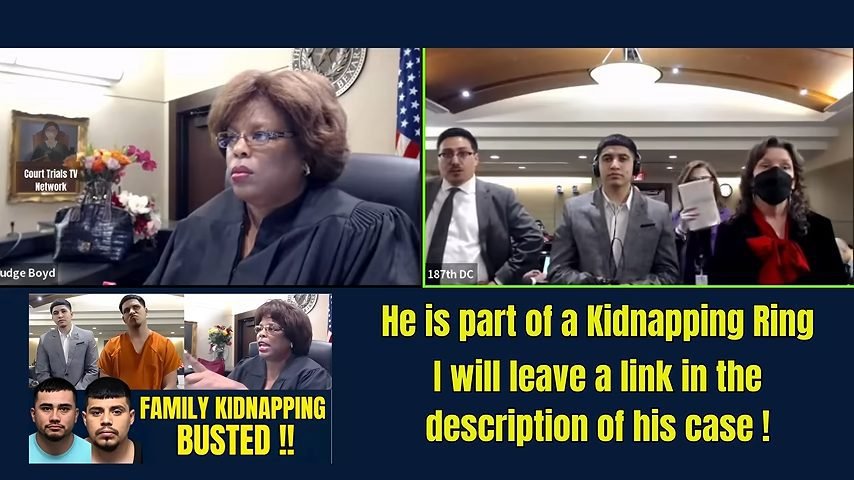
Berrocal’s removal from the courtroom turned out to be only the first layer of the story. Once he was gone, the defense attorney actually assigned to the kidnapping case, identified as Ms. Compton, came forward with a separate and arguably more troubling account.
Compton told the court that Berrocal had been inserting himself directly into her client’s criminal case — filing unsolicited legal documents into the file without any authorization to do so, and going so far as to threaten her with a federal lawsuit. In other words, this wasn’t a one-time courthouse stunt; Berrocal appears to have been actively, and repeatedly, positioning himself as some kind of legal authority in a case that had nothing to do with him.
The most serious allegation, however, involved the Bexar County Jail itself. It emerged that Berrocal had been conducting private remote video visits with an incarcerated defendant — visits that are, by design, reserved exclusively for licensed defense attorneys meeting with their clients. These “attorney visits” are treated differently from ordinary jail visitation specifically because they’re protected by attorney-client privilege, which is why they are legally required to go unrecorded. That protection is what makes the alleged abuse so significant: Berrocal wasn’t just lying about his identity in a hallway, he was allegedly exploiting a privacy safeguard meant to protect defendants’ constitutional rights, using it to gain unsupervised, unrecorded access to an inmate.
The Bexar County Sheriff’s Office opened an inquiry into how this happened. Investigators reportedly found no record of Berrocal booking any in-person legal visits — but confirmed that he had been able to use the remote video system to conduct these sessions, apparently without ever having his credentials or bar status verified.
That gap is worth sitting with. Remote video visitation was built into modern jail infrastructure largely as a convenience — for attorneys who can’t always make it to the facility in person, and for jails looking to streamline legal access without straining physical visitation resources. But convenience systems are frequently the ones with the thinnest verification layers. If a jail’s remote attorney-visit scheduling doesn’t require proof of bar admission, or doesn’t cross-check a name against a state bar registry before flagging a session as privileged and unrecorded, the system is effectively trusting the requester’s word. Berrocal’s case suggests that trust can be exploited by anyone willing to claim a title they don’t hold. Whether this incident prompts Bexar County — or other Texas counties running comparable systems — to tighten credential checks for remote legal visits remains to be seen, but the vulnerability itself is now a matter of public record.
Bond Revocation and the $500,000 Penalty
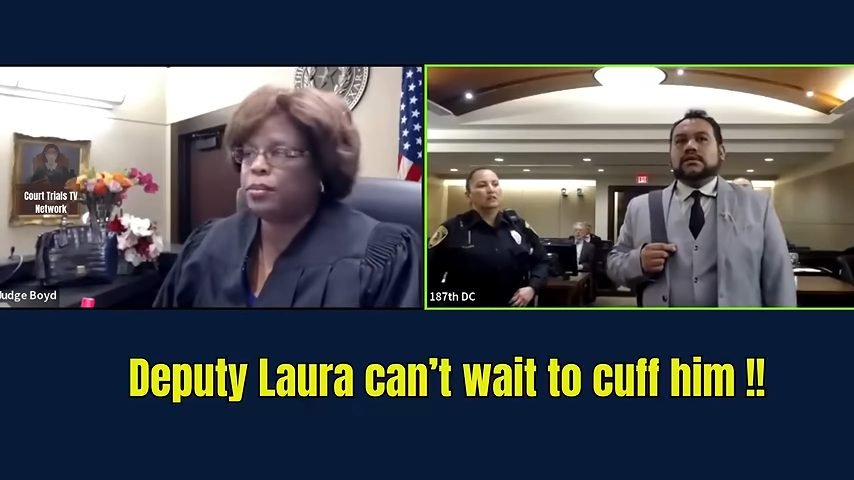
Underlying all of this was a fact that made the entire episode far more serious than a bizarre one-off impersonation: Henry Berrocal was not a free citizen wandering into a courthouse on a whim. He was out on bond, awaiting trial on a charge of Aggravated Assault with a Deadly Weapon — a violent felony.
Pretrial release conditions typically require defendants to avoid any new criminal conduct and to comply with the terms set by the court overseeing their case. Berrocal’s conduct at the Bexar County courthouse and jail checked several boxes that pretrial services and judges take extremely seriously: misrepresenting his identity to a sitting judge, interfering with a jury pool in an active felony trial, and impersonating licensed counsel to gain unauthorized access to an inmate. Any one of these, on its own, would likely trigger scrutiny of a defendant’s bond status. Taken together, they amounted to a comprehensive breach of the conditions that had allowed him to remain out of custody in the first place.
The response was swift. Judge Joel Perez of the 437th District Court, which was handling the assault case, revoked Berrocal’s bond and ordered him back into custody. His new bond was set at $500,000 — a dramatic escalation clearly designed to reflect both the severity of the underlying violent charge and the extraordinary nature of the conduct that led to the revocation.
The court didn’t stop at the bond figure. Should Berrocal ever manage to post the $500,000 and secure release again, he will be bound by strict no-contact conditions: he is barred from entering Judge Boyd’s 187th District courtroom, and he is prohibited from having any contact whatsoever with inmates housed in the Bexar County Jail. These are the kinds of protective orders courts use when a defendant’s behavior demonstrates a specific, identifiable risk to specific people or institutions — in this case, a judge whose courtroom he disrupted and a jail population he had already shown he could improperly access.
The Psychological Evaluation Mandate
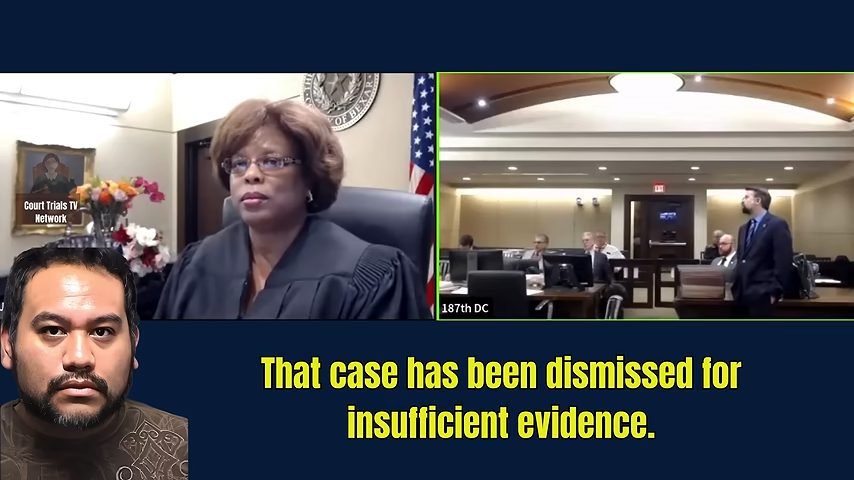
The final piece of the court’s response was an order for a formal psychological and psychiatric evaluation. Judge Perez’s mandate reflects a legitimate legal question sitting underneath the spectacle: was Berrocal’s conduct the product of a calculated scheme, a mental health crisis, or something in between — and is he competent to participate meaningfully in his own defense on the assault charge he’s now facing with a half-million-dollar bond attached?
Competency evaluations are a standard, and often necessary, step whenever a defendant’s behavior is erratic enough to raise doubts about whether they understand the proceedings against them or can assist in their own defense. Claiming to be a federal executive with no supporting documentation, while already out on bond for a violent felony, is the kind of conduct that reasonably prompts a court to ask that question rather than assume either explanation.
As of the public record available, the case has moved from the courtroom theater of a disrupted jury pool and an infiltrated jail to a clinical process aimed at answering that question. Whatever the evaluation concludes, the incident has already left its mark: a felony kidnapping trial reset, a defense attorney publicly detailing harassment and impersonation, and a Texas jail confronting a hole in its own security procedures — all traced back to a defendant who was never a federal official or an attorney at all.