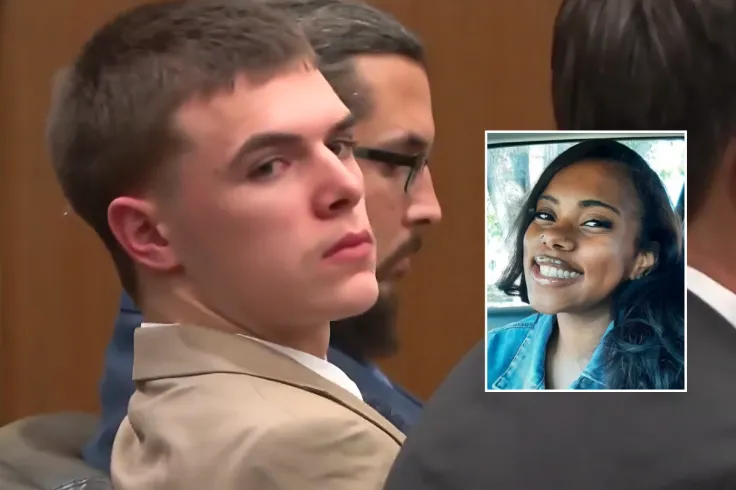
Thomas Stein asked the judge for one thing before the bailiffs took him away. He wanted to hug his family goodbye. Judge Nicholas Thompson said no.
That single exchange, delivered in a quiet Lee County courtroom on July 10, 2026, closed out a case that began on a spring break night two years earlier. A 15-year-old girl named Kayla Rincon-Miller had gone to the movies with two friends. She never made it home.
By the time Stein stood for sentencing, a jury had already convicted him of felony murder and three counts of attempted robbery with a firearm. What remained was the punishment, and the raw grief of the people Kayla left behind.
This is the story of the Thomas Stein murder case, from the ambush on Del Prado Boulevard to the final gavel in a Fort Myers courtroom.
A Movie Night That Turned Into a Nightmare
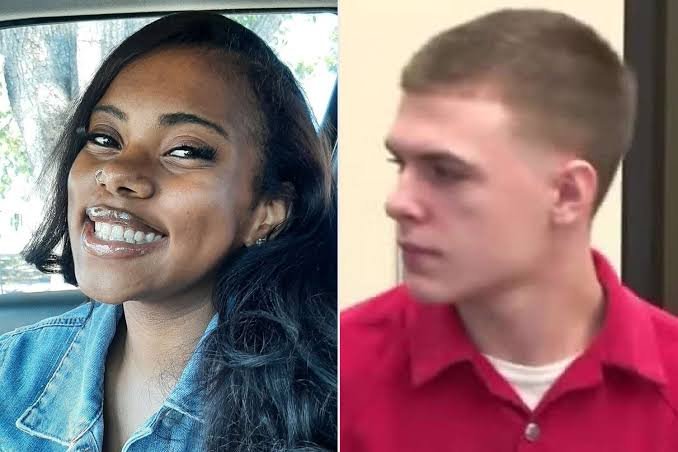
Kayla Rincon-Miller, Emma Wright, and Louann Dejaie were just three teenage friends looking for a normal night out. They caught a screening of Bob Marley: One Love at the Coralwood 10 theater in Cape Coral, Florida. Court TV’s live coverage of the trial later confirmed the girls stepped outside afterward before deciding to walk to a nearby McDonald’s for food.
It was March 17, 2024. Spring break was in full swing across Lee County, and the mood among the three friends was lighthearted. Trial testimony described the girls recording a video of themselves on the walk, joking around and pretending Kayla was strutting down a runway.
None of them noticed anything unusual at first. A silver SUV rolled slowly past them on the dimly lit road near Del Prado Boulevard. Then it did something that changed everything.
The vehicle made a U-turn.
The Ambush on Del Prado Boulevard
The SUV came back toward the girls and cut them off, flashing its high beams directly into their faces. Survivors later testified that their first instinct wasn’t fear. It was confusion.
Emma Wright and Louann Dejaie both told the court they briefly thought the whole thing was a prank, according to Court TV’s trial coverage. That assumption evaporated the moment several figures climbed out of the vehicle.
Prosecutors said the driver of the SUV was Thomas Roy Stein, then 16 years old, riding with his acquaintance Christopher Horne Jr., also 16. According to testimony, Stein went straight for Kayla while demanding the girls hand over their bags and purses.
Within moments, a gun went off.
Kayla was struck in the torso at close range. Stein and Horne fled the scene immediately, according to police accounts presented at trial, leaving Kayla’s two friends to try to help her alone on the roadside.
Racing Against Time: The Scene and the Aftermath
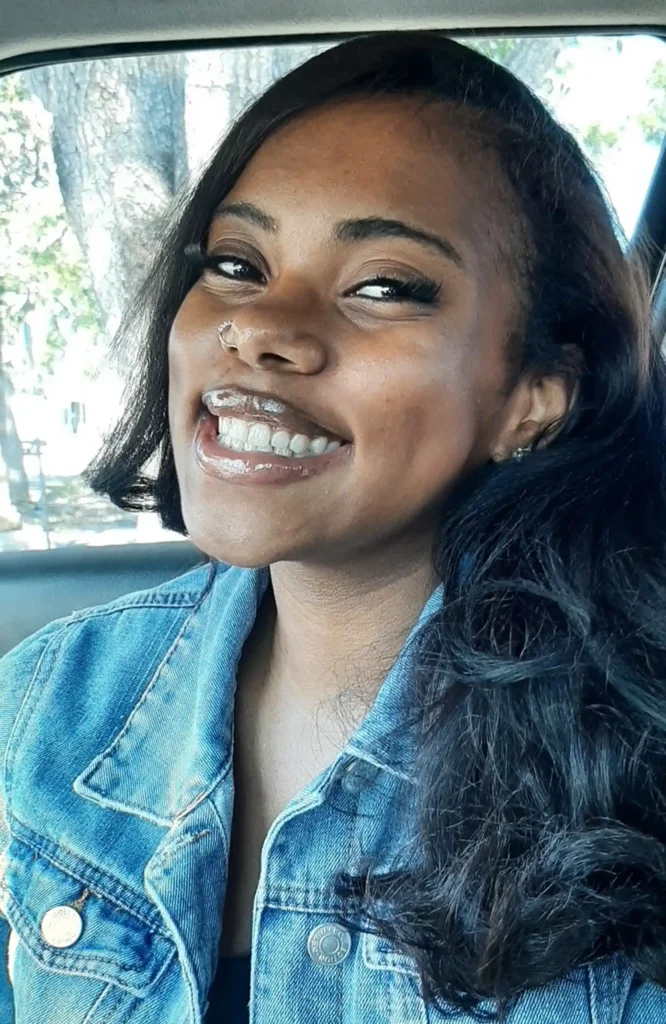
Cape Coral police officers arrived within minutes of the shooting, responding to the area of Southeast 16th Place near Del Prado Boulevard. Sgt. Brian Gumm, one of the first officers on scene, later testified that he stayed with Kayla and her family through the early, chaotic hours of the case, including the moment surgeons told her family she had not survived.
Kayla was rushed to a nearby hospital. She died a short time later.
Before losing consciousness, according to case summaries of the incident, Kayla was able to tell responding officers that she did not recognize the person who had shot her. It was a detail investigators would later need to work around, since neither surviving witness could immediately identify a stranger they’d never seen before that night.
Cape Coral Police Department Chief Anthony Sizemore later described the scene response as beginning with officers who <cite index=”2-1″>immediately rendered life-saving aid</cite>, followed by forensic personnel who worked to process the crime scene. Evidence specialist Elizabeth Lansky photographed the location and later took custody of Kayla’s clothing directly from hospital staff.
Piecing Together the Digital Trail
Investigators didn’t have a name to work with in the immediate aftermath. What they did have was a description of a silver SUV, and a community with cameras.
Detective Sgt. John Prese canvassed the surrounding area and located surveillance footage that captured the vehicle making its U-turn just before the attack. That video became one of the prosecution’s foundational exhibits at trial.
From there, the investigation moved quickly. The SUV was traced back to a Hertz rental account, and that account led directly to Stein’s mother, Jessica Stein, who had rented the vehicle earlier that day for a family beach trip.
Cell phone data reinforced the connection. Records showed phones belonging to Thomas Stein, his mother, Christopher Horne Jr., and another acquaintance named Jayden Fernandez had all traveled together to the beach that afternoon before returning to the Stein residence later that evening — around the same window investigators were trying to account for.
The Arrest
Thomas Roy Stein was arrested on March 19, 2024, just two days after the shooting, and charged as an adult with first-degree murder with a firearm and three counts of attempted robbery.
When detectives sat down with Stein, he reportedly told them he had first learned about the investigation through Instagram, and that he believed the entire case against him was a “setup.” He then invoked his right to an attorney, and the interview ended there.
Christopher Horne Jr. was arrested roughly a month later, on April 17, 2024, facing identical charges. Investigators say Horne eventually admitted to handling the firearm involved in the case and described throwing both the weapon and his own cell phone into the Caloosahatchee River in the days after the shooting.
From Juvenile Court to a Grand Jury Indictment
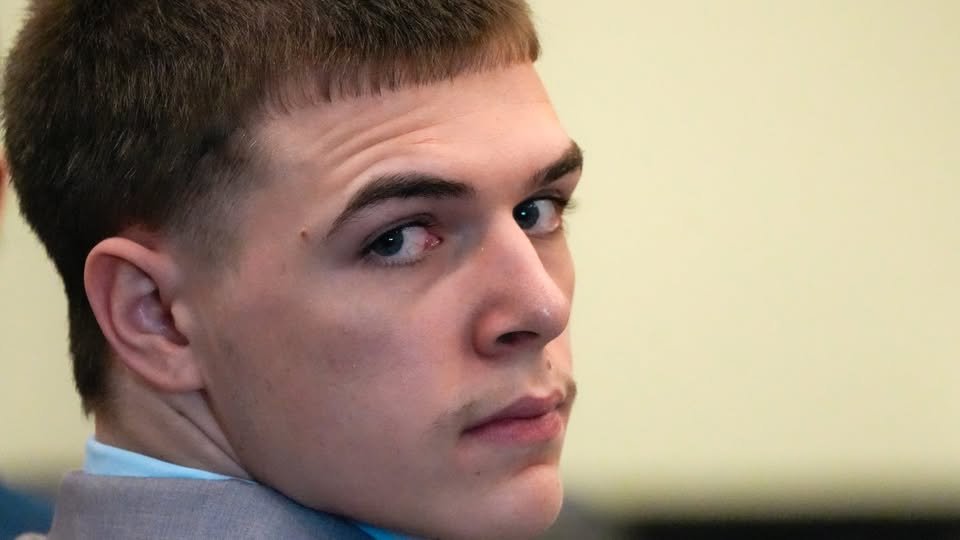
Under normal circumstances, two 16-year-olds accused of a crime would move through Florida’s juvenile justice system. That did not happen here.
State Attorney Amira Fox used her office’s authority to “direct file” charges against both Stein and Horne, moving them out of juvenile court and into the adult system before formal charges were even finalized. It’s a legal mechanism Florida prosecutors reserve for the most serious violent offenses committed by minors.
A Lee County grand jury then reviewed the evidence and returned formal indictments on September 4, 2024. Both teenagers were charged with first-degree felony murder and three counts of attempted robbery with a firearm — charges that, under Florida law, exposed each of them to the maximum penalties available to an adult defendant.
What “Felony Murder” Actually Means
For readers unfamiliar with the charge, first-degree felony murder doesn’t require prosecutors to prove a defendant personally pulled the trigger. Florida law holds that if a death occurs during the commission of a separate dangerous felony — in this case, attempted armed robbery — every participant in that felony can be held criminally liable for the resulting death.
That legal reality became central to the entire case. Stein’s defense would spend the trial arguing about who fired the fatal shot. Under felony murder statute, prosecutors didn’t strictly need to win that specific argument to secure a conviction, so long as jurors accepted that Stein was a knowing participant in the attempted robbery that killed Kayla.
The three counts of attempted robbery with a firearm, one for each of the girls targeted that night, carried their own mandatory minimum sentencing exposure independent of the murder charge.
The Plea That Changed the Case: Christopher Horne Jr.
Long before Stein’s trial began, his co-defendant made a decision that would define the state’s entire strategy.
Christopher Horne Jr. entered into a negotiated plea agreement with prosecutors. He pleaded no contest to second-degree murder and three counts of attempted robbery, avoiding the first-degree felony murder charge he’d originally faced alongside Stein.
In exchange, Horne agreed to a 25-year prison sentence — and to testify truthfully against Stein if called to the stand.
It was a deal that gave prosecutors a firsthand account of what happened inside that SUV. It also gave Stein’s defense team a built-in target: a cooperating witness with every incentive to shift blame toward his former friend.
Inside the Four-Day Trial
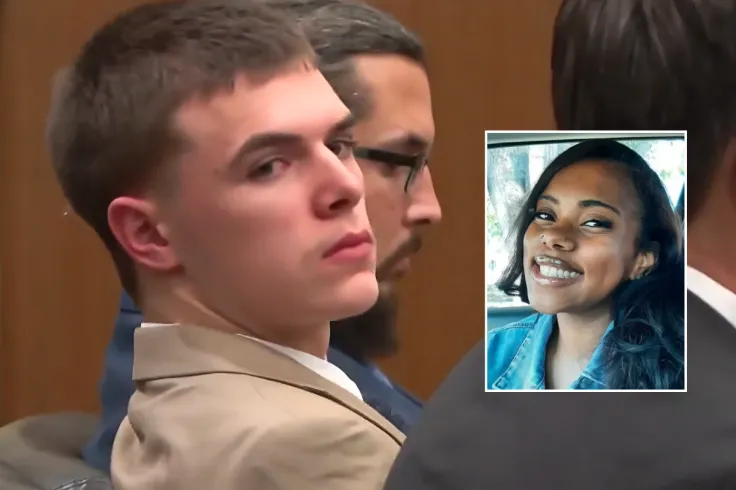
Jury selection alone proved contentious. Reports from the courthouse described a hallway altercation between members of the two families before testimony ever began, an early sign of just how raw the emotions surrounding this case remained two years after Kayla’s death.
The trial opened on April 29, 2026, in Fort Myers, with Assistant State Attorneys Sara Miller and Alyssa Wolf leading the prosecution.
The State’s Case-in-Chief
Prosecutors built their case around a combination of digital evidence, forensic testimony, and Horne’s cooperation. Their opening argument framed Stein as the driving force behind that night’s events — supplying the rental vehicle, bringing the firearm, and steering the group toward the three girls.
Emma Wright took the stand and described watching the SUV’s driver approach directly toward Kayla. She testified that she saw a white male with a distinctive bowl haircut and blue eyes get out of the vehicle and move straight at her friend, a detail prosecutors used to place Stein specifically in that role rather than a more peripheral one.
“I have been bullied and discouraged. People tried to blame me and my friend Dejaie for this act of violence.”
That quote, delivered by Wright, wouldn’t come until the sentencing hearing months later. But her trial testimony about the night itself laid the groundwork prosecutors leaned on throughout the case.
Louann Dejaie also testified about the chaos of the encounter, describing seeing armed men jump from the vehicle and rush toward the group demanding their belongings.
Forensic evidence added complexity rather than a clean resolution. Evidence specialist Amy Shober testified about the type of firearm believed responsible for the fatal shot, telling the court that ballistics evidence was inconsistent with a Glock 27 — notably, the exact model of handgun Stein’s mother testified she owned and which went missing after Kayla’s death. No murder weapon was ever recovered.
GPS records and cell tower data formed another pillar of the state’s case. An expert testified that Stein’s phone had pinged towers near the Coralwood Shopping Plaza around the time of the shooting, placing him in the vicinity despite the defense’s later attempts to complicate the timeline.
The Co-Defendant Takes the Stand
The most consequential testimony of the trial came from Christopher Horne Jr. himself.
Horne told jurors there were only two people in the SUV that night: himself and Stein. He testified that the original plan had simply been to break into unattended cars, but that Stein changed course after spotting the three girls, allegedly saying, “Let’s rob them.”
According to Horne’s account, the firearm was already inside the vehicle when Stein picked him up. He said he told Stein to remove the bullets from the gun beforehand, but that Stein ignored him. After the shooting, Horne testified, he immediately confronted Stein, screaming and demanding to know why he had fired.
Horne’s testimony was, by design, damaging to Stein’s defense. It was also, by the defense’s own framing, exactly what jurors should expect from a witness who had already secured a 25-year deal in exchange for cooperation.
The Defense Counter-Theory
Defense attorney David Wheeler represented Stein through the trial itself, building a defense around two central pillars: unreliable witnesses and the absence of direct forensic proof.
Wheeler argued that no physical evidence conclusively tied Stein to pulling the trigger. He directly challenged Horne’s credibility in front of the jury, characterizing him during closing arguments as a witness who had been handed a favorable deal specifically to point the finger at Stein.
Stein’s own account, delivered when he took the stand in his own defense, introduced a version of events not corroborated by any other witness. He told jurors that two additional people he knew only as “JD” and “Trey” were also present in the vehicle that night, and that “JD” had struggled with Kayla before the gun discharged. Stein maintained he had only intended to break into parked cars and was attempting to break up a physical altercation when the shot was fired.
No evidence of these additional individuals was presented to corroborate Stein’s account, and no other suspects were ever arrested or charged in connection with the case.
The defense also pointed to a prior witness-tampering allegation involving members of Horne’s family, who had reportedly been arrested for allegedly threatening Stein’s mother months after the shooting. Those tampering charges were later dropped, with prosecutors citing a recorded conversation they said clarified what had actually happened during the disputed confrontation. Wheeler used the episode to suggest the case against his client had been shaped by conflicting, unreliable accounts from the start.
Crucial Cross-Examinations
Cross-examination became the trial’s central battleground, particularly around eyewitness Emma Wright.
The defense zeroed in on a discrepancy between Wright’s trial testimony — in which she stated she saw the driver “go straight for Kayla” — and her earlier statements to investigators. Wheeler argued this shift was significant enough to undermine her reliability as a witness identifying Stein’s specific role that night.
Forensic cross-examination proved similarly pointed. When Wheeler asked evidence specialist Amy Shober whether a different handgun model, a Colt, could have produced the same ballistic pattern found at the scene, Shober testified she would need to conduct a direct comparison to answer definitively. It was a small opening, but one the defense used to argue that the state’s forensic case wasn’t as airtight as prosecutors presented it.
Detective testimony regarding GPS and cell-tower data also faced scrutiny, though the defense was unable to meaningfully dislodge the timeline placing Stein’s phone near the crime scene.
Prosecutors, for their part, maintained throughout the trial that their case never depended primarily on eyewitness identification. In later court filings, the state argued it had built its case on what it called extremely strong circumstantial evidence, independent of any single witness’s account.
The Verdict
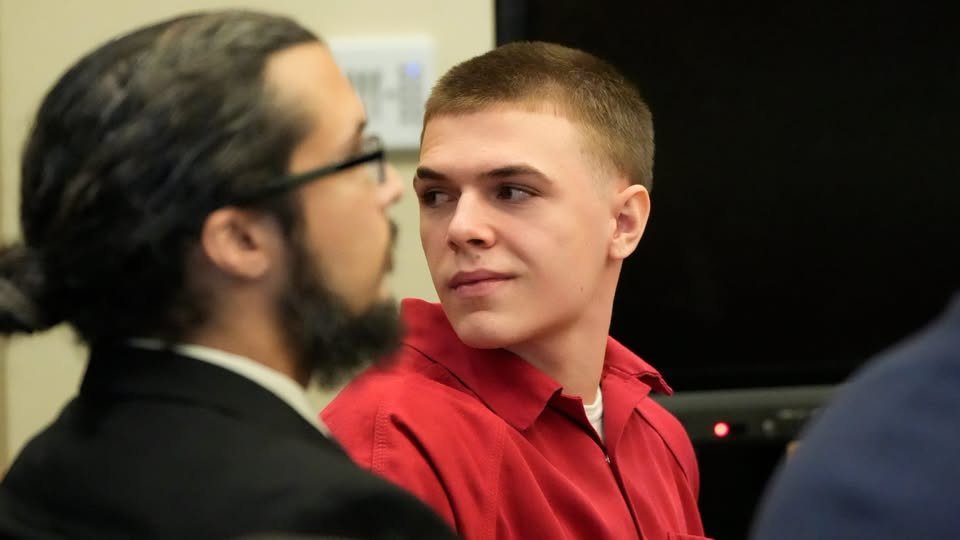
On May 4, 2026, after four days of testimony, the jury returned its decision. Thomas Roy Stein was found guilty on all counts: first-degree felony murder with a firearm, and three counts of attempted robbery with a firearm.
The conviction meant Stein faced a mandatory sentence of life in prison for the murder charge alone, with the three robbery convictions carrying their own additional, consecutive prison exposure.
Cape Coral Police Chief Anthony Sizemore later said he sat beside Kayla’s family and the detectives who investigated the case as the verdict was read, calling it a moment that <cite index=”2-1″>brought accountability, but not closure</cite>.
A Motion for a New Trial
Stein’s legal team wasn’t finished. Shortly after the conviction, attorney Robert Malove — who took over the case for sentencing-related proceedings — filed a motion arguing that prosecutors had committed a discovery violation tied to Emma Wright’s shifting testimony.
The motion claimed the defense had been “ambushed” by a change in Wright’s account of what she witnessed, and further argued that Judge Nicholas Thompson had improperly restricted the defense’s ability to call one of the prosecutors to testify about a pretrial conversation with Wright.
Prosecutors filed a response rejecting the claim outright, stating the defense had adequate opportunity to challenge Wright’s testimony during cross-examination and that the state’s case had never depended on her identification in the first place.
At a subsequent hearing, Judge Thompson denied the motion for a new trial, clearing the way for sentencing to proceed as scheduled.
Sentencing Day: July 10, 2026
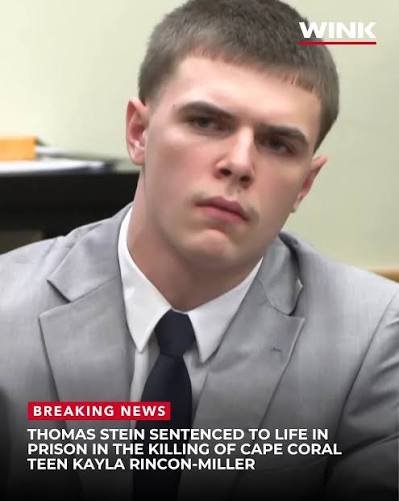
The courtroom on the morning of July 10 carried a different weight than the trial had. This was no longer about guilt or innocence. It was about consequence, and about grief that had been building for more than two years.
The Voices of Kayla’s Friends
Emma Wright addressed the court directly, describing how the aftermath of the attack had reshaped her life in ways that went well beyond the physical trauma of that night. She told the judge she had faced blame and social fallout in the years since, on top of the loss itself.
Louann Dejaie’s statement captured a different kind of devastation.
“I feel like I’m trapped in a coma that I can’t wake up from. Like I’m suffocating, but somehow still expected to keep on living.”
Kayla’s mother also addressed the court, describing the ongoing weight of losing her daughter. Public reporting on the hearing did not include her statement verbatim, and this article won’t speculate on her exact words beyond what has been publicly documented.
Prosecutors Push for the Maximum
Assistant State Attorneys asked Judge Thompson to impose the maximum available sentence, pointing to Stein’s prior juvenile record, which included felony car burglary convictions. Prosecutors characterized him during the hearing as the driving force behind the group’s actions that night, telling the court he was “the bad influence” and, notably, “the driver.”
The Defense’s Final Argument
Robert Malove asked the court for a 25-year sentence, arguing for parity with the deal Horne had already received for his cooperation. It was a request Judge Thompson would ultimately decline.
Stein addressed the court himself before sentencing. He expressed remorse, though he continued to maintain that he had not intended for anyone to be hurt that night.
“I didn’t know that robbery was going to occur, but it was my reaction in fleeing that ultimately played a major role in assisting the perpetrators.”
He went on to describe the decision to get behind the wheel that night as an act of selfishness he said he regretted every day.
The Denied Request
Before the sentence was formally handed down, Stein made one final, simple request of the court.
“If I could just ask you one thing, if before I walk out of the courtroom, if I could give my family a hug, if you’d allow that?”
Judge Thompson’s answer came without hesitation.
“I can’t grant that request in here. You can say goodbye, but you can’t have any physical contact.”
The Sentence
Judge Thompson sided with the prosecution. He sentenced Stein to life in prison for the first-degree felony murder of Kayla Rincon-Miller.
Because Stein was only 16 years old at the time of the offense, Florida and federal case law governing juvenile sentencing guarantees him a review of that life sentence after 15 years have been served. This is a legally mandated safeguard for defendants who committed serious crimes as minors, not a discretionary act of leniency from the court.
Separately, Thompson sentenced Stein to 15 years in prison on each of the three attempted robbery counts, with a mandatory minimum of 10 years on each. Critically, the judge ordered those three sentences to run consecutively — both to each other and to the underlying life sentence.
In practical terms, that means even in the scenario where a future court finds Stein rehabilitated and eligible for release consideration after his 15-year murder review, he would still face a minimum of 45 additional years in prison on the robbery counts alone.
Malove objected to the stacking of the sentences, pointing out this exact consequence to the court. Judge Thompson was unmoved.
“I’ve thought about it, I’ve considered it, and the sentence the Court’s imposed is what I believe is appropriate under these circumstances. So I will leave it the way I’ve ordered it.”
Stein was permitted a brief moment to speak with his family from a distance before bailiffs led him out of the courtroom to begin serving his sentence.
What Happens Next

As of publication, Christopher Horne Jr. remains held to the terms of his own 25-year plea agreement, contingent on the cooperation he already provided at Stein’s trial. No additional suspects have been identified or charged in connection with Kayla Rincon-Miller’s death, despite Stein’s unsupported claims at trial that other individuals were present.
Whether Stein’s legal team pursues a formal appeal beyond the denied motion for a new trial has not been publicly confirmed at the time of this writing. Available records leave a gap regarding any appellate filing, and this article will be updated if that changes.
The Broader Weight of This Case
Cases like this one sit at an uncomfortable intersection of Florida law: the direct-file mechanism that moves accused teenagers into adult court, felony murder statutes that hold participants liable regardless of who fired the fatal shot, and juvenile sentencing protections that guarantee review even after a life sentence is imposed.
For Kayla Rincon-Miller’s family and friends, none of those legal mechanisms change the outcome of March 17, 2024. What the courtroom process ultimately provided was documented accountability, delivered more than two years after a walk to McDonald’s ended in the loss of a 15-year-old girl.