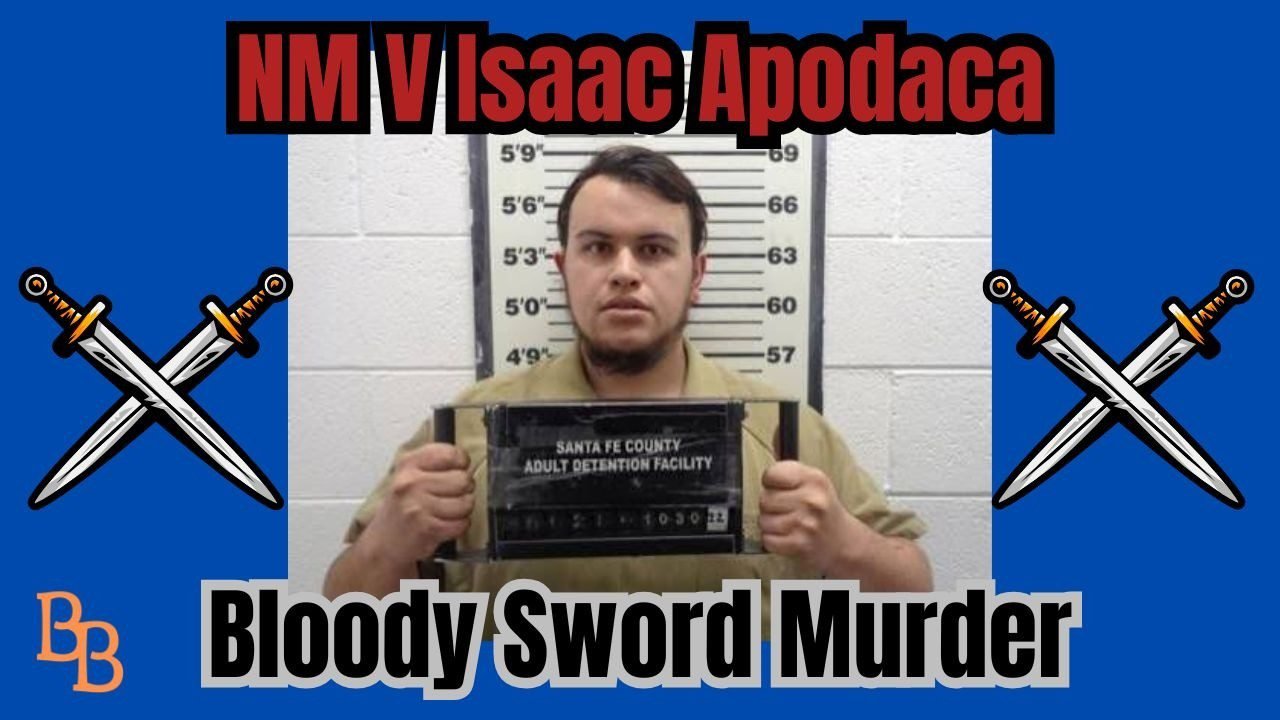
Kiara McCulley has already told a courtroom, under oath, that she is the one who picked up a 36-inch broadsword and killed Grace Jennings. She has already been sentenced. She is already thirty years into a term she will serve behind bars.
So why is Isaac Apodaca on trial for murder?
That is the question hanging over the First Judicial District Court in Santa Fe, New Mexico, as opening statements got underway in July 2026 in the case of State of New Mexico v. Isaac Apodaca. The 30-year-old defendant did not swing the sword that killed 21-year-old Grace Jennings on October 29, 2022. Prosecutors do not dispute that. Instead, they argue he built the psychological cage that made the killing happen — one text message at a time.
A Killing Already Confirmed, A Question Still Open
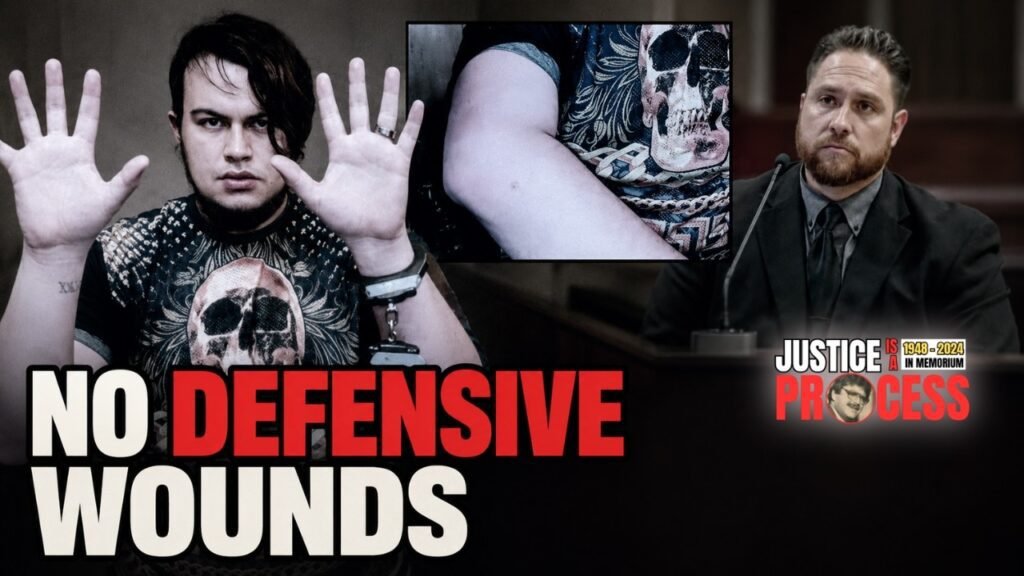
Grace Jennings was found dead in a detached garage behind a Santa Fe home, killed with a sword. That much has never been in serious dispute. Kiara McCulley, who was Apodaca’s girlfriend at the time, pleaded guilty in February 2025 to aggravated second-degree murder and conspiracy to commit murder. As part of her plea agreement, she was sentenced to thirty years in prison, and she agreed to testify truthfully against Apodaca in exchange for the deal.
That confession closed one question and opened another. If McCulley wielded the weapon, what is Apodaca actually charged with — and why would prosecutors pursue a first-degree murder case against a man who was not holding the sword?
The state’s answer, laid out in its opening statement, is that Apodaca is not being tried as a bystander or an accessory after the fact. He is being tried as the architect. Prosecutors allege that in the days and hours before Jennings’ death, Apodaca used a campaign of manipulation, invented mythology, and direct instruction to push McCulley toward a killing she would not otherwise have committed.
The Weapon: A 36-Inch Broadsword, Ordered Days Before
Central to the physical case is the murder weapon itself — a double-handed broadsword with a 36-inch blade. According to courtroom testimony, the sword was purchased online through Amazon just days before Jennings was killed.
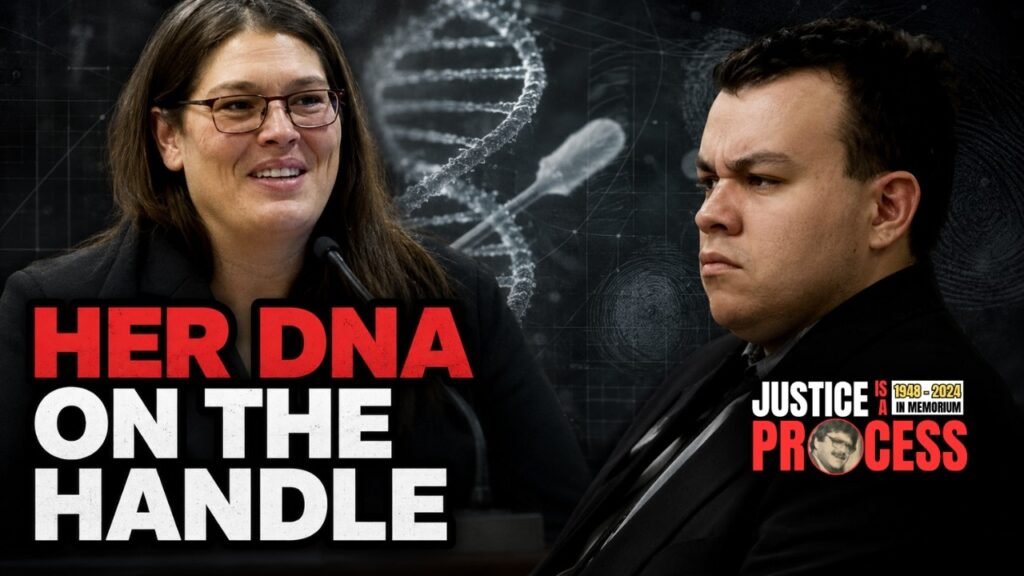
Lani McCulley, Kiara’s mother, took the stand to establish the weapon’s origin. She testified that she witnessed the sword’s delivery at the property roughly two days before the killing. Her daughter and Apodaca had been living in a detached garage on her property at the time, and it was in that same garage that Jennings’ body was later found.
The timing matters to prosecutors. A weapon purchased so close to the killing, they argue, undercuts any narrative that Jennings’ death was an impulsive act born out of a sudden argument. Instead, they are positioning the sword’s acquisition as one early data point in a sequence they say was planned.
The Prosecution’s Theory: A Fictitious Organization Called “Ghost”
The most striking element of the state’s case is not physical evidence at all — it is language. Prosecutor Haley Murphy has built the core of the state’s argument around a series of text messages allegedly sent by Apodaca to McCulley in the lead-up to the killing.
Among the messages prosecutors have pointed to in court are lines attributed directly to Apodaca:
“I’m just saying, swing and don’t regret the aim.”
“I’m wanting you to kill her.”
According to the state, these were not isolated outbursts. Prosecutors allege Apodaca invoked the existence of a secret vigilante organization — referred to in messages and testimony as “Ghost” — and convinced McCulley that she was a member of it. As part of this alleged fiction, prosecutors say Apodaca told McCulley that Jennings had been placed on a “kill list,” and that carrying out the killing would allow McCulley to advance within the group’s ranks.
There is no indication in court filings or testimony that “Ghost” was a real organization. The state’s position is that it existed only as a psychological construction — a narrative device Apodaca allegedly built and maintained to give McCulley a framework in which killing Jennings felt sanctioned, purposeful, and even earned, rather than criminal.
This is the crux of the state’s legal theory: that Apodaca’s culpability rests not on physical participation in the killing, but on his alleged role in engineering the conditions, beliefs, and instructions that led McCulley to commit it.
The Accomplice Turned Star Witness
Kiara McCulley’s plea deal makes her the state’s most consequential witness — and also its most complicated one. She has already admitted, in a sworn plea, to killing Grace Jennings. Her thirty-year sentence, for aggravated second-degree murder and conspiracy to commit murder, is not in question and will not be affected by the outcome of Apodaca’s trial.
What is in question is her credibility as a witness against her former partner. Plea agreements that trade testimony for a negotiated sentence are a familiar and legally accepted tool in cases like this one, but they also give defense attorneys an opening: juries are frequently invited to weigh whether a witness who benefited from a deal has an incentive to tell the story the prosecution wants told.
For the state, McCulley’s testimony is expected to be the throughline connecting the text messages, the “Ghost” narrative, and the events inside the garage on the night Jennings died. Her role in this trial is to testify not to what she did — that has already been settled — but to why she did it, and to whom she attributes the decision.
The Legal Battle Lines
The trial is being presided over by Judge T. Glenn Ellington in Santa Fe’s First Judicial District Court. Opening statements set up a direct clash between the state’s coercion theory and the defense’s effort to draw a hard line between influence and legal responsibility for murder.
Prosecutor Haley Murphy has framed the case around premeditation and control, telling the court that the evidence would show a deliberate plan rather than a spontaneous act. The state’s strategy leans heavily on the specific wording of Apodaca’s alleged messages, treating them as direct evidence of intent and instruction rather than the kind of vague or hyperbolic language that might occur in an argument.
Defense attorney Jay Nair, representing Apodaca, has pushed back on the state’s framing. The defense’s position is that the evidence, however extensive, does not establish that Apodaca committed murder — a distinction the defense argues matters legally, even where messages are inflammatory or troubling. Nair has also raised procedural objections during pretrial proceedings, including disputes over the timing of the state’s disclosure of at least one key witness.
The tension between these two positions — a state case built on language and alleged psychological control, and a defense case built on the absence of physical participation — is likely to define much of the trial as it continues.
What Comes Next
State of New Mexico v. Isaac Apodaca remains an active, ongoing jury trial in Santa Fe. No verdict has been reached, and none should be assumed. The state’s case-in-chief is still being presented, with additional testimony expected as proceedings continue.
What the trial has already surfaced, though, is a legal question that extends well beyond this single courtroom: how the justice system should weigh digital communication — texts, invented narratives, alleged psychological control — against the traditional benchmarks of direct participation in a killing. Kiara McCulley has already answered for her role with a guilty plea and a thirty-year sentence. Whether a jury finds that Isaac Apodaca bears equivalent responsibility for orchestrating what happened in that garage is the question this trial is still working to answer.
This article reflects verified courtroom testimony and confirmed case details as of the article’s publication date. Details will be updated as the trial progresses. Isaac Apodaca has pleaded not guilty and is presumed innocent unless and until proven guilty.