Nashville prosecutors say a former Tennessee Titans scout slipped cocaine dissolved in alcohol into his pregnant girlfriend’s pink lemonade, killing her and the daughter she was carrying. His attorneys say she overdosed on drugs she chose to take herself. Seven days into testimony, that dispute is now in the hands of a Davidson County jury.
Note: This trial is ongoing as of this writing, with closing arguments underway. No verdict has been reached. This article will need updating once the jury returns a decision.
The Night Everything Changed
On February 25, 2023, Blaise Taylor called 911 from his Nashville apartment to report that his girlfriend, 25-year-old chef Jade Benning, appeared to be having a severe allergic reaction. “I don’t know. I think she’s having an allergic reaction,” Taylor told the dispatcher, according to the recording played for jurors. “She’s not responding.”
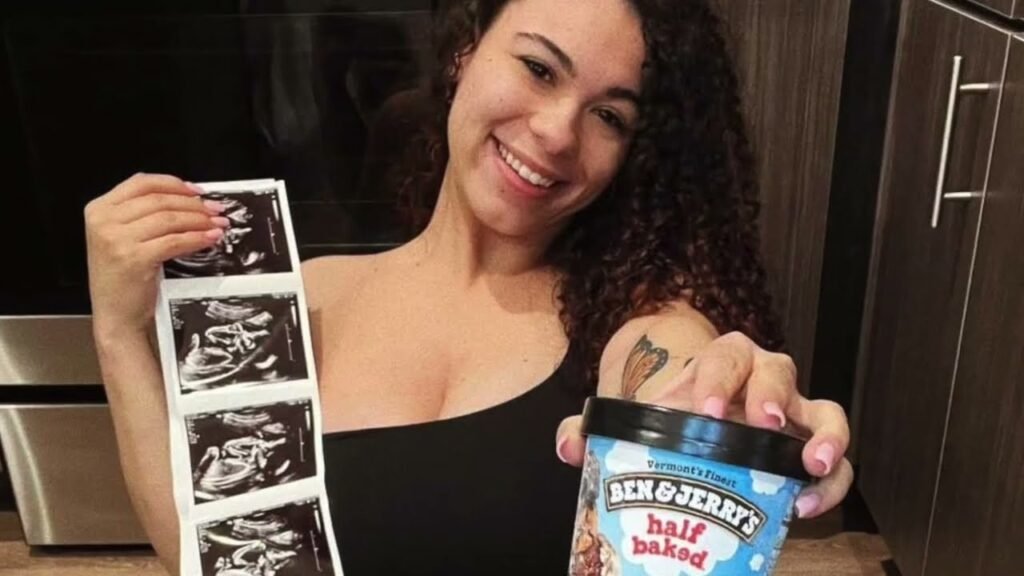
Benning was five months pregnant. Paramedics rushed her to Vanderbilt University Medical Center, where a doctor who treated her testified that her condition looked dire from the moment she arrived. Two days later, on February 27, her unborn daughter — a girl the family had planned to name Ivy — died. Benning never recovered. She died on March 6, 2023, her 25th birthday.
Taylor was not arrested immediately. The investigation stretched on for roughly a year before he was charged in 2024 with two counts of first-degree murder and two counts of felony murder in the deaths of Benning and her unborn child.
Who They Were
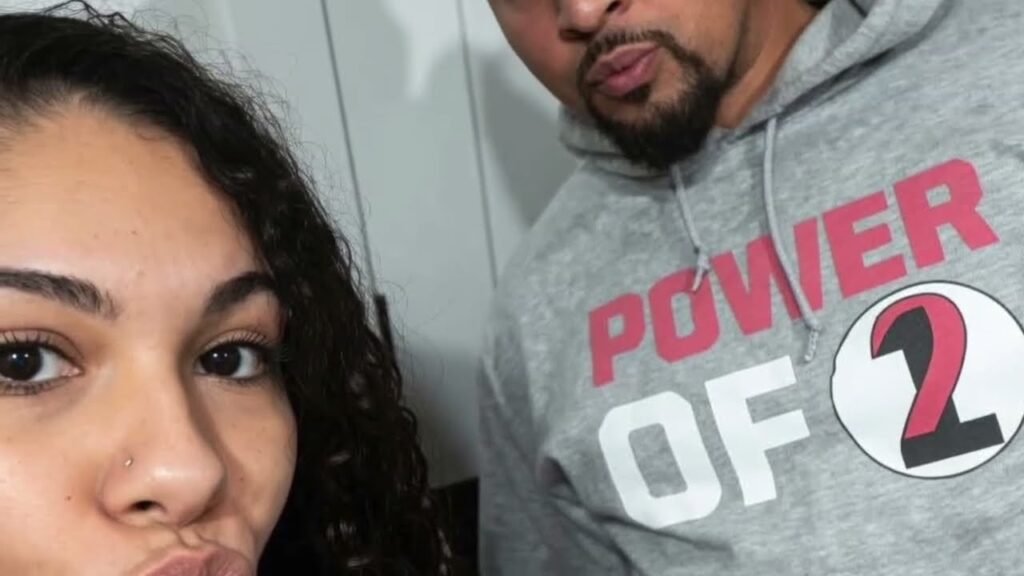
Benning had met Taylor on the dating app Hinge in January 2022. They didn’t reconnect until that August, when they went to dinner and began a relationship. Taylor, a former defensive back and team captain at Arkansas State University, had gone on to work as a scouting assistant and then a pro scout for the Tennessee Titans — a career that, by the defense’s account, he built while avoiding alcohol and drugs entirely during his college years.
Benning’s family has described her since her death as a devoted daughter and a talented cook. Her mother, Bridget Burks, testified that her daughter told her Taylor wanted no part of the pregnancy — that if the baby was born, he “didn’t want it to have his name” and didn’t want the child to ever know him. A former Titans coworker, Mical Johnson, told jurors Taylor had made similar comments at work, saying he wasn’t “ready” and didn’t want to become a father anytime soon.
The Case Prosecutors Built
The state’s theory is that Taylor carried out a quiet, deliberate poisoning rather than a violent one. Prosecutors allege he secretly dissolved a lethal amount of cocaine into alcohol and slipped it into Benning’s pink lemonade during a night at her apartment — allegedly because he didn’t want responsibility for a child, and possibly didn’t even know at first how far along she was.
The most dramatic evidence came from Benning’s best friend, Nijaiha Jackson, who testified that she was on the phone with Benning in the minutes before she was hospitalized. Jackson said Benning became violently ill, began losing the ability to walk, and started accusing Taylor directly. “She was like, ‘I know you put something in my drink. I knew my drink tasted funny,'” Jackson told the jury, adding that Benning repeated the accusation as she lost feeling in her legs.
Prosecutors also called Taylor’s ex-girlfriend, Apple Dennie, who testified that years earlier, in 2017, Taylor had discussed obtaining abortion pills to put into the drink of another woman he’d gotten pregnant — testimony the state used to argue a pattern of behavior. Coworkers described Taylor showing up to work and behaving normally during the week Benning lay dying in the hospital.
The medical examiner’s office told jurors the concentration of cocaine found in Benning’s blood was the highest they had ever recorded.
Where the Defense Found Its Openings
Taylor’s attorneys, led by Letitia Quinones-Hollins, built their case around two arguments: that Benning used drugs on her own, and that the investigation was too flawed to trust.
On the medical science, the defense highlighted testimony that Benning’s blood sample sat for days without proper preservatives before testing, and that the final toxicology figure was partly a mathematical reconstruction rather than a direct reading. A toxicology expert testified that cocaine, fentanyl, and other substances turned up not just in blood but in vomit stains on a comforter from the apartment — and, according to the defense’s questioning, fentanyl also appeared in a lab control sample, raising questions about contamination.
On the investigation itself, the defense pointed out that friends of Benning entered the apartment before police arrived, moving items and removing a comforter, and that a cup or glass matching the one Benning allegedly drank from was never recovered or tested.
The defense also introduced testimony and phone records aimed at showing Benning had a documented history of marijuana and alcohol use, including evidence suggesting she used drugs after learning she was pregnant, and that she had not clearly turned down an offer of a marijuana edible while carrying. Taylor ultimately waived his right to testify in his own defense, a decision confirmed in court as closing arguments began.
A Judge’s Frustration, and a Trial Still Unresolved
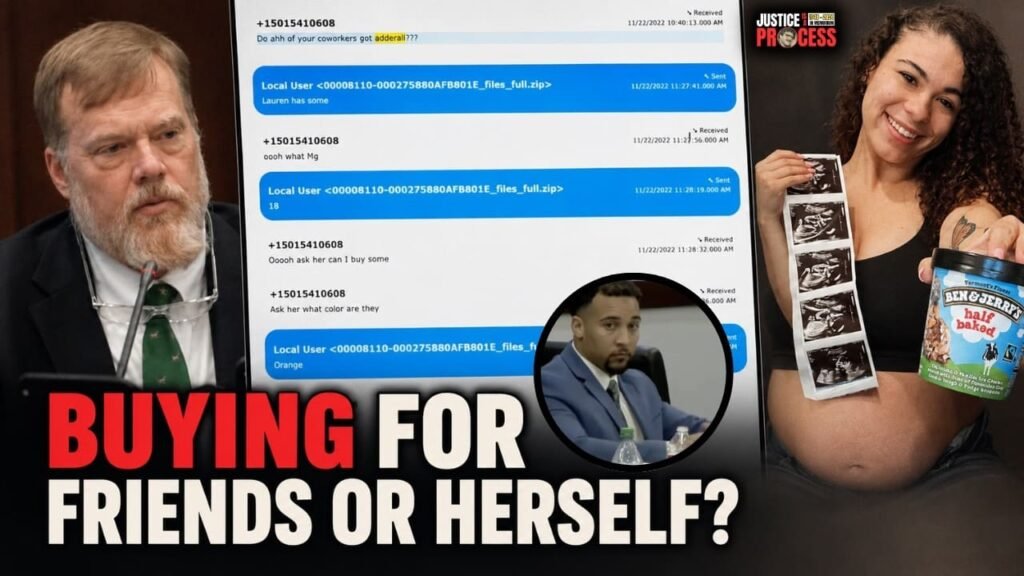
The trial wasn’t without friction between the bench and both legal teams. At one point the judge grew visibly frustrated over evidence that hadn’t been properly shared in discovery, telling attorneys the jury was “back there wondering what in the heck we’re doing” because of procedural missteps — a reminder that even a case this closely watched isn’t immune to the ordinary messiness of a courtroom.
Taylor has remained free on a $2.5 million bond since bonding out in April 2024, required to wear a GPS monitor. Prosecutors have said they’re pursuing a sentence of life in prison without parole if he’s convicted.
As of this writing, closing arguments are underway and the jury has not yet reached a verdict. What’s clear from a week and a half of testimony is that this case will likely turn less on any single smoking-gun piece of evidence than on which story jurors find more credible: a calculated act hidden behind a mundane 911 call, or a tragic overdose complicated by a badly handled investigation.