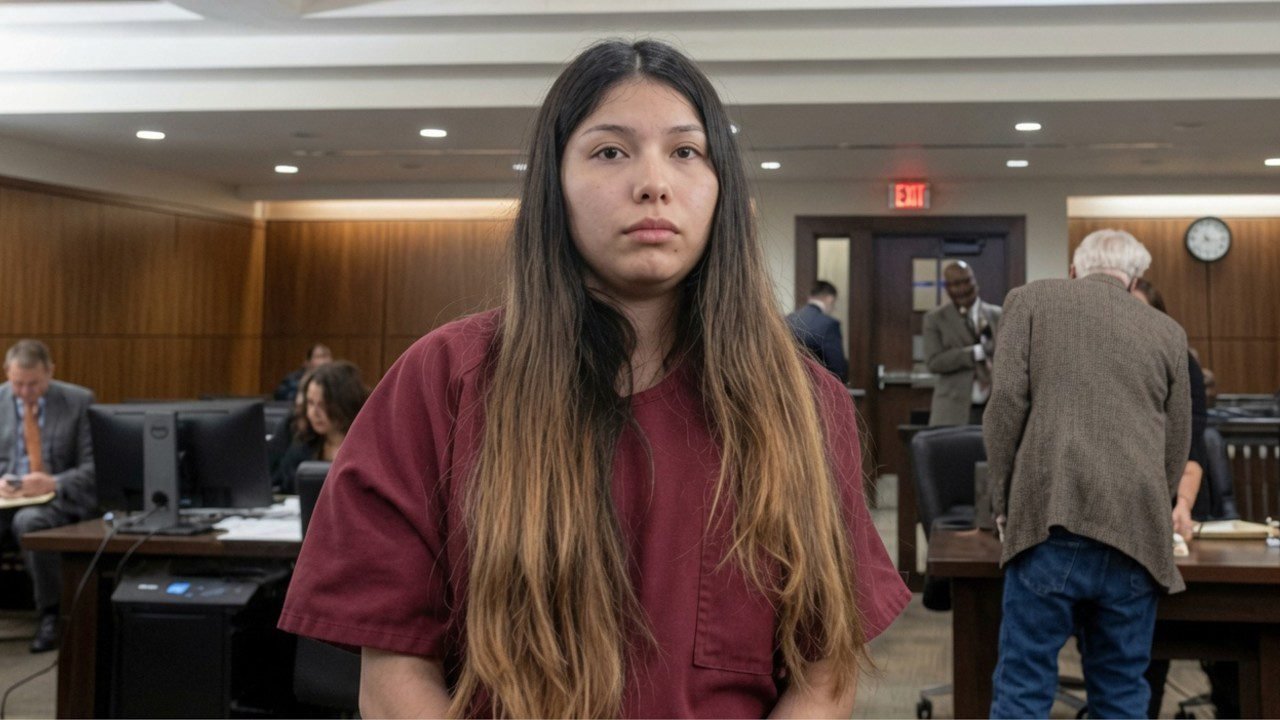

Inside Bexar County’s 187th District Court, plea agreements move fast, but the stakes never shrink. Judge Stephanie Boyd’s docket regularly tests how far a defendant’s explanation can stretch against the hard parameters of Texas law. Two recent cases on her bench show exactly how that test plays out, and what happens once a plea is entered.
The Reality of Child Endangerment
The case of State of Texas v. Australia Hernandez de Jesus (2024CR012173) began with a barbecue. Neighbors told investigators they had watched the defendant’s car driving up and down the street throughout the day, with no adult visible at her apartment after 7:00 p.m. Loud banging and crying eventually drew them to a window, where a young child said she was alone, hungry, and thirsty.
Officers who responded found the front door standing open behind a locked screen door. Inside were infants left in heavily soiled diapers. The 22-year-old defendant was charged with abandoning or endangering a child with intent to return, a state jail felony.
Deconstructing the Defense
The defendant told the court she had stepped away briefly to help a friend pack a bag and escape an abusive boyfriend. She said the driver that day was her ex-boyfriend, 25-year-old Adrian Ruiz Jr., not herself.
Judge Boyd questioned the logic directly, pointing out that if a boyfriend were abusive, the appropriate response was calling police rather than intervening in person. The judge noted the defendant had been acting as though she were single with no children, directing her attention toward a boyfriend while her own children went without food or water at home.
The plea resulted in four years of deferred adjudication probation. Conditions include a $1,500 probated fine, proof of employment within 30 days that excludes home healthcare or minor-care work, and regular random drug testing. The order also imposes absolute no contact with Adrian Ruiz Jr. and bars contact with her children entirely unless Child Protective Services formally petitions the court for supervised visitation.
Fleeing the Law: The Anatomy of an Evading Charge
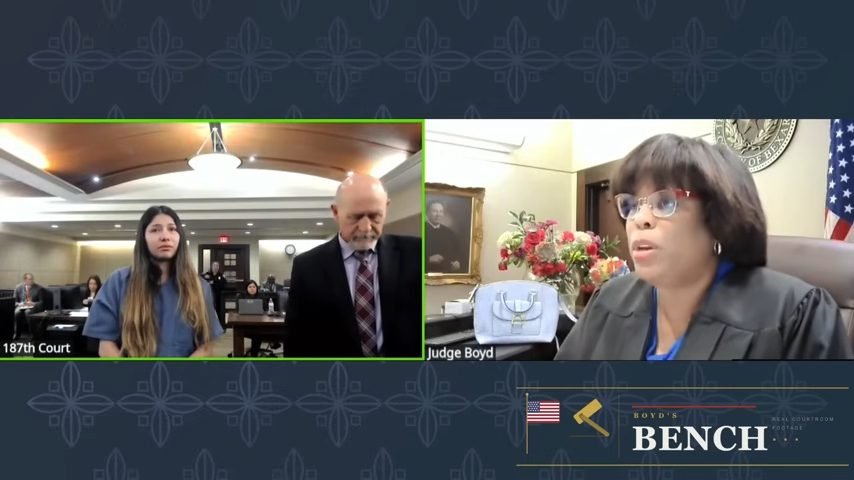
State of Texas v. Mia Raye Herrera (2025CR003690) started as a routine traffic stop. An officer detected a strong odor of marijuana and instructed the defendant to exit her vehicle. Instead, she rolled up her window and drove off, triggering a pursuit through multiple streets before she stopped a second time.
Even then, she refused to exit. With a weapon drawn, she told officers, “Nope, not getting out of my vehicle,” forcing them to break the window to remove her from the car. She was charged with evading arrest or detention with a vehicle, a third-degree felony.
The defendant, a restaurant server, told the court she drove away because she “did not feel comfortable or safe with the officer,” while acknowledging that it was the wrong decision. She also admitted she would likely test positive for marijuana.
The Path to the Friendly Skies
Her sentence: two years of deferred adjudication probation, with a full driving ban until she can produce a valid license and insurance. The terms also require monthly field visits for the first three months, random drug testing, and 100 hours of community service.
One condition stands apart from the rest. Judge Boyd ordered that if the defendant successfully becomes a flight attendant, her stated career goal, within the two-year probation period, her 100 hours of community service will be considered fully satisfied.
Conclusion
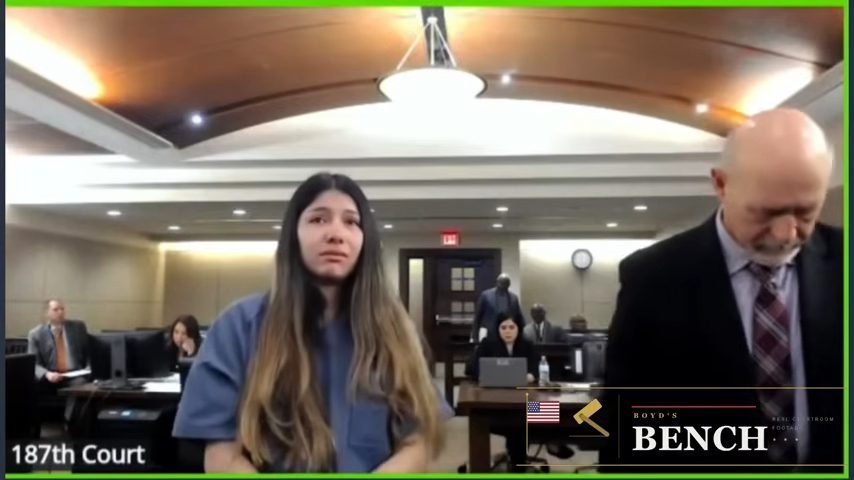
Neither case ended in a conviction on the books; both resolved through deferred adjudication, meaning a guilty finding is withheld pending compliance with the court’s terms. What the terms themselves reveal is a court using probation as more than punishment. No-contact orders, driving bans, and career-linked incentives function here as tools of behavioral enforcement, built around the specific circumstances that brought each defendant before the bench.