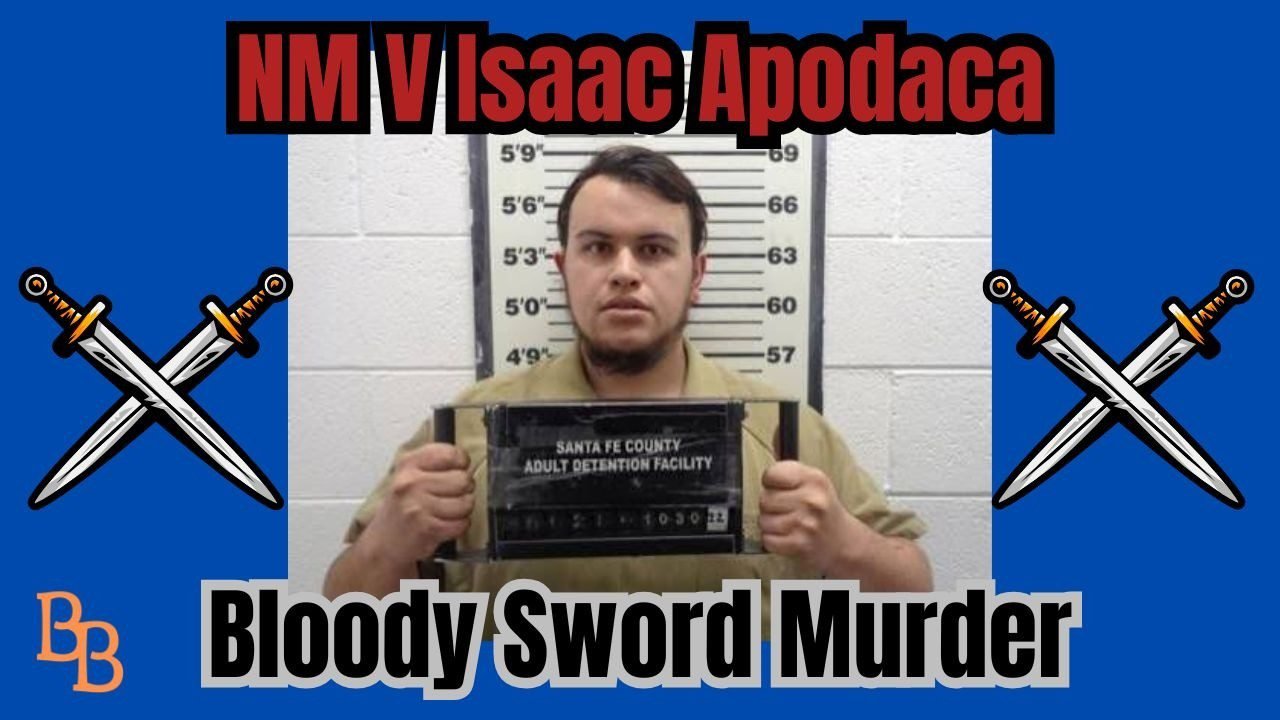
Santa Fe’s district courthouse has seen its share of hard cases, but few carried the theatrical weight of the one that closed this week. Isaac Apodaca sat at the defense table as the state rested its case against him, accused of orchestrating the sword killing of 21-year-old Grace Jennings. By the time the jury filed back into the room, the courthouse itself had gone dark, and so had any hope the defense held for a lesser outcome.
The trial had drawn intense public attention from the start, livestreamed gavel to gavel for a true-crime audience hungry for every procedural twist. Day 6 delivered the biggest twist of all: a defense that chose silence, a jury that chose darkness, and a verdict that left no ambiguity about who the jury believed was responsible.
The Final Legal Stand

When court resumed for its sixth day, the defense team rested without calling a single witness to the stand. Isaac Apodaca himself declined to testify, a choice that left jurors with only the state’s version of events to weigh. It was a calculated gamble, betting that the prosecution’s own case carried enough holes to create doubt.
Before closing arguments began, defense attorneys made one last procedural push. They asked the court to instruct the jury on a lesser included offense, conspiracy to commit second-degree murder, hoping to give jurors an off-ramp from the top charges. The judge declined, and the most serious homicide counts went to the jury exactly as prosecutors had charged them.
The state used its closing argument to hammer home the physical brutality of the crime. Prosecutors walked jurors back through the forensic realities of the weapon itself, then turned to carefully controlled demonstrations of the DNA evidence tying the defendant to the scene. It was a closing built less on rhetoric and more on the accumulated weight of physical proof.
Deliberation in the Shadows

Jurors retired to deliberate, and almost immediately the courthouse lost power. A widespread outage knocked out electricity across a large stretch of the surrounding area, and the courthouse was swept clear of nearly everyone still inside its walls. The jury, however, stayed put.
Sequestered and unwilling to pause the process, jurors kept working through the blackout using the light from their own cell phones alongside whatever emergency lighting the building could provide. Court staff monitored the situation as deliberations continued in near-total darkness, an image that will likely define public memory of this trial long after the legal details fade.
There is something almost unbearably strange about a jury deciding a man’s fate for first-degree murder while huddled around the glow of their own phone screens, the courthouse around them gone completely black.
The deliberation itself did not stretch on for long. Jurors reached their conclusion in a matter of hours, dark courtroom notwithstanding, and asked to be brought back in to deliver it.
The Verdict and What Follows
When the jury returned, the panel delivered a unanimous guilty verdict on all counts against Isaac Apodaca. There was no split decision, no partial acquittal, and no room left for the step-down instruction the defense had fought for just hours earlier. The lights, by most accounts, had only just come back on as the verdict was read.
The judge wasted no time on the practical consequences of the finding. Apodaca was remanded on the spot into the custody of the Santa Fe County Sheriff’s Office to await sentencing, a hearing the court indicated would be scheduled roughly 35 days out. For a defendant who had sat through six days of trial as a free man on the strength of his presumption of innocence, that presumption evaporated the moment the verdict was read.
Attention now shifts to the sentencing phase, where the defense has already signaled its next move. Attorneys for Apodaca have announced plans to introduce an expert trauma mitigation report before the final sentencing hearing, an effort to argue for leniency even after the jury rejected every argument for reasonable doubt. Whether that report can meaningfully soften the outcome remains to be seen, but it marks the clearest sign yet that the legal fight in this case is far from finished, even with a guilty verdict on the books.
For the family of Grace Jennings, the verdict closes one chapter of a case that began with a discovery no family should have to make. For observers of the New Mexico courts, the image of a jury deliberating a murder charge by flashlight will likely outlast most of the trial’s other details. And for Isaac Apodaca, the countdown to sentencing has now begun in earnest, this time from behind the walls of the Santa Fe County jail rather than a seat at the defense table.