A Miami County, Ohio, jury has found former American Idol contestant Caleb Flynn guilty of aggravated murder in the February 2026 shooting death of his wife, Ashley Flynn. Jurors returned guilty verdicts on all nine counts that reached them, including murder, felonious assault and tampering with evidence, after roughly two hours of deliberation on Tuesday, September 29.

Judge Jeannine Pratt read the verdicts in the Miami County Common Pleas Court in Troy. Flynn, 40, had pleaded not guilty. Sentencing is scheduled for October 5, 2026, at 3:00 p.m.
The verdict came on the same day as closing arguments. Prosecutors told jurors that Flynn killed his wife in their Tipp City home and then staged a break-in. His defense argued that the state never recovered a murder weapon and never produced direct proof that he fired a gun that night.
Case Background
Ashley Flynn, 37, was found shot in bed early on February 16, 2026, at the couple’s home on Cunningham Court in Tipp City. She was a middle school volleyball coach and substitute teacher, and a mother of two young daughters. Authorities said officers were dispatched around 2:30 a.m. on a report of a burglary and a person shot.

The call to 911 came from Caleb Flynn. In audio obtained by Fox News Digital, he described an intruder.
“Somebody broke into my home and shot my wife.”
That account became the central question of the case. The defense maintained an intruder was responsible, while the state argued the scene had been arranged to look like a burglary.
Police reported that only Caleb Flynn, Ashley Flynn and the couple’s two daughters were inside the home at the time. According to reporting based on a police report, officers also found the center console open in a truck parked in the garage, where Flynn kept his handgun. The bullets recovered in the case were 9mm rounds, and the gun used was never found.
Flynn was arrested on February 19 and arraigned the next day, when he entered a not guilty plea. A grand jury later returned an 11-count indictment on March 19, and his bond was raised from $2 million to $3.5 million at that stage. The two misdemeanor counts of intimidation of an attorney, victim or witness were dismissed on a prosecution motion the day before the verdict, leaving nine counts for the jury.
Flynn has been described in public reporting as a former worship pastor and a Season 12 American Idol contestant. Reporting at the time of his arrest said he had no criminal history beyond traffic infractions.
What Happened on the Final Day of Trial

The jury was seated Tuesday morning and closing arguments began shortly after 9:00 a.m. They concluded just before 11:00 a.m., according to local reporting. Judge Pratt then instructed the jury on the law.
Deliberations began at about 1:15 p.m. Local station WHIO reported that the jury returned just before 3:30 p.m., while other updates logged the verdict later in the afternoon, so the exact clock time of the announcement varies by outlet. All reports agree the jury needed only about two hours.
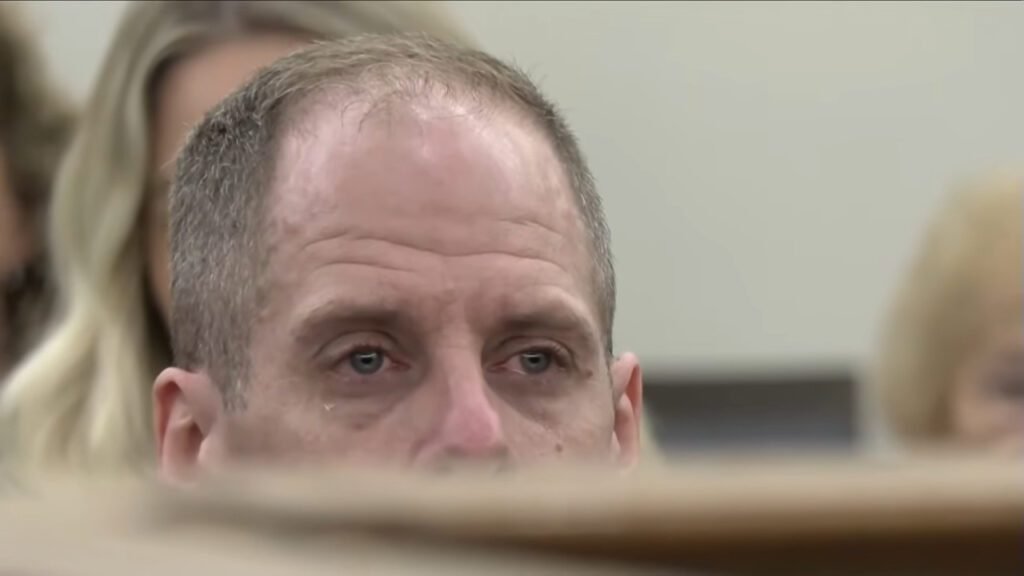
Flynn was seen crying as the verdicts were read, and members of Ashley Flynn’s family embraced one another in the courtroom, according to Dayton Daily News coverage. Defense attorneys later spoke with reporters outside the courtroom.
Prosecution’s Closing Argument
Prosecutors asked the jury to follow the physical and digital evidence. In their telling, Flynn shot his wife while she slept and then tried to disguise the killing as a home invasion. They also urged jurors to look closely at what they described as Flynn’s changing account of the night.
On motive, the state pointed to an affair. According to the trial summary provided for this article, prosecutors highlighted text messages Flynn sent to the woman he was involved with, and argued that those messages showed he wanted to be free of his marriage. They also pointed to a $100,000 life insurance policy on Ashley Flynn that named her husband as sole beneficiary, along with shared bank assets.
Those are allegations about motive, and the jury was left to decide how much weight to give them.
The state also leaned on forensic evidence. According to the summary, prosecutors said Flynn’s fingerprints and DNA were found on the hood of Ashley Flynn’s van near the area where a forced entry was supposedly made, on the door of his truck and on the refrigerator. They argued the garage side door damage looked staged rather than the product of a burglar forcing his way in.
Another point involved police tracking dogs. Prosecutors argued the dogs did not pick up a trail of anyone leaving the property, and that the animals instead alerted back toward the house and garage three times. The state also pointed to deleted digital data and what it called inconsistencies in Flynn’s statements to law enforcement after the shooting.
The prosecution’s preparation for this stage was visible months earlier. At an April pretrial hearing, the Miami County Prosecutor’s Office disclosed it had served nearly three dozen subpoenas on people connected to the case, including analysts from the Ohio Bureau of Criminal Investigation and the FBI Laboratory at Quantico, and record keepers from financial institutions, cellphone companies, social media platforms and a life insurance company.
Defense’s Closing Argument
The defense told jurors the state’s case rested on assumption. According to the trial summary, defense counsel argued that investigators found the affair first and then read the physical evidence to fit that story, a pattern the defense called hindsight bias.
The lack of direct evidence was a major theme. No murder weapon was ever recovered. The defense also said no gunshot residue testing produced direct proof that Flynn fired a weapon that night, and criticized police for allowing him to wash his hands before testing was complete.
On the most serious charge, the defense argued the state had not proven prior calculation and design beyond a reasonable doubt. Aggravated murder in Ohio requires that element, and the defense contended the evidence of advance planning was not there.
Defense attorneys also argued that investigators failed to follow evidence and leads that could have created reasonable doubt. Throughout the trial, lawyers for Flynn had maintained that an intruder entered the home. Defense counsel reminded jurors that suspicion, or proof of infidelity, is not the same as proof of murder.
The Judge’s Instructions

Before deliberations, Judge Pratt instructed the jury on the legal definitions it would need to apply. According to the summary, those instructions covered the difference between aggravated murder, which requires prior calculation and design, purposeful murder and felony murder, as well as the difference between direct and circumstantial evidence. She also instructed on the requirements for firearm specifications and for tampering with evidence.
These instructions mattered because the jury was not asked a single question of guilt or innocence. It was asked to decide each count separately under its own legal standard.
The Verdicts
The jury found Flynn guilty of all nine counts submitted to it: one count of aggravated murder, three counts of murder, two counts of felonious assault and three counts of tampering with evidence. Reporting also indicates the jury found related firearm specifications, which can add time at sentencing.
Rolling Stone, citing a Court TV livestream, reported that the verdict was unanimous and that Flynn closed his eyes and began crying as he stood to hear it. CNN reported that he shook his head and wiped his face as the verdicts were read.
After the verdict, Flynn’s lead defense attorney, L. Patrick Mulligan, said he and his client respected the system but were disappointed. He said the defense expected to appeal after sentencing. Prosecutors thanked the Ohio Bureau of Criminal Investigation, the Tipp City Police Department and the prosecutor’s office for their work on the investigation.
Key Legal Issues Explained
Aggravated murder is the most serious homicide charge in the case. In Ohio, it generally requires proof that the killing was committed with prior calculation and design, which means the state must show more than a sudden impulse. The jury in this case found that element satisfied.
Circumstantial evidence is evidence that points to a conclusion indirectly, such as forensic traces, digital records or the behavior of tracking dogs. It is different from direct evidence, such as an eyewitness who saw the shooting. Because there was no weapon and no eyewitness account of the shooting, the jury’s instructions on this distinction were especially relevant.
Felony murder and purposeful murder are separate theories of homicide with different elements. The verdict form gave the jury a way to evaluate each theory individually.
Merger is the principle that a defendant cannot be punished separately for offenses that arise from the same conduct and count as the same offense under Ohio law. Mulligan told a Dayton television station that the first six counts would merge at sentencing. How that plays out will be decided by the court.
What Happens Next
Judge Pratt set sentencing for October 5, 2026, at 3:00 p.m. WHIO has said it plans to stream the hearing.
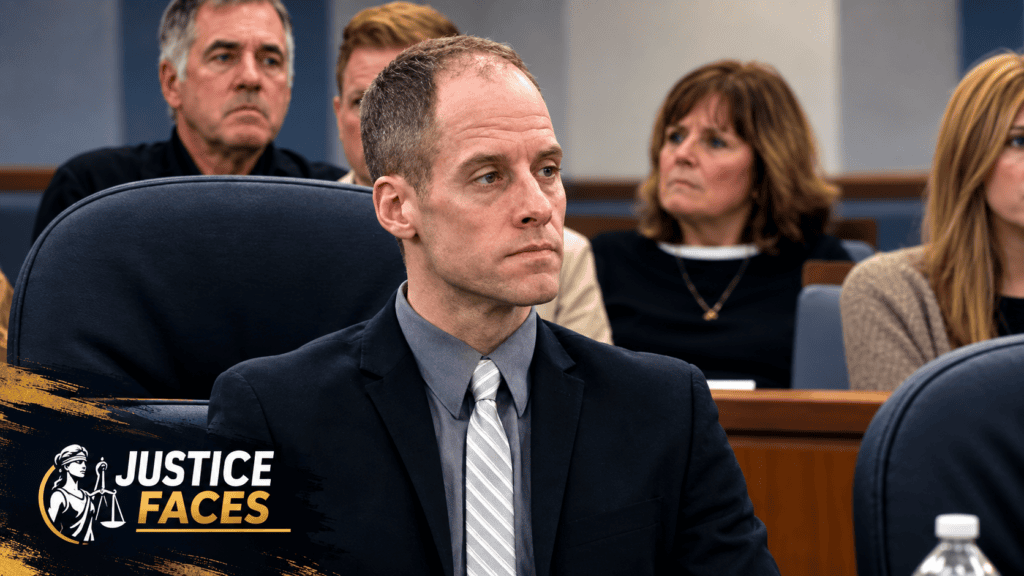
Mulligan said possible sentences on aggravated murder in Ohio include 20 years to life, 25 years to life, 30 years to life, or life without parole. CNN reported that Flynn faces a possible sentence of life in prison without parole. The final sentence will be determined by the judge at the hearing.
The defense has said it expects to appeal. No appeal has been filed at this stage, and no appellate ruling exists.
Current Case Status
As of October 1, 2026, Caleb Flynn stands convicted by a jury on all nine counts submitted to it. He has not yet been sentenced. A conviction is not final in the sense that appeals are still available, and none has been decided.
Frequently Asked Questions
What is the Caleb Flynn case about?
Caleb Flynn was charged with killing his wife, Ashley Flynn, 37, who was found shot in bed at their Tipp City, Ohio, home on February 16, 2026. Flynn told 911 that an intruder broke in. Prosecutors argued he committed the killing and staged the scene.
Was Caleb Flynn found guilty?
Yes. A Miami County jury found him guilty on all nine counts on September 29, 2026, including aggravated murder.
Which charges did the jury decide?
One count of aggravated murder, three counts of murder, two counts of felonious assault and three counts of tampering with evidence, along with related firearm specifications.
What did prosecutors argue in closing?
They argued Flynn shot his wife while she slept and staged a break-in, pointing to alleged motive, forensic evidence, tracking dog behavior, deleted data and what they called inconsistent statements.
What did the defense argue?
The defense argued that the state’s case was built on assumption, that no murder weapon was found, that no gunshot residue testing directly tied Flynn to the shooting, and that prior calculation and design had not been proven.
Who is the judge?
Judge Jeannine Pratt of the Miami County Common Pleas Court presided over the trial and read the verdicts.
How long did the jury deliberate?
About two hours, according to several news reports.
When is sentencing?
October 5, 2026, at 3:00 p.m.
What sentence could Caleb Flynn receive?
Mulligan said aggravated murder carries possible sentences of 20 years to life, 25 years to life, 30 years to life, or life without parole. The judge will decide at sentencing.
Will Flynn appeal?
His attorney said the defense expects an appeal after sentencing. Nothing has been filed or decided at this stage.
Conclusion
The jury accepted the state’s account that Ashley Flynn was killed by her husband and that the scene was staged, and rejected the defense argument that the evidence fell short. The case went to the jury without a recovered weapon, which made the circumstantial record the center of the trial.
What remains is the sentence. Judge Pratt will decide it on October 5, and any appeal will follow afterward.