
The courtroom in Fulton County was quiet the day Kirsty Hannah Flood stood to accept a plea deal that would keep her out of Georgia’s execution chamber. She was 29 years old, a mother of two herself, and for nearly a year she had been the woman prosecutors said beat a two-year-old girl to death in a Sandy Springs apartment.
The girl’s name was Fallon Fridley. She had just started forming full sentences. She loved her mother, her stepfather, and by every account she trusted the woman who was supposed to be watching her that night.
The Fallon Fridley murder case became one of the most disturbing child abuse prosecutions in recent Georgia history, not simply because of the injuries a toddler suffered, but because of how long the warning signs went unread. A trusted family friend. A four-month babysitting arrangement. A mother two years into recovery who believed she had finally found someone safe.
By the time paramedics reached the Monterrey Parkway apartments on December 9, 2020, Fallon had no measurable brain activity. She was pronounced dead within hours at Children’s Healthcare of Atlanta. What investigators found afterward — in her body, in a phone’s search history, and in a home security camera Flood herself had installed — would dismantle every explanation Flood offered.
This is the story of how that happened, and how the case moved from a frantic 911 call to a life sentence.
A Friendship Built on Trust
Kristen “Chris” Fridley had been sober for two years by the winter of 2020. She credited much of that stability to Kirsty Flood, a longtime friend who had supported her through recovery. When Chris needed reliable childcare for Fallon, Flood seemed like the obvious choice.
The arrangement began simply enough. Flood would watch Fallon four days a week, typically from 6:00 a.m. to 6:00 p.m., while Chris worked. For about four months, nothing about the routine raised serious alarm.
Flood, for her part, described her bond with Fallon in maternal terms. She told people she loved the little girl like her own daughter. She lived at the apartment with her fiancé, Jeffrey Meyers, along with her own infant and young daughter.
But Flood was not a stranger to the criminal justice system. Court records show a 2010 arrest for battery and criminal trespass, followed by a 2012 drug possession arrest. None of that history was visible in the day-to-day warmth she projected toward Fallon and her mother.
The Warning No One Recognized
About a week before Fallon died, she came home with scratches on her face and bruising along her chin. Flood explained it away as an accident — her dog had jumped onto the bed and caught the toddler with a paw.
Chris accepted the explanation. There was no reason not to. Flood had never given her cause for suspicion, and toddlers accumulate bumps and scrapes as a matter of course.
In hindsight, that incident sits at the center of how the Fallon Fridley murder case is discussed today: not as an isolated act of violence, but as the visible edge of something that had likely been building for weeks.
December 9, 2020 — The Final Day
Fallon’s stepfather dropped her at Flood’s apartment between 6:00 and 6:30 that morning. It was meant to be a milestone of trust — Fallon’s very first overnight stay at Flood’s home.
Flood later said the children spent the day playing indoors, with a brief outing to Morgan Falls Overlook Park. At 4:30 p.m., Chris texted to check in. “How’s my girl?” she asked. Flood replied that they were heading to the park and that her phone battery was dying.
At 7:30 p.m., Chris FaceTimed her daughter. What she saw unsettled her immediately.
Fallon lay in bed, staring blankly at the screen, saying nothing. When Chris asked if she wanted to talk to her dad, Fallon faintly managed, “Yeah” — before the call abruptly cut off.
Repeated calls back went unanswered.
Around 8:00 p.m., neighbors in the building heard something they would later describe to police as a massive, concussive boom coming from Flood’s unit. It was followed immediately by a child screaming and crying in apparent pain.
One neighbor, Alexis Flowers, received a frantic call from Flood herself in the aftermath. According to Flowers, Flood admitted outright: she had hit Fallon because the toddler “wasn’t listening,” calling it a spanking.
Minutes That Mattered
What happened next would become central to the prosecution’s theory of delay and concealment.
Rather than call 911, Flood and Meyers reportedly tried to revive Fallon themselves. When Fallon’s parents eventually reached Meyers by phone, he told them everything was fine — her phone had simply died, she’d eaten dinner, and she was already asleep.
As Fallon’s condition worsened, Flood and Meyers placed the unresponsive toddler, still in her diaper, into a cold bathtub in an apparent attempt to shock her back to consciousness. It did not work.
It wasn’t until 9:20 or 9:30 p.m. — nearly two hours after the sound neighbors described — that Flood finally dialed 911. She also called Chris, crying, telling her that Fallon had gone limp and that paramedics were working on her.
The Story Police Were Told
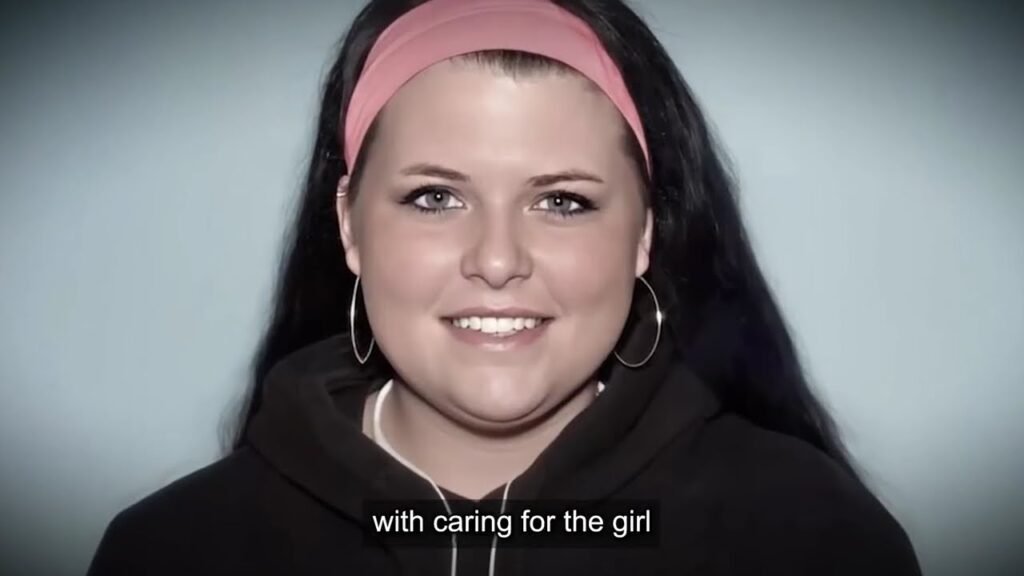
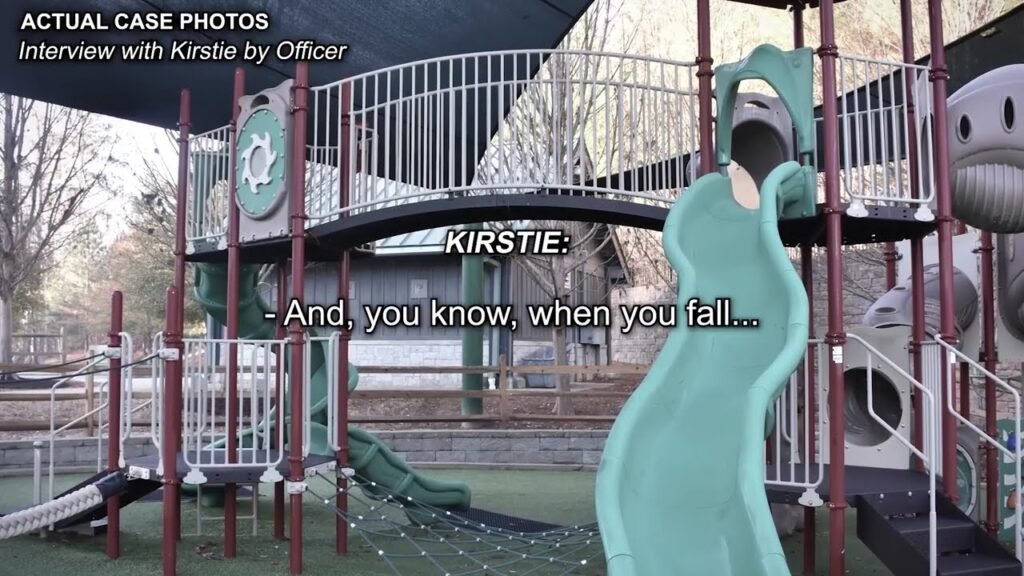
When Sandy Springs officers arrived, Flood offered an account built around an accident at the park. She said Fallon had fallen from a slide, hit her head lightly, grown lethargic, refused dinner, and then stopped breathing while Flood was outside for a five-to-ten-minute cigarette break.
It was a story engineered to explain a head injury without implicating anyone. It did not survive contact with the medical evidence.
What the Hospital Found
At Children’s Healthcare of Atlanta, doctors documented a massive skull fracture and severe brain swelling. Fallon’s abdomen was filled with blood from acute, catastrophic lacerations to her liver, spleen, and colon. Bruising covered her head and body.
Play equipment padding at Morgan Falls Park is specifically engineered to prevent the kind of trauma Fallon had suffered. Investigators noted that a fall from a slide, even a bad one, does not typically produce injuries of this severity. Fallon had no brain function on arrival and was pronounced dead shortly after.
Interrogation and Deflection
During questioning, investigators deliberately withheld the fact that Fallon had already died, hoping to keep Flood talking. The strategy worked — Flood kept talking, and kept changing her story.
At various points she blamed the playground slide. She tried to shift suspicion onto Fallon’s stepfather, suggesting he had a criminal record involving children. She floated the idea that her dog, Grace, might have stepped on the toddler. She claimed the apartment’s vinyl flooring concealed exposed, rusty nails.
She even accused the 911 dispatcher of causing Fallon’s internal injuries, arguing that instructions for deep CPR compressions were responsible for the severed liver and spleen.
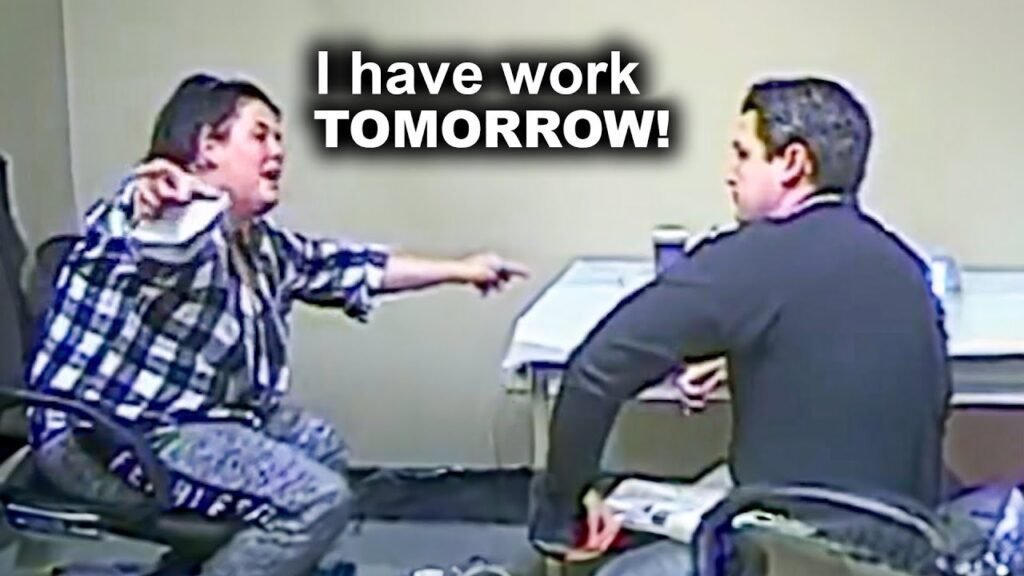
When Flood was finally told she was being placed under arrest during a follow-up interview, witnesses described her reacting with anger rather than grief — insisting police were “entrapping” her and “ruining her life.”
Digital Evidence Investigators Could Not Ignore
Three pieces of evidence effectively ended any possibility of an accidental explanation.
The first came from Flood’s own phone. Forensic extraction revealed search queries including “I hit my child and feel guilty,” a query asking what it means to have a sudden urge to beat a child that isn’t yours, and a search about what kind of person enjoys abusing other people’s children.
The second was Alexis Flowers’s account of the phone call in which Flood admitted to hitting Fallon for not listening, paired with the sound of the child’s screaming that neighbors heard through the walls.
The third was the most damaging. Flood had installed a Wyze home security system in the apartment and reportedly believed the footage would help clear her name. Instead, once police obtained a warrant, the recordings showed a pattern of abuse and physical mistreatment of Fallon in the time leading up to her death.
The Charges, Explained
A Fulton County grand jury indicted Kirsty Flood on Malice Murder, Felony Murder, First-Degree Cruelty to Children, Second-Degree Cruelty to Children, Second-Degree Murder, and Tampering with Evidence.
In plain terms, Malice Murder in Georgia means a killing carried out with deliberate intent and without legal justification — the state’s most serious homicide charge. Felony Murder applies when a death occurs during the commission of another dangerous felony, in this case child cruelty. The cruelty-to-children counts addressed the pattern of physical suffering inflicted on Fallon, separate from the fatal injuries themselves. Tampering with Evidence covered the delay in calling for help and the misleading statements given to police and paramedics.
The grand jury later added a charge of Aggravated Sexual Battery after evidence surfaced indicating Flood had also physically violated the toddler. It was a charge that transformed an already devastating case into one of the more disturbing child abuse prosecutions Fulton County had handled.
A Plea Instead of a Trial
Unlike many high-profile homicide cases, the Fallon Fridley murder case never reached a jury. Facing the possibility of a death sentence given the malice murder and aggravated sexual battery charges, Kirsty Flood entered a guilty plea.
While public court dockets do not detail the private negotiations between prosecutors and Flood’s defense team, the outcome removed capital punishment from the table in exchange for a plea to the underlying charges.
Flood was sentenced to life in prison without the possibility of parole. There was no trial testimony to weigh, no jury deliberation — the video evidence, the search history, and the neighbor’s account had left little room for a viable defense at trial, and the plea reflected that reality.
Jeffrey Meyers’s Separate Reckoning
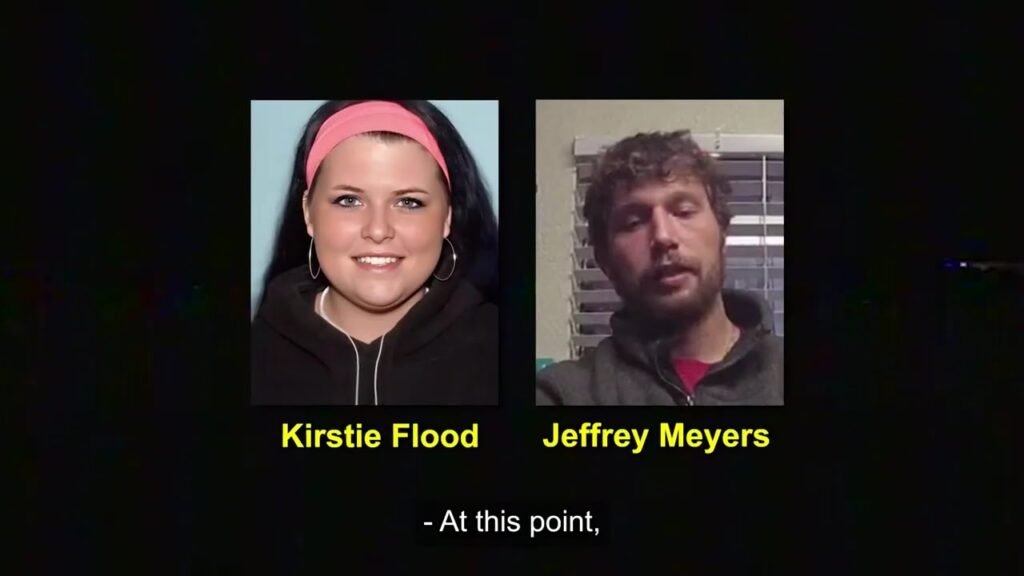
Fallon’s case did not end with Flood. Jeffrey Meyers, Flood’s fiancé, faced his own charges of Second-Degree Murder and Cruelty to Children.
Prosecutors argued that even though surveillance footage showed moments of Meyers treating Fallon kindly, he was present during the pattern of abuse, failed his legal duty to protect a child in his home, and participated in the delay and cover story told to Fallon’s parents and to police.
Meyers was ultimately sentenced to 15 years in prison — a markedly different outcome from Flood’s, reflecting the state’s view that his role, while serious, was one of failure to protect and act rather than direct infliction of the fatal injuries.
What the Case Left Behind
The Fallon Fridley murder case has since been cited in discussions about informal childcare arrangements — the kind built on friendship and trust rather than licensing, background checks, or oversight. Chris Fridley’s trust in Flood was not naive; it was the product of a genuine, years-long relationship. That is precisely what makes the case difficult for other parents to read.
Home security footage, so often installed by caregivers to prove their own innocence, instead became the clearest record of what happened inside that apartment. For investigators, it served as a reminder that digital evidence — search histories, security footage, phone records — increasingly tells a more reliable story than any account given after the fact.
Fallon Fridley was two years old. She is remembered by her family as sweet, quiet, and just beginning to find her voice.
Case details reflect publicly reported facts, court filings, and law enforcement statements associated with this prosecution. Some procedural specifics, including the full terms of plea negotiations, are not part of the public record.