Floyd County Superior Court fell silent on July 18, 2024, as Assistant District Attorney Leah Mayo walked the room through the final hours of a 21-year-old man’s life. The defendant, Brandon Christopher Risner, sat with his head down. He had already pleaded guilty a month earlier. What remained was the reckoning.
The Aaron Davis murder case had gripped Rome, Georgia, and the wider LDS community since November 2022, when a graduate student vanished on a routine drive to visit his girlfriend. What investigators found at the end of that search was not a car accident or a robbery gone wrong. It was a premeditated killing carried out by a lifelong friend, followed by an attempt to erase a human being from existence.
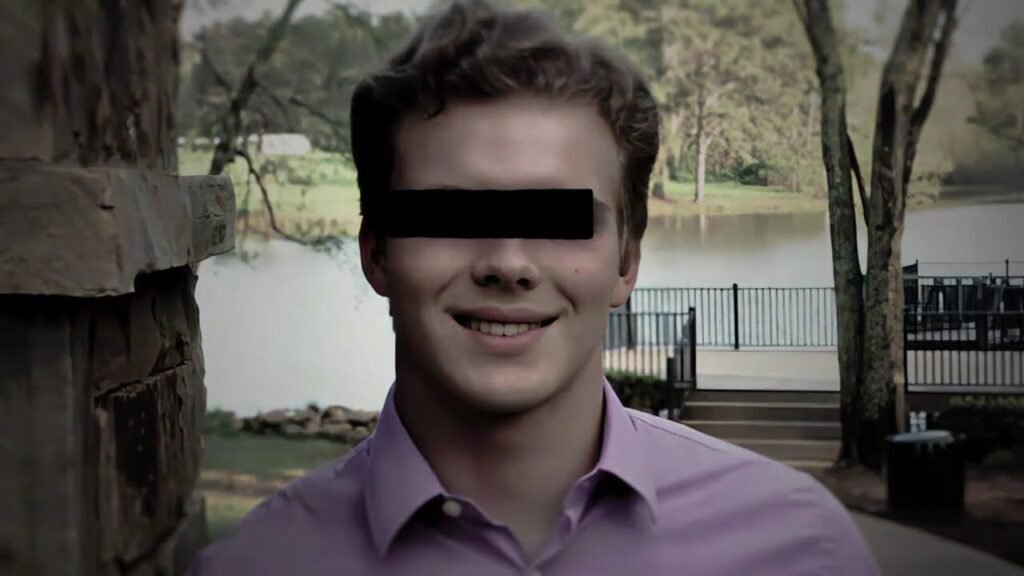
Aaron William Davis had just taken his graduate school admission exam that morning. He called his parents afterward, excited about how it went. He was 21, a recent Brigham Young University-Idaho graduate with a political science degree, and he was weighing a career in teaching or law. Friends and family describe a young man defined by his kindness, his loud shirts, and his devotion to his church.
Brandon Risner had known him since eighth grade. They attended the same church. They ate at the same family table more times than anyone could count. And on the night of November 11, 2022, Risner climbed onto his own roof, slipped through a guest bedroom window, and stabbed his sleeping friend forty times.
“It’s really like losing two kids at this point. It just felt like betrayal.”
That line, from Aaron’s father Randy Davis, captures the emotional core of a case that stunned investigators as much as it did the victim’s family. This article walks through the relationship between the two men, the crime itself, the manhunt, and the sentencing hearing that closed the book on one of Floyd County’s most disturbing homicide cases in recent memory.
The Friendship Behind the Aaron Davis Murder Case
To understand how this happened, it helps to understand who these two young men were to each other.
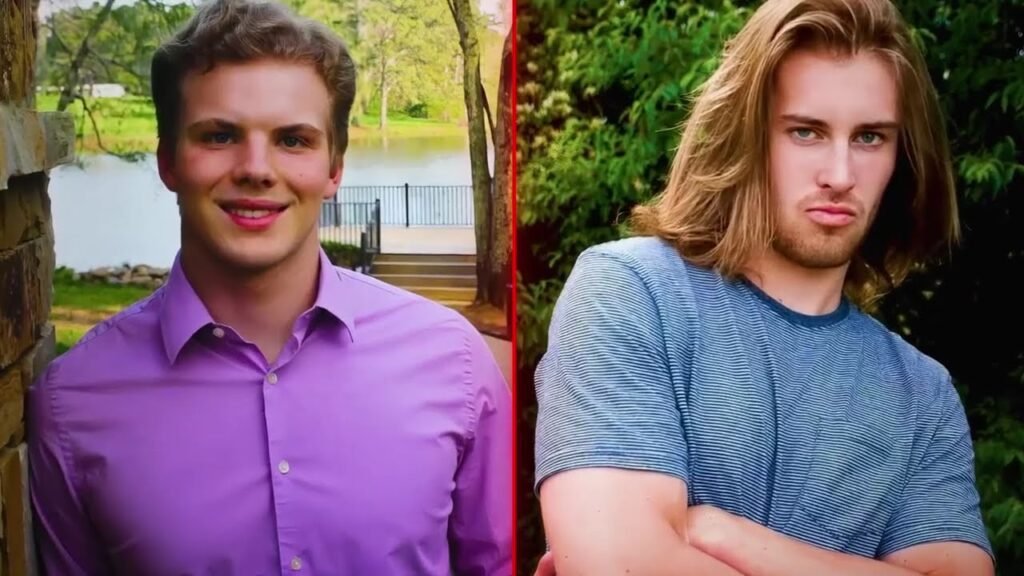
Davis and Risner met in the eighth grade and stayed close through high school. Both were raised in the Church of Jesus Christ of Latter-day Saints, and both attended youth activities together for years. By the time they reached young adulthood, their paths had diverged sharply, but the friendship held.
Davis pursued higher education aggressively. He graduated from BYU-Idaho in July 2022 with a political science degree, completed a law internship in North Carolina, and was actively deciding between teaching and law school. He lived with his family in Cumming, Georgia, and was in a serious relationship with his girlfriend, Charliegirl Schellenger, whom he had met at a church campout.
Risner’s trajectory looked different. He attended BYU-Idaho for a single semester before withdrawing. His parents later told investigators the decision came after he began experiencing severe anxiety attacks and suicidal thoughts. They brought him home in an effort to keep him safe. By 2022, Risner was working as a scare actor at a haunted attraction in Canton, Georgia, and posting original music to a YouTube channel under his own name.
Sara Davis, Aaron’s mother, later described just how embedded Risner had become in the family’s life. She told the court she had cooked him countless dinners over the years and that he had slept over at their house more often than his own. That closeness is precisely what makes the events of November 2022 so difficult to process, and it is central to why this case drew national true-crime attention.
A Fascination That Went Unnoticed
According to testimony and reporting from the sentencing hearing, Risner had developed what prosecutors described as a fixation on serial killers and violent film content in the months leading up to the murder. Family members and investigators would later point to this as one thread in a broader picture of psychological decline that nobody around him fully recognized in real time.
His parents told police they knew he was struggling. What they did not know was how far that struggle had traveled.
November 11, 2022: The Night Everything Changed
On the morning of November 11, Davis sat for the GACE, Georgia’s certification exam for prospective teachers. He called his parents afterward to share how confident he felt. From there, he began the roughly 60-mile drive from the Rome area toward Alabama, where his girlfriend was waiting.
Along the way, he made a stop that would cost him his life. He swung by Risner’s house on Collinwood Road in East Rome. Risner’s parents were out of town, giving the two men the house to themselves.
That evening, the pair went out to a bar near the Etowah River. Davis rarely drank, but Risner ordered him high-alcohol-content beers anyway. Investigators would later flag this detail as significant, since it left Davis far more intoxicated than usual and considerably more vulnerable. Back at the house, the two sang karaoke and shared a bottle of wine. Davis, feeling the effects of the alcohol, became sick and eventually went upstairs to sleep it off in the guest bedroom. His last text to his girlfriend went out around 9:57 p.m.
What Davis did not know was that Risner had already been fantasizing about killing him for weeks.
The Attack
Sometime after midnight, while Davis slept, Risner retrieved a kitchen knife. Rather than walk through the house, he went outside, climbed onto the roof, and entered the guest bedroom through the window, apparently to avoid waking his friend by using the interior hallway.
What followed was methodical and brutal. Risner stabbed Davis approximately forty times across his head, chest, torso, and limbs. The violence was severe enough that blood reached the ceiling and soaked completely through the mattress and carpet below.
Risner then moved Davis’s body into the guest bathroom shower, where he partially dismembered and disemboweled him. During this process, a portion of the victim’s small intestine was lost and never recovered, a detail that would later surface repeatedly in court filings and prosecutorial statements.
Concealing the Body
Risner wrapped his friend’s body in the same bedsheets Davis had been sleeping on, sealed it with duct tape purchased from a local Walmart, and forced it into a suitcase. He hid the suitcase in the trunk of Davis’s own blue Toyota Prius.
The following night, Risner drove to a wooded area near Tumlin Drive. He found a large hole left behind by an uprooted oak tree, roughly six to eight feet across, and buried Davis there under six to twelve inches of dirt. He then drove Davis’s Prius to Heritage Creek Park and attempted to submerge it in a drainage ditch behind a levee, hoping to remove any trace of his friend’s presence at the house.
In the days that followed, Risner began an elaborate campaign of deception, using Davis’s own phone to text his worried girlfriend and pretending to be Davis. He also reached out to Davis’s family and friends, offering to help search for the very person he had already killed.
The Investigation and Manhunt
Rome police discovered the abandoned Prius submerged in the creek during a routine patrol. A license plate check connected the vehicle to Aaron Davis, and officers reached out to his family. Davis’s father confirmed his son had planned to visit Risner before continuing on to Alabama, and that no one had heard from him since.
With Davis’s phone going straight to voicemail, the family filed a missing person’s report. Officers contacted Risner directly, and he played the role of a worried friend, telling Lieutenant Sailors that he was out searching for Davis at a local park. He claimed Davis had gotten sick after drinking wine, woken up around 1:00 a.m., and left in his own car.
When investigators arrived at the Collinwood Road house in person, the story began to unravel. Risner repeated his account, but officers noted his agitated demeanor, several locked interior doors, and an overwhelming smell of cleaning chemicals throughout the home. Later analysis of his phone’s search history would show queries for new bedsheets, hydrochloric acid, how to drain a washing machine, and how to remove blood from carpet.
Upstairs, in the guest bedroom, police found visible pools of blood on the floor along with blood-detection powder residue. Realizing officers were closing in, Risner bolted from the house, jumped a backyard fence, and disappeared into a neighboring subdivision.
The Father’s Discovery
While Risner was on the run, his parents, Jeremy and Rachel Risner, returned home and began assisting investigators. Jeremy located his son’s cell phone inside the house. Initially protective of his child, he declined to hand the device over without a warrant.
That changed once he looked through its contents himself. What he found included disturbing writings Risner had composed describing the killing in graphic detail, along with a literal to-do list written after the murder. The list included mundane tasks like doing laundry and showering, alongside instructions to text Davis’s family a cover story claiming Davis had gotten sick and left on his own.
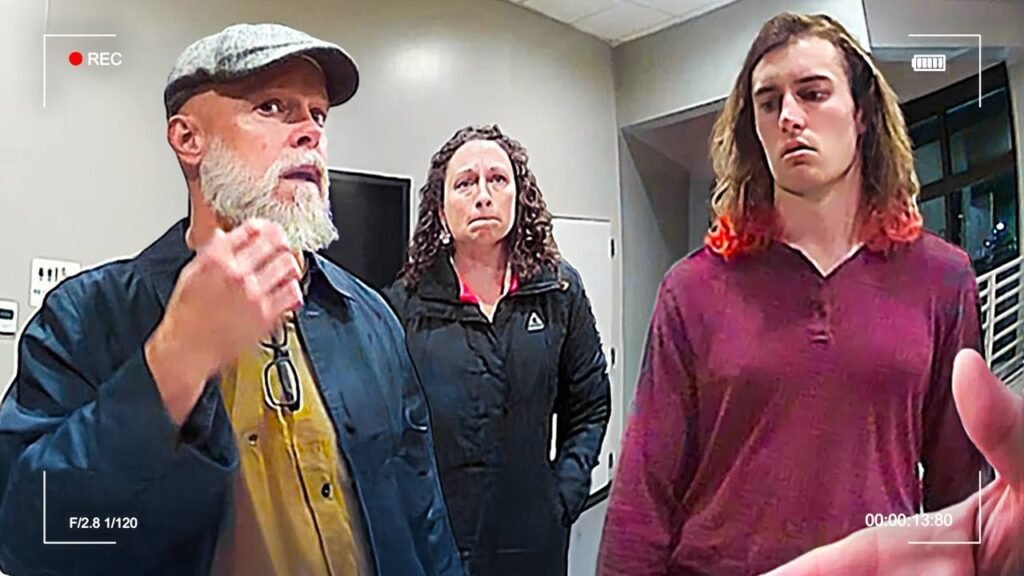
Confronted with the reality of what his son had done, Jeremy Risner contacted police roughly an hour later to say he was with Brandon and that his son was ready to surrender peacefully. Twenty-five minutes after that call, Brandon Risner walked into the police station alongside his parents. Jeremy then quietly directed investigators to the wooded area off Tumlin Drive where Davis’s body had been buried.
Risner was formally indicted for the murder in January 2023. Multiple court-ordered mental health evaluations delayed proceedings for months. A state psychiatrist ultimately found him competent to stand trial.
The Charges, Explained
Risner ultimately pleaded guilty to twelve separate criminal charges rather than face a capital trial that had been scheduled to begin in June 2024. Understanding what each of these charges actually means helps explain the scale of what prosecutors were prepared to prove.
Malice murder is Georgia’s term for a killing committed with deliberate intent, as opposed to one that occurs during another crime. Felony murder, charged here in two counts, applies when a death results from the commission of an underlying felony, in this case the aggravated assault and battery against Davis. Aggravated assault and aggravated battery describe the act of causing serious bodily harm with a weapon, here the kitchen knife used in the attack.
Concealing the death of another and abandonment of a dead body both relate to Risner’s efforts to hide what he had done, including burying Davis in an unmarked grave. Theft by taking covered his use of Davis’s vehicle to dispose of evidence. The misdemeanor charge for removal of body parts from the scene of a death reflects the loss of a portion of Davis’s small intestine during the mutilation, along with related tampering with evidence and obstruction of an officer charges tied to his flight from police and his fabricated story about the night’s events.
Taken together, these charges painted a picture prosecutors described as calculated rather than impulsive, a distinction that would matter enormously at sentencing.
Inside the Sentencing Hearing
Because Risner pleaded guilty, there was no trial, and therefore no cross-examinations or defense attempts to raise reasonable doubt. Instead, the case moved directly to a sentencing hearing that stretched more than two hours, during which prosecutors laid out the full scope of the evidence and both families addressed the court directly.
Assistant District Attorney Leah Mayo told the judge Davis had worked too hard to reach the point he was at that day, only to have his life cut short by someone his family trusted completely. She detailed the timeline of the killing, the attempted cleanup, and the digital trail investigators recovered from Risner’s phone, including the disturbing writings and the post-murder task list.
Mayo also described the motive prosecutors believed drove the attack. She said Risner had taken cannabis edibles in the weeks prior and experienced what he described as a vision instructing him to kill his best friend. According to Mayo, Risner had those urges, wanted to act on them, and ultimately did.
Victim Impact Statements
Davis’s mother, Sara, told the court she believed the murder had been carefully planned, recalling how Risner had spent years as a fixture at their family dinner table while secretly harboring violent intentions. She described her younger son’s bond with Aaron and the particular cruelty of losing him on her youngest child’s birthday.
Randy Davis, Aaron’s father, spoke about his son’s work ethic and the promise of the future that had been stolen from him. Davis’s girlfriend, Charliegirl Schellenger, delivered one of the hearing’s most emotional statements, describing how she searched the freezing streets of Rome before learning her boyfriend was dead.
The Defense’s Request for Mercy
Risner’s attorney did not dispute the facts of the case. Instead, the defense argued for a sentence that would allow for the possibility of parole, pointing to a combination of diagnoses that included autism spectrum disorder, an unspecified psychotic disorder, severe OCD, and cannabis use disorder. The defense acknowledged Risner did not meet Georgia’s legal standard for an insanity defense but argued these conditions had contributed significantly to his psychological collapse in the months before the killing.
Risner’s parents addressed the court as well, tearfully asking Judge Niedrach to consider a sentence that would allow their son access to long-term psychiatric treatment. The defense’s formal request was for thirty years with the possibility of parole, citing Risner’s lack of any prior criminal record and his decision to plead guilty rather than force a trial.
The Verdict and Its Weight
Judge John “Jack” Niedrach rejected the defense’s request for leniency. He acknowledged the pain being felt by both families in the courtroom but was direct about where that pain fell heaviest, telling the room that while everyone present was suffering, the Davis family’s loss exceeded all of it. Losing a son to a brutal murder, he said, was simply unfathomable.
On July 18, 2024, Niedrach sentenced Brandon Christopher Risner to life in prison without the possibility of parole. Risner is currently held at Macon State Prison, with no future release date on record.
A Case That Still Raises Hard Questions
The Aaron Davis murder case continues to draw attention from true-crime audiences and legal observers alike, not because the facts are unclear, but because the relationship at its center defies easy explanation. Two young men raised in the same church, the same friend group, and at times the same dinner table ended up on opposite sides of one of Floyd County’s most disturbing homicide cases in years.
Available records leave a gap regarding exactly when Risner’s private fixation on violence began to overtake his relationship with Davis. What is clear from the sentencing hearing is that no one around him, not his parents, not his lifelong best friend, saw it coming in time.
Aaron Davis is remembered by his family and community as a young man who had already accomplished a great deal and had far more ahead of him. His case remains a sobering reminder that the greatest threats are not always the ones that come from strangers.