
Mark Daniel Lewis went into a Texas sentencing hearing asking for probation, and he received it. But Judge Stephanie Boyd made him choose first, and the terms attached to that choice begin with confinement and a transfer to a state substance abuse treatment facility.
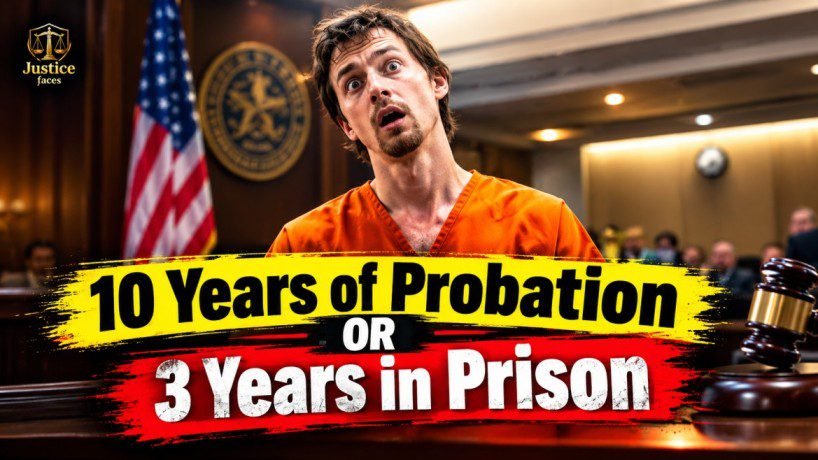
The State of Texas had asked for the six-year prison sentence that came with Lewis’s plea bargain agreement. Boyd, who presides over the 187th District Court in Bexar County, told him she could place him on 10 years of probation, or she could give him three years in prison. She then asked which he would prefer.
The hearing is worth reading closely for two reasons. It shows how a Texas judge weighs a defendant’s claim that he has changed against a presentence report full of prior history, and it shows how much a single probation order can contain.
Case Background
State of Texas v. Mark Daniel Lewis reached sentencing after Lewis entered a plea of no contest on November 28 and applied for deferred adjudication. The case notes provided for this article do not identify the specific offense, so this report does not guess at one.
The prosecution’s position was clear. Prosecutors strongly opposed leniency and asked the court to impose the six years called for in the plea bargain agreement, pointing to Lewis’s criminal history and his failure to comply with the terms of earlier supervision.
Before sentencing, both the defense and the prosecution confirmed that they had reviewed the Pre-Sentence Investigation (PSI) report and had no formal objections to it. As summarized in the case notes, the report covers juvenile infractions, prior felony time with the Texas Department of Criminal Justice (TDCJ), gang affiliation, and prior convictions for violating sex offender registration rules. Those details come from the report as described in the notes, and the offense in this case was not a sex offender charge.
A recording of the proceeding was posted on YouTube on January 21, 2026 by a channel called Court of Justice. The material provided does not state the date of the hearing itself.
What Happened During the Hearing
Lewis testified in response to questions from his defense attorney and from Judge Boyd. His central message was that he is not the person he used to be.
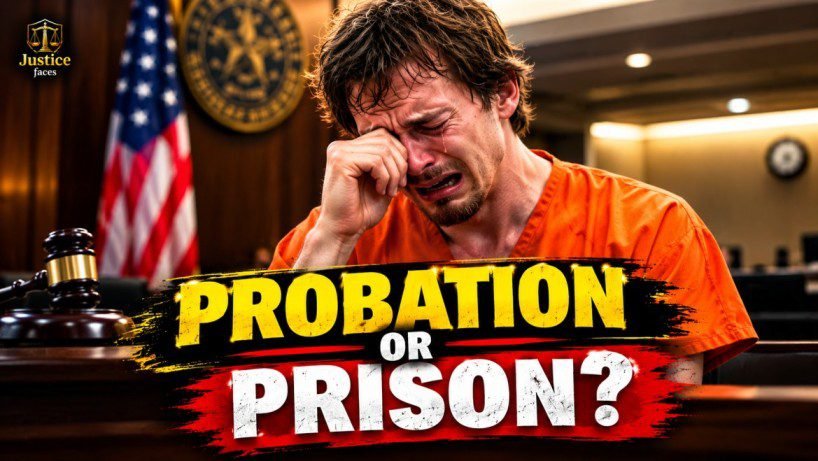
He described his younger self as someone “acting like a kid” who believed he could “BS his way through it.” He told the court he now has a daughter and wants to change his life.
Substance use was a recurring theme. Lewis acknowledged that alcohol and over-the-counter drugs played a major role in his lifestyle and in his offenses, and the notes record him describing time as having “started fading away.”
The judge also pressed him about why he had been lingering around a downtown hotel. Lewis said he was charging his phone at an outdoor outlet near a Starbucks, dropped his charging cord down an air duct or grate, and eventually crawled into a restricted or private area to get it back. The case notes do not record how the court responded to that explanation, and they do not say how the episode relates to the charge in this case.
On housing, Lewis said that if he were granted probation he planned to stay at Haven for Hope in San Antonio at first. He added that his father, who lives in Houston, might help him financially with an apartment later.
Key Testimony and Evidence
Two things carried the hearing: the PSI report and Lewis’s own testimony. No exhibits, witnesses or recordings beyond those appear in the case notes.
The PSI report was the document the judge returned to when Lewis described his reform. Nobody objected to it, which meant its contents were effectively before the court as the factual backdrop for sentencing. The report is also where the court drew its reasoning for one of the most discussed conditions in the order, the no-contact provision involving Lewis’s parents.
Lewis’s testimony was the counterweight. It offered a personal account of change, a daughter, a housing plan and an explanation for the hotel incident, and the court weighed all of it against the written record.
Prosecution’s Argument
The State opposed any form of leniency. Its position, as recorded in the notes, rested on two points: Lewis’s problematic criminal history and his failure to comply with the terms of previous supervision.
Prosecutors asked for the agreed six-year prison term. Allegations and history cited by the State should be read as the State’s position at sentencing, and the notes do not record any new findings of fact beyond what the PSI report contained.
Defense’s Argument
The case notes summarize the defense mainly through Lewis’s testimony rather than through a formal closing argument. The defense’s goal was clear from the application for deferred adjudication and from the request for probation.
Lewis’s own case for leniency was that he had matured, that he wanted to be present for his daughter, and that he understood his substance use had driven his past conduct. The notes do not describe any specific challenge by the defense to the PSI report, which both sides had said they had no formal objections to.
Judge’s Role and Key Statements
Judge Boyd questioned Lewis directly and confronted his account with the PSI report. According to the notes, she referred to his earlier stints with TDCJ for violating sex offender registration requirements, a history of prohibited sexual conduct dating to his youth, and his gang affiliation, all as described in the report.
Her most consequential statement came at approximately 00:08:45, when she set out the options before her. The exchange is quoted here as it appears in the case notes:
“Here’s your choice, Mr. Lewis… The State wants you to do 6 years in prison. I can put you on 10 years probation… It’s going to be a conviction either way, I’m not giving you deferred adjudication… or I will give you 3 years in the prison. Which would you prefer?”
The statement did three things at once. It denied deferred adjudication, which means Lewis would stand convicted either way. It offered a long probation term as one path, and it offered a shorter prison term as the other. The notes do not explain how the three-year option related to the six-year plea agreement.
Lewis chose probation, with placement at the State’s substance abuse felony facility.
Readers who follow Judge Boyd’s courtroom should also know that the Texas State Commission on Judicial Conduct issued her a public warning on June 3, 2026, citing her courtroom YouTube channel and her conduct in certain hearings. FOX San Antonio reported that the commission’s concerns included her involvement in plea negotiations. The sources reviewed do not identify this hearing as part of that review, and Boyd told the commission her decisions were based solely on the evidence and the law. She also lost the March 3, 2026 Democratic primary, and her current term ends on December 31, 2026.

For another example of how judicial conduct complaints are covered, see the Judge Cedric Simpson biography on JusticeFaces, which discusses a Michigan Judicial Tenure Commission case.
The Most Important Moments From the Hearing
The Judge Turns to the Presentence Report
Lewis’s account of reform was tested against his own record. By pointing to the report’s history of TDCJ time, registration violations and gang affiliation, the judge made clear that the written record would weigh as heavily as his testimony.
The Choice at 00:08:45
The moment that gave the hearing its identity was the choice. Instead of simply accepting the State’s recommendation or granting the defense request, the judge laid out a probation option and a prison option and asked Lewis to pick.
A No-Contact Order Involving His Parents
The most surprising condition was a bar on contact with Lewis’s biological parents. The judge cited the PSI report’s account of his upbringing and placement in foster care. Lewis objected that his father in Houston was a source of support, and the judge ruled that the no-contact order would stand unless his father formally appeared before the court by Zoom.
The Terms of Probation
Judge Boyd attached a long list of conditions to the probation. The notes group them roughly as follows.
Custody and treatment. Lewis remains in custody until he is transferred to a Substance Abuse Felony Punishment (SAFP) facility.
Work and contact limits. He must show proof of employment within 30 days of release. He may not work as a home health care provider or in any job involving minors, and he may have no unsupervised contact with minors.
Supervision. After release, he faces field visits twice a month and monitoring through the urinalysis (UA) hotline until further notice. He must attend 90 recovery meetings in 90 days and undergo an evaluation for mental health issues.
Caseload and legal restrictions. Because of his prior registration history, he was placed on a specialized sex offender caseload, even though the notes say this case was not a sex offender charge. The order bars him from possessing weapons or ammunition, a restriction the notes tie to the felony conviction, and his right to appeal was waived as part of the plea agreement.
Legal Issues Explained
No contest plea. A plea of no contest, also called nolo contendere, means the defendant does not dispute the charge for purposes of the case but does not formally admit guilt. The court can still find the defendant guilty and impose a sentence.

Deferred adjudication. Under Texas law, a judge can place a defendant on deferred adjudication community supervision after a guilty or no contest plea. If the defendant completes it successfully, the case can end without a formal conviction. Boyd refused that route here, saying a conviction would follow either way.
Probation and a suspended sentence. In Texas, probation is formally called community supervision. When a prison sentence is suspended, the court holds it in reserve in exchange for compliance, and Texas law gives courts the authority to revoke supervision after a violation. The notes do not discuss what a violation would mean in Lewis’s case.
The PSI report. A pre-sentence investigation report gathers a defendant’s background, criminal history and personal circumstances for the judge. Here, neither side objected to it, which made it a key reference point.
SAFP. The Substance Abuse Felony Punishment Facility program is run through the Texas Department of Criminal Justice for people on felony community supervision who have been assessed as having a substance abuse problem. According to a county community supervision department, the first phase is six to nine months in a secure TDCJ facility, followed by placement in a residential treatment center. Lewis’s own timeline was not stated.
Sex offender caseload. Texas runs a statewide sex offender registration program under Chapter 62 of the Code of Criminal Procedure. Lewis’s prior convictions involved violating registration rules, which is why the court placed him on a specialized caseload even though this case was not a sex offender charge.
What Happens Next
The next step in the notes is Lewis’s transfer to an SAFP facility, where he will remain in custody. After that, he is to show proof of employment within 30 days of release and begin field visits, UA monitoring and the 90-in-90 recovery schedule.
The material does not give a date for the transfer, a future review hearing or any later court date. Nothing in it suggests an appeal, since the right to appeal was waived under the plea agreement.
Current Case Status
Lewis entered a no contest plea, and the court denied deferred adjudication. In the judge’s words as recorded in the notes, he stands convicted, and the six-year prison sentence was suspended in favor of 10 years of probation with SAFP placement.
He remains in custody pending that transfer. Any violation of the conditions would be a matter for the court to address later.
Frequently Asked Questions
What is the Mark Daniel Lewis case about? State of Texas v. Mark Daniel Lewis is a Texas criminal case that reached sentencing after Lewis pleaded no contest. The case notes do not identify the offense.
Who is the judge in the case? Judge Stephanie Boyd, who presides over the 187th District Court in Bexar County, Texas, heard the sentencing.
What did prosecutors argue? The State opposed leniency and asked for the six-year prison sentence under the plea bargain agreement. Prosecutors cited his criminal history and past failures to comply with supervision.
What did Lewis say in his own defense? He said he had changed since his younger years, that he now has a daughter, and that alcohol and over-the-counter drugs played a major role in his past. He also gave an account of a hotel incident and described his housing plans.
What choice did the judge give him? According to the notes, she said she could place him on 10 years of probation or give him three years in prison. She added that either way he would be convicted, because she was not granting deferred adjudication.
What was the final sentence? The six-year prison sentence was suspended, and Lewis was placed on 10 years of probation with transfer to an SAFP facility.
What are the main conditions of his probation? They include SAFP placement, proof of employment within 30 days of release, no unsupervised contact with minors, no contact with his biological parents unless his father appears by Zoom, field visits twice a month, UA hotline monitoring, 90 recovery meetings in 90 days and a mental health evaluation.
Can Lewis appeal? According to the notes, his right to appeal was waived as part of the plea agreement.
Conclusion
The hearing came down to one question: whether a defendant’s account of personal change could outweigh a long written record. Judge Boyd’s answer was a split decision. She granted probation, but only after denying deferred adjudication, and she surrounded it with conditions meant to enforce treatment, supervision and distance from certain risks.
What remains unsettled is how this will play out in practice. The offense, the date of transfer and the outcome of the SAFP program are not in the material provided. For now, the court has made its choice, and the supervision order is the part of the case the public can see.