Updated October 20, 2026. Closing arguments were scheduled for this date in most reports reviewed. No verdict had been reported when this article was prepared.
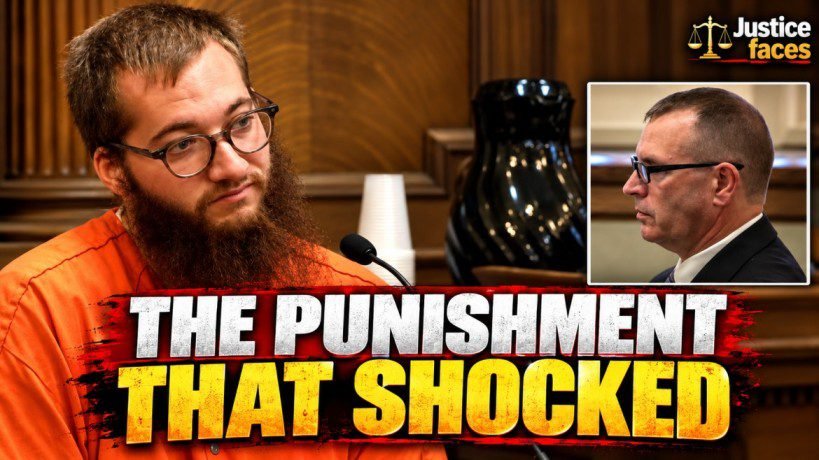
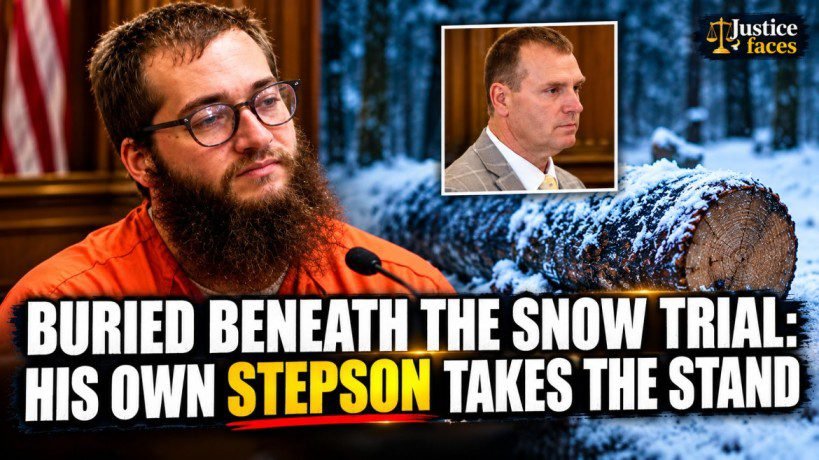
A Manitowoc County jury heard its first full day of testimony on Tuesday, October 13, 2026, in the trial of Timothy Hauschultz. Prosecutors say he ordered the punishment that preceded the death of his 7-year-old great-nephew, Ethan Hauschultz, on April 20, 2018. Ethan was found in a snowbank at the family home in the Town of Newton after being made to carry a log outdoors.
Timothy was not home when Ethan was fatally injured, and that single fact shapes the entire trial. The State argues he set the punishment in motion and left his teenage son in charge. The defense argues that his son alone is responsible for the violence that followed.
Day 1 gave jurors both theories in opening statements, then moved straight into testimony from the medical workers who treated Ethan and the investigators who first responded. Timothy is presumed innocent, and nothing described below has been proven against him.
Case Background
Ethan was Timothy’s great-nephew and lived in the Hauschultz home as a foster child. Timothy and his wife, Tina McKeever-Hauschultz, were the legal guardians of Ethan and his siblings at the time. According to the criminal complaint, as reported by WLUK Fox 11, Ethan did not adequately know 13 Bible verses, so a punishment was ordered.
That punishment, the complaint says, required Ethan to carry a log for two hours along a path in the backyard. It alleges Timothy picked out the logs and told his son, Damian, who was 14 at the time, that he had to supervise the younger children. Neither Timothy nor Tina was home.
The complaint further alleges that Damian repeatedly hit, kicked and poked Ethan, stood on his body while he lay face down in a puddle, and buried him in about 80 pounds of packed snow. It says Ethan was left there for roughly 20 to 30 minutes without a coat or boots. These are allegations drawn from court documents, not findings against Timothy.
Ethan was taken to a hospital and died that day. Testimony later in the trial from the chief medical examiner, reported by WBAY, was that he died of hypothermia. The appellate record in Damian’s own case, available through Justia, is the best primary source for the earlier case’s facts.
Three Cases, Three Different Outcomes
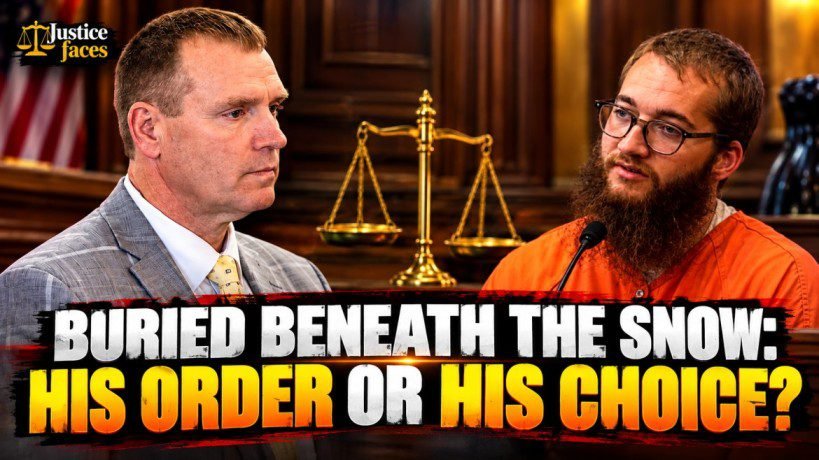
Timothy’s trial is the last of three related prosecutions, and the results of the other two do not decide his.
Damian pleaded guilty to reckless homicide in June 2021 and was sentenced to 20 years in prison. He was resentenced in June 2026, when a judge added five more years of supervision after the prison term. Tina served a five-year prison term for her role in the events leading up to Ethan’s death and was released to extended supervision in January 2024.
Timothy was charged in 2019, but his case stalled for years while Damian’s proceedings continued. Judges rejected proposed plea agreements in February and November 2025, according to WBAY’s reporting, and the case changed judges along the way. Calumet County Circuit Judge Carey Reed presides over the trial in Manitowoc County Circuit Court.
The Charges Timothy Hauschultz Faces
Timothy faces six charges, according to Fox 11. The two most often named are neglecting a child, consequence is death, and intentionally contributing to the delinquency of a child resulting in death.
A felony murder charge that appeared in earlier filings was changed in the fall of 2025. NBC 26 reported on October 19 that the first count was reduced to a misdemeanor while the lawyers discussed the charges. Reports describe some counts differently, so the operative charging document and the jury instructions are the authoritative sources for exact wording.
Jury Selection and Setting
Jury selection ended Monday, October 12, with seven men and seven women seated. The court and both sides had questioned nearly 100 prospective jurors. The trial was scheduled to run about two weeks.
The prosecution is led by Manitowoc County District Attorney Jacalyn LaBre. Timothy is represented by defense attorney Donna Kuchler.
What Happened During Day 1
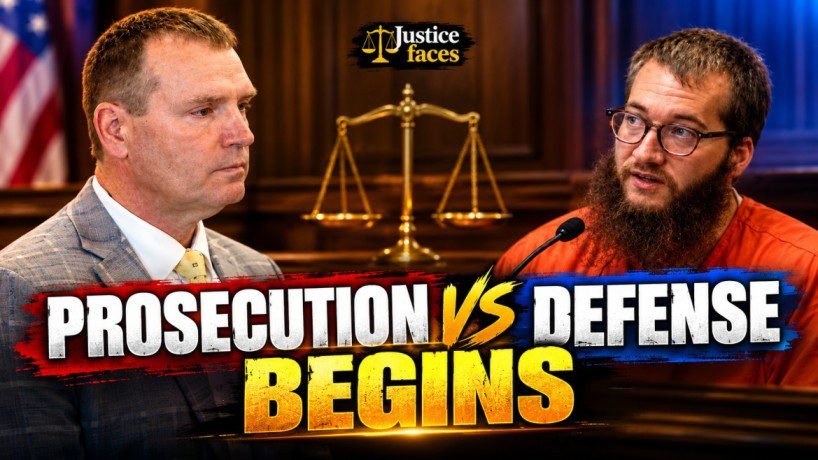
Opening statements came first on Tuesday morning. Testimony followed the same day, beginning with an emergency room physician and a critical care paramedic, then a deputy who had responded to the hospital in 2018, and then other investigators.
The order mattered. Jurors met Ethan’s medical condition before they heard anything about the dispute over responsibility, which gave the case an emotional starting point that neither side could avoid.
The State’s Opening Statement
LaBre told jurors that Timothy is responsible even though he was away from the yard. According to WTAQ’s coverage, she said that “He chose the punishment. He chose the amount of time. And he chose the size of those logs as well as the supervisor in charge.”
That sentence is the backbone of the prosecution’s case. It places the key decisions with Timothy, then asks jurors to treat his absence as part of the danger rather than a defense to it. Prosecutors contend he started the sequence of events that led to Ethan’s death while leaving Damian unsupervised.
The Defense’s Opening Statement
Kuchler answered by separating the punishment from the violence. Her central line, as reported by WTAQ, was direct:
“Tim did not murder his great nephew, Damian did. And the state must prove Tim’s criminal responsibility, not just that he had a relationship with Damian.”
The second sentence is as important as the first. It frames the case as a test of whether the State can connect Timothy’s own decisions to the crimes charged, rather than relying on the fact that Damian is his son.
According to a WFRV account of the openings, the defense also told jurors that Damian called Timothy more than once about Ethan’s reluctance to finish the task, and that Timothy told him to leave Ethan alone and not punish him. That is a claim made in an opening statement, which is not evidence.
Key Testimony and Evidence
Day 1 testimony focused on Ethan’s condition and the first investigative steps. None of it, taken alone, answers who directed what in the backyard. What it does is establish the severity of the emergency and begin to tie the household’s disciplinary practice to the investigation.
Dr. Rebecca Reim, Emergency Physician
Dr. Reim described Ethan as he arrived at the Holy Family hospital emergency room. “He was breathing, but he was unresponsive completely,” she testified. “He was extremely cold.”
Jurors also watched video of Tina carrying Ethan into the emergency room and sitting down before he was taken to a trauma room. Staff worked for about five hours to raise his body temperature, which had fallen so low that his heart was barely beating, according to the reporting.
Reim also described trying to learn what had happened. She testified that the adults said they did not know because they had not been home, and that when she asked the teenager, he did not answer, something she called “superbly strange.”
William Manis, Critical Care Paramedic
Manis took Ethan from Tina at the hospital. “The child looked rather limp, they were very pale,” he testified.
His account backed up the physician’s description of a critically ill child and helped establish the timeline of the medical response. It did not address the punishment itself.
Special Agent Kevin Haese, Wisconsin Department of Justice
Haese was a Manitowoc County patrol deputy in 2018 and now works with the state Department of Justice. He testified about responding to the hospital on the day Ethan died and became emotional describing the injuries he saw.
Jurors were shown photographs he took. Describing one, Haese said, “Exhibit 5 is visible injuries to face, right side temple area and forehead and upper skull area.”
Haese also testified about asking Timothy what had happened. “Mr. Hauschultz informed me Damian, Ethan and Anthony were carrying wood,” Haese said, a reference to another child in the home. When asked what that meant, Haese said Timothy “indicated when the children misbehave there’s a consequence and the consequence is carrying wood.”
This was the first testimony linking Timothy’s own words to the household’s use of wood carrying as discipline. It does not say who chose the logs, how long the punishment lasted that day, or what Timothy knew about the conditions outside. Those questions belonged to later witnesses.
Other Investigators
Additional investigators testified before the day ended. The published coverage does not provide a full witness-by-witness account of those exchanges, so this report does not describe their testimony in detail.
The Prosecution’s Argument
The State’s theory is that Timothy’s decisions made the harm foreseeable. Prosecutors say he selected a physically demanding punishment, set how long it would last, chose the logs, and put a 14-year-old in charge of younger children.
Later in the trial, prosecutors put numbers on the theory. According to WBAY, they said Ethan weighed 62 pounds and was required to carry a 44-pound log through wet snow for two hours. They argued those choices matter because Timothy was responsible for the children’s care, even though he did not personally carry out the abuse.
By the close of evidence, LaBre framed the neglect theory in plain statutory terms, saying Timothy “endangered the physical, mental or emotional health of the child and that failure was negligent,” as quoted by WTAQ.
The Defense’s Argument
The defense does not dispute that Ethan suffered terrible abuse. Kuchler said in the trial’s final stretch that the evidence does prove Damian committed major child abuse against both boys, but that “there is no evidence that Tim was aiding and abetting or a party to the crime at all.”
Her position is that ordering a punishment is not the same as ordering violence. During cross-examination, the defense has repeatedly emphasized that Timothy did not tell Damian to hurt anyone. It also challenged the scope of the State’s expert witnesses, pointing out that one of them had not interviewed the children or reviewed Damian’s police interview.
Judge Carey Reed’s Role
No major rulings from the bench were reported from Day 1 itself. The judge’s most notable comments came later in the trial.
On October 19, after the State rested, the defense asked Reed to dismiss all six charges. Reed denied the request but criticized how the case had been presented. WBAY reported that he said he was “troubled” by the presentation, and WTAQ reported he believed prosecutors had failed to lay out a clear roadmap of their case.
Those comments describe the judge’s view of how the evidence was organized. They are not a finding about guilt, and the judge’s decision to let the case go to the jury is a separate matter from the verdict.
The Most Important Moments From Day 1
Ethan Arrives at the Hospital
The hospital testimony set the emotional and medical baseline for the trial. A physician describing a limp, extremely cold child, and jurors watching him being carried into the emergency room, established the stakes before any legal argument began.
Timothy’s Statement About Carrying Wood
Haese’s account of questioning Timothy was the day’s most direct link between the defendant and the practice at the center of the case. Timothy described carrying wood as a consequence for misbehavior. How much more he knew, and when, became the work of later testimony.
The Defense Draws Its Line
Kuchler’s opening gave the defense its theme early and kept it consistent. Every later cross-examination returned to the same distinction: a punishment ordered by an adult versus abuse committed by a teenager.
Legal Issues Explained
Presumption of innocence and burden of proof. Timothy does not have to prove anything. The State must prove each charged offense beyond a reasonable doubt, and the jury must consider each count on the evidence.
Opening statements are not evidence. They are roadmaps. Jurors are told to decide the case on testimony, exhibits and the court’s instructions.
Why Damian’s conviction does not settle Timothy’s case. Damian’s guilty plea established his own responsibility. Timothy’s responsibility depends on his own conduct, and the State must prove it separately, as the defense stressed in its opening.
Neglect, consequence is death. Under Wisconsin’s current neglect statute, as published by Justia, a person responsible for a child’s welfare can be guilty of neglect if, for reasons other than poverty, they negligently fail to provide necessary care in a way that seriously endangers the child’s health. The offense is a Class D felony if the child dies as a consequence. The statute was rewritten by 2017 Wisconsin Act 283, and the jury instructions, not this article, control which version and elements apply here.
Party to a crime. In plain terms, Wisconsin law can hold a person responsible for a crime they did not personally commit if the law’s requirements for aiding or otherwise participating are met. That is why the defense keeps asking whether Timothy directed the violence, not just the punishment.
Motion to dismiss at the close of the State’s case. The defense asks the judge to rule that no reasonable jury could convict on the evidence presented. Courts generally view the evidence in the light most favorable to the prosecution at that stage, so a denial means the case goes to the jury. It is not a prediction of the outcome. For a comparison, see how a similar request played out in the David Prevatte trial Day 7 report.
How the Trial Developed After Day 1
The following events happened after Day 1 and are included for context. Each is reported testimony, tested by cross-examination.
Damian testifies (October 14). Damian took the stand after his guilty plea. According to the Manitowoc Herald Times, he testified that he called Timothy and Tina twice, and that during the first call he said Ethan was “acting weird” and lying on the ground. He said they responded that they would be home soon. On cross-examination, he agreed that Timothy had never instructed him to use the violence he used that day.
Ethan’s twin brother and Dr. Lori Frasier (October 15). As reported by WBAY, the twin brother testified that the wood carrying had gone on for months and that the boys could not stop without risking more time. He also testified that Ethan once told Timothy that Damian was hurting him, and that Timothy responded, “Maybe you shouldn’t be dropping your piece of wood.” Because he is a juvenile, his testimony was not recorded. The State’s expert, Dr. Frasier, a pediatrics professor at Penn State Hershey School of Medicine, called the punishment abusive, and the defense noted she had not interviewed the children or reviewed Damian’s interview with law enforcement.
Ethan’s sister, Dr. Hillary Petska and the medical examiner (October 16). Ethan’s older sister testified about household punishments and about the day Ethan died. Child abuse pediatrician Dr. Hillary Petska testified that the punishment was inappropriate. Chief Medical Examiner Dr. Wieslawa Tlomak testified that Ethan died of hypothermia and had injuries to his head, chest and abdomen. On cross-examination, Tlomak agreed that some injuries could have come from either wrestling or a beating.
The State rests (October 19). Former detective Christine Bessler testified about interviewing Damian and said Damian told her Timothy picked the size of the logs, according to Seehafer News. The defense then moved to dismiss, Reed denied the motion, and the defense rested without calling witnesses. Timothy chose not to testify.
What Happens Next

After both sides rested, the court and attorneys spent the afternoon of October 19 working through jury instructions. Closing arguments were scheduled for Tuesday morning, October 20, in most reports, with jury deliberations expected to follow. One WBAY update referred to Wednesday, so the schedule should be confirmed against the latest coverage.
Once the jury has the case, it will decide each count separately based on the evidence and the judge’s instructions.
Current Case Status
As of this report, Timothy Hauschultz has not been convicted or acquitted of any charge. He is on trial, and the jury had not returned a verdict in any source reviewed. His son Damian and Tina have each been separately sentenced in their own cases, and those outcomes are not findings against Timothy.
Frequently Asked Questions
What is the Timothy Hauschultz trial about?
It is the trial of a Wisconsin man accused in connection with the April 20, 2018 death of his 7-year-old great-nephew, Ethan Hauschultz. Prosecutors say Timothy ordered a log-carrying punishment and left his son Damian in charge. The defense says Damian acted outside Timothy’s instructions.
What happened on Day 1 of the trial?
Both sides gave opening statements, and the jury heard from an emergency physician, a critical care paramedic, a deputy who responded to the hospital, and other investigators. Jury selection had finished the day before.
Who is the judge in the case?
Calumet County Circuit Judge Carey Reed is presiding over the trial in Manitowoc County Circuit Court.
What did prosecutors argue?
That Timothy chose the punishment, its length, the size of the logs and the supervisor, and that he is therefore responsible for what followed even though he was away from the home.
What did the defense argue?
That Timothy did not kill Ethan and that the State must prove his own criminal responsibility. The defense says Damian committed the abuse and that Timothy never told him to hurt Ethan.
What evidence was shown on Day 1?
Jurors saw hospital video of Ethan being carried into the emergency room and photographs of his injuries taken by a deputy, including a photograph introduced as Exhibit 5.
Was Timothy Hauschultz convicted?
Not as of the latest reporting reviewed. The jury had not returned a verdict, and he is presumed innocent unless and until the State proves each charge beyond a reasonable doubt.
What happened to Damian and Tina Hauschultz?
Damian pleaded guilty to reckless homicide in 2021 and was later resentenced in June 2026. Tina served a five-year prison term and was released to extended supervision in January 2024. Their cases are separate from Timothy’s.
What happens next?
Closing arguments were scheduled for October 20, 2026, followed by jury deliberations. Check the latest local coverage for the verdict.
Conclusion
Day 1 did not answer the question at the center of this trial, but it made the question impossible to avoid. A seven-year-old arrived at a hospital unresponsive and extremely cold, and a deputy testified that the household treated carrying wood as a consequence for misbehavior. What remained unresolved was the legal link between an absent guardian’s alleged decisions and a teenager’s violence.
The jury’s task is narrower than the public’s moral reaction to the case. It must decide whether the evidence proves Timothy Hauschultz’s own criminal responsibility for each count charged, and until a verdict is returned, that question stays open.
For more day-by-day trial reporting, see the Court Cases section on JusticeFaces, including our recap of the Faith Hedgepeth murder trial and our report on the Lindsay Clancy mistrial. To see how a jury rejected a self-defense claim, read the Caylen Deller trial report. Readers new to courtroom terms can start with our Legal Basics guides.
This report is based on published trial coverage and public court records, not a courtroom transcript. It is general information, not legal advice. See our disclaimer.