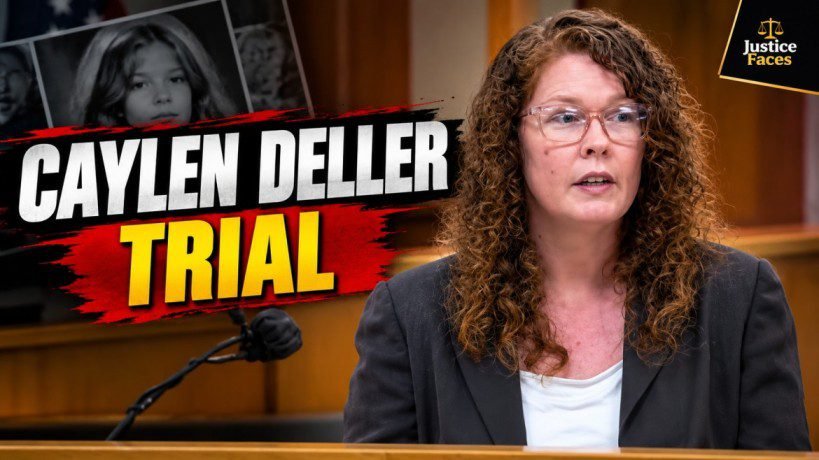
A Putnam County, Florida jury took about an hour on October 15, 2026 to convict Caylen Savannah Deller of first-degree murder in the shooting death of Chad Mullen. The same jury found her guilty of tampering with or fabricating physical evidence and of failing to report a death with intent to conceal it. She was sentenced to life in prison.
Deller never disputed that she fired the gun. She took the stand and told jurors she shot Mullen twice, but said she did it in self-defense after he choked her and came at her with a hammer. Prosecutors told a different story: a deliberate killing at her horse stables, followed by days of work to hide the body.
That gap between an admitted shooting and a contested motive is what the three-day trial was really about. This article walks through who the people were, what the state alleged, what Deller said, what evidence mattered, and how the verdict came together.
Case Background: Who Were Chad Mullen and Caylen Deller?
Chad Mullen was 52 when he disappeared in September 2024. He lived in the Palatka area and made his living on handyman jobs, including mechanical repairs and home remodeling. Prosecutors described a man who liked working on his truck, fishing, and spending time with family and friends.
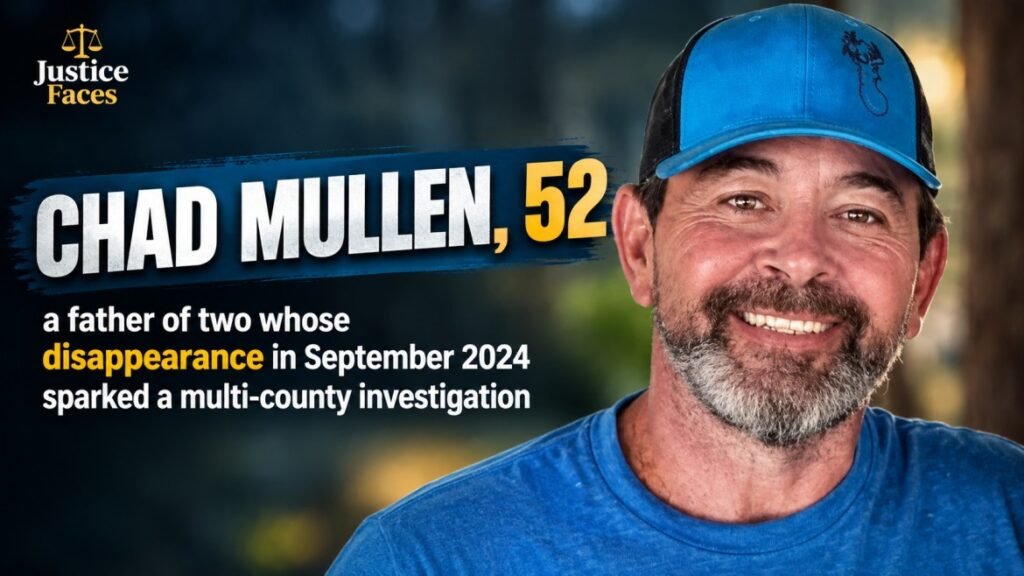
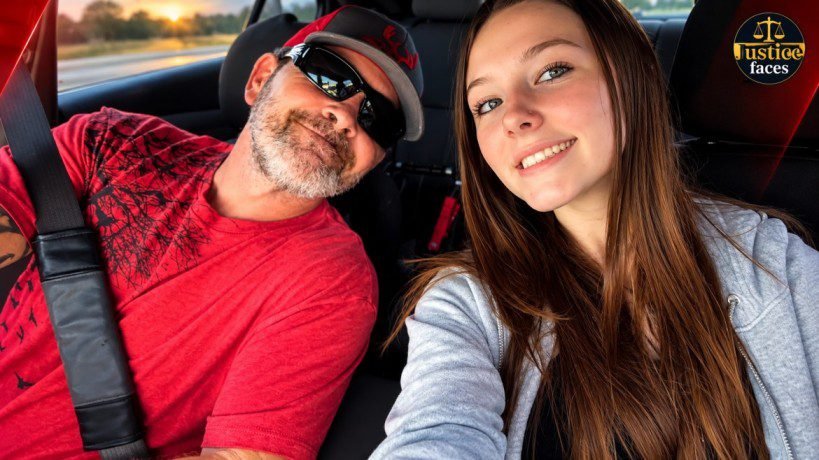
He was a father of two. His daughter Holli Mullen, then 18 and still in high school, told jurors her father was excited about a family trip to New Mexico for his older brother’s wedding.
Deller was 32 at the time of trial and worked as a riding-lesson instructor. She had run a horse-related business known as Stormy Stables, tied to the property where prosecutors say the shooting happened. She and Mullen had an on-again, off-again romantic relationship.
The state’s theory of motive centered on a belief it said Deller held, that Mullen had inappropriately touched her young daughter. That claim was part of the prosecution’s motive argument and of Deller’s own account of the confrontation. It has not been established as fact in any court record reviewed for this article, and it should not be read as proven.
The Timeline Prosecutors Presented
Prosecutors said Deller brought Mullen to her stables on the evening of September 9, 2024, and shot him there. Holli Mullen testified that her father called her that same day asking for a mechanic’s number because his truck had broken down. After that, he stopped answering calls and texts.
According to the state, Deller and her friend Tina Marie Lee-Ellis moved the body to a pond on September 10 and tried to keep it underwater with a cinder block. About three days later, prosecutors said, the body was retrieved and buried in a shallow grave on a farm near Hastings.
Mullen’s mother reported him missing around September 15, according to Holli’s testimony. His remains were found on October 28, 2024, in a rural potato field in the Hastings area of St. Johns County. An investigating lieutenant testified that Deller was arrested around November 8, 2024, on a first-degree murder warrant.
The body-movement and burial sequence is the prosecution’s account as presented in court. The discovery of the remains, the arrest and the outcome are supported by court transcripts and news reporting.
What Happened During the Trial
Jury selection began on Monday, October 12, according to Action News Jax. Testimony ran from October 13 through October 15 in Putnam County, with Judge Alicia Washington presiding.
Day 1: The State Lays Out Its Case

Assistant State Attorney Mike Willard opened for the prosecution. He told jurors the shooting happened during the late hours of September 9 into September 10, and that Deller shot Mullen twice before enlisting help to hide what she had done.
The defense reserved its opening statement. Its theory, self-defense rather than planned murder, came out later through Deller’s own testimony and the closing argument.
Holli Mullen gave jurors the human side of the disappearance. Other witnesses covered the investigation, including a man who found Mullen’s driver’s license and a credit card behind a building in April 2025 and passed them to investigators.
The state also called Kenneth Waddell, who testified about a conversation in which he said Deller told him she had shot Mullen and needed help because she could not move the body alone. That is testimony about something a witness says the defendant told him. It is not a police-recorded confession, and the difference matters when weighing it.
Day 2: Deller Testifies
The second day brought the central dispute into focus. Deller took the stand and gave her version of events.
She described what she called earlier troubling incidents with Mullen. She said he tried to break into her residence on August 1, 2024, that a handprint appeared on her kitchen window days later, and that he showed up uninvited at the stables around September 2 and set off fireworks. These were her statements from the witness stand, and the sources reviewed here do not identify independent corroboration of each one.
On September 9, she testified, Mullen came to the farm to repair a headlight on a truck she had lent him. She said she confronted him about whether he had sexually abused her five-year-old daughter, and that he became angry, pinned her against the truck and grabbed her by the throat. She told jurors she could not breathe.
She said she grabbed a gun, forced him back, and then saw him pick up a hammer. Asked why she fired, Deller answered, according to Action News Jax:
“Because he was choking me, and he came at me with a hammer.”
She explained the gun’s presence by saying she had obtained it after the earlier incident with Mullen and had forgotten to remove it from her truck when she switched vehicles.
Day 2: Cross-Examination
Prosecutors pressed on what Deller did next, and on what she did not do. She did not call 911. Fox reporting on the trial says she testified she thought police would not believe her self-defense claim, and she conceded that staying silent “was probably not a good idea.”
Action News Jax reported that Deller said she dragged the body to a pond with a four-wheeler and tied a cinder block to it. The prosecution’s opening statement had described a horse being used. That difference is worth noting, and it comes from two sources: the state’s theory in opening, and Deller’s own testimony.
She also testified she burned Mullen’s phone in a fireplace because she panicked. The state pointed out that Deller and Lee-Ellis drove around with Mullen’s phone after the shooting, and that Deller lied to Mullen’s ex-partner when that person asked where he was.
Action News Jax also reported that Deller backtracked under cross-examination on her claim that she asked Mullen whether he had touched her daughter. She acknowledged she had listened to other witnesses throughout the trial, and described herself as vulnerable at the time of the shooting.
Day 3: Closings, Instructions and Verdict
The defense closing, delivered by attorney Brian Smith, accepted that Deller handled the aftermath badly. His argument was that the trial was not about every decision she made after the shooting, but about whether she reasonably believed she had to shoot to save her own life when Mullen came toward her swinging a hammer.
Willard countered that Deller’s account did not fit the rest of the evidence. He asked jurors to weigh the alleged planning, the shooting, her reported statements afterward and the concealment together, and he pointed to motive and the physical evidence.
Judge Washington instructed the jury on the charges, the state’s burden of proof, the unanimity requirement and the lesser-included offenses it could consider. Closing arguments wrapped up just before noon, and the verdict was read around 1:10 p.m., according to Action News Jax.
Key Evidence in the Case
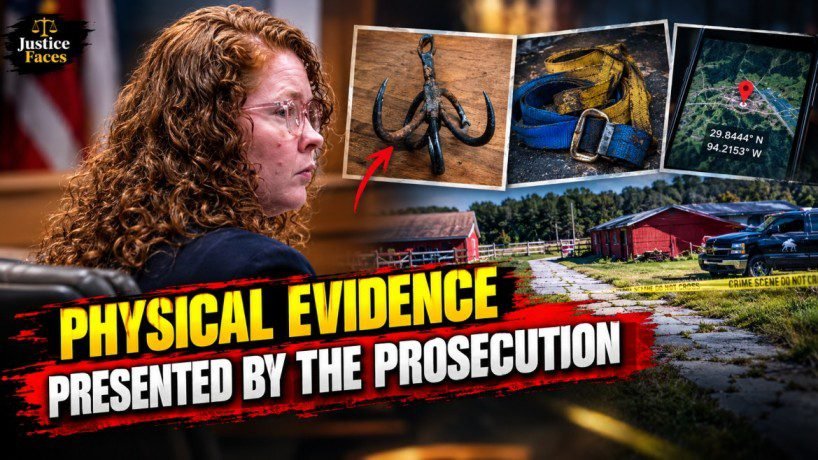
Investigators described several categories of evidence, and prosecutors used them together rather than relying on any single item.
Items found with the remains. Prosecutors said the body was recovered with a tarp, a blanket, straps resembling those used around horse stables, netting, a red grapple hook and a cinder block attached to a limb. They used these to support their account of how the body was moved and hidden.
The red grapple hook. Lieutenant Fussell testified that a red four-grapple hook seen in videos tied to Deller’s Google account looked similar to one found at the grave. He also testified the hook was no longer hanging in the barn when investigators searched. Similarity is not the same as a forensic match, and the sources reviewed here do not describe DNA or any other conclusive link.
Phone records and location data. The state presented phone records for both Deller and Mullen, along with location information from a Find My Phone application, to reconstruct movements on September 9. The lieutenant placed the killing on or about that date, at around or before 8:30 p.m. That is the prosecution’s reconstruction, not an independently proven time of death.
Medical examiner findings. In opening, Willard said the examiner would describe a gunshot wound to the upper right shoulder and another to the upper left arm. Where the wounds are located does not by itself show whether a shooting was intentional, premeditated or justified.
Mullen’s cards. Steven Killian testified that he found Mullen’s license and a credit card during a cleanup on April 9, 2025. The discovery adds to the investigative record, but it does not directly show what happened on the night of the shooting.
The Prosecution’s Argument
The state argued that Deller lured Mullen to her stables and shot him deliberately. It then said she took part in a sequence of actions meant to make the death disappear, starting with the pond and ending with the grave.
Prosecutors argued these steps mattered beyond the tampering charge. In their view, the concealment and the decision not to call for help undercut the claim that the shooting was a frightened reaction to an attack.
The state also leaned on motive and on what Deller allegedly told others. Prosecutors said she told the father of her young daughter that she killed Mullen because she believed he had touched the child, and Waddell testified about a separate conversation. Jurors had to decide how much weight those reported statements deserved.
The Defense’s Argument
The defense accepted the shooting and contested its meaning. Its position was that Deller feared for her life, that Mullen was the aggressor, and that the state had not disproved self-defense beyond a reasonable doubt.
Smith did not defend what happened afterward. He conceded the aftermath was wrong, but argued that panic and poor choices after a shooting do not prove the shooting itself was a crime.
The defense also pointed jurors to three accounts at the core of the dispute: Deller’s, Mullen’s, and Waddell’s. Mullen could not testify, which meant the confrontation itself was known to the jury mainly through Deller’s own description.
The Judge’s Role
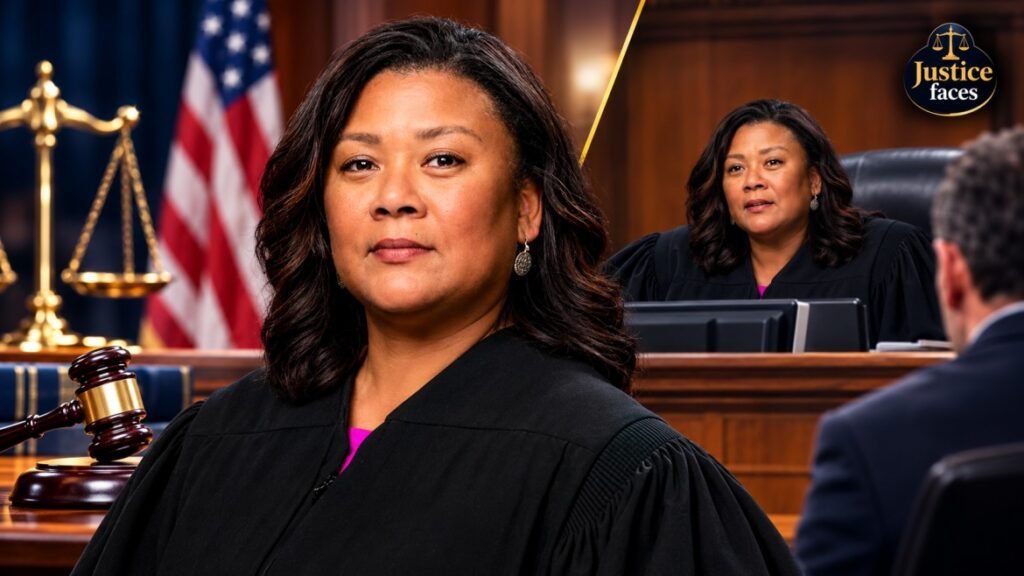
Judge Alicia Washington managed the trial and delivered the instructions that framed the jury’s job. According to the record summarized for this article, she told jurors to decide the case only on admitted evidence and the law, and that if the state failed to prove an offense beyond a reasonable doubt, they had to return a not-guilty verdict on it.
The sources reviewed do not include a ruling or comment from the judge that signals how she viewed any particular witness. Any such reading would be speculation. After the verdict, Judge Washington imposed the sentences.
Legal Issues Explained
Self-Defense in Florida
Under Florida Statute 776.012, a person may use deadly force only if they reasonably believe it is necessary to prevent imminent death or great bodily harm to themselves or another. The statute also says a person who is not engaged in criminal activity and is in a place they have a right to be has no duty to retreat.
The word “reasonably” carries a lot of weight. Fear alone is not enough. Jurors had to ask whether a reasonable person in Deller’s position would have believed deadly force was necessary, based on the full picture of the evidence.
Why First-Degree Murder?
First-degree murder in Florida generally turns on a premeditated design to kill. The prosecution’s lure theory and its concealment evidence were aimed at that element, while the defense argued there was no plan, only a sudden crisis.
The jury returned a guilty verdict as charged on the murder count. Because the verdict form is a simple finding, the record reviewed here does not show which pieces of evidence individual jurors found most persuasive.
The Two Concealment Counts
Tampering and failure to report a death are separate offenses from the shooting. The self-defense dispute went mainly to the murder charge, while counts two and three concerned conduct afterward.
On the tampering count, the jury also answered yes to a question about whether the tampering related to a criminal proceeding or investigation involving a capital felony.
The Verdict and Sentence
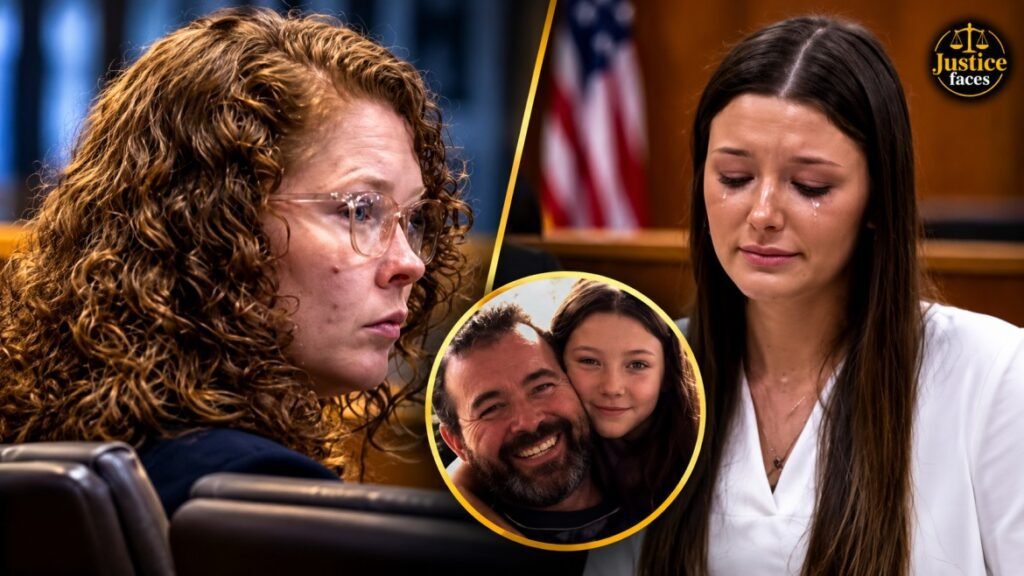
The jury was unanimous. Per Action News Jax, Deller was sentenced to life in prison on the first count, 15 years on the second and 5 years on the third.
| Count | Charge | Verdict | Sentence |
|---|---|---|---|
| 1 | First-degree murder | Guilty | Life in prison |
| 2 | Tampering with or fabricating physical evidence | Guilty | 15 years |
| 3 | Failure to report a death with intent to conceal | Guilty | 5 years |
Before sentencing, Holli Mullen gave a victim impact statement. Local reporting described Mullen’s relatives cheering outside the courthouse after the sentence was announced.
The Role of Tina Marie Lee-Ellis
Prosecutors identified Lee-Ellis as Deller’s friend and an alleged participant in moving the body and digging the grave, with a small bulldozer or skid-steer. Court TV reported she pleaded not guilty to accessory to first-degree murder and was to be tried separately.
Deller’s conviction does not establish anything about Lee-Ellis’s guilt. Her case is a separate proceeding, and readers should check for current developments before treating any allegation about her as settled.
What Happens Next
Deller has been convicted and sentenced, so the trial phase is over. The sources reviewed for this article do not say whether an appeal has been filed, and nothing here should be read as predicting one.
The next visible development is likely to be the separate case against Lee-Ellis. No hearing or trial date for her was available in the material reviewed.
Current Case Status
As of October 19, 2026, Caylen Deller stands convicted of first-degree murder, tampering with or fabricating physical evidence, and failure to report a death with intent to conceal. She has been sentenced to life in prison on the murder count. Lee-Ellis has not been convicted of anything in this case, according to the reporting reviewed.
For readers following similar proceedings, our coverage of the Faith Hedgepeth murder trial shows how a different jury weighs forensic evidence over several days of testimony.
Frequently Asked Questions
What is the Caylen Deller case about?
It is the prosecution of Caylen Deller for the September 2024 shooting death of Chad Mullen, her on-again, off-again boyfriend, at a horse property in Putnam County, Florida. She was convicted on all three counts after a jury trial in October 2026.
Did Caylen Deller admit to shooting Chad Mullen?
Yes. She testified that she shot Mullen twice but said it was self-defense. The jury rejected that defense on the murder charge.
What did prosecutors say happened?
They argued Deller brought Mullen to her stables, shot him deliberately, and then helped hide his body, first at a pond and later in a grave near Hastings. Those details reflect the state’s allegations, and the jury ultimately sided with the prosecution.
What was the defense’s argument?
The defense said Deller shot Mullen because he choked her and came at her with a hammer. It admitted her actions afterward were wrong but argued they did not prove the shooting itself was unjustified.
What evidence did the jury hear?
Jurors heard testimony about items found with the remains, a red grapple hook, phone records and location data, and testimony from people who said Deller made statements about the killing. They also heard from Deller herself and from Mullen’s daughter.
How long did the jury deliberate?
About an hour, according to the reporting reviewed. Action News Jax said less than an hour, and Fox reported over an hour.
What sentence did Deller receive?
Life in prison on the first-degree murder count, 15 years on the tampering count and 5 years on the failure-to-report count, per Action News Jax.
Who is the judge in the case?
Judge Alicia Washington presided over the trial.
Is Tina Marie Lee-Ellis also charged?
Court TV reported she pleaded not guilty to accessory to first-degree murder and was to be tried separately. She has not been convicted in connection with this case based on the sources reviewed.
Conclusion
The jury was never asked to decide whether Caylen Deller fired the gun. It was asked whether she had a legally reasonable belief that deadly force was necessary, and whether her conduct before and after the shooting fit that belief. It answered no.
What remains open is narrower: whether any appeal follows, and how the separate case against Tina Marie Lee-Ellis resolves. For Chad Mullen’s family, the central question of accountability was answered in a Putnam County courtroom on October 15.