
Two Boys, One Snapchat Message, and a Desert Grave
On a December night in 2018, Ahmed Lateef sent a message to a stranger on Snapchat asking to buy a gun. He was fourteen. Within hours, he and his fifteen-year-old friend Collin Romero would be dead, left in a shallow grave on the West Mesa outside Albuquerque.
The Ahmed Lateef murder case would not reach its final sentencing hearing for another four and a half years. What unfolded in between was a slow, grinding process of arrests, plea negotiations, and a trial that forced a New Mexico courtroom to confront how casually violence had been arranged, filmed, and shared among teenagers who barely understood the weight of what they were doing.
This is not a story with a clean villain and a clean victim. Lateef had reportedly reached out for a firearm because he believed he’d been robbed before, by someone using the street name “Flex.” The stranger he contacted instead led him into an ambush. Court records make clear that whatever Lateef intended that night, he did not intend to die in the desert with Romero beside him.
What makes the Ahmed Lateef murder case difficult to summarize in a single headline is the number of people eventually drawn into it. Three young men orchestrated the killing itself. Two more — a father and an uncle — became entangled afterward, helping hide evidence and dispose of the bodies. All five would eventually stand before a judge.
Available trial records do not include a full transcript of the sentencing remarks delivered on May 1, 2023, though public dockets confirm the final terms handed down that day.
The following account walks through the case from the first Snapchat message to the final prison terms, using what is documented in public case filings and reporting on the prosecution.
The Boys Behind the Screen Names
Before the killings, none of the people at the center of this case were public figures. They were a mix of teenagers and young adults moving through the same corner of Albuquerque, connected by social media handles more than by any formal relationship.
Ahmed Lateef was fourteen. Collin Romero, his friend, was fifteen. Little in the public record paints either boy as anything other than a teenager navigating a rough social landscape, one that apparently included buying and carrying firearms for personal protection. Lateef’s decision to reach out for a gun was reportedly tied to a prior robbery he believed had been carried out by someone using the alias “Flex” — a detail that becomes darkly ironic given who would later be riding in the front seat of the car that picked him up.
Stephen Goldman Jr., who went by “Calypso,” was nineteen at the time. Court documents identify him as the primary architect of the December 15 meeting, the person who arranged the fake gun sale, drove the vehicle, and gave the orders once the boys were inside it. Whatever role social pressure, prior criminal exposure, or simple greed played in shaping Goldman into the person capable of orchestrating this, the public record does not spell out in detail. What it does establish is a clear chain of command that night, with Goldman at the top of it.
Jimmie Atkins — “Flex” — was twenty-two, the oldest of the three in the car. He sat in the front passenger seat, participated in robbing the boys, and later helped dispose of their bodies. The coincidence of his alias matching the name Lateef associated with his earlier robbery has never been fully resolved in public reporting; whether Atkins was in fact the same “Flex” Lateef believed had wronged him, or whether it was simple bad luck, remains an open question in the case record.
Julio Fabian Almentero, known as “FaFa,” was the youngest of the three, just fifteen at the time of the killings — the same age as one of his victims. Almentero would later be identified as the person seen most directly assaulting the boys in the backseat, acting, he claimed, on Goldman’s orders.
Two more names enter the story only after the killings: Anthony Aragon, Almentero’s uncle, and Stephen Goldman Sr., Goldman Jr.’s father. Neither was present for the abduction or the shooting. Both would be charged for what they did in the hours and days that followed.
How the Setup Unfolded
The Ahmed Lateef murder case begins, according to the record, with a Snapchat message. Lateef contacted Stephen Goldman Jr. to buy a firearm, apparently for his own protection after believing he had been robbed by someone using the name “Flex.” It was an ordinary transaction by the standards of the platform and the circles these teenagers moved in — the kind of exchange that happens constantly and almost always ends without incident.
This one did not.
On December 15, 2018, Goldman, Atkins, and Almentero arrived at a meeting spot in a borrowed white Buick. Lateef and Romero climbed into the backseat, expecting to complete a gun purchase. Instead, once the doors were closed, Goldman turned a weapon on Lateef and demanded everything the two boys had.
Almentero, in the backseat with the victims, stripped them of cash, a wallet, marijuana, and a second firearm Lateef had brought along — presumably for his own protection during the deal. Within moments, what had been framed as a transaction became a robbery. And the car did not stop.
A Beating Broadcast in Real Time
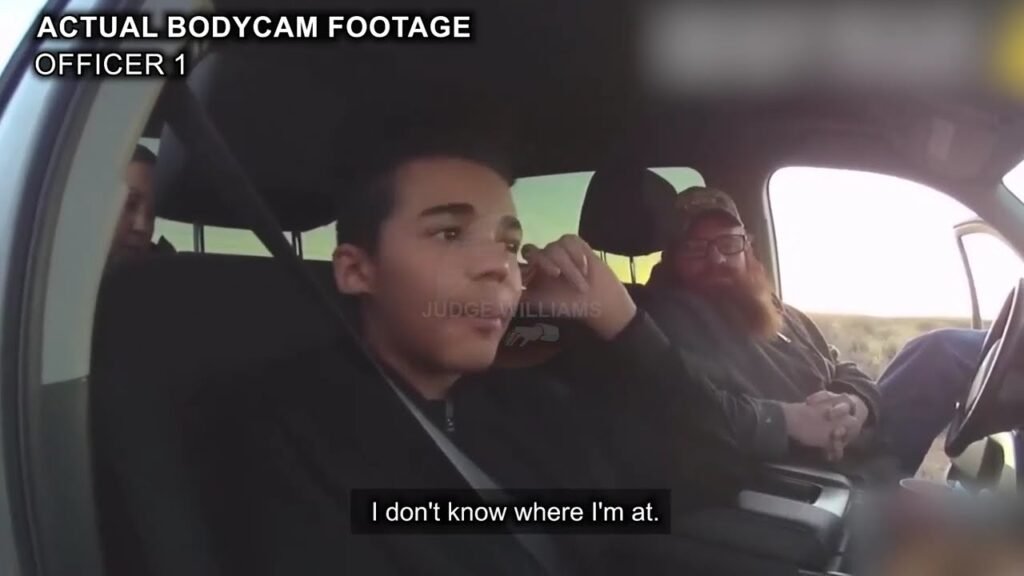
What separates the Ahmed Lateef murder case from a routine robbery-gone-wrong is what happened during the drive that followed. As the Buick moved toward the outskirts of the city, Goldman ordered Almentero to beat both boys. According to case records, Goldman filmed portions of the assault on his phone and uploaded footage to Snapchat as it happened.
The group also allegedly forced Lateef to log into his own Snapchat account through Atkins’s phone, apparently intending to use his identity to lure other potential robbery targets. Lateef’s physical phone, meanwhile, was thrown from the moving vehicle onto the freeway — a detail investigators would later use to help trace the route the Buick had taken that night.
There is something particularly disturbing about a crime partially narrated on social media in real time, even to an audience of the perpetrators’ own following. It is one of the details that distinguishes the Ahmed Lateef murder case from earlier generations of similar crimes: the violence did not just happen, it was performed, packaged, and sent outward as it occurred.
The West Mesa
The drive ended on the West Mesa, a stretch of high desert near Rio Rancho in Sandoval County, well outside the reach of streetlights or witnesses. There, the three men forced Lateef and Romero out of the car, stripped them of most of their remaining clothing, and shot them.
Lateef was shot nineteen times. Romero was shot at least nine. Case records indicate the boys were still making sounds when they were left in a shallow grave — a detail that, more than almost any other in this case, underscores how far removed the final act was from anything resembling the “robbery” that had begun it.
There is no way to soften that. The Ahmed Lateef murder case, at its core, is the story of two teenagers who thought they were buying a gun and ended up executed in the desert by people close to their own age.
Cleaning Up After a Killing
What happened over the following hours and days would eventually pull two more people into the case. Goldman called Almentero’s uncle, Anthony Aragon, and told him, according to court filings, that they had “two in the trunk.”
Aragon met the group, saw the blood-stained interior of the Buick, and purchased cleaning supplies. He helped Atkins move the bodies to a spot behind a tree. Days later, as media attention around the missing boys intensified, the group returned to bury the remains more securely.
Separately, Stephen Goldman Sr. took possession of the weapons used in the killings to hide them, and later helped destroy the white Buick itself by burning it — eliminating the vehicle that had physically carried the boys to their deaths.
Neither Aragon nor Goldman Sr. was present for the shooting. Both would eventually be charged as accessories after the fact, a legal distinction that matters enormously for how their cases were ultimately resolved, and one worth unpacking before moving into the trial itself.
What “Accessory After the Fact” Actually Means
New Mexico law, like most states, draws a hard line between the people who commit a killing and the people who help conceal it afterward without having participated in the act itself. An accessory after the fact typically has not planned the crime, was not present when it occurred, and did not intend for the victims to be harmed — but knowingly helps the principal offenders evade justice once the crime has already happened.
That distinction is why Anthony Aragon and Stephen Goldman Sr. faced dramatically different charges — and dramatically different sentences — than the three men in the car that night.
Goldman Jr., Atkins, and Almentero were ultimately charged with first-degree felony murder, kidnapping, armed robbery, and tampering with evidence. Felony murder is a legal doctrine that allows a killing committed during the course of another serious felony — here, kidnapping and armed robbery — to be charged as murder even without evidence of individualized premeditated intent to kill on the part of every participant. In plain terms: everyone in that car when the plan turned lethal could be held responsible for the deaths, not only whoever pulled the trigger.
Kidnapping charges reflected the boys being held against their will in a moving vehicle, unable to leave once the robbery began. Armed robbery covered the theft of cash, drugs, and the second firearm. Tampering with evidence applied to the destruction of the vehicle, the disposal of the weapons, and the burial of the bodies — conduct aimed specifically at obstructing the eventual investigation.
Aragon and Goldman Sr. faced narrower charges tied specifically to their post-crime conduct: assisting in disposing of the bodies, in Aragon’s case, and tampering with evidence tied to the weapons and the vehicle, in Goldman Sr.’s.
Four Years to a Courtroom
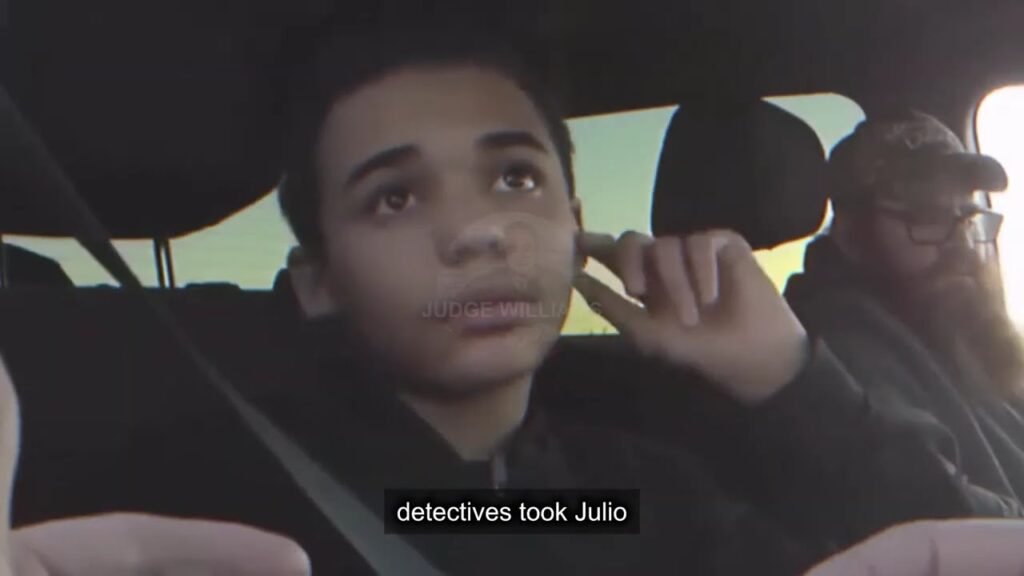
The gap between the December 2018 killings and the trial that finally concluded in 2023 was not unusual for a case of this complexity, even if it can feel jarring from the outside. Multi-defendant homicide cases involving both adult and juvenile suspects tend to move slowly, partly because each defendant’s legal team operates on its own timeline, and partly because the procedural questions raised by a juvenile defendant — Almentero was fifteen at the time of the killings — add additional layers of review that adult-only cases don’t require.
Public dockets for the case reflect the kind of pretrial motion practice typical of a case this size: competency and jurisdiction questions tied to Almentero’s age, evidentiary disputes over the Snapchat material, and the standard back-and-forth of discovery in a multi-defendant homicide. Available records do not detail every procedural motion filed during those four years, but the overall shape — extended delay driven by structural complexity rather than any single dramatic development — is consistent across the reporting on the case.
By the time it reached trial, the physical case against Goldman, Atkins, and Almentero rested heavily on digital evidence: the Snapchat messages that initiated contact, the footage uploaded during the assault, and the location data tied to Lateef’s phone being thrown from the vehicle along the freeway. That digital trail, more than any single witness, appears to have anchored the state’s timeline of the night’s events.
Julio Almentero’s Interrogation
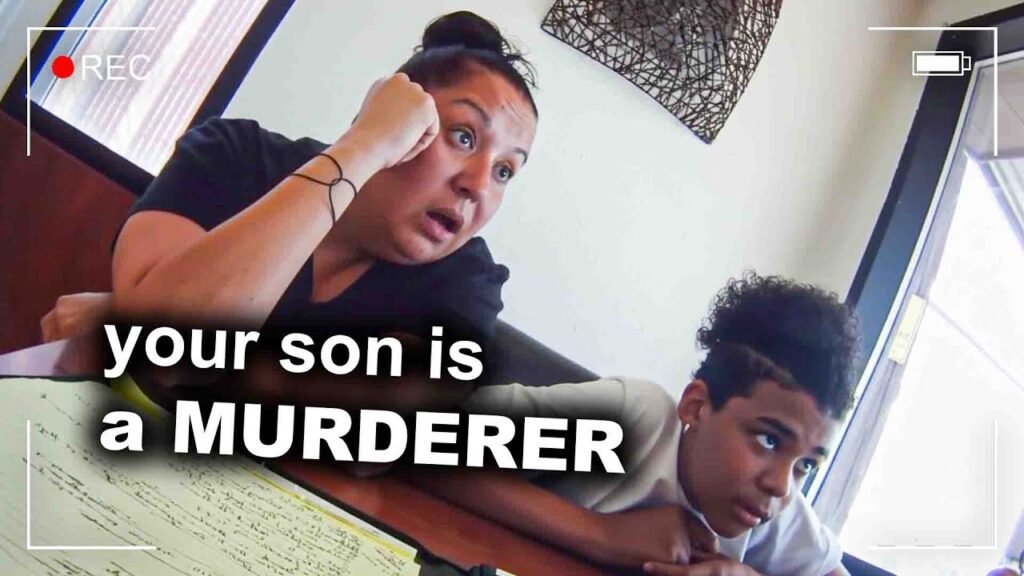
One of the more revealing pieces of the public record comes from Almentero’s police interrogation, conducted with his mother present given his age at the time. During that questioning, the fifteen-year-old attempted to reframe his role in the killings.
He told investigators he had acted out of fear of Goldman, describing himself as someone who was “following orders” rather than acting on his own initiative. He denied firing the fatal shots, placing responsibility for the actual executions on Goldman and Atkins.
In the course of that same interview, Almentero also disclosed a separate criminal operation the group had allegedly been running: an interstate robbery scheme targeting pharmacies — Walgreens and CVS locations across Phoenix, Las Vegas, and California — to steal promethazine, sold on the street under the name “lean.” That disclosure widened the scope of what investigators understood about the group’s activity well beyond the West Mesa killings themselves, though it does not appear to have resulted in additional charges within the core Ahmed Lateef murder case as tried.
Whether Almentero’s account of being coerced by Goldman shaped how prosecutors and, eventually, jurors weighed his individual culpability is not something the available public record spells out in detail. What is clear is that his stated defense — fear and subordination rather than initiative — did not prevent him from being convicted on the same core charges as Goldman and Atkins.
The Verdicts
On May 1, 2023, Stephen Goldman Jr., Jimmie Atkins, and Julio Almentero were each found guilty of first-degree felony murder, kidnapping, armed robbery, and tampering with evidence — for both victims. Each received two consecutive life sentences, structured so that none of the three would be eligible for parole for up to sixty years.
For three men who were nineteen, twenty-two, and fifteen years old at the time of the killings, sentences of that length function, practically speaking, as sentences for the remainder of their working lives. The court’s structuring of the sentences — running consecutively rather than concurrently, one term for each victim — reflected the fact that this was a case with two separate lives taken, not one.
Anthony Aragon accepted a plea deal tied to his role in disposing of the bodies and was sentenced to six years in prison. Stephen Goldman Sr. pleaded guilty to tampering with evidence, tied to burning the vehicle and hiding the weapons, and received four years.
The disparity between those sentences and the life terms handed to the three principal offenders is not an accident of the system — it is the system working roughly as designed, distinguishing between those who caused two deaths and those who, afterward, tried to help conceal them.
What the Case Leaves Behind

The Ahmed Lateef murder case does not resolve into a tidy lesson. It is, at its center, the story of a fourteen-year-old trying to arm himself against a threat he believed was real, walking instead into a robbery that escalated into a double homicide broadcast in fragments on social media.
It is also a case study in how quickly a group of young men — several of them still teenagers themselves — moved from robbery to torture to execution over the course of a single night, and how much of that escalation appears to have been driven less by careful planning than by a kind of momentum once the first gun was drawn.
For Albuquerque, and for the families of Ahmed Lateef and Collin Romero, the four-and-a-half-year wait between the killings and the final sentencing hearings represented its own kind of ordeal — one that court records and public reporting can document only from the outside. What the case ultimately produced, in May 2023, was as close to a full legal accounting as the system could offer: five people held responsible, in five different measures, for one night on the West Mesa that neither of two teenage boys walked away from.