
Eight jurors filed back into a Park City courtroom on the evening of March 16, 2026, after barely three hours of deliberation. Kouri Richins, the real estate agent and self-published children’s author accused of poisoning her husband with fentanyl, kept her head down as the first guilty verdict was read.
By the time the clerk finished, she had been convicted on all five counts: aggravated murder, attempted aggravated murder, forgery, and two counts of insurance fraud. Across the room, Eric Richins’ family wept. Richins did not react.
The case had been building toward this moment for four years — since a 3 a.m. phone call from a mountain town outside Park City first drew police to a bedroom where a 39-year-old father of three lay dead.
“Kouri Richins was a suburban mother, real estate agent… but she knows she wants it because it is lethal, it is fatal, it kills.”
That line, delivered by Summit County chief prosecutor Brad Bloodworth in his closing argument, became the defining soundbite of a trial that stretched across three weeks and pulled back the curtain on a marriage few outsiders had ever questioned.
A 3 A.M. Call From Kamas
Eric and Kouri Richins lived in Kamas, a small mountain community about forty miles southeast of Salt Lake City. Eric ran a stonemasonry business; Kouri worked as a real estate investor who flipped houses around the Park City market. They had three young sons and, on paper, the kind of life that draws people to the Utah mountains in the first place.
On the night of March 3, 2022, the couple stayed up to celebrate the closing of a property deal in Midway. Kouri later told investigators she mixed her husband a Moscow Mule cocktail in the kitchen; he drank it in bed and took a THC gummy. One of their sons woke from a nightmare, so Kouri went to sleep in the boy’s room instead of her own.
She said she returned to the master bedroom roughly six hours later and found Eric cold to the touch. She called 911 just after 3 a.m. Paramedics pronounced him dead at the scene.
An autopsy would later show Eric had no history of illicit drug use or prescription abuse. Toxicology found fentanyl in his system at roughly five times a lethal dose, ingested orally rather than through injection. A forensic pathologist who examined the case ruled out heart disease, stroke, or any other natural cause of death.
For a year, that was the story the public knew: a young husband, an accidental overdose, a grieving widow left to raise three boys alone.
The Book That Turned Heads
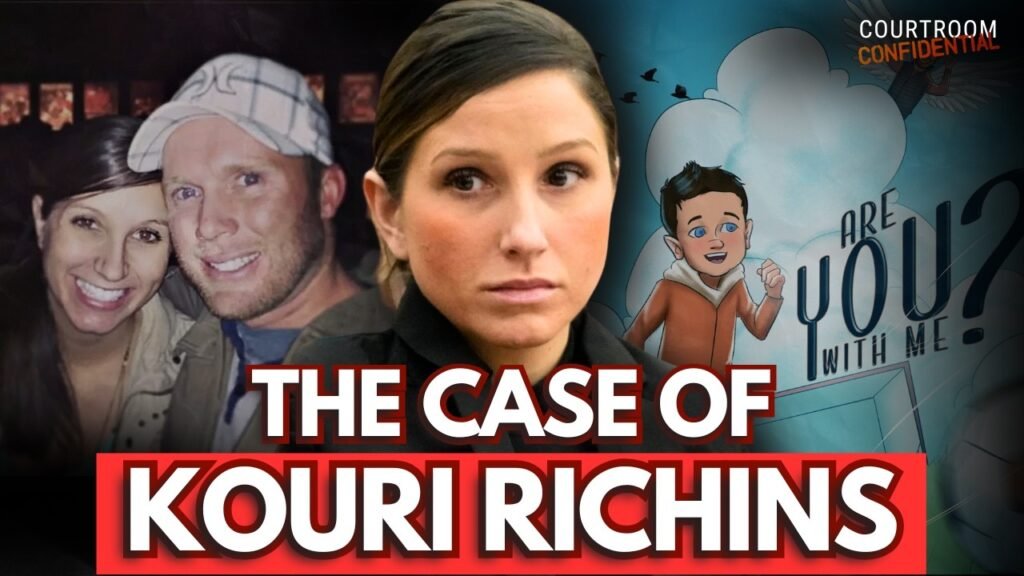
In March 2023, a year after Eric’s death, Kouri self-published a children’s picture book titled Are You With Me? The story follows a boy searching for signs of his late father’s presence in everyday moments — birthdays, holidays, quiet afternoons at home.
She promoted the book on local Utah television, telling one station’s morning show that writing it alongside her sons had brought her family a measure of peace during their first year without Eric. The appearance aired on a local lifestyle program in April 2023.
Two months later, in May 2023, Kouri Richins was arrested and charged with her husband’s murder.
The book instantly became one of the most scrutinized details of the case. Prosecutors would later argue in court filings that the timing — a public grief campaign unfolding while a homicide investigation quietly closed in around her — was not a coincidence but a calculated piece of image management.
Debt, an Affair, and a Trust She Didn’t Know About
Court testimony painted a financial picture very different from the one Kouri projected publicly. Forensic accountants and prosecutors described a real estate business that was millions of dollars in debt even as she maintained the appearance of success.
Eric and Kouri had signed a prenuptial agreement when they married in 2013, one that kept their assets separate — with a single exception. If Eric died while they were still legally married, Kouri stood to inherit. A National Public Radio report on the trial noted that under that agreement, <cite index=”7-1″>leaving Eric would also have meant leaving most of his money.</cite>
Unbeknownst to Kouri, Eric had grown suspicious of her long before his death. In October 2020, he consulted first with a divorce attorney and then with an estate planning lawyer, ultimately creating a living trust that would place his estate under his sister’s control for the benefit of their three sons if he died — cutting Kouri out entirely. Prosecutors say she never learned about that trust before he was killed.
At the same time, Kouri was carrying on a romantic relationship with a man named Robert “Josh” Grossman, a business associate who worked with her flipping houses. Text messages shown to the jury described the two discussing a future together, and Grossman testified that Kouri had once asked him a question that stopped the courtroom cold: whether he had ever killed anyone.
Prosecutors argued the combination — mounting debt, a secret trust she stood to lose everything from, and a lover waiting in the wings — gave Kouri both the motive and the urgency to act.
The Valentine’s Day Sandwich
Weeks before Eric died, prosecutors say Kouri made a first attempt on his life. According to testimony and court filings, she left him a sandwich in his truck on Valentine’s Day 2022, tucked alongside a handwritten love note.
Eric broke out in hives almost immediately after eating it and had trouble breathing. He treated himself with one of his sons’ EpiPens and recovered without going to a hospital. He later confided to a friend that he suspected his wife was trying to poison him.
That episode became the basis for the attempted aggravated murder charge — the count prosecutors argued proved a pattern, not a single moment of panic.
The Housekeeper Who Bought the Pills
If one witness carried the state’s case, it was Carmen Lauber, the Richins family’s occasional housekeeper. Testifying under a grant of immunity, Lauber told jurors that Kouri approached her four separate times between December 2021 and March 2022 asking her to obtain pain medication.
Lauber said Kouri initially described the request as being for an unnamed “investor.” When Lauber delivered ordinary opiate pills, Kouri reportedly said she needed something stronger — pills she referred to as the <cite index=”15-1″>”Michael Jackson stuff.”</cite> Lauber testified she didn’t understand the reference and had to look it up online before realizing Kouri meant fentanyl.
Lauber said she obtained the drugs from a man at a gas station in Draper, Utah, and delivered them to Kouri on more than one occasion, including once in Kouri’s own driveway. Records showed Lauber picked up more fentanyl on February 26, 2022 — six days before Eric died.
Days after Eric’s death, phone records showed Kouri texted Lauber asking if she still had her “hookup.” When Lauber confronted Kouri directly and asked whether the pills had been meant for Eric, Kouri reportedly told her no — that Eric had died of a brain aneurysm.
On cross-examination, defense attorney Wendy Lewis worked to undercut Lauber’s credibility, highlighting her history of methamphetamine use during the same period she claimed to be sourcing pills for Kouri, along with the immunity deal that shielded her from prosecution in exchange for testimony.
Digital Trails and Guilty Searches
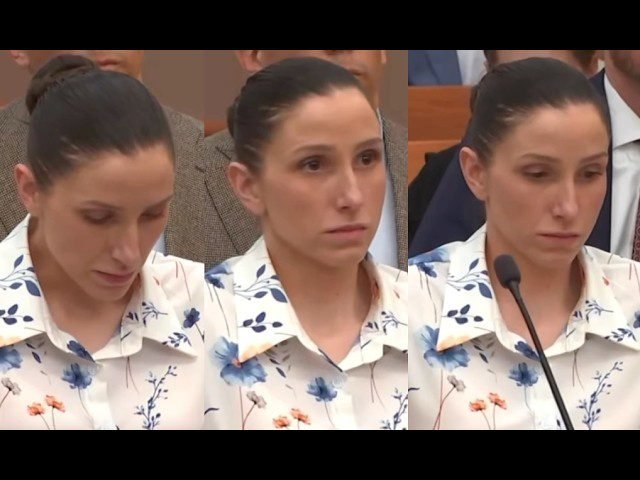
Much of the state’s case rested on data rather than eyewitnesses. A digital forensics analyst testified that hundreds of text messages between Kouri and Lauber from early 2022 had been deleted from both of their phones — though records from cell carriers showed the two had exchanged messages on the very days Lauber said she picked up drugs.
Investigators also pointed to Kouri’s internet search history as evidence of what prosecutors called a guilty conscience. On a new phone she began using in April 2022, after her original device had been seized, she allegedly searched terms including what a lethal dose of fentanyl looks like, whether deleted messages could be recovered from an iPhone, and whether police could compel someone to take a polygraph test.
Prosecutors argued this pattern — destroying evidence on one phone while quietly researching how thoroughly that evidence could be destroyed on another — was difficult to explain as anything other than an attempt to cover her tracks.
A Case Built on Circumstance
Notably, no witness at trial ever testified to actually seeing Kouri put fentanyl into her husband’s drink. The prosecution’s own attorneys acknowledged in closing arguments that their case rested heavily on circumstantial evidence: motive, opportunity, and a documented pattern of behavior before and after Eric’s death.
Bloodworth told jurors that circumstantial evidence could be every bit as convincing as direct evidence, reminding them that people rarely record themselves committing murder. The defense seized on that same gap, arguing throughout the trial that the state had never actually proven how the fentanyl entered Eric’s body.
The Defense That Called No Witnesses
Kouri’s legal team, led by attorneys Wendy Lewis and Kathy Nester, argued the investigation had been compromised from the start — shaped, they said, by Eric’s own family, who hired a private investigator and pushed law enforcement toward Kouri as a suspect well before the evidence supported it.
The defense suggested Eric may have struggled with an undisclosed addiction, pointing to a hydrocodone prescription found in a bedside drawer the night he died. A crime scene photo appeared to show residue in the bottle, though it was never sent for testing — a gap the defense highlighted repeatedly.
In a striking turn, Kouri’s attorneys rested their case on March 13, 2026, without calling a single witness, despite having indicated earlier that several were prepared to testify. She herself waived her right to take the stand.
Closing Arguments and a Three-Hour Verdict
Closing arguments began March 16. Lewis told jurors the state’s case amounted to guesswork dressed up as certainty, arguing prosecutors could not explain how the drug was administered and were asking the jury to convict on inference alone.
Bloodworth countered by walking the jury back through the debt, the affair, the Valentine’s Day sandwich, and Lauber’s testimony, describing Kouri as a woman who understood exactly what she was buying even if she didn’t know the street terminology for it.
The eight-person jury — six men and two women — deliberated for less than three hours before returning guilty verdicts on every count: aggravated murder, attempted aggravated murder, forgery, and two counts of insurance fraud.
Sentencing on Eric’s Birthday
Kouri Richins returned to court on May 13, 2026 — a date that happened to fall on what would have been Eric’s 44th birthday. Third District Judge Richard Mrazik handed down the maximum available sentence: life in prison without the possibility of parole.
Before the sentence was read, Richins addressed her three sons directly in an extended statement to the court and maintained her intention to appeal. Judge Mrazik was unsparing in his remarks, describing how she had allegedly failed in one attempt on her husband’s life only to try again weeks later.
Eric’s family read victim impact statements before sentencing. Outside the courthouse, his sister Amy Richins thanked those who had worked to bring the case to trial and said the family’s focus now turned to raising Eric’s three boys.
What Happens Next
Kouri Richins’ legal troubles may not be finished. She still faces a separate case involving roughly two dozen additional financial felony charges tied to the same web of debt and alleged fraud explored at trial, though prosecutors have not said publicly whether they intend to pursue it following the murder conviction. She has also indicated she intends to appeal the verdict.
Civil disputes over Eric’s estate, meanwhile, continue between Richins and her late husband’s family — a legal fight complicated by the trust Eric quietly created before his death specifically to keep his assets out of her hands.
What remains, for now, is the public record of a three-week trial: a housekeeper who Googled a coded request for fentanyl, a deleted text thread that investigators reconstructed anyway, and a children’s book about a father’s presence that a jury ultimately decided was never about grief at all.