
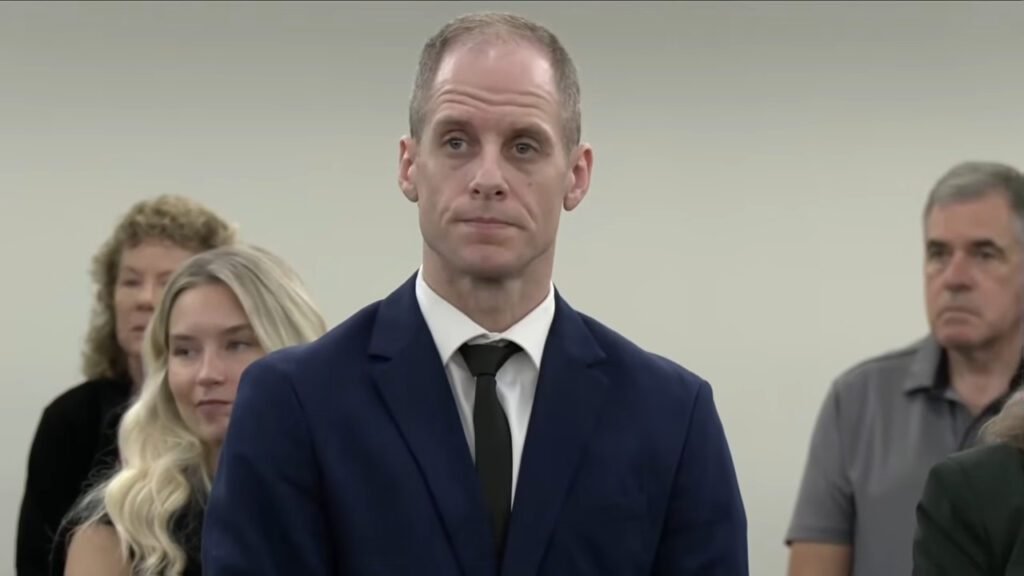
The murder trial of Caleb Flynn opened in the Miami County Common Pleas Court in Ohio, where jurors heard two sharply different accounts of how his wife, Ashley Flynn, died. Prosecutors say the 37-year-old was shot twice in the head as she slept and that her husband staged a home invasion to cover it up. The defense says Flynn was a poor husband who betrayed his wife, but that being unfaithful and dishonest does not make him a killer.
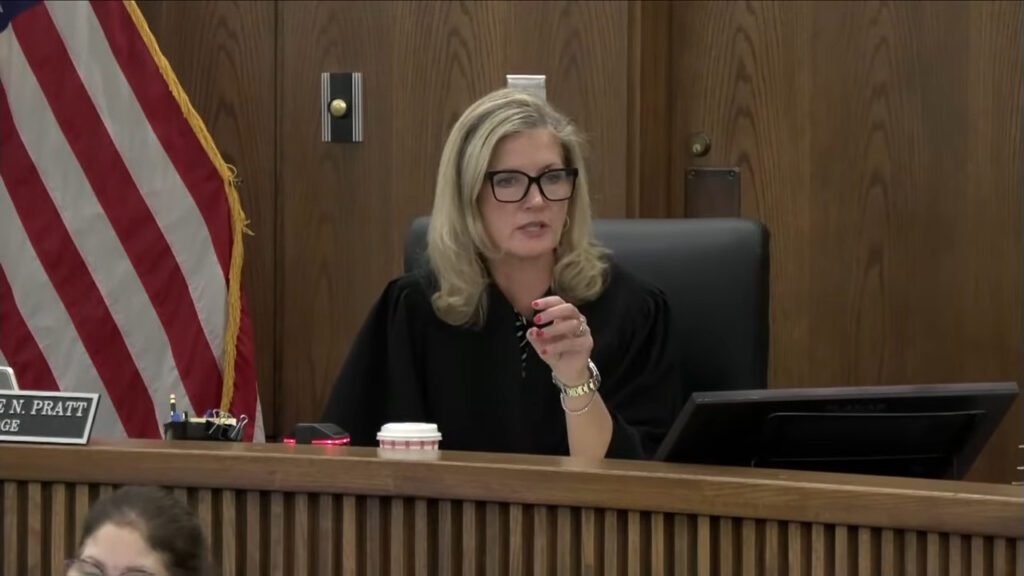
The case is being heard by Judge Jeannine Pratt as State of Ohio v. Caleb Flynn (Case No. 26 CR 88). Flynn, a former contestant on the 2013 season of American Idol and a former music pastor, faces an 11-count indictment. The charges include aggravated murder, murder, felonious assault, tampering with evidence and witness intimidation. Flynn is presumed innocent, and nothing described below has been proven in court.
Case Background
Ashley Flynn, 37, worked as a middle school volleyball coach and as a substitute teacher with Tipp City Schools. Case notes describe her as a well-liked member of her community. She was married to Caleb Flynn for roughly 15 to 16 years, and the couple had two daughters.

Caleb Flynn appeared on the 12th season of American Idol in 2013. He later served as a music pastor at Christian Life Center in Butler Township, Ohio.
The shooting happened on February 16, 2026, at the couple’s home in Tipp City. Flynn called 911 that day and told the dispatcher that an unknown intruder had entered the house, fired shots and run away. That account is the central point of dispute in the trial.
The Charges
Flynn was indicted on 11 counts. According to the case notes, the charges include:
- Aggravated murder
- Murder (on multiple counts)
- Felonious assault
- Tampering with evidence
- Witness intimidation
The notes say the most serious charges carry a possible sentence of life imprisonment without parole. An indictment is a formal accusation. It is not evidence of guilt, and the state must prove each charge beyond a reasonable doubt.
What Happened in Court on Day 1
The first day covered the judge’s preliminary instructions to jurors, both sides’ opening statements, a jury visit to the Tipp City home, and testimony about the police canvass of the neighborhood.
Instructions From Judge Pratt
Before opening statements, Judge Pratt explained to jurors the difference between direct and circumstantial evidence. She used an analogy involving “Johnny and apple pie” to illustrate the distinction. Direct evidence proves a fact without needing an inference, such as an eyewitness who saw an event. Circumstantial evidence asks jurors to draw a reasonable conclusion from a chain of facts. Both count as evidence.
The distinction matters here, because the defense says there is no eyewitness, and prosecutors appear to be building a case from many connected pieces of circumstantial evidence.
The judge also told jurors to stay away from social media, including X, Facebook and YouTube. She told them not to discuss the case with the public or with family members.
The Jury Visits the Home
After opening statements, the jury was taken to the Tipp City residence. Jurors, the defense, the prosecution and court bailiffs all went, so that jurors could see the layout of the house and the side garage door at the center of the staging theory. Caleb Flynn waived his right to attend the site visit, and that waiver was made under a court order.
The Prosecution’s Argument
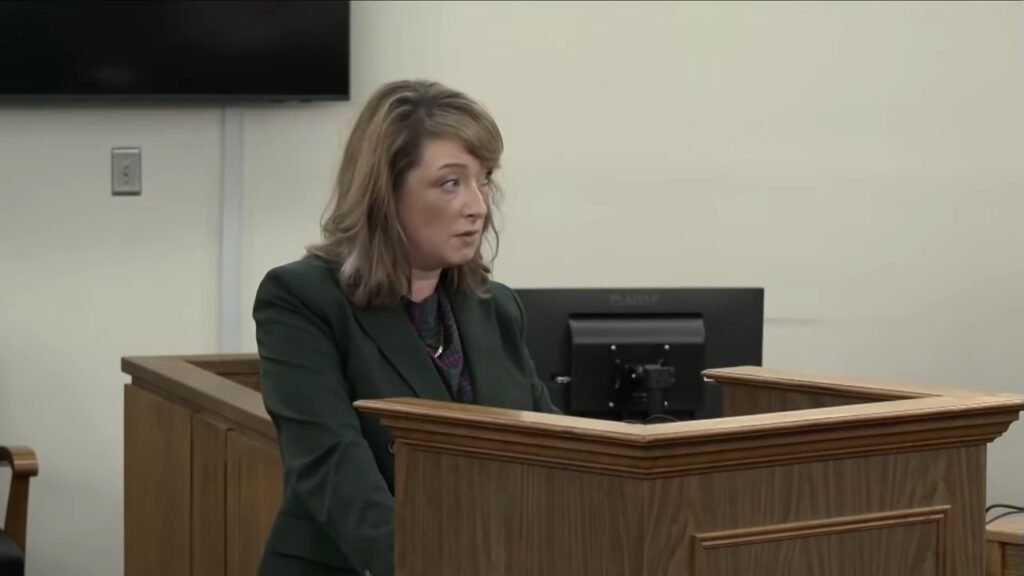
Lead prosecutor Mr. Watkins told jurors this was an execution-style killing disguised as a home invasion. In the state’s account, Ashley Flynn was asleep in bed when she was shot twice in the head from behind with a 9mm handgun.
The Missing Gun
The 9mm weapon used in the shooting has not been recovered. Prosecutors say Flynn kept a 9mm handgun in the console of his truck. According to the state, the truck was parked in the garage at the time of the shooting, the console was open, and the gun was missing.
The missing weapon is not proof that Flynn took it. The state is asking jurors to connect its absence with other evidence.
The Side Garage Door
Flynn told investigators that the intruder forced his way in through the damaged side garage door. Prosecutors say the physical evidence contradicts that. Forensic tool mark examiners and law enforcement experts, according to the case notes, concluded that the damage to the door frame was not consistent with prying or kicking. They said it was made deliberately with multiple tools after the door had already been unlocked, so that the scene would look like a burglary.
This is the core of what prosecutors call the staging theory. If jurors accept it, it would undercut the intruder account Flynn gave in his 911 call.
Digital Evidence
Flynn told police he had been asleep when the shooting happened. Prosecutors say data from his devices shows otherwise. The state points to digital extractions from his Apple Watch and iPhone, as well as AirPod activity and Face ID unlock records. According to prosecutors, these show he was awake and active before he made the emergency call.
The Messages
Prosecutors say Flynn had been in a relationship with another woman for about a year and that the two exchanged more than 100,000 messages. The state highlighted two of them.
The first was sent some months before the shooting. According to the state, Flynn wrote: “I was up until 4:00 a.m. last night crying… trying to think of ways to kill her and not go to jail… That is how dark and how hateful I feel.”
The second, sent on February 15, the night before the killing, read: “I choose you. I’m free. Actions will come tomorrow… Feb 16th, a day I’ll never forget.”
Prosecutors presented these messages as evidence of intent and planning. How the messages are interpreted, and whether the full conversation supports that reading, will likely be a major point of contention.
The Alleged Motive
The state offered several motives: the affair, financial considerations tied to Flynn keeping his job in Ashley’s family business, custody concerns, and his wish to protect his position as worship leader. Motive is not an element the state must prove for a conviction, but it can help jurors understand why someone might have acted.
The Defense’s Argument
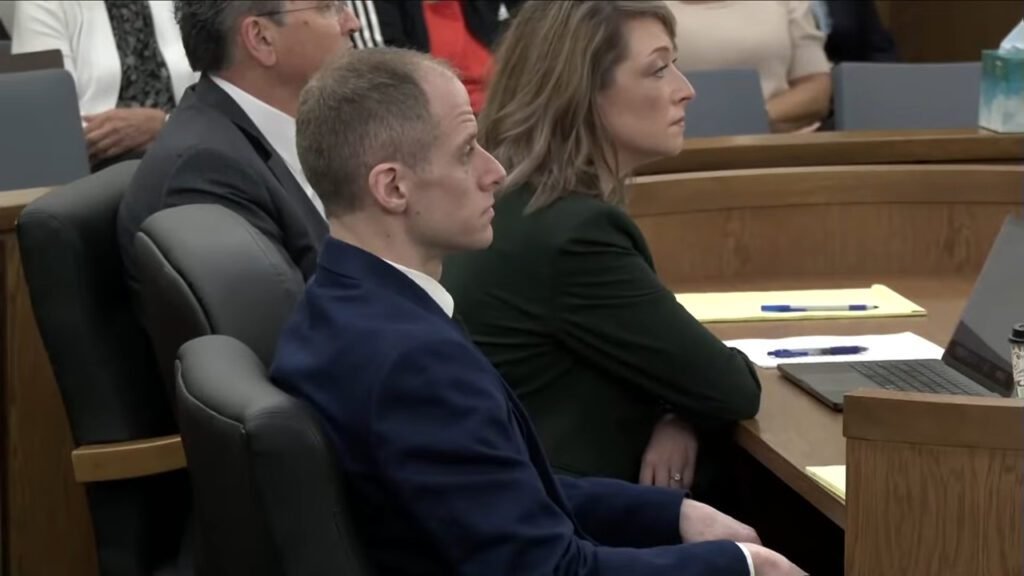
Flynn is represented by L. Patrick Mulligan and Ms. Smith. They asked jurors to set aside emotion and speculation and to rely on reasonable doubt.
Admitting the Affair, Denying the Murder
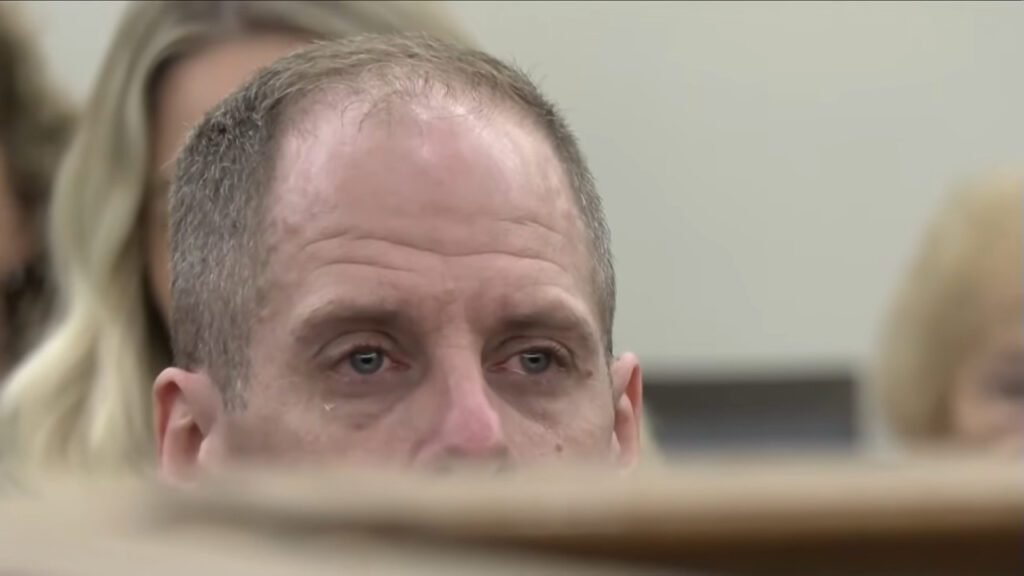
The defense did not try to defend Flynn’s conduct in the marriage. They acknowledged that he had an affair, lied and betrayed his wife. Their message to jurors was direct: “A man can fail as a husband without being a murderer.”
Conceding what the jury will hear anyway is a common defense strategy. It allows the defense to argue that the evidence of the affair, however damaging, shows a failed marriage and nothing more.
A Rush to Judgment
The defense argued that investigators zeroed in on Flynn once the affair came to light. In their telling, he became a convenient suspect, and other possibilities, including other suspects and intruder leads, were never properly investigated.
No Direct Physical Evidence
The defense listed what the state does not have:
- The murder weapon has not been found.
- No gunshot residue was found on Flynn’s clothing or body.
- No eyewitness saw the shooting.
- Fingerprints inside the home are explained by the fact that Flynn lived there.
- The time of death has not been clearly established.
The Police Canvass
Testimony on Day 1 focused on the search for a possible intruder. Local police and an FBI agent identified in the notes as Agent Tom canvassed about 80 homes and collected video footage. According to the case notes, no suspicious activity was confirmed within the perimeter they examined.
Both sides can use this testimony. Prosecutors can say the canvass found no sign of an outsider. The defense can say that a canvass is not a full investigation of every lead, a point tied to their claim that investigators focused too narrowly.
Legal Issues Explained
Reasonable doubt. The state must prove guilt beyond a reasonable doubt. The defense does not have to prove that Flynn is innocent or that an intruder existed.
Circumstantial evidence. Evidence such as device data, tool marks and text messages can support a conviction even without an eyewitness. Jurors decide how strong the connections between the pieces are.
Aggravated murder. In Ohio, this generally involves a killing that is prior calculated design or that involves other aggravating factors. The exact counts and theories the state is pursuing were not detailed in the source material.
Gunshot residue. A negative result does not automatically clear someone, because residue can be washed off or removed. Both sides may argue about what its absence means.
What Happens Next
The trial is continuing, and the source material does not describe upcoming witnesses or a verdict schedule. Jurors are expected to hear more testimony from experts, investigators and possibly other witnesses. No verdict has been reached.
Current Case Status
Caleb Flynn has been charged with an 11-count indictment and is on trial. He has not been convicted or acquitted, and no sentencing has taken place. Every allegation described above is the state’s claim, not a proven fact.

Frequently Asked Questions
What is the Caleb Flynn case about?
It is a murder trial over the February 16, 2026 shooting death of Ashley Flynn at the couple’s Tipp City, Ohio home. Prosecutors say her husband killed her and staged a home invasion. The defense denies it.
Who is the judge?
Judge Jeannine Pratt of the Miami County Common Pleas Court.
What are the charges?
An 11-count indictment including aggravated murder, murder, felonious assault, tampering with evidence and witness intimidation.
What did prosecutors argue?
That Flynn shot his wife twice as she slept, took his own 9mm handgun from his truck, staged a burglary at the side garage door, and lied to police about being asleep.
What did the defense argue?
That the state has no murder weapon, no gunshot residue, no eyewitness and no clear time of death, and that investigators ignored other leads after learning about the affair.
Did Flynn admit to the affair?
Yes. His defense acknowledged the affair, the lying and the betrayal, while denying he committed murder.
Has anyone been convicted?
No. The trial is ongoing and no verdict has been announced.
Did the jury visit the home?
Yes. Jurors toured the Tipp City residence and saw the side garage door. Flynn waived his right to attend.
Conclusion
The trial comes down to one question: was the shooting the work of an intruder, or was it staged by the man who called 911? Prosecutors are building a circumstantial case around a missing gun, a damaged door, device activity and pointed text messages. The defense is relying on what the state cannot show, and on the argument that a bad marriage is not proof of murder. Jurors have seen the home and heard the opening claims, but the evidence that will test both accounts is still to come.
2 thoughts on “Caleb Flynn Trial|Staged Home Invasion Claim Explained”