
Judge William Sullivan set March 29, 2027, as the start date for Lindsay Clancy’s retrial at a brief scheduling hearing in Plymouth Superior Court on Monday, November 16, 2026. Prosecutors had asked for May or, at the very least, the end of April, because of other trials already on their calendar. NBC reported that the date was settled over the Commonwealth’s objection.
The defense wanted the case tried by spring and said it would work around its own commitments. The court also set a status hearing for December 30, 2026, and a final pretrial conference for February 18, 2027. The hearing decided when Clancy will face a second jury, not whether she is guilty, and prosecutors have not formally said which charges they will pursue.
What Happened at Lindsay Clancy’s November 16, 2026 Hearing?
The hearing lasted about 10 minutes, according to NBC’s account, and nearly all of it went to a calendar dispute. Clancy appeared with her attorneys, Kevin Reddington and Laura McConnell. Assistant District Attorneys Jennifer Sprague and Shannon Buckingham represented the Commonwealth, and LA Magazine reported that District Attorney Timothy Cruz was not in the courtroom.
This was a scheduling proceeding, not a trial. The reports describe only argument between the lawyers and the judge. It came a week after Sullivan denied the defense motion to dismiss on double jeopardy grounds, which we covered in our report on the November 9 rulings. Two weeks earlier, at the November 2 hearing, the judge had raised the possibility of a March or April trial.
Commonwealth Signals It Is Prepared for Another Jury Trial
Sprague told the court the prosecution intended to proceed with a jury trial and was ready to pick a date. ABC News quotes her saying that, given the charges, the case “requires a jury trial.” She did not say which charges the district attorney will pursue, WBUR reported.
Reddington drew his own conclusion. “The die has been cast,” he said, calling the reference to a jury an indirect sign that the district attorney means to proceed on the first-degree murder indictments. That is the defense’s reading. WBUR reported that the district attorney’s office did not confirm it.
The difference matters because the three existing indictments are for first-degree murder, and a reduced charge could change how the case is tried. LA Magazine noted that a lower charge would open the door to a bench trial, and asked Reddington afterward whether he would prefer one with Sullivan. He answered, “It depends.”
Boston 25 News reasoned that the Commonwealth appears not to be changing how Clancy is charged. That is a reporter’s inference, not a statement from prosecutors.
Why the Prosecution Wanted a Later Retrial Date
Prosecutors first said their earliest availability was May because of other trials. Sprague told the court the office would be in trial on other matters in March and would need time to prepare for Clancy’s case afterward, per the AP-based report in the Epoch Times. She also said defendants in those cases have been waiting in jail, and that some had filed motions objecting to the Clancy retrial taking priority over them.
Her core argument was about fairness in the order of cases. She questioned why a defendant should get a second trial before people held in custody get a first trial date. LA Magazine reported that the judge questioned why a case tied to a 2014 incident should come ahead of Clancy’s.
After Sullivan pressed for March or April, Sprague proposed April 26, then asked for a date at the end of April, according to NBC. Read fairly, the Commonwealth was not refusing to retry the case. It was arguing about which cases a limited trial calendar should serve first.
Defense Pushes for an Earlier Lindsay Clancy Retrial
Reddington had previously asked for March. When prosecutors said May, he proposed splitting the difference at April, and said he wanted the case finished before spring ended. He argued that conflicting cases can be continued, and that this was a case that needed to be tried.
ABC News reported that he also voiced frustration that prosecutors had not yet said how, or whether, they would proceed. LA Magazine reported that he acknowledged having other trials scheduled but said he would make the date work.
One point to keep straight: none of the reports reviewed attribute an argument about Clancy’s continued custody to Reddington at this hearing. WBUR notes that she has been held at Tewksbury Hospital since 2023, but that is background, not something reported as argued on Monday.
Judge William Sullivan’s Response to the Scheduling Dispute
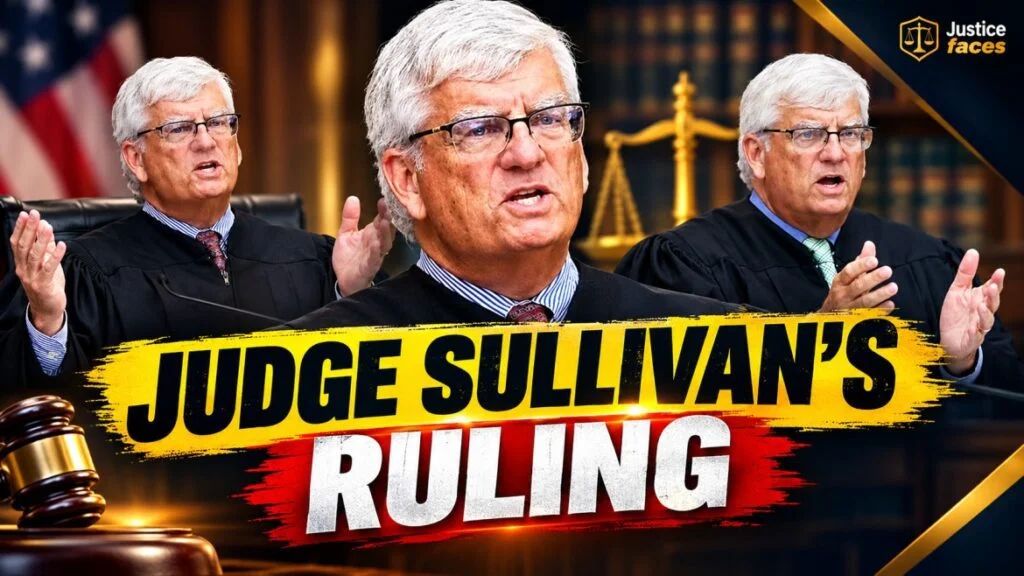
Sullivan’s position was simple: he wanted a date. He reminded the parties that a March trial had come up two weeks earlier, thanked them for checking their calendars, and said he saw the choice as March or April. He floated April 5 first, then March 8 and March 15, according to LA Magazine.
When the discussion kept circling, he reached for Shakespeare. Boston 25 News, in an AP report, quoted him this way:
“We can’t go to tomorrow and tomorrow. Tomorrow creeps up on its petty pace.”
He followed with “We’re going to pick a trial date.” The line, from Macbeth, was a judge’s way of saying that further delay was off the table.
He then suggested March 15, the Ides of March. Reddington chuckled, and Sprague replied, “I don’t have any jokes,” per LA Magazine. Sullivan answered that he was not joking and was only trying to get a date, adding that he had known both counsel for a long time and knew they wanted to serve the Commonwealth and their clients. NBC called the exchange “brief but heated.”
Sullivan also addressed the conflicts directly. According to Boston 25, he said that if another case had to be continued to make room, it could be continued, and Reddington said he could work with that. In the AP account, the judge told both sides to pick a date and that adjustments could come later. He said “the sooner the case is retried, the better” for everyone, including the attorneys, and that a March date would give everyone about four months to prepare.
The approach is a familiar one for trial judges. A firm date forces calendar conflicts into the open, and a date that proves unworkable can be revisited at a status hearing or pretrial conference. The December 30 hearing is that checkpoint.
Judge Sets March 29, 2027, Retrial Date Despite Objection
After more back and forth, NBC reported, the parties “wound up settling” on March 29, over the prosecution’s objection. LA Magazine says only that they eventually settled on the date. The reports reviewed do not say who first proposed March 29, or how the Commonwealth worded its objection when the date was fixed.
What the court actually ordered, per the reports, was a retrial date of March 29, 2027, a status hearing on December 30, 2026, and a final pretrial conference on February 18, 2027. Reports describe the March 29 date as the trial date. None specify whether that day is for jury selection or openings.
A trial date is a calendar entry. It does not decide guilt, it does not resolve the criminal responsibility question at the center of the first trial, and it does not settle what charges the jury will hear.
What Happens Before the March 2027 Retrial?
| Court proceeding | Scheduled date | Purpose |
|---|---|---|
| Status hearing | December 30, 2026 | Plymouth Superior Court status hearing; reports do not detail the agenda |
| Final pretrial conference | February 18, 2027 | Final pretrial hearing before trial; agenda not detailed in reports |
| Retrial start | March 29, 2027 | Start of the scheduled second trial |
The reports reviewed do not describe any discussion of courtroom security, transportation or media arrangements, so none are assumed here. The first trial drew hundreds of spectators and a large livestream audience, per WBUR, which is why readers may wonder about logistics. Those are questions for later hearings.
The December 30 status hearing is the next scheduled court date at which the Commonwealth’s charging plans could come up. Nothing reported says prosecutors must announce them then.
Legal Background: How the Earlier Mistrial Affects the Next Trial
The first trial ended on September 4, 2026, when jurors told the court they could not reach a unanimous verdict. The defense says 11 of the 12 jurors were prepared to find Clancy not criminally responsible, and one disagreed, as NBC and WBUR reported. Our reports on the mistrial and the motions heard afterward cover that period in full.
A mistrial is not an acquittal. It ends a trial without a verdict, so the prosecution may generally try the case again. The Fifth Amendment’s bar on double jeopardy can still block a retrial when a judge ended the first trial without sufficient justification.
The legal test is “manifest necessity,” and the Supreme Court has long treated a genuinely deadlocked jury as the classic example, giving trial judges wide discretion in Arizona v. Washington. Sullivan ruled on November 9 that the deadlock met that standard. The defense disagrees, arguing the judge should have inquired further into the holdout juror before declaring a mistrial.
For general terms, our legal resources page explains the basics.
What the November 16 Hearing Means for Lindsay Clancy’s Case
The practical change is a fixed date. For the first time since the mistrial, the case has a calendar, with checkpoints in December and February before March 29. Dates can move, but the judge made clear he wants any adjustments to be argued, not assumed.
Several things remain unresolved. Prosecutors have not formally stated their charges, and the defense and prosecution still disagree about the timeline. The defense also contests the legality of a second trial.
Update, November 21, 2026 (after the hearing): LA Magazine reported that the defense filed a petition on November 16 challenging the double jeopardy ruling. On November 19, Justice Elizabeth Dewar of the Supreme Judicial Court sent the petition to the full court. Filing deadlines run from December 3 to December 28, with argument expected in January 2027, and the retrial remains scheduled for March 29. Sending the petition to the full court does not mean Clancy has won anything; it means the court will consider the question.
Clancy has pleaded not guilty and has not been convicted of any crime. For the judge behind these decisions, see our profile of Judge William Sullivan. A related civil matter is covered in our report on the Patrick Clancy wrongful death lawsuit hearing, and more trial coverage sits in our Court Cases section.
Source note: Reconstructed from same-day reporting by NBC, WBUR, Boston 25 News (AP), ABC News, LA Magazine and the Epoch Times. The original Court TV hearing recording is the primary source. JusticeFaces did not attend the hearing.
Frequently Asked Questions
When was Lindsay Clancy’s latest court hearing?
Monday, November 16, 2026, in Plymouth Superior Court. It was a scheduling hearing, and the next scheduled date is December 30, 2026.
What happened at the November 16, 2026 hearing?
Judge Sullivan set a retrial date of March 29, 2027, after prosecutors asked for May or the end of April and the defense asked for spring. He also set a December 30 status hearing and a February 18 final pretrial conference.
When is Lindsay Clancy’s retrial scheduled to begin?
March 29, 2027. Reports call it the trial date and do not say whether that day is jury selection or openings.
Why did prosecutors object to the March 2027 date?
They said other trials, some involving defendants held in jail, left them unavailable until May. Sprague also said some of those defendants had filed motions objecting to the Clancy retrial taking priority.
Who is Judge William Sullivan?
An associate justice of the Massachusetts Superior Court, appointed in 2014 by Governor Deval Patrick, who presided over the first trial. Our biography has the details.
When is Lindsay Clancy’s next court hearing?
December 30, 2026, in Plymouth Superior Court, followed by a final pretrial conference on February 18, 2027.
What is the difference between a mistrial and an acquittal?
A mistrial ends a trial without a verdict, so a retrial is generally possible. An acquittal is a not-guilty verdict that ends the prosecution for that offense.
Have prosecutors officially confirmed which charges they will pursue at retrial?
No. Sprague said the charges require a jury, and Reddington read that as first-degree murder, but WBUR reported the district attorney did not confirm it.