
Judge William Sullivan denied Lindsay Clancy’s motion to dismiss on November 9, 2026, ruling that a retrial on the three first-degree murder indictments does not violate double jeopardy. He also refused the defense’s request for records about the holdout juror and the prosecution’s request for a gag order. Clancy has not been convicted, and no court has decided whether she was criminally responsible.
What Did Judge Sullivan Rule on November 9, 2026?
Judge Sullivan issued three separate decisions in Plymouth Superior Court, and all three motions were denied. Two went against the defense and one against the prosecution, so the day was not a clean win for either side. Coverage from CNN and ABC News describes the same three orders.
| Motion | Filed by | Decision | What it means |
|---|---|---|---|
| Motion to dismiss on double jeopardy grounds | Defense | Denied | A retrial on the murder indictments can go forward |
| Request for holdout juror records and a limited inquiry | Defense | Denied | No court-ordered access to the juror’s questionnaire or phone records |
| Request to restrict attorneys’ public statements (gag order) | Prosecution | Denied | No gag order for now; prosecutors may ask again if circumstances change |
The rulings answer one narrow legal question: can the Commonwealth try Clancy again? They do not answer the question at the center of the first trial, which is whether she was criminally responsible when her three children died on January 24, 2023. For the hearing that led up to these orders, read our report on the November 2 Lindsay Clancy hearing.
Ruling 1: Why the Double Jeopardy Motion Failed
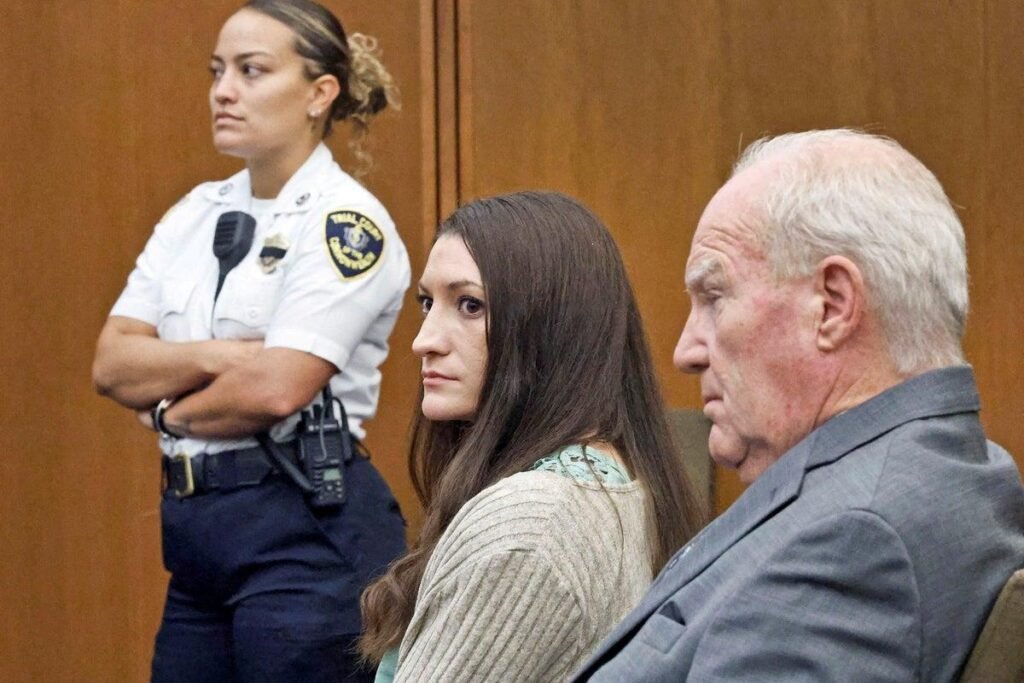
The judge held that the jury’s deadlock created a “manifest necessity” for the September 4 mistrial, so retrying Clancy does not put her in jeopardy twice. His written ruling said that because of that necessity, a retrial on the murder indictments does not violate her right against double jeopardy, as quoted by ABC News.
What the defense argued
The Fifth Amendment bars a second prosecution for the same offense. Clancy’s lawyers, including appellate specialist Martin Weinberg, argued that the mistrial was declared too fast. Their reasoning had four steps:
- The jury foreperson sent notes saying one juror was not following the instructions on reasonable doubt.
- The judge could have questioned the foreperson and the holdout in more depth.
- If the answers showed the juror could not follow the law, the juror could have been replaced by an alternate.
- Because that option was skipped, the defense said there was no manifest necessity and no second trial is allowed.
The Boston Globe explained the motion when it was filed in September.
What manifest necessity means
A mistrial does not automatically block a retrial. When a judge ends a trial over a defendant’s objection, prosecutors can try the case again only if the mistrial was truly necessary. The U.S. Supreme Court treats a genuinely deadlocked jury as the classic example, and it gives trial judges broad deference on that call in Arizona v. Washington (1978).
How Sullivan reasoned
The judge found that the foreperson’s notes “did not plausibly suggest” that the holdout refused to consider the evidence or disagreed with the law, according to CNN. In his view, the notes pointed to disagreement among jurors, which is what juries are for. He also ruled that information that surfaced about the juror after the trial cannot undermine a mistrial decision made on what the court knew on September 4. That echoes his October ruling, reported by WBUR, that evidence of good cause that appeared only after the mistrial is not relevant to manifest necessity.
What the ruling does not decide
The order does not find Clancy guilty. It does not reject her insanity defense, and it does not decide her mental state in January 2023. It only removes one barrier to a second trial. Read our earlier report on how the first trial ended in a mistrial for the full background.
Ruling 2: The Judge Refuses to Investigate the Holdout Juror
Sullivan declined to order the juror’s confidential questionnaire, cellphone records or other records, and he did not question the juror under oath. The reason he gave was relevance: the requested material was not relevant or material to the dismissal motion or to any retrial, as ABC News reported.
Who the holdout juror is
Court papers call him “Juror Doe,” and JusticeFaces follows that designation. After the mistrial, jurors told reporters the panel was split 11–1, with 11 prepared to find Clancy not criminally responsible. The one juror who disagreed has said publicly that he had no doubt about her guilt.

What the defense wanted
Defense attorney Kevin Reddington asked for a limited inquiry into the juror. The request covered:
- The juror’s confidential jury-selection questionnaire
- Related court and background records
- Cellphone records from the trial period
- Courthouse records tied to juror phones
- A short examination of the juror under oath
The defense raised two concerns. First, it alleged the juror was not fully candid about his legal history on the questionnaire. Second, it relied on another juror’s claim that he was scrolling on his phone during deliberations. Both are allegations. No court has found misconduct, and the juror’s lawyer disputes the claims.
Why Sullivan said no
Three points drove the decision:
- Relevance. The defense did not show the records mattered to its legal arguments.
- Timing. Facts discovered after the mistrial cannot show whether the September 4 decision was proper at that moment.
- Juror privacy. Digging into deliberations without a firm basis could discourage people from serving on juries.
The judge also treated deeper questioning during deliberations as a coercion risk, since pressing a single dissenting juror can push that person toward a verdict. Phone privacy is a recurring legal theme, and our guide to whether police can search without a warrant explains why courts guard cellphone data so closely.
Why this matters
The ruling means the defense’s claims about the juror stay unproven and the inquiry does not go forward. Reporting should keep that line clear: the defense wanted to find out whether outside information reached the jury, and it has not been shown that it did.
Ruling 3: The Gag Order Request Is Denied
The prosecution lost its request to restrict attorneys’ public statements. Sullivan found that prosecutors had not shown that the defense team’s out-of-court comments pose a serious enough threat to jury selection or a retrial to justify a restriction, according to Yahoo News.
What a gag order is
A gag order is a court order limiting what participants in a case may say publicly. Prosecutors asked for one after months of media appearances by Reddington, arguing it was needed to prevent a “carnival atmosphere” from the first trial. The defense called the request a prior restraint, meaning a limit on speech before it happens.
The legal standard
Courts allow limits on lawyers’ statements only when they carry a substantial likelihood of material prejudice, the test from Gentile v. State Bar of Nevada (1991). Lawyers in Massachusetts are also bound by Rule of Professional Conduct 3.6 on trial publicity, which applies whether or not a gag order exists.
What Sullivan left open
The denial is not a free pass. CNN reported that the judge said prosecutors may renew the request if circumstances change, and that he reminded the defense of its ethical obligations. With no trial date and no jury yet, the prosecution’s case for urgency was weak.
For readers following the judge behind these decisions, see our profile of Judge William Sullivan.
Background: Why the First Lindsay Clancy Trial Ended in a Mistrial

The first trial ended without a verdict on September 4, 2026, after the jury reported it could not unanimously agree. A mistrial is neither a conviction nor an acquittal. It means the case has no final outcome yet.
The 2023 case
Clancy is charged with three counts of first-degree murder in the January 24, 2023 deaths of her children, Cora (5), Dawson (3) and Callan (8 months), at the family home in Duxbury, Massachusetts. She did not deny causing their deaths. The trial turned on her mental state.
| Side | Core argument |
|---|---|
| Defense | Severe postpartum psychosis left her not criminally responsible, Massachusetts’ version of the insanity defense |
| Prosecution | She acted deliberately and understood her actions were wrong |
These are competing legal theories, not findings. Neither has been decided by a verdict.
How the jury deadlocked
Jury selection began in July, and the trial ran about seven weeks. NPR reported the start of deliberations on August 28. During deliberations the foreperson sent notes saying one juror was not applying the reasonable doubt instruction. Sullivan questioned jurors, re-instructed the panel, declined to remove the holdout, and declared a mistrial on September 4. On October 1 he also denied a separate defense motion for a required finding of not guilty, concluding the evidence was legally sufficient for a jury.
For a fuller account of the verdict-watch days, read our report on how the Lindsay Clancy trial ended in a mistrial.
What Happens Next in the Lindsay Clancy Case?
No retrial date exists yet. The next step is a status hearing in Plymouth Superior Court, scheduled for Monday, November 16, 2026, where Sullivan has said he would pick a trial date if the motion to dismiss was denied, as the Boston Globe reported. One outlet gave November 17, so confirm the date on the docket before publishing.
Retrial timing
Sullivan floated March 2027 as a realistic target, and Reddington said he was looking at April. Neither month is a confirmed date. Our November 2 hearing report covers why timing matters, including the judge’s approaching retirement.
Which charges will prosecutors choose?
Plymouth County District Attorney Timothy Cruz has not announced whether the Commonwealth will retry all three first-degree murder counts or proceed on reduced charges. Under one scenario discussed in the Boston Globe’s coverage, a reduction to second-degree murder would let Clancy waive a jury and have a judge decide the case. That is a possibility, not an announced decision.
What is at stake
- If the defense proves lack of criminal responsibility: a not-guilty verdict on that ground does not mean release. A judge can order confinement in a mental health facility, as NBC Boston noted.
- If prosecutors win first-degree murder convictions: the penalty in Massachusetts is mandatory life imprisonment.
The insanity defense and competing psychiatric evidence will likely dominate any second trial, a point Newsweek also made. The criminal case is not the only court matter involving the family; see our report on the Patrick Clancy wrongful death lawsuit hearing. More trial coverage is in our Court Cases section.
Frequently Asked Questions
Was Lindsay Clancy’s motion to dismiss denied?
Yes. On November 9, 2026, Judge William Sullivan denied the motion, finding that a retrial on the murder indictments does not violate double jeopardy.
Why did the judge say a retrial is not double jeopardy?
He concluded the jury’s deadlock created a manifest necessity for the September 4 mistrial. A mistrial based on a genuinely hung jury generally does not bar a second trial.
Is Lindsay Clancy guilty?
No. She has not been convicted, and the first trial ended without a verdict. The November 9 rulings did not decide whether she was criminally responsible.
Will there be a second trial?
It is now legally possible. Prosecutors have said they intend to retry her but have not announced the charges, and no trial date is set. March 2027 has been floated.
Was a gag order issued?
No. The judge denied the prosecution’s request, though prosecutors may ask again if circumstances change, and he reminded the defense of its ethical duties.
Did the judge investigate the holdout juror?
No. He refused to order the juror’s questionnaire, phone records or other records, and he did not question the juror under oath. The defense’s allegations about the juror remain unproven.
When is Lindsay Clancy’s next court date?
Monday, November 16, 2026, in Plymouth Superior Court, for a status hearing and possible trial scheduling.