A Miami County judge sentenced former American Idol contestant and music pastor Caleb C. Flynn to life in prison without the possibility of parole on Monday, October 5, 2026. The hearing took place at the Miami County Common Pleas Court in Troy, Ohio, six days after a jury found Flynn guilty on all nine counts in the February 2026 shooting death of his wife, Ashley Flynn.
The sentencing hearing was more than a formality. The court decided how several overlapping counts would be treated, ordered restitution, listened to the defendant speak, and heard from members of Ashley’s family, including her two daughters. Flynn, who was 37 years old Ashley’s husband, told the court he was sorry for the affair and the lies but maintained he did not kill her.
This article covers only the October 5 hearing: what the court ruled, what was said, and what the sentence means in practice.

Case Background
The case is State of Ohio v. Caleb C. Flynn, Case No. 26 CR 88. The offense date is listed as February 16, 2026, in Tipp City, Ohio. The victim, Ashley Flynn, was 37, a middle-school volleyball coach and a mother of two.
According to the evidence presented at trial in the weeks before sentencing, prosecutors argued that Flynn shot his wife twice in the back of the head while she slept, then arranged the house to look like a burglary or home invasion. The jury accepted the State’s case and returned guilty verdicts on September 29, 2026.
Several pieces of trial evidence formed the backdrop for the sentencing. Prosecutors presented evidence that Flynn was having an affair with a 20-year-old church intern, Alleigha Botner, who was referred to in court as Aaliyah. The night before the killing, Flynn texted her: “I choose you. I’m free. Actions will come tomorrow.”
Prosecutors also relied on device logs that contradicted Flynn’s claim that he was asleep when his wife was killed, showing movement and active device use around the estimated time of death. They said he had searched for ways to wipe digital records before the killing. Forensic testing, according to the trial summary, found no foreign DNA, unidentified fingerprints, footprints, or signs of forced entry. The State also presented evidence that Flynn had tried to coach his two young daughters, Alyssa and Ava, before their forensic interviews, telling them their statements meant “life or death” for him.
Those are the findings and evidence that led to the verdict. The October 5 hearing was about consequences.

The Legal Team in Court
Lead Prosecutor Paul Latins and Assistant Prosecutor Matt Jose represented the State of Ohio. Patrick Mulligan and Emily Smith represented Flynn. The case was heard by a judge of the Miami County Common Pleas Court.
What Happened During the Hearing
Registration as a Violent Offender
The court began with a series of legal rulings. Under Ohio Revised Code § 2903.41, the judge ordered Flynn to register as a violent offender for 10 years upon any release from prison. Because the primary sentence is life without parole, the order would only matter if his situation changed in some way, but it is a standard part of sentencing for offenses in this category.

Merging the Counts
The most technical ruling of the day concerned what lawyers call allied offenses, or merger. The judge ruled that Counts 1 through 6, which included Aggravated Murder, Murder, and Felonious Assault charges, merged into Count 1 because they arose from the same course of conduct against a single victim.
In plain terms, a person can be found guilty of several overlapping charges for one act, but the law generally does not allow separate punishments for each when they are essentially the same conduct against the same person. Once the court merges the counts, the State chooses which one the defendant will be sentenced on. Here, prosecutors elected to proceed with sentencing on Count 1, Aggravated Murder.
Merger does not erase the other guilty verdicts. It simply prevents the court from stacking punishments for what it viewed as one course of conduct.
Jail Credit and Restitution
The court recorded 229 days of jail time credit, which was stipulated, meaning the parties agreed on the figure. The judge also ordered $20,000 in restitution payable to Ashley’s parents, Todd and Jill Smith, for funeral expenses.
Caleb Flynn’s Statement to the Court
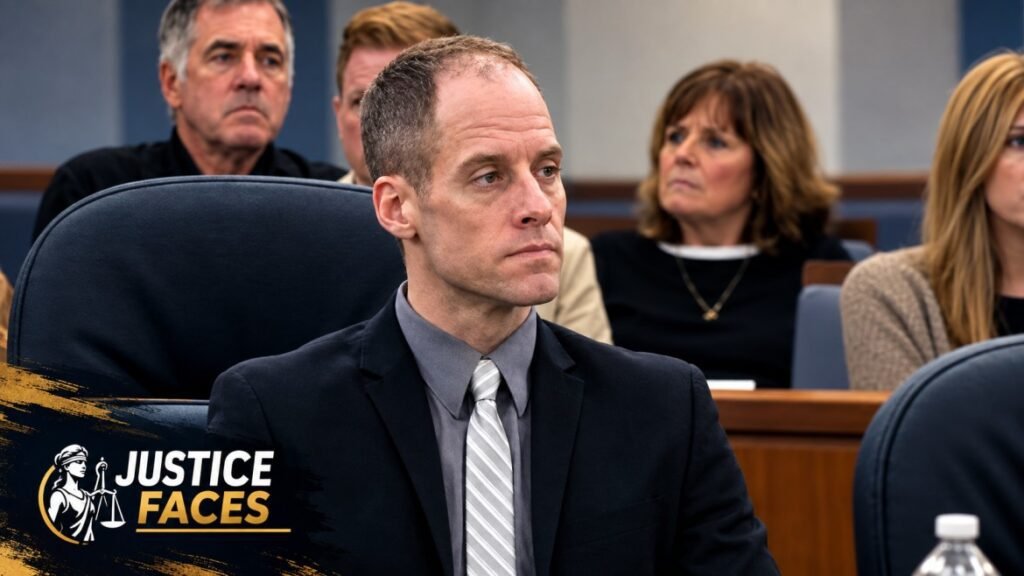
Flynn then addressed the court. The case summary describes the statement as emotional, with Flynn sobbing at times.
He spoke first to his daughters, Alyssa and Ava. He told them he loved them, apologized for not being present for their futures, and urged them to seek God. He thanked his parents and his brother, Adam, for their support, and apologized for the public disgrace his actions brought on his church community.
He also directly addressed Ashley’s family. Flynn apologized for breaking his wedding vows and for vile remarks he had made about Ashley in the past.
What he did not do was admit to the killing. Stating that he was under oath, Flynn said:
“As I stand here before God who is my ultimate judge, I am not lying when I say I did not kill my wife. I will continue to fight for my innocence as long as the Lord allows me to.”

That statement drew a clear line. Flynn accepted responsibility for the affair and the dishonesty that surrounded it, but not for the crime of which the jury convicted him. The court did not treat it as remorse, as the judge’s remarks later made clear.
Victim Impact Statements
Victim impact statements allow family members to tell the court, in their own words, how a crime has affected them. In this hearing, they were the emotional center of the day.
Kayla, Ashley’s Sister-in-Law
Kayla spoke about the sense of betrayal felt by the church and the wider community. She described how the case had damaged the sense of safety of local children, some of whom now fear break-ins because of the staged home invasion narrative. She also said she forgives Caleb and Alleigha, not to excuse what happened, but to keep hatred from taking over her own life.
Matt, Ashley’s Brother and the Girls’ Legal Guardian
Matt described the reality of raising four young girls: his own two daughters and Ashley’s two. He told the court that Alyssa and Ava often visit their mother’s grave and lie on the grass in front of her headstone to feel close to her.

Ava Flynn
Ava, the younger daughter, wrote a statement addressed to her father, which Matt read aloud. It described her mother as “the perfect person” and asked, “What did she ever do to make you hate her so much?” She wrote that the affair and the killing were her father’s choices, and she urged him to repent to God before it is too late.
Alyssa Flynn
Alyssa’s statement was read by Kayla. It confronted what she saw as hypocrisy, asking how her father could stand in church and sing about loving God while keeping secrets. She wrote that Ashley “was the best thing that ever happened to you,” and ended with a short, blunt line: “I don’t plan on coming to see you.”
Todd and Jill Smith, Ashley’s Parents
Ashley’s parents said they forgive Flynn personally, but they asked the court for full earthly justice: a lifetime behind bars without parole.
Taken together, the statements shared a pattern worth noting. Several relatives spoke of forgiveness in a spiritual sense while separating that from the request for punishment. That distinction shaped the tone of the hearing.
The Judge’s Remarks and the Sentence
Before imposing sentence, the judge criticized Flynn’s lack of remorse. According to the case summary, the judge described his conduct as marked by “deceit, manipulation, and cruelty,” and noted that he had used his religious faith to manipulate others.

Those words were the court’s own characterization at sentencing. They reflect the judge’s view of the conduct established at trial, not new evidence.
The Sentence Count by Count
| Count | Offense | Sentence |
|---|---|---|
| Count 1 | Aggravated Murder (unclassified felony) | Life imprisonment without parole |
| Gun specification, Count 1 (R.C. 2929.14(B)(1)(b)) | Firearm specification | 3 years mandatory, consecutive |
| Gun specification, Count 2 (merged count) | Firearm specification | 3 years mandatory, consecutive |
| Count 7 | Tampering with Evidence (third-degree felony) | 36 months, plus 1 year gun specification, consecutive |
| Count 8 | Tampering with Evidence (third-degree felony) | 36 months, consecutive |
| Count 9 | Tampering with Evidence (third-degree felony) | 36 months, consecutive |
How the Sentences Stack
The terms run consecutively, meaning one after another rather than at the same time. The court set the order as follows:
- Seven years of mandatory firearm specification time (3 plus 3 plus 1 years) are served first.
- Next come nine years for the three tampering counts (three terms of 36 months each).
- The life term without parole on Count 1 follows.
In practical terms, the sentence adds 16 years of fixed prison time ahead of a life term with no possibility of parole. Since the life sentence has no parole eligibility, the earlier terms mainly matter as a matter of record and in the event any part of the case is later changed on review.
Legal Terms Explained
Aggravated murder. In Ohio, aggravated murder is the most serious homicide offense. It is classified as an unclassified felony, which means it sits outside the normal felony degree scale, and it carries penalties up to life in prison without parole.
Firearm specification. A firearm specification is an add-on to a charge. If the jury finds the defendant used a firearm in committing the offense, the court must impose an additional mandatory prison term. That time is served before the sentence for the underlying offense.
Tampering with evidence. This charge applies when someone alters, hides, or destroys evidence, knowing an investigation is underway or likely. Here, the three tampering counts were treated as separate offenses and were not merged, which is why each carried its own term.
Consecutive sentences. When terms are consecutive, they are added together. When they are concurrent, they run at the same time.

Allocution. This is the defendant’s opportunity to speak to the court before sentence is imposed. It is not testimony subject to cross-examination in the usual sense, which is why the court listens to it but weighs it alongside everything else.
What Happens Next
The supplied case information does not mention any post-sentencing hearing, appeal filing, or further court date, so none can be reported here. Flynn said in court that he will continue to fight for his innocence, but no specific legal step was described in the material provided.
In general, a defendant convicted at trial in Ohio has the right to seek appellate review. Whether Flynn does so, and on what grounds, would need to be confirmed from the court docket.
Current Case Status
As of October 5, 2026, Caleb Flynn stands convicted on all nine counts after a jury verdict on September 29, 2026. He has been sentenced to life in prison without the possibility of parole on the aggravated murder count, plus consecutive mandatory and definite terms on the firearm specifications and tampering counts. Flynn denies killing his wife.

Frequently Asked Questions
What was Caleb Flynn sentenced to?
Life in prison without the possibility of parole on Count 1, Aggravated Murder, along with seven years of mandatory firearm specification time and nine years for three counts of Tampering with Evidence, all served consecutively.
Who was the victim in the case?
Ashley Flynn, 37, was a middle-school volleyball coach and the mother of two daughters. She was Caleb Flynn’s wife.
When and where did the sentencing take place?
The hearing was held on Monday, October 5, 2026, at the Miami County Common Pleas Court in Troy, Ohio.
What was Caleb Flynn convicted of?
A jury found him guilty on all nine counts on September 29, 2026. At sentencing, Counts 1 through 6 merged into Count 1, Aggravated Murder, and he was also sentenced on three counts of Tampering with Evidence.
Did Caleb Flynn admit to killing his wife?
No. He apologized for the affair, for breaking his wedding vows, and for lies and vile remarks, but he told the court he did not kill his wife and would keep fighting for his innocence.
What does it mean that the counts merged?
It means the court treated Counts 1 through 6 as one course of conduct against one victim, so Flynn could be sentenced on only one of them. The State chose Count 1.
Who spoke at the sentencing hearing besides Flynn?
Ashley’s sister-in-law Kayla, her brother Matt, and her parents Todd and Jill Smith addressed the court. Statements from Ashley’s daughters, Ava and Alyssa, were read aloud by Matt and Kayla respectively.
Was restitution ordered?
Yes. The court ordered $20,000 in restitution to Ashley’s parents for funeral expenses.
Will Flynn have to register as a violent offender?
The court ordered 10 years of violent offender registration under R.C. 2903.41 upon any release.
Conclusion
The October 5 hearing closed the trial phase of a case that unfolded in a small Ohio community and inside a church. The sentence was the maximum available for the most serious count, and the judge‘s remarks left little doubt about how the court viewed Flynn’s conduct and his refusal to acknowledge the killing.
What remains unresolved is not the sentence but the question of review. Flynn continues to maintain his innocence, Ashley’s family has asked for a lifetime of accountability, and two young girls, now in the care of their uncle, are growing up with the outcome. Any further legal action will have to be confirmed through the court record.