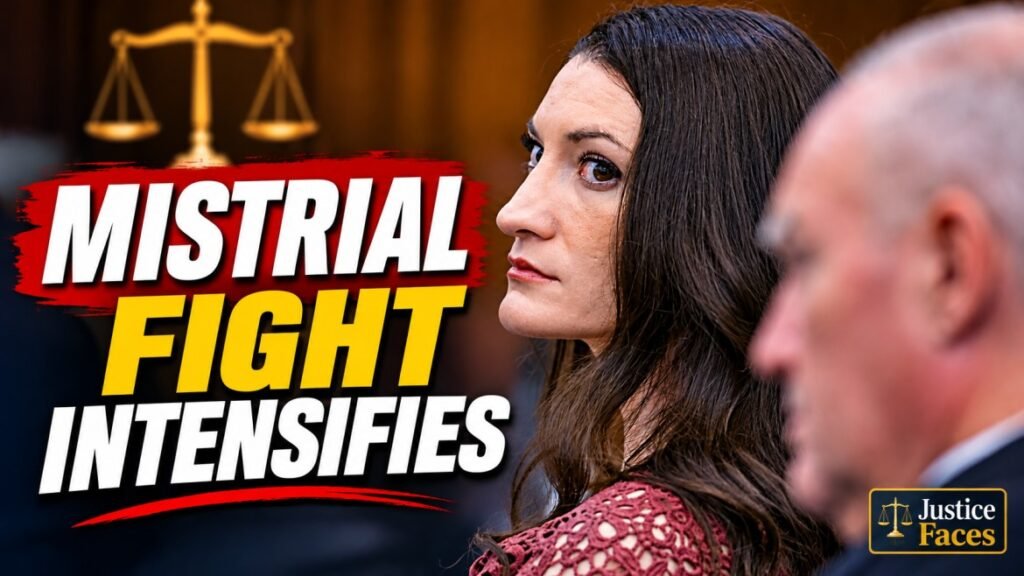
PLYMOUTH, Mass. — Lindsay Clancy’s November 2, 2026 hearing in Plymouth Superior Court ended the way most motion hearings end: with no decisions. Judge William Sullivan took all three pending motions under advisement after nearly two hours of argument. What made the hearing newsworthy was how sharply the lawyers fought over the next phase of the case, and one moment when the judge and Clancy’s lead lawyer openly talked over each other.
That moment came when defense attorney Kevin Reddington spoke the holdout juror’s name in open court. Sullivan cut him off, saying there was no need to name the man the court has called “Juror Doe.” Reddington refused to stop. The judge held his ground, and Reddington eventually continued without the name.
Behind that exchange sat a larger legal fight. Clancy’s defense wants the murder charges thrown out on double jeopardy grounds, arguing that the September 4 mistrial was declared too quickly. It also wants records and a limited inquiry into the lone juror who refused to join an 11–1 majority. Prosecutors, meanwhile, want the judge to restrict what defense counsel can say publicly before any retrial.
The outcome of those motions will decide whether Clancy faces a second trial, how soon, and under what rules of public comment. Prosecutors told the court they intend to retry her, but they did not say on which charges. The case returns to court on November 16, 2026.
Watch the full hearing: Court TV livestream of the November 2 hearing. For background on the first trial, see our earlier report, Lindsay Clancy Trial Ends in Mistrial: What Happened in Court and What Comes Next.
What Happened at the November 2 Lindsay Clancy Hearing?
The court heard three motions and ruled on none of them. Sullivan said at the outset that he had read the written motions and oppositions, then took each one under advisement after argument.
| Motion | Filed by | What it asks for | Status after Nov. 2 |
|---|---|---|---|
| Motion to dismiss (Pleading 215) | Defense | Dismiss the charges because the mistrial lacked “manifest necessity,” so a retrial would violate double jeopardy | Under advisement |
| Motion to preserve records and for limited inquiry into Juror Doe (Pleading 212) | Defense | Preserve juror records and allow questioning and records review of the holdout juror | Under advisement |
| Motion to preclude prejudicial extrajudicial statements (Pleading 222) | Commonwealth | Restrict defense counsel’s public statements that could prejudice a future jury pool | Under advisement |
The parties in court were Assistant District Attorney Jennifer Sprague for the Commonwealth; defense attorneys Kevin Reddington, Martin Weinberg and Laura McConnell for Clancy; and attorney Heather O’Connor for the holdout juror. Plymouth County District Attorney Timothy Cruz sat in the gallery, according to The Boston Globe.
Clancy, 36, is charged with three counts of first-degree murder in the January 24, 2023 deaths of her children, Cora, 5, Dawson, 3, and Callan, 8 months, at the family’s Duxbury home. She has not denied causing their deaths. Her defense at the first trial was that postpartum psychosis left her not criminally responsible, Massachusetts’ version of the insanity defense. Prosecutors argued she acted deliberately and knew what she was doing was wrong.
The first trial, which began with jury selection in July, lasted roughly seven weeks. Jurors deliberated for about a week before reporting an 11–1 deadlock. Jurors who later spoke to the media said the majority favored a finding of not guilty by reason of lack of criminal responsibility, while one juror would not agree. Sullivan declared a mistrial on September 4, 2026.
A mistrial is not an acquittal. It means no verdict was reached, so no finding of guilt or innocence exists. Nothing said on November 2 changed that. In an earlier ruling issued October 1, Sullivan also denied a separate defense motion for a required finding of not guilty, concluding the trial evidence was legally sufficient to send the case to a jury.
Why Lindsay Clancy’s Defense Wants the Murder Charges Dismissed
The defense argues that Sullivan declared the mistrial without first exhausting a reasonable alternative, and that this error bars any second trial. Martin Weinberg, an appellate specialist on Clancy’s team, asked the judge to reconsider decisions he said were made “in the heat of battle” on September 3 and 4.
The Jury’s Two Notes About Reasonable Doubt
The argument rests on two notes the jury foreperson sent during deliberations. As read aloud in court on November 2:
- First note (September 3): a member of the jury was unable to follow the instructions on reasonable doubt, and the jury asked how to proceed.
- Second note (late September 3, addressed September 4): a juror, identified by number, had made statements acknowledging doubt but would not apply it to the verdict as the law requires, which was why the jury could not reach a unanimous decision.
After the first note, Sullivan brought the jurors in one at a time, under oath, and asked each whether they could follow his instructions. Every juror said yes. He then re-instructed the full jury on reasonable doubt. After the second note, he declined the defense request to remove or further question the holdout. A single justice of the Supreme Judicial Court denied an emergency defense petition, and the mistrial followed.
Why the Defense Raised Double Jeopardy
The Fifth Amendment bars trying a person twice for the same offense. But a mistrial declared over a defendant’s objection does not bar a retrial if there was “manifest necessity” for it, a standard dating to the U.S. Supreme Court’s 1824 decision in United States v. Perez. In Arizona v. Washington, 434 U.S. 497 (1978), the Court held that the prosecution carries a heavy burden to justify such a mistrial. It also called a genuinely deadlocked jury the classic example of manifest necessity, and said trial judges deserve broad deference on that call.
Weinberg’s argument is that this was not an ordinary deadlock. In his view, the notes signaled a possible juror who was not following the law, not mere disagreement. A “probing voir dire” of the foreperson and the holdout, he argued, might have shown the juror should be discharged and replaced by an alternate. If that alternative existed and was skipped, he said, there was no manifest necessity and the remedy is dismissal.
Sullivan pushed back directly. “Didn’t I do that?” he asked, pointing out that he had questioned every juror individually under oath. Weinberg answered that one question producing a uniform “yes” was constitutionally insufficient when the foreperson, speaking for 11 jurors, was describing something different. Sullivan noted the difference between screening jurors before trial and questioning them mid-deliberation, when a judge must avoid probing how jurors are weighing the evidence.
Sprague argued the opposite. In her view, the notes described a disagreement over how reasonable doubt applied to the evidence, which is the jury’s job, not misconduct. She told the court the juror “did not refuse to deliberate. He refused to agree.” Any deeper questioning, she argued, would have required asking which evidence each juror believed, intruding on deliberations and risking coercion of a lone dissenter. She added that manifest necessity is judged on what the judge knew on September 4, not on media interviews given later.
That last point has recent Massachusetts support. In Karen Read’s case, the Supreme Judicial Court in 2025 rejected a double jeopardy claim built on post-trial juror statements, and the U.S. Court of Appeals for the First Circuit agreed that the manifest-necessity question looks to the record at the moment of the mistrial. Weinberg, who represented Read in that appeal, argued the Clancy facts differ because the defense objected and sought juror questioning while the jury was still intact.
Judge William Sullivan’s Heated Exchange With Kevin Reddington

The confrontation lasted only seconds, but it captured the tension between the defense’s push to scrutinize the juror and the court’s duty to protect jurors’ privacy.
Reddington was opening his argument on the juror motion, about 52 minutes into the hearing, when he named the holdout juror. Court filings had referred to him only as Juror Doe. Sullivan interrupted:
Judge Sullivan: “I’m going to stop you right there.” Kevin Reddington: “No, you’re not going to stop me.”
The judge replied that he was. Sullivan said there was no need to use the juror’s name in the courtroom and asked that he be referred to as Juror Doe. Reddington answered that the juror was already all over the internet, and remarked that the juror had more face time than he did. Sullivan responded that any publicity had not come from his rulings. Reddington then continued without the name.
The juror has publicly identified himself in media interviews since the mistrial, so the name is not secret. The judge’s point was narrower. A court controls how its own proceedings treat jurors, and Massachusetts law treats juror questionnaire information as confidential. Using a pseudonym in court signals that jurors who serve will not be exposed by the court process itself, regardless of what they choose to say elsewhere. JusticeFaces is following the court’s designation and refers to him as Juror Doe.
The friction returned minutes later, when Reddington began describing what the juror had written on his confidential questionnaire. Sullivan stopped him again and noted that the questionnaire is confidential by statute. After Sprague objected, the judge called the lawyers to sidebar and asked everyone to “dial this back a little bit.” Exhibits discussed at sidebar were admitted under seal.
The exchange did not reflect personal hostility in the end. Later in the same hearing, Reddington praised Sullivan’s experience and said he wanted him to preside over any retrial.
Why the Defense Wants to Investigate the Holdout Juror
Reddington asked the court to preserve juror records and permit a limited inquiry into Juror Doe, including his questionnaire, related court records and cellphone activity during deliberations. Everything below is a defense allegation. No court has found that the juror committed misconduct, and his lawyer told the court he does not concede any of the claims.

Questions About the Juror Questionnaire
Massachusetts jurors fill out a confidential questionnaire before jury selection. Under G.L. c. 234A, § 23, it is used during impanelment and kept confidential. Reddington alleged that Juror Doe was not candid on that form or in follow-up questioning in July. He said the juror disclosed one arrest from early 2026 but did not disclose an abuse prevention order or a 2021 domestic case, which Boston.com reported was later dismissed. The details were argued largely at sidebar and the related records were sealed.
Allegations of Cellphone Use During Deliberations
Reddington pointed to another juror’s post-trial television account that Juror Doe was scrolling on his phone during deliberations. He went further, alleging the juror researched “filicide” and “altruistic filicide,” terms central to the trial, based on what he said a podcast host had relayed. Jurors are instructed not to research the case or the law.
The legal distinction matters. Holding or scrolling a phone is not misconduct by itself. O’Connor said every juror was allowed to keep a phone. The legal problem arises only if outside information about the case actually reached the jury. Massachusetts courts call that “extraneous information,” and it is one of the few areas where judges may question jurors after a verdict, without asking how they reasoned.
Why the Juror’s Attorney Opposed an Investigation
Heather O’Connor argued that the defense is targeting her client because of his vote. Her main points:
- The defense had its chance in July. It read the questionnaire, asked the juror two questions about the insanity defense and the burden of proof, raised no challenge and declared itself content with the jury.
- The notes alleged no misconduct. They mentioned no outside research, no phone use and no refusal to deliberate. They described a juror who was discussing his view.
- Disagreement is not misconduct. Every juror swore under oath that he or she could follow the court’s instructions, and the court accepted those answers.
- Post-trial interviews are unreliable footing. Jurors who speak after a case ends have heard the coverage and are defending their own positions.
- A phone search needs a real basis. Records demands under Massachusetts criminal procedure require a specific factual showing, not a search to see what turns up.
- The chilling effect. If disagreeing with the majority is enough to trigger an investigation, she warned, the lesson for future jurors is to agree or be investigated.
Sprague asked that the motion be denied outright, saying the information could not affect the double jeopardy motion because it all surfaced after the mistrial. She also warned that opening an inquiry into one juror could open the door to the other 11, citing post-trial accounts of other jurors’ phone use and other conduct.
The practical stakes are significant beyond this case. Holdout jurors on both sides of a case are protected for the same reason: a unanimous-verdict system only works if a single juror can disagree without fear. Sullivan had already denied a defense request for an evidentiary hearing on the juror in October. He took this motion under advisement on November 2.
Prosecutors Seek a Gag Order Against Defense Statements
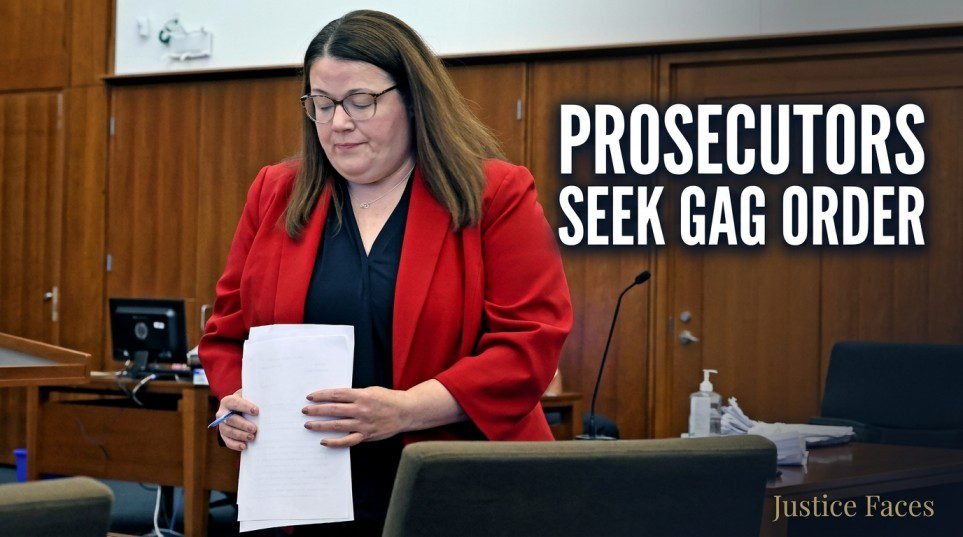
The Commonwealth asked Sullivan to bar prejudicial out-of-court statements by defense counsel, arguing that months of public comments risk tainting the pool of potential jurors for a retrial. The defense called the request an unconstitutional prior restraint.
Jennifer Sprague’s Argument
Sprague told the court that Reddington’s statements before, during and after trial were calculated to shape public opinion. She cited several examples, all attributed to Reddington in public remarks:
- Statements aimed at the holdout juror, including that the other jurors were robbed and that he hoped the juror could sleep well at night.
- Describing Clancy as being like a daughter to him.
- Asking for a presidential pardon, which she said is not possible. The presidential pardon power reaches only federal offenses, and Clancy faces state charges.
- Asking the president to call the district attorney to discourage a retrial.
- A joking remark about hiring Sullivan after the judge’s approaching retirement.
She relied on Gentile v. State Bar of Nevada, 501 U.S. 1030 (1991), in which the U.S. Supreme Court held that states may restrict lawyers’ statements that carry a “substantial likelihood of material prejudice” to a pending case. She argued that remedies such as a change of venue or sequestration would not cure publicity that has already spread. Prosecutors, she added, already follow a stricter rule for prosecutors and have said only “no comment,” and she offered to be bound by the same order.
Laura McConnell’s First Amendment Response
McConnell argued that the Commonwealth was asking the court to silence speech before it happens. Courts treat that kind of prior restraint as the most serious intrusion on free speech, allowed only where the harm is grave and nearly certain. Her points:
- No proven prejudice. There is no evidence any future juror has been affected, and no retrial date or jury yet exists.
- Existing rules already apply. Massachusetts Rule of Professional Conduct 3.6 governs trial publicity for all lawyers, and Rule 3.8 adds duties for prosecutors. Lawyers who break them face discipline after the fact.
- Gentile cuts the other way. That case involved discipline after a statement, she argued, not an open-ended advance restriction lasting through any appeal.
- The right to respond. Rule 3.6 lets a lawyer answer recent prejudicial publicity that the lawyer did not create, and the defense says much of the coverage has come from others, including post-trial juror interviews.
- Reddington is Clancy’s voice. Clancy has not given interviews, McConnell said, so restricting her lawyer would effectively restrict her as well.
The dispute reflects a familiar tension. The First Amendment protects public comment on criminal cases, and lawyers often explain court developments to the public. The Sixth Amendment guarantees an impartial jury, and the Supreme Court has long recognized that judges may take steps to protect it. Courts usually try less restrictive tools first, such as careful jury questioning or a change of venue, before limiting speech. Sullivan did not rule on the motion, so no gag order is in effect.
Will Lindsay Clancy Face a Second Trial?
Prosecutors said yes, but did not say on what charges. Asked by Sullivan whether the Commonwealth had decided how to proceed, Sprague said it would be a retrial, and that what it looks like would depend on the rulings on the pending motions. The Commonwealth preferred to set a status date rather than a firm trial date, noting that either side could appeal the coming rulings.

Reddington pressed for more. He asked why the defense still did not know whether the next trial would be on first-degree murder, a lesser charge or no charge, and said he needed that answer to prepare witnesses. He said the decision rested with District Attorney Cruz alone. He also told the court that, after consulting Clancy, the defense would not pursue any appeal of the double jeopardy ruling that would delay a trial.
The timing has a practical edge. Sullivan is approaching Massachusetts’ mandatory retirement age for judges. Reddington said he wanted Sullivan, who heard seven weeks of testimony, to preside over the retrial, and that he did not want Clancy to wait in custody for another year or more. “I want a trial. And I want it with you. And I want it this spring,” he said.
Sullivan said he was thinking of a trial sometime in March, possibly earlier, and that March was “probably realistic.” He was careful to add that no one should read his scheduling language as a signal of how he will rule on the motion to dismiss. March 2027 is a scheduling target the judge floated, not a confirmed trial date. Reddington later told reporters he was looking at April, Boston.com reported.
What Happens at the November 16 Hearing?
The case is continued to Monday, November 16, 2026, at 10:00 a.m. in Plymouth Superior Court for a status conference and possible trial assignment. Sullivan said he would try to issue at least some decisions before then. If the motion to dismiss is denied, he said, the court would aim to pick a trial date at that hearing. The defense said it prefers to appear in person and that Clancy wants to attend.
Key questions for that date:
- Has Sullivan ruled on the double jeopardy motion, and if so, which way?
- Will the Commonwealth announce whether it will retry Clancy on first-degree murder or reduced charges?
- Will the court allow any inquiry into Juror Doe or his records?
- Will any restriction on attorney statements be imposed?
- Can a trial date be set before Sullivan’s retirement?
Legal Questions That Could Shape the Next Stage of the Case
1. Was there a viable alternative to the mistrial? This is the heart of the double jeopardy motion. In Commonwealth v. Ronchi (2023), the Supreme Judicial Court said a judge should question a deliberating juror individually when reliable information suggests bias, extraneous influence or an inability to deliberate. Both sides cited it. The defense reads the notes as that kind of information. The Commonwealth reads them as a description of honest disagreement, which Massachusetts law has long said cannot justify removing a juror. Under Commonwealth v. Connor (1984), a deliberating juror may be discharged only for personal reasons unrelated to the case, not for his or her views on the evidence.
2. How much deference does the judge get? Hung-jury mistrials are rarely overturned because appellate courts defer to the judge who watched the jury. The defense’s argument is built to overcome that deference. Even if Sullivan rejects it, the defense has preserved the issue, and a double jeopardy claim is one of the few that can be raised before a second trial rather than only after a conviction.
3. Can post-trial accounts reopen deliberations? Courts protect the secrecy of jury deliberations and generally permit post-verdict questioning only about outside information or improper influence, not about how jurors weighed the evidence. The juror allegations here mostly surfaced in interviews after the mistrial. That timing is the Commonwealth’s and the juror’s strongest response to the records motion.
4. How private is a juror’s phone? A cellphone holds a great deal of personal information, and courts are cautious about ordering access to one. The general principles behind phone privacy are explained in our guide, Can Police Search Without a Warrant?. The juror’s lawyer argued that a phone search with no showing that case information reached the jury would set a precedent reaching every juror’s phone.
5. Can a court silence a lawyer before trial? Gentile allows limits on lawyer speech that is substantially likely to materially prejudice a case. Advance court orders face a higher bar than after-the-fact discipline, and courts usually expect specific findings. With no trial date set, the defense argues the Commonwealth cannot yet show the necessary harm.
6. What charges will a second jury hear? The Commonwealth could retry the first-degree murder charges or proceed on reduced charges. That choice will shape the evidence, the jury instructions and any plea discussions. It remains unannounced.
The criminal case is not the only Clancy litigation in court this fall. For the related civil case, see our report on the Patrick Clancy wrongful death lawsuit hearing. More coverage is collected in our Court Cases section, and primary sources are listed on our Legal Resources page.
Frequently Asked Questions
What happened at Lindsay Clancy’s November 2, 2026 hearing?
Judge William Sullivan heard three motions in Plymouth Superior Court: a defense motion to dismiss on double jeopardy grounds, a defense motion for records and a limited inquiry into the holdout juror, and a Commonwealth motion to restrict prejudicial public statements. He took all three under advisement and set a status hearing for November 16.
Why did Judge William Sullivan stop Kevin Reddington from naming the holdout juror?
The court has referred to the juror as Juror Doe throughout. Sullivan said there was no need to use his name in the courtroom, even though the juror has spoken publicly. Juror questionnaire information is also confidential under Massachusetts law.
Why does Lindsay Clancy’s defense want the charges dismissed?
The defense argues the September 4 mistrial lacked manifest necessity because the judge did not question the holdout juror in depth after two foreperson notes about reasonable doubt. If there was no manifest necessity, the defense says, double jeopardy bars a retrial.
What does double jeopardy mean after a mistrial?
Double jeopardy protects a person from being tried twice for the same crime. After a mistrial declared over the defendant’s objection, retrial is allowed only if the mistrial was justified by manifest necessity. A genuinely deadlocked jury is the classic example.
Why was the jury deadlocked 11–1?
Jurors who spoke after the trial said 11 favored a finding of not guilty by reason of lack of criminal responsibility and one did not agree. The holdout has publicly disputed some of his fellow jurors’ accounts. Jury deliberations are confidential, so the full reasoning is not part of the court record.
What did the defense allege about the holdout juror?
The defense alleged he was not fully candid on his confidential questionnaire, used his phone during deliberations and researched terms tied to the case. These are unproven allegations. His lawyer disputes them, and no court has made findings.
Did the judge order an investigation of the juror?
No. Sullivan took the defense motion under advisement on November 2 and had previously denied a request for an evidentiary hearing on the juror.
What is the proposed gag order in Lindsay Clancy’s case?
The Commonwealth asked the court to bar defense counsel from making prejudicial out-of-court statements that could affect a future jury. The defense opposes it as a prior restraint on speech. No order has been issued.
Will Lindsay Clancy face a retrial?
Prosecutors told the court on November 2 that they intend to retry her, but they have not said whether it will be on first-degree murder or reduced charges. The double jeopardy motion is still pending. Sullivan mentioned March 2027 as a realistic target, but no trial date has been set.
When is Lindsay Clancy’s next court hearing?
November 16, 2026, at 10:00 a.m. in Plymouth Superior Court, for a status conference and possible trial assignment.
Editorial note: This article is for general information and reports on a pending criminal case. It is not legal advice, and JusticeFaces is not a law firm. Allegations described here are claims made in court and have not been proven. See our Disclaimer.