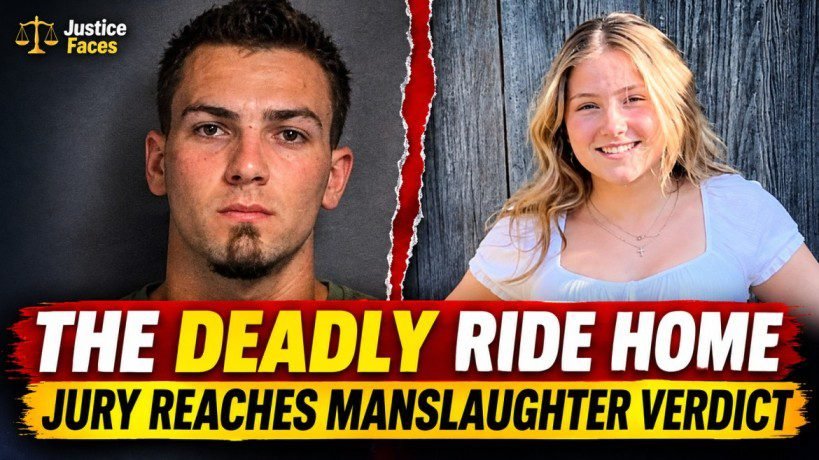
Shortly after 5:20 p.m. on Friday, November 6, 2026, a six-member jury in New Britain Superior Court returned a split verdict in the Cooper Ouellette trial. Jurors found the 21-year-old Harwinton man not guilty of first-degree manslaughter. They found him guilty of the lesser included offense of second-degree manslaughter, and guilty of delivering alcohol to a minor.
The case concerns the death of Sophie R., a 17-year-old high school junior from Burlington, Connecticut, who died in the early hours of May 21, 2023, after a night that began at a party and ended with her family carrying her, barely conscious, from Ouellette’s pickup truck in their driveway. Judge Chris Pelosi ordered everyone in the trial, including the news media covering it, not to use her last name because she was a minor. JusticeFaces follows that order.
The verdict came after seven court days that leaned heavily on two kinds of proof: an autopsy that the State said showed Sophie was run over by a truck tire, and Life360 location data that prosecutors used to rebuild the ride minute by minute. The defense attacked both. The jury’s answer, a conviction one step below the top charge, says a good deal about how jurors weighed that evidence against the law they were given.
How we reported this: This account is built from courtroom transcripts, timestamped logs kept by reporters inside the courtroom, and published reporting by Connecticut news organizations. Testimony is attributed to the witness who gave it, and arguments to the lawyer who made them. Allegations are not treated as established facts unless the jury’s verdict decided them.
What Happened in the Cooper Ouellette Case?

On the evening of May 20, 2023, Ouellette, then 18, picked Sophie up at her family’s home on Fieldview Drive in Burlington. The two had dated for roughly three years, according to testimony from her mother. According to testimony and the State’s location animation, they stopped at a package store, met friends in a Chili’s parking lot and at a Walmart, and ended up at a gathering of young people at the Schultz Corporation property in the Terryville section of Plymouth, which several witnesses described as a place where teenagers drank.
What happened after they left that party, at around 11:20 p.m., was the heart of the case.
The State’s formal accusation, which Judge Pelosi read to the jury on Day 1, set out the prosecution’s theory in one sentence. According to the charging document, Ouellette provided alcohol to Sophie, engaged in assaultive behavior toward her, drove recklessly with her in the truck, and unlocked her passenger-side door while the truck was moving. Sophie then separated from the truck and, the State alleged, suffered crushing injuries as a result. Prosecutors argued that she was run over by the truck’s rear tire on Fieldview Drive, near her own home.
Ouellette’s account was different. In a police body-camera interview recorded at his home the next morning, he told detectives that Sophie said she needed to throw up and jumped out before he could pull over. He said he picked her up, put her back in the truck, and drove her home. He pleaded not guilty, and his lawyers, Martin Minnella and Jonathan Raad, told jurors her death was a tragic accident rather than a crime.
Some things were not in dispute. Ouellette drove into the family’s driveway at about 11:50 p.m., ran into the house, and told Sophie’s mother something was wrong with her. Her mother found her slumped in the passenger seat, unable to move or speak clearly, and her father and brother helped carry her into the garage. After a 911 call suggested an ambulance could take some time, her parents drove her to Bristol Hospital themselves. She died there. The autopsy listed the cause of death as blunt impact injuries to the torso.
Connecticut State Police investigated for more than a year. Ouellette turned himself in on July 12, 2024, and was charged with first-degree manslaughter and delivery of alcohol to a minor. He was released on a $50,000 bond and remained free through trial.
The Seven Days That Shaped the Cooper Ouellette Trial
Day 1 (Thursday, October 29): Ground rules and the family’s testimony
Before jurors entered, Judge Pelosi reminded the lawyers of their duties under Rule 3.6 of the Rules of Professional Conduct and Practice Book Section 42-48, which govern public statements about a pending trial. Jurors were identified only by number and initials, and the judge said their names would be sealed for seven days after the trial. Sophie’s relatives testified using only the initial of their last name.
The Day 1 transcript shows no opening statements. After preliminary instructions, the judge read both charges and the elements of first-degree manslaughter, and the State called its first witness. (Opening statements are not required in Connecticut criminal trials.)
Sophie’s mother described waiting up past her daughter’s 11:30 p.m. curfew, checking Life360 on her phone, and then hearing Ouellette come through the garage door. Home security video showed the truck arriving at about 11:50 p.m. On cross-examination, Minnella pointed out that she had texted Sophie earlier that night asking her to control her drinking, and that she initially believed her daughter only needed her stomach pumped. Sophie’s father and brother described what they saw in the driveway. Her brother testified that Ouellette gave him two different versions of where and how Sophie came out of the truck. A state police analyst then played a video recovered from Sophie’s phone in which she can be heard saying “ow.”
Day 2 (Friday, October 30): The body camera, the truck and the autopsy

Detective Tyler Bastos of the Connecticut State Police narrated his body-camera footage from the Ouellette home on the morning of May 21. Jurors watched Ouellette learn that Sophie had died. In the recording, he told detectives he had been going “30 tops” and that she came out of the truck at about 10 miles per hour. On cross-examination, Raad established that Ouellette’s mother let officers into the house and that Ouellette answered their questions.
Sergeant Jamie Pearson walked jurors through the processing of Ouellette’s mother’s Chevrolet Silverado: a cooler with alcoholic beverages in the bed, Sophie’s broken “Cooper” necklace on the driver’s-side floor mat, and blood-like stains on the passenger side. Under cross-examination, he agreed that luminol testing found no blood on the undercarriage, bumper or tires, and that the tire tread was cut but never tested. On redirect, he said rain and the drive home could have destroyed such evidence.
Detective Spencer Bronson of the state police crash reconstruction (CARS) unit described the roadway scene on Fieldview Drive: Sophie’s boot, a hair clip found about 1,900 feet from the boot, biological material in five spots, and no skid marks. Based on the scene evidence, he estimated the truck was traveling 13 to 15 miles per hour. On cross-examination, he said he found no physical evidence at the scene that Sophie had been struck or run over by the truck.
The day ended with Associate Medical Examiner Dr. Gregory Vincent of the Office of the Chief Medical Examiner, whose testimony is examined in detail below. He told jurors he believed Sophie was run over by a wheel of the vehicle and that the manner of death was homicide.
Day 3 (Monday, November 2): The medical examiner under fire, and the phone records
Defense counsel spent the morning cross-examining Dr. Vincent, focusing on how and when his office reached its conclusion and whether hospital treatment could account for some internal damage.
A state police digital forensic scientist then presented phone extraction records, including a 12:36 a.m. text from Ouellette to Sophie’s mother asking if Sophie was OK, and earlier texts in which Ouellette and a friend discussed drinking that night. Several homeowners and a business owner along Route 4, Johnny Cake Mountain Road and Fieldview Drive authenticated surveillance footage they gave police. That footage later anchored the State’s timeline.
Ouellette’s mother testified about the morning police arrived and about what her son told her that night. The prosecution raised a concern outside the jury’s presence that she had viewed trial material in violation of the court’s sequestration order. Friends testified that Sophie called around 11:15 p.m. looking for a ride home and sounded scared, and one said she received a Snapchat photo from Sophie at about 11:40 p.m. showing a bloody nose. A voicemail Ouellette left for a friend around 11 p.m., in which he said he was “very very drunk,” was played for the jury. The friend acknowledged on cross-examination that the two sometimes left joking voicemails.
Day 4 (Tuesday, November 3): Friends describe the party
Some early summaries described Day 4 as the vehicle-reconstruction day. The record shows that testimony came on Day 2. Day 4 belonged to witnesses from the party.
A 21-year-old who attended testified that Ouellette pulled beer from a Yeti cooler in his truck, handed it to others, and appeared drunk, slurring his words. He described seeing Ouellette push Sophie against the side of the truck and later leave “like a bat out of hell.” Under cross-examination, he became combative, and the defense confronted him with his earlier statement to police. Another friend testified that he saw Ouellette kick Sophie two or three times with his boot while she was trying to hug him, and that she fell. A third witness said Sophie texted her around 11:25 p.m. that she was “scared.” A former classmate testified that Ouellette told her weeks later that he and Sophie had argued that night and that she fell out of the truck.
With the State’s agreement, the defense called its medical expert out of order. Dr. Alex Williamson, a forensic pathologist with the Nassau County Office of the Medical Examiner in New York, testified that Sophie’s injuries were more consistent with falling from a moving vehicle and hitting the road than with being run over, and that he would classify the manner of death as undetermined. On cross-examination, he acknowledged reviewing about a dozen photographs and examining the sweatshirt for roughly five minutes, and that his written findings ran four sentences.
Day 5 (Wednesday, November 4): Life360, the State rests, and the “no blood test” question
Mark Sanders, a geolocation and intelligence analyst with the New England State Police Information Network (NESPIN), presented two animations reconstructing the night from Life360 data, phone records, Snapchat activity and surveillance video. He testified that he believed his speed estimates were accurate to within about 5 miles per hour. The State rested at 12:50 p.m.
The defense then called Jeffrey Martin, a former Michigan State Police digital analyst, who testified that Life360 data is not reliable enough to determine speed or precise location. On cross-examination, the State established that he had not reviewed the Life360 log files, the phone extractions, or the NESPIN report itself.
Finally, and unusually, the defense called the lead investigator, Detective Ryan Slaiby. Minnella pressed him on why no trooper sought a warrant for Ouellette’s blood in the hours after the crash. Slaiby testified that by the time investigators reached the house, too much time had passed, and that the decision was not his at that stage.
Day 6 (Thursday, November 5): The defense rests, and the acquittal motion
Slaiby’s testimony continued. He testified that investigators identified Locust Road as the place of the first separation in early 2024, with Sanders’ help. The defense pressed him on why that took about 10 months; he said investigators were not initially sure where it happened. He also testified that the state lab referred a request to compare Sophie’s sweatshirt against the tire to the FBI laboratory, which did not have that capability.
Three more defense witnesses, all from the night of the party, described Sophie as “tipsy” at Walmart and Ouellette as not appearing drunk. On cross-examination, one of them agreed that Ouellette brought a Yeti cooler filled with alcohol, that he saw the couple fighting around 10:30 p.m., and that Sophie was calling people for a ride.
After clearing the courtroom, Judge Pelosi questioned Ouellette and found he had knowingly and voluntarily waived his right to testify. The defense rested. Outside the jury’s presence, the defense moved for a judgment of acquittal on both counts. The judge reserved his ruling until the next morning.
Day 7 (Friday, November 6): The ruling, closings and the verdict
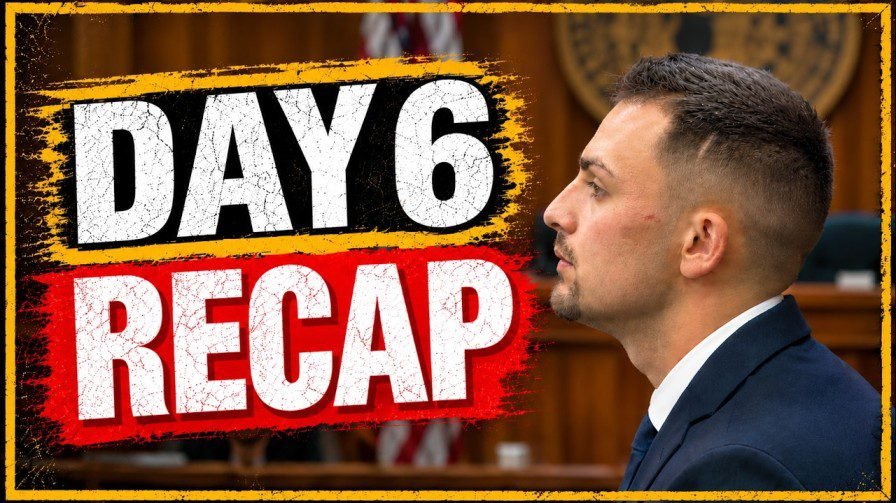
Judge Pelosi denied the acquittal motion on both counts in a lengthy ruling from the bench. He finalized the jury charge which, at the State’s request, included second-degree manslaughter and criminally negligent homicide as lesser options under the first-degree count.
Senior Assistant State’s Attorney David Clifton opened for the State, Minnella closed for the defense, and State’s Attorney Christian Watson gave the rebuttal. The jury began deliberating at about 2:30 p.m. At 3:13 p.m., the foreperson sent a note asking which flash drive held the officers’ body-camera video, the photos of Sophie’s bloody nose, and the animation. Just before 5 p.m., as the judge prepared to send jurors home for the weekend, they asked for 10 more minutes. The verdict was read at about 5:20 p.m.
| Date | Day | Main witnesses and events |
|---|---|---|
| Oct. 29 | 1 | Publicity and juror-anonymity orders; charges read; Sophie’s mother, father and brother; phone video played |
| Oct. 30 | 2 | Det. Bastos body camera; Sgt. Pearson truck exam; Det. Bronson (CARS) scene reconstruction; Dr. Vincent direct |
| Nov. 2 | 3 | Dr. Vincent cross; phone records; surveillance-camera owners; defendant’s mother; friends; voicemail |
| Nov. 3 | 4 | Party witnesses; defense pathologist Dr. Williamson (called out of order) |
| Nov. 4 | 5 | NESPIN analyst Mark Sanders; State rests; defense expert Jeffrey Martin; Det. Slaiby called by defense |
| Nov. 5 | 6 | Det. Slaiby continues; defense witnesses; defendant waives testimony; defense rests; acquittal motion argued |
| Nov. 6 | 7 | Acquittal motion denied; jury charge; closings; verdict; bond increased |
The Medical Evidence: What the Medical Examiner Told the Jury

Dr. Vincent testified that Sophie had displaced rib fractures on her left side, fractured in three places, and a shearing laceration to the lower lobe of her left lung, with bleeding into both chest cavities. He explained that a displaced fracture is a break where the two ends no longer line up, and that the blood filling her chest would have made it hard to breathe and would have left her drowsy and unable to talk.
The core of his opinion was mechanical. A crushing injury, he testified, requires force from two opposing surfaces. A fall alone strikes the body from one side. In his view, a fall could break ribs but could not produce the shearing damage he saw in her lung. He described patterned abrasions on her back that, he said, can be made by a tire, and he told jurors that a person falling about three and a half feet and then being run over by a rear tire could suffer exactly these injuries. Toxicology showed a blood alcohol level of about 0.15, which he said did not cause her death.
The defense cross-examination targeted process rather than anatomy. Counsel established that the autopsy report itself did not use the words “run over,” “crushed” or “tire,” and that the manner of death stayed “pending” for nearly a year before it was changed to homicide in May 2024. The pathologist who performed the autopsy had since left the office. Dr. Vincent acknowledged comparing the tire to the abrasions only through photographs, not by examining the tire itself, and that some of the case information he received came from detectives.
The defense also raised a medical alternative. Hospital staff inserted a chest tube, performed a thoracotomy (an incision between the ribs to open the chest) and gave chest compressions. Counsel noted that compressions also apply force from two directions, and that the report did not separate lung injuries caused before treatment from those caused during it. On redirect, Dr. Vincent said his office discussed the case at multiple daily consensus conferences and reached agreement on homicide after receiving the investigators’ summary animation. He said he believed the injuries came before medical treatment because of the amount of blood already present when doctors intervened.
Two points matter for readers. First, a medical examiner’s “homicide” ruling means death at the hands of another person. It is a medical classification, not a finding of crime or guilt. On cross-examination, the defense had Dr. Vincent confirm that an autopsy cannot show a driver’s intent or whether he saw the person. Second, the jury did not have to choose a pathologist. It had to decide whether the State proved each element beyond a reasonable doubt, using all the evidence. For comparison, our coverage of medical examiner testimony in the Faith Hedgepeth trial shows how a cause-of-death opinion fits into a larger case.
The GPS and Life360 Evidence That Helped Reconstruct the Ride
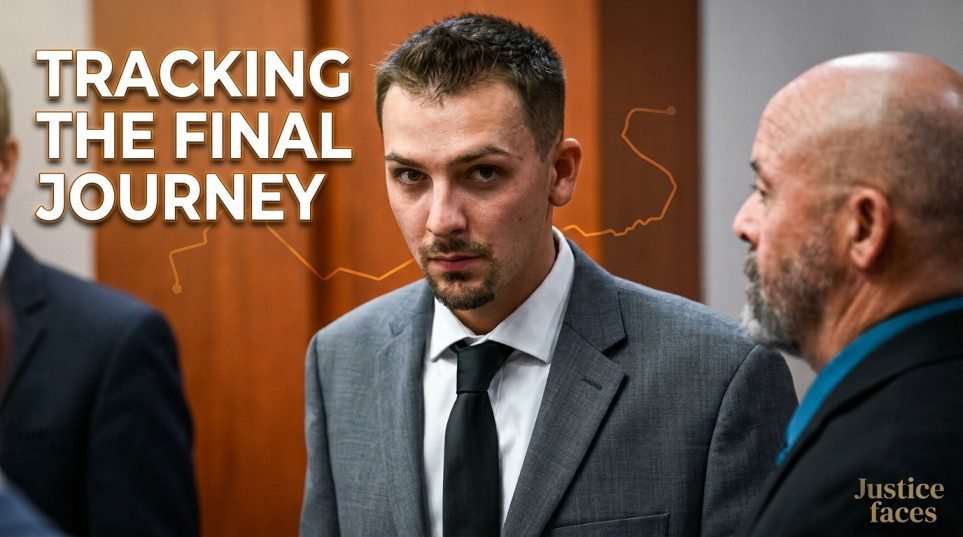
Life360 is a family-tracking app. Sophie’s parents used it to see her location, and it was installed on both teenagers’ phones. It records location points from a phone’s own sensors and sends some of them to the company’s servers.
A simple way to picture the difference between this data and older cell-tower evidence: a tower record is like knowing which neighborhood someone’s call passed through, while a phone’s own GPS fix is like a dropped pin with a circle of uncertainty around it. That circle, the “horizontal accuracy,” can be a few meters on an open road or much larger under trees, in a valley or with a weak signal. The defense expert agreed on cross-examination that phone GPS is generally more precise than tower triangulation.
Sanders testified that Life360’s server points include a recorded speed, while other “sample points” do not. For those, he calculated speed himself by dividing distance by time. He combined that with timestamps from home and business cameras along the route. According to the courtroom log, his animation placed the truck on Locust Road, not the direct route north, around the time Sophie’s phone recorded the “ow” video; showed Sophie’s phone stationary in a wooded area for about two minutes while Ouellette’s moved away and came back; and showed the truck passing her neighborhood more than once before stopping on Fieldview Drive at about 11:41 p.m. Sophie’s phone then stayed in that area for about eight minutes before moving to her driveway.
Approximate timeline presented at trial (times as reported from testimony and the State’s animation):
- About 11:10–11:20 p.m.: Sophie calls friends for a ride; the couple leaves the party together.
- About 11:24–11:30 p.m.: Video on Sophie’s phone captures the engine, a door chime, and her saying “ow.” The State placed this near Locust Road.
- About 11:25 p.m.: Sophie texts a friend that she is “scared.”
- 11:35–11:38 p.m.: Surveillance cameras on Johnny Cake Mountain Road and Fieldview Drive capture the truck passing.
- 11:38–11:49 p.m.: Sanders testified Life360 did not log a trip in this window, so the State relied on individual location points and video.
- About 11:40–11:41 p.m.: Sophie sends a friend a Snapchat photo showing a bloody nose; the State says the second separation follows on Fieldview Drive.
- 11:49 p.m.: Sophie’s phone begins moving again after about eight minutes.
- About 11:50 p.m.: The truck arrives in the family’s driveway.
- 12:24 a.m.: Ouellette’s phone is back at his home.
The limits were aired in open court. Sanders acknowledged it was the first time he had used Life360 in a case, that it is a consumer app not designed for accident reconstruction, that Ouellette’s phone recorded no data from 11:30 to 11:49 p.m., and that Sophie’s phone logged at least one impossible reading: reverse speed over 250 miles per hour. He tested speeds in a Tesla on different roads, not in a pickup on the same roads, and had never visited the scene. The defense noted that Life360’s own disclaimer warns against using it to determine speed. In closing, Minnella argued the animation’s speeds could not be trusted, citing an 18-to-20-mile-per-hour estimate he said was about 30 percent off.
Prosecutors answered that the data matched surveillance video and that even a 5-mile-per-hour margin left the truck well over the speed limit at points. In closing, Clifton told jurors the truck hit about 56 miles per hour through a dip on Polly Dan Road. That figure is the State’s argument based on the animation, not a measured speed. The defense also unsuccessfully sought to keep the animation away from the jury, according to CT Insider.
The broader legal backdrop is shifting. Our explainer on how the Supreme Court treated cellphone location records in Chatrie v. United States covers when police need a warrant for this kind of data. That was not the dispute here; police obtained search warrants for both phones and the Life360 accounts. The fight was over reliability, not access.
What the Defense Challenged During the Trial
The defense case had four main lines.
The investigation. Minnella called the lead detective himself and spent much of his closing on him, arguing that Slaiby “tried to take a tragic accident and incident and turn it into a crime.” He pointed to the year it took to obtain a warrant, the months investigators spent focused on the wrong road, and the absence of any blood, breath or urine test of Ouellette. Whether officers could have sought a warrant for his blood in those hours was raised repeatedly; readers can find background on when police need a warrant to search.
The autopsy. The defense stressed the late homicide ruling, the absence of tire comparisons on the clothing, and the possible role of emergency treatment, and offered Dr. Williamson’s view that the injuries fit a fall.
The digital reconstruction. The defense argued Life360 cannot reliably give speed, the analyst had never done it before, and the animation filled gaps with assumptions.
The alleged assault. Minnella told jurors there was no evidence Ouellette pushed Sophie out of the truck, and asked how prosecutors could know the couple argued inside it. He told jurors that Sophie’s mother had never described the relationship as abusive.
None of these points became facts simply because they were argued. Each was evidence or argument for the jury to weigh.
The acquittal motion. At the close of evidence, the defense asked Judge Pelosi to enter a judgment of acquittal under Practice Book Section 42-40. That rule lets a judge take a charge away from the jury when the evidence “would not reasonably permit a finding of guilty.” The judge does not weigh credibility; he views the evidence in the light most favorable to the State and asks whether a reasonable jury could convict. The defense argued that, at most, Sophie was intoxicated and left a slow-moving truck, which does not show “extreme indifference to human life.” On the alcohol count, it argued no witness saw Ouellette hand Sophie a drink. The State answered that extreme indifference is judged by the defendant’s cumulative conduct before and after the separation, including the drinking, the driving, the bloody nose, and the eight minutes on Fieldview Drive without calling 911.
Judge Pelosi sided with the State. According to CT Insider, he ruled: “After careful consideration of the totality of the facts and circumstances leading up to where the state alleges Sophie separated from the vehicle and was fatally injured, the court finds that the jury could reasonably find, based upon the facts established and the inferences reasonably drawn from them, the defendant guilty of manslaughter in the first-degree.” Denying that motion did not mean the judge found Ouellette guilty. It meant the question belonged to the jury. A similar motion in another case is explained in our report on a renewed motion for a not-guilty finding in the Lindsay Clancy case.
Why the Jury Chose Second-Degree Manslaughter
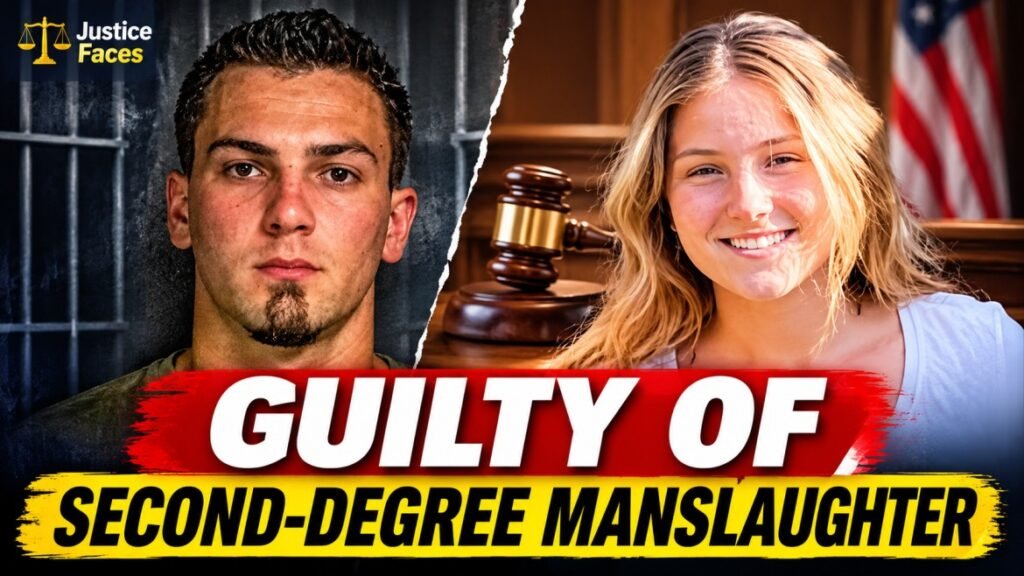
Connecticut’s homicide statutes build in steps, and the difference between the first two steps is the whole story of this verdict.
| First-degree manslaughter, §53a-55(a)(3) | Second-degree manslaughter, §53a-56 | Criminally negligent homicide, §53a-58 | |
|---|---|---|---|
| Mental state | Recklessness | Recklessness | Criminal negligence |
| Extra element | Circumstances showing extreme indifference to human life, and conduct creating a grave risk of death | None | None |
| Class | Class B felony | Class C felony | Class A misdemeanor |
| Prison range | 1 to 20 years | 1 to 10 years | Up to 364 days |
Under Connecticut’s homicide statutes, a person acts “recklessly,” as Judge Pelosi instructed the jury, when he is aware of and consciously disregards a substantial and unjustifiable risk. Both manslaughter counts require that. First degree adds two things the State must also prove: that the conduct created a grave risk of death, and that it happened under circumstances showing extreme indifference to human life. The judge told jurors that “extreme indifference” means more than ordinary indifference, the greatest departure from ordinary care, and that what shows it is a question of fact for them.
Second-degree manslaughter strips those additions away. The State needed to prove only that Ouellette recklessly caused Sophie’s death.
So the verdict tells us something specific. The jury unanimously found that Ouellette acted recklessly and that his recklessness caused her death. It also found that the State had not proved, beyond a reasonable doubt, the extra element of extreme indifference to human life. The jury did not explain its reasoning, and no juror has spoken publicly, so any account of why goes beyond the record.
A lesser included offense instruction is allowed in Connecticut when, among other things, it is impossible to commit the greater crime without committing the lesser, and the element separating them is sufficiently in dispute, a test drawn from State v. Whistnant (1980). Here the State itself asked for the lesser charges.
One wrinkle deserves mention. The courtroom log reports that criminally negligent homicide was also included. Yet the text of §53a-58 excludes deaths caused by a motor vehicle. We could not obtain the final written jury charge to see how that offense was framed, and the point became moot when the jury chose second degree.
The Delivery of Alcohol to a Minor Conviction
The second count was charged under Connecticut General Statutes §30-86(b)(2), which bars anyone from delivering or giving alcoholic liquor to a person under 21. In Connecticut, “minor” in the liquor laws means anyone under 21, not under 18. Judge Pelosi instructed that the State had to prove Ouellette willfully gave alcoholic liquor to Sophie and that she was under 21.
The State called the evidence on this count “uncontroverted.” A receipt showed a purchase at a package store that evening, a cooler with alcohol was found in the truck, and the party witness testified that Ouellette handed out beer from the cooler. Sophie’s blood alcohol level was about 0.15. The defense argued no one saw him hand her a drink.
This conviction stands independently of the manslaughter verdict. Sentencing exposure has been reported inconsistently. The Connecticut General Assembly’s Office of Legislative Research, in a December 2023 report, describes the penalty as up to 18 months in prison, a fine of up to $3,500, or both. Some courtroom reporting cited a lower figure. The maximum is set by the statute as it stood in May 2023.
What Happens Next in the Cooper Ouellette Case?

After the verdict, the State asked to raise Ouellette’s bond. According to WTNH and CT Insider, Judge Pelosi increased it from $50,000 to $200,000, and marshals handcuffed Ouellette in the courtroom. (One syndicated version of CT Insider’s report gives the figure as $250,000; the clerk’s office is the authority on the final amount.) We found no published report confirming house arrest or electronic monitoring as release conditions, so those are not stated here.
The judge ordered a presentence investigation. In Connecticut, a probation officer prepares that report, covering the defendant’s background, record, the offense and statements from the victim’s family, to help the judge choose a sentence within the legal range. The next court date is January 12, 2027. NBC Connecticut reported that sentencing is set for that day; other reports describe it as the next scheduled date after the presentence investigation. As of November 9, 2026, Ouellette has been convicted but not sentenced.
Sentencing is a separate stage from the verdict. The jury decided guilt; the judge alone decides punishment. Ouellette also may file post-verdict motions and, after sentencing, an appeal. Separately, Sophie’s family has filed a civil lawsuit against Ouellette, the liquor store and the hosts of the party, which proceeds on its own track.
What This Trial Reveals About Digital and Forensic Evidence
The case shows how much modern prosecutions now rest on consumer technology, and how much those tools depend on the people interpreting them. Life360 gave investigators something rarely available in rural crash cases: a near-continuous map of two phones. But its data had gaps, at least one impossible reading, and a speed method its analyst had never used before. Jurors saw both the animation and its weaknesses.
The forensic side had its own gaps. No tire-to-clothing comparison was performed. The truck had no recoverable blood on its tires. No test measured the driver’s intoxication. The State’s case rested on how those pieces fit together, and on the surveillance video that tied the phone data to fixed points in time. That is the general lesson: no single source here was decisive, and each side’s argument was strongest where independent evidence lined up and weakest where one source stood alone.
This verdict does not set legal precedent. It is a trial-court jury decision. Any ruling on whether the Life360 evidence was properly admitted would come only on appeal.
Frequently Asked Questions About the Cooper Ouellette Case
1. Who is Cooper Ouellette? A 21-year-old from Harwinton, Connecticut. He was 18 at the time of Sophie R.’s death in May 2023.
2. Who was Sophie R.? A 17-year-old high school junior from Burlington, Connecticut. The judge barred use of her last name because she was a minor.
3. What happened in the Cooper Ouellette case? Prosecutors say that after an underage drinking party, Sophie separated from Ouellette’s moving truck twice and was run over the second time. Ouellette told police she jumped out because she felt sick.
4. When did the incident happen? The night of May 20, 2023. Sophie died early on May 21, 2023.
5. Where did it take place? The party was at the Schultz Corporation property in Terryville. The State placed the first separation near Locust Road and the fatal injuries on Fieldview Drive in Burlington.
6. What charges did he face? First-degree manslaughter under §53a-55(a)(3) and delivery of alcohol to a minor under §30-86(b)(2).
7. Was Cooper Ouellette found guilty? Yes, of second-degree manslaughter and delivery of alcohol to a minor. He was found not guilty of first-degree manslaughter.
8. Why second-degree instead of first-degree manslaughter? The jury found reckless conduct that caused death, but not the additional element of extreme indifference to human life. Jurors did not state their reasons.
9. What did the medical examiner say? Dr. Gregory Vincent testified that Sophie died of blunt impact injuries to the torso consistent with being run over by a wheel, and classified the death as a homicide. The defense pathologist disagreed.
10. What did the Life360 and GPS evidence show? The State said it showed the truck taking an indirect route, passing her home more than once, and stopping on Fieldview Drive for about eight minutes. The defense said the data was too unreliable for speed.
11. Who was the digital forensic analyst? Mark Sanders of the New England State Police Information Network (NESPIN).
12. What happened with the motion for judgment of acquittal? Judge Pelosi denied it on both counts on November 6, finding a jury could reasonably convict.
13. What is his bond now? Reported at $200,000, up from $50,000. Confirm with the court for the final figure.
14. When is sentencing? The next court date is January 12, 2027, following a presentence investigation.
15. What is the difference between first- and second-degree manslaughter in Connecticut? Both require recklessness that causes death. First degree also requires circumstances showing extreme indifference to human life and conduct creating a grave risk of death. It is a Class B felony; second degree is a Class C felony with a maximum of 10 years.
For more trial reporting, see our court cases coverage, and for plain-language definitions of legal terms, visit our legal resources page.
This article is for informational and educational purposes only and is not legal advice. Cooper Ouellette has been convicted but not sentenced, and retains the right to challenge the verdict. See our full disclaimer.