Introduction
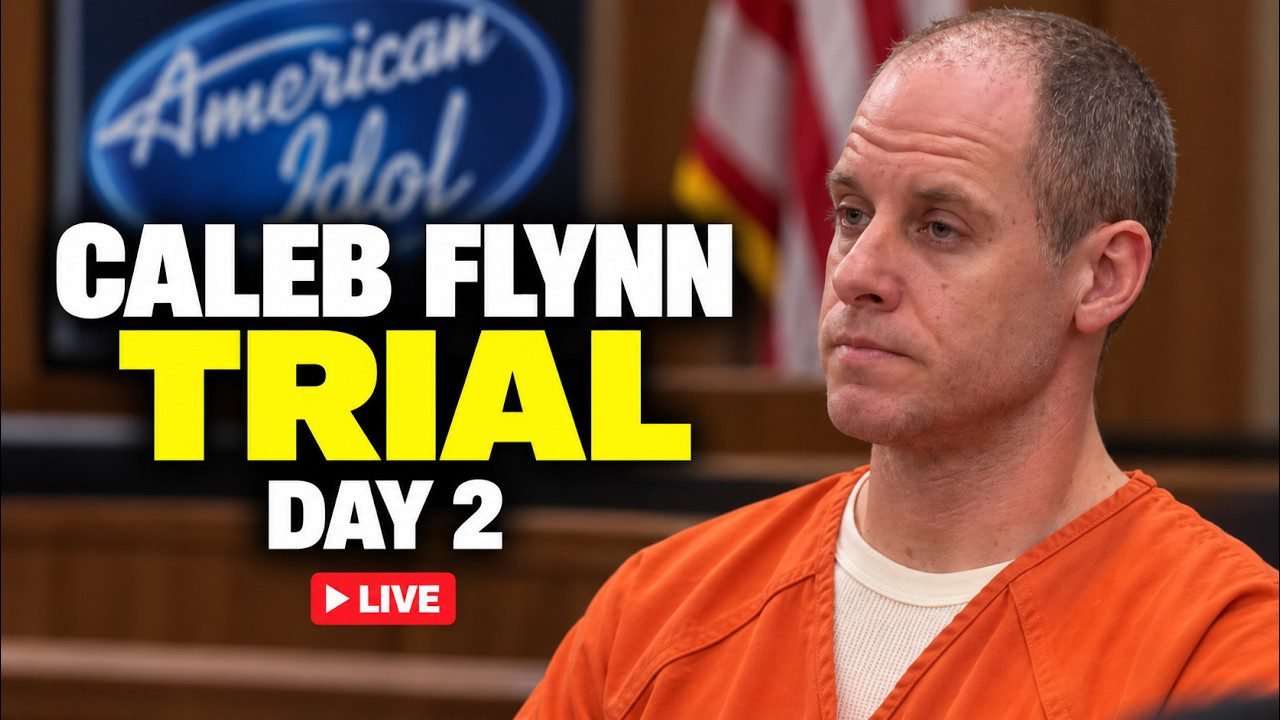
The second day of testimony in the murder trial of Caleb Flynn opened on September 21, 2026, in Miami County Common Pleas Court in Troy, Ohio. Flynn, a former “American Idol” Season 12 contestant and worship pastor, is charged with aggravated murder, felonious assault, and tampering with evidence in the February 16, 2026 shooting death of his wife, Ashley Flynn.
Where the first day of testimony centered on the emotional aftermath of the killing, including Flynn’s 911 call and police bodycam footage, Day 2 moved into the physical evidence. Jurors heard from an Ohio Bureau of Criminal Investigation (BCI) special agent, a BCI forensic investigator, and the forensic pathologist who performed Ashley Flynn’s autopsy. By the end of the day, a Tipp City detective had also taken the stand.
The central question of the day was whether the crime scene supported Flynn’s account of an intruder or whether it had been arranged to look that way.
Case Background
Ashley Flynn, a 37 year old middle school volleyball coach and educator, was found shot twice in the head early on February 16, 2026, inside the couple’s home on Cunningham Court in Tipp City. Caleb Flynn told police an intruder had entered through the garage while he was sleeping and later checking on their two young daughters.
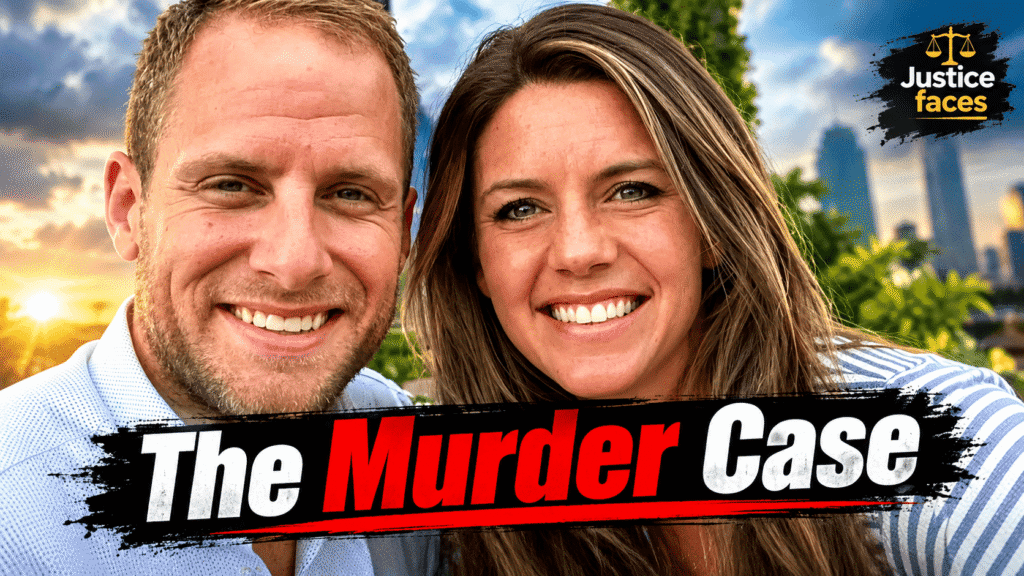
Investigators arrested Flynn within days, saying the crime scene appeared staged. He has pleaded not guilty and is presumed innocent, and the burden of proof rests with the state of Ohio throughout the trial.
Prosecutors have also introduced evidence of an affair Flynn was having, including text messages exchanged with another woman, as part of their theory of motive. That evidence came out on the first day of testimony rather than Day 2, but it forms the backdrop against which jurors are weighing the forensic testimony described below.
What Happened During the Hearing
Judge Jeannine Pratt opened the morning by reminding spectators and media to stay seated and quiet until the court adjourned, a note that followed a disruption during jury instructions at the end of the previous week. Testimony then resumed with BCI Special Agent David Hammond, who had also been on the stand at the close of Day 1.
Hammond walked jurors through the exterior of the home, focusing on the garage door that Flynn said an intruder used to get inside. He testified that the door’s handle locking mechanism had been broken off and the deadbolt receiver was bent, but that he saw no tool marks, no paint transfer, and no damage consistent with the roughly 20 to 30 forced entries he had previously examined in his career.
“As I stood there inside the garage, it looked to me like the damage happened with the door open,” Hammond told jurors, adding that both the door’s locks were unlocked when he examined them.
He then described the interior of the home in detail, including the bedroom where Ashley Flynn was found. Photographs shown to the jury depicted her lying on her side under a comforter, with two 9mm cartridge casings recovered near pillows on the floor. Hammond said there was no sign of a struggle and that “it appeared to us that she was asleep or lying still in that position when she was harmed.”
Caleb Flynn looked away from the screens each time crime scene photographs of his wife appeared, and he was seen crying and wiping his eyes during that portion of testimony. Family members in the gallery, including Ashley Flynn’s father and aunt, also reacted visibly.
Hammond capped his direct testimony by stating his overall conclusion after roughly twelve hours at the scene. “My conclusion was this was a homicide staged to look like a burglary,” he said.
Key Testimony and Evidence
Several distinct threads of physical evidence emerged over the course of the day.
The garage door and staging theory. Hammond testified that the only visible damage to the garage entry point was to its interior hardware, not the exterior, and that a refrigerator sat pushed against that door. He said this was inconsistent with roughly two to three dozen burglary scenes he had personally examined, though on cross-examination defense attorney L. Patrick Mulligan pointed out that Hammond had no scientific test to determine whether the lock had actually been picked or how long the door might have been unlocked before the shooting.
Fingerprints and DNA. Investigators lifted latent fingerprints from several locations, including the master bedroom door casing, the interior side of the garage door, the exterior of a Ford F-150 parked in the garage, and a Chrysler minivan also parked there. Hammond acknowledged under cross-examination that there was no way to date when any individual print or handprint had been left.
The missing firearm. Caleb Flynn told investigators he kept a handgun in the center console of his truck, and photographs shown to the jury depicted that console open with no weapon inside. Hammond said the gun used in the shooting has never been recovered, despite an extensive search that included removing attic insulation, and that investigators have found weapons hidden in duct work or buried in the ground during other cases.
Blood spatter and gunshot residue. On redirect examination, Hammond explained that BCI did not attempt a full blood spatter analysis because the surfaces in the bedroom, including a textured lamp and walls, were not suited to it, and that only a handful of stains were present. He also testified that gunshot residue is fragile evidence that can be removed by handwashing, and that investigators try to test for it within two hours of a shooting.
The door damage, independently confirmed. BCI forensic investigator Holly Ryezea, who arrived at the scene around 8 a.m. to assist Hammond, testified separately that she had examined 20 to 30 forced entry doors during her career and found the garage door’s damage “inconsistent” with those cases. She said the only visible damage was on the interior side of the door. The defense did not cross-examine her.
The autopsy findings. Deputy coroner and forensic pathologist Dr. Bryan Casto, who told the court he has personally performed more than 7,000 autopsies, testified that Ashley Flynn suffered two gunshot wounds just behind her right ear that were close together and shared a parallel path. He described the injury as a close range wound, though he clarified on cross-examination that the exact distance between the shooter and Ashley Flynn was “indeterminate.” Casto said the cause of death was multiple gunshot wounds to the head, and that toxicology results showed an antidepressant and an elevated but explainable level of melatonin in her system.
Prosecution’s Argument
Prosecutors, led by Miami County Prosecuting Attorney Paul Watkins, used Day 2 to build a forensic case that the burglary Flynn described did not happen the way he said it did. Their central witnesses, Hammond and Ryezea, each independently concluded that the garage door damage was inconsistent with a real forced entry.
The state also emphasized the absence of any struggle, defensive wounds, or repositioning of Ashley Flynn’s body, arguing this pointed to her being shot while asleep or lying still rather than during a confrontation with an intruder. Combined with the still missing weapon, prosecutors are asking jurors to conclude that the scene was arranged after the fact rather than discovered as reported.
Defense’s Argument
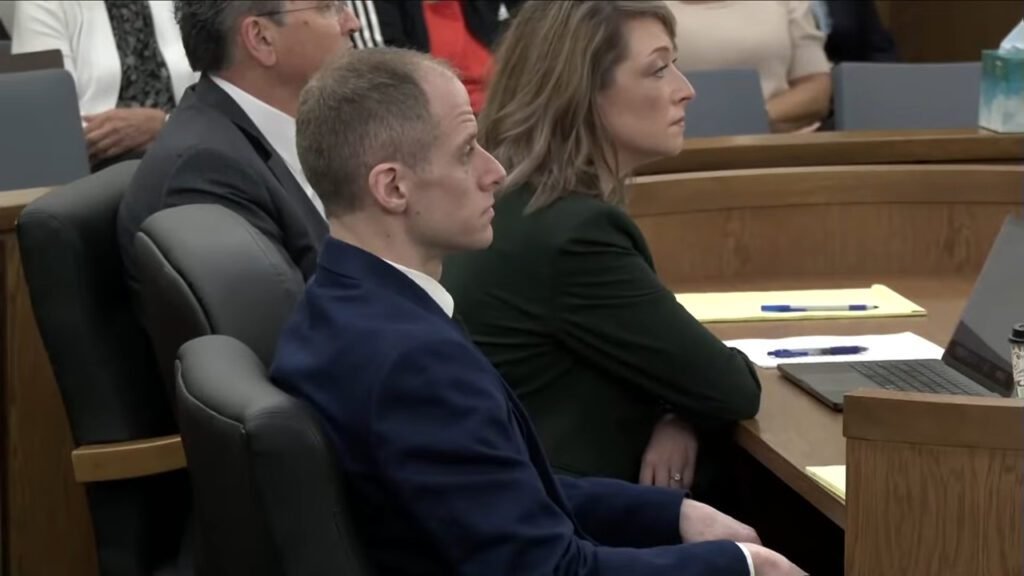
Lead defense attorney L. Patrick Mulligan used his cross-examination of Hammond to highlight the limits of the state’s physical evidence. He noted that the only account connecting the garage door to an intruder came from Flynn himself, who is not trained in law enforcement, and that Hammond had never actually interviewed Flynn directly.
Mulligan also established that BCI has no test capable of determining whether a lock was picked or how long a door may have been unlocked before an incident, and that investigators could not say when any of the recovered fingerprints or palm prints had actually been left. He raised the possibility of stolen electronic key fob codes as an alternative explanation for vehicle access, a line of questioning Hammond acknowledged he had heard of in other contexts.
Judge’s Role and Key Statements
Judge Pratt’s most notable action of the day came at the outset, when she admonished spectators and media over courtroom decorum following an incident the previous Friday. Beyond procedural rulings on the flow of testimony and breaks, the available court record from Day 2 does not indicate the judge made substantive statements about the evidence itself, and none should be inferred.
A Staging Theory Meets Its Limits
Hammond’s direct testimony gave prosecutors a forensic anchor for their theory that the crime scene was staged. His flat conclusion, delivered at the end of hours of detailed testimony, was one of the most consequential moments of the day.
Cross-Examination Chips Away at Certainty
Mulligan’s cross-examination did not dispute the physical description of the door damage so much as challenge what could actually be proven from it. By repeatedly asking whether specific tests existed and getting “no” in response, the defense worked to reframe Hammond’s conclusion as an informed opinion rather than a scientific certainty.
An Emotional Courtroom During Crime Scene Photos
Caleb Flynn’s visible reaction to autopsy and crime scene images, and the corresponding reaction from Ashley Flynn’s family in the gallery, underscored how the forensic testimony that can feel clinical on paper played out as a deeply emotional moment inside the courtroom.
Legal Issues Explained
Several legal concepts from Day 2 are worth clarifying for readers unfamiliar with courtroom procedure. “Direct examination” refers to the initial questioning of a witness by the side that called them, in this case the prosecution questioning its own forensic witnesses. “Cross-examination” is the opposing side’s opportunity to question that same witness, which the defense used to probe the limits of what the physical evidence could conclusively establish.
Expert witnesses, such as Dr. Casto, must generally be formally qualified by the court before offering opinion testimony, which is why the court specifically noted his qualification as an expert in forensic pathology. Jurors are ultimately responsible for deciding how much weight to give any expert’s conclusions, including an investigator’s opinion that a scene was staged.
What Happens Next
Testimony was ongoing as the day ended, with Tipp City Police Detective Adam Bernard taking the stand shortly before the close of proceedings. The trial is expected to continue with additional witnesses, and the prosecution has indicated Flynn’s alleged mistress is expected to testify at a later point in the trial. No further specifics about the schedule beyond continued testimony were available at the time of this report.
Current Case Status
Caleb Flynn remains charged with aggravated murder, two counts of felonious assault, and three counts of tampering with evidence. Two misdemeanor counts of intimidation of an attorney, victim, or witness were dismissed by the prosecution before trial began. Flynn has pleaded not guilty to all remaining charges, and the trial is ongoing, meaning no verdict has been reached.
Frequently Asked Questions
What was the focus of Day 2 of the Caleb Flynn trial?
Day 2, held September 21, 2026, focused almost entirely on physical and forensic evidence from the crime scene, including testimony from two BCI investigators and the forensic pathologist who performed Ashley Flynn’s autopsy.
What did the BCI agent conclude about the crime scene?
Special Agent David Hammond testified that, after roughly twelve hours examining the home, his conclusion was that Ashley Flynn’s death was a homicide staged to look like a burglary, based largely on the garage door’s damage pattern.
Was the garage door actually forced open?
Hammond and a second BCI investigator, Holly Ryezea, both testified that the damage to the garage door’s interior hardware was inconsistent with dozens of confirmed forced entry cases they had examined in their careers, and that they saw no exterior damage, tool marks, or paint transfer.
Has the gun used in the shooting been found?
No. Investigators testified that despite an extensive search, including removing attic insulation, the firearm has never been recovered.
What did the autopsy show?
Forensic pathologist Dr. Bryan Casto testified that Ashley Flynn died from two close range gunshot wounds behind her right ear, though he said the exact distance between her and the shooter could not be determined.
How did the defense respond to the forensic testimony?
Defense attorney L. Patrick Mulligan focused his cross-examination on what could not be proven from the physical evidence, including the absence of any test to determine whether a lock had been picked and the inability to date recovered fingerprints.
Did Caleb Flynn react to the evidence in court?
Yes. Witnesses and reporters in the courtroom described Flynn crying and looking away from screens when crime scene and autopsy photographs of his wife were displayed.
What happens next in the trial?
Testimony was continuing as Day 2 ended, with a Tipp City detective taking the stand, and the trial is expected to resume with additional witnesses in the days ahead.
Conclusion
Day 2 of the Caleb Flynn trial shifted the courtroom’s focus from the raw emotion of the 911 call and bodycam footage to a methodical forensic account of the crime scene itself. Two BCI investigators independently told jurors the garage door damage did not match a genuine break in, while the defense worked just as methodically to show how much of that conclusion rests on training and experience rather than a hard scientific test. With the murder weapon still missing and the autopsy establishing only that the fatal shots came from close range, the forensic picture jurors are being asked to weigh remains a contest between expert interpretation and the limits of what physical evidence alone can prove.