This report is based on Day 2 proceedings (Thursday, November 12, 2026) in the ongoing trial of State of Georgia v. Lacy Jolee Boles. Lacy Boles is presumed innocent unless and until proven guilty. Details may change as testimony continues.
The opening statements are over, and the jury in GA v. Lacy Boles has started hearing evidence. On Lacy Boles trial Day 2, jurors listened to the 911 call Boles made after her husband, Daniel Akers, was shot, heard from the first deputy to reach the house, and watched part of her police interview.
On Day 1, prosecutors told jurors Boles ambushed Akers and staged a suicide, while the defense described an accident during a suicide intervention read our full Day 1 breakdown. Day 2 was the first chance to measure those two stories against actual evidence.
Day 2 at a Glance
| Date | Thursday, November 12, 2026 |
| Judge | Dean Bucci |
| Key evidence | Boles’ 911 call; part of her police interview; testimony about the Swiffer mop; the .22-caliber pistol |
| Key witness | Capt. Brent Miller, first deputy on the scene |
| Notable moment | A juror called in sick, reporting kidney stone symptoms |
| Trial status | Ongoing; Boles remains free on a $100,000 bond |

A Sick Juror Opens Lacy Boles Trial Day 2
Before any evidence was presented, a juror called in sick, reporting kidney stone symptoms and saying they could not attend. Judge Dean Bucci discussed with the attorneys how to proceed; reports did not detail how it was resolved.
The moment matters because this case has already lost one jury. In June 2026, a mistrial was declared during jury selection after a prospective juror used ChatGPT to research the case and shared it with others. After years of delay, every seated juror counts. (See also the Lindsay Clancy mistrial.)
The Lacy Boles 911 Call: Her First Words After the Shooting
The day’s first major exhibit was the Lacy Boles 911 call. In the recording, Boles can be heard crying hysterically and pleading for help. She tells the dispatcher, “He shot himself.”
She also says, “I know he’s unconscious. I think he’s dead.” When the dispatcher asks where the gun is, she answers: “It’s right here. No, no, I don’t have it in my hand.”
Why the 911 call matters to both sides
The call is likely to be central to both narratives, because the same words can be read two ways:
- For the defense, “He shot himself” and her distress fit its account of a suicide attempt Boles tried to stop.
- For the prosecution, which alleges the scene was staged as a suicide, the statement is the first appearance of that suicide explanation. Jurors must decide whether it reflects what she saw or the story the state says she built.
Her remark about the gun’s location also points ahead: where the pistol was, and who handled it, are questions for forensic experts. (We explored how 911 calls become trial evidence in an earlier case.)
Capt. Brent Miller Testimony: What the First Deputy Found
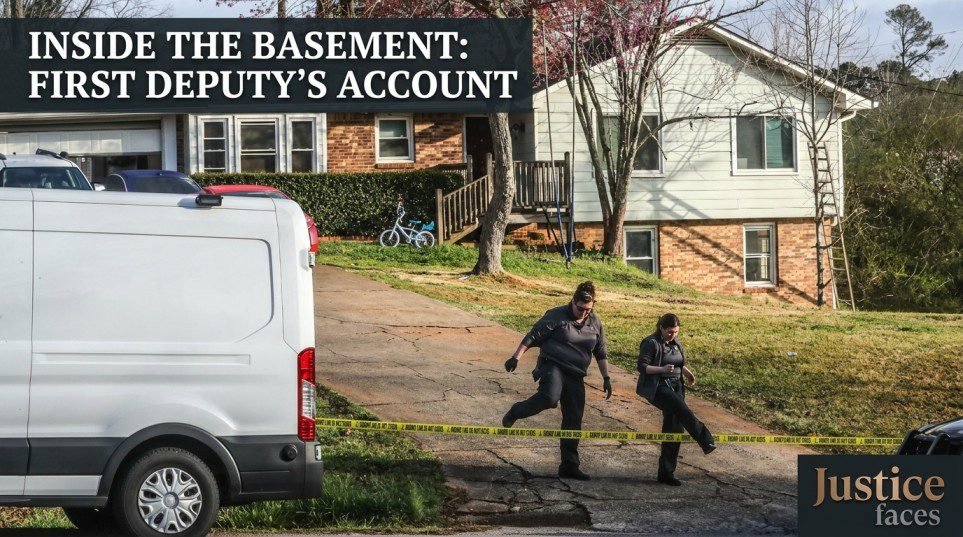
The first deputy on the scene, Capt. Brent Miller, testified that he found Boles crying and screaming for help. She directed him to the basement, where Akers’ body was.
Miller told jurors he could smell McDonald’s food in the room and saw a McDonald’s bag and cup.
Why the McDonald’s detail matters
The Capt. Brent Miller testimony physically corroborates that Akers returned home after a food stop that night. In a case like this, each confirmed point in the timeline gives jurors a fixed fact to test both accounts against.
On its own, though, the detail shows only that Akers came home with food. It does not show what happened in the basement, which remains the core dispute.
The Police Interview: Boles’ Account of December 21
Jurors also watched part of Boles’ recorded police interview. In it, she said that on December 21, 2019, an argument over money turned physical. She alleged that Akers pushed her against a wall, choked her, and took her phone before leaving for a bar.
How her account fits the broader case
This was the jury’s first look at Boles’ own version of the hours before the Daniel Akers shooting, and it adds an allegation of violence by Akers. Both sides place an argument over money before the shooting; they differ on what followed.
A recorded interview is not cross-examined testimony. Jurors will weigh whether her account fits the physical evidence and the testimony still to come.
The Swiffer Mop Booby Trap: Premeditation or Warning?

The mop came up repeatedly throughout Day 2, and it remains the sharpest factual dispute in the case.
- The prosecution describes the Swiffer mop booby trap as a premeditated setup, designed to alert Boles the moment Akers came home.
- The defense says it was a harmless warning system. Under the Brian Steel defense account, Boles placed it after texting Akers not to come home, because she planned to file for divorce.
The dispute is not whether the mop was there but why. Read as preparation, it supports the state’s theory of planning; read as a precaution, it supports the defense.
The Weapon: A .22-Caliber Pistol From Her Father
Testimony established that the weapon was a .22-caliber pistol that Boles’ father had given to her.
Where the gun came from is foundational. How it was held and fired are harder questions that will likely fall to forensic witnesses.
Legal Context: Malice Murder, Felony Murder and “Staging”
Boles has pleaded not guilty to malice murder, felony murder and aggravated assault. Under Georgia’s murder statute, malice murder requires an intent to kill, express or implied, which is why the mop’s purpose matters so much. Felony murder applies when a death happens during a felony such as aggravated assault, and does not require proof of malice. (See how these charges played out on appeal in Ricky Rose v. State of Georgia.)
“Staging” means rearranging a scene to tell a false story. It is usually argued through circumstantial evidence, meaning gaps between a person’s account and the physical facts. Compare the staging arguments in the Caleb Flynn trial. Throughout, the presumption of innocence keeps the burden on the state.
What to Watch Next After Lacy Boles Trial Day 2
Lacy Boles trial Day 2 laid out the scene. The coming days in this staged murder trial Georgia case are likely to turn on science:
- Bullet trajectory and wound evidence: whether the angle and range fit a self-inflicted shot, a struggle, or something else.
- Gunshot residue: whose hands, if anyone’s, tested positive, and what that can and cannot prove.
- DNA and fingerprints on the pistol: who handled the .22-caliber gun and when.
- Phone and text records: the timing of the text telling Akers not to come home, and what happened to Boles’ phone.
- Expert testimony: how each side’s experts read the same physical evidence.
- Jury status: whether the panel stays intact after Day 2’s absence.
FAQ
What happened on Day 2 of the Lacy Boles trial? On Lacy Boles trial Day 2, jurors heard the 911 call, testimony from Capt. Brent Miller and part of Boles’ police interview. A juror also called in sick.
What did the 911 call reveal in the Lacy Boles case? Boles is heard crying and saying “He shot himself,” that she thought Akers was dead, and that the gun was nearby but not in her hand.
Who testified on Day 2 of the Lacy Boles trial? Capt. Brent Miller, the first deputy on the scene, described finding Boles screaming for help and McDonald’s food in the basement.
What is the “Swiffer mop” evidence in the Lacy Boles trial? Prosecutors call it a booby trap meant to alert Boles when Akers came home. The defense says it was a harmless warning after she told him not to return.
Conclusion
Lacy Boles trial Day 2 moved the case from argument to evidence. The 911 call, the first deputy’s observations and Boles’ own account gave jurors their first direct look at the night of December 22, 2019. None of it settles whether the shooting was intentional or accidental; that will likely depend on the forensic testimony still to come.
Follow our court cases coverage and all Lacy Boles trial updates as the case continues.
If you or someone you know is struggling with thoughts of suicide, help is available. In the U.S., call or text 988 or visit the 988 Suicide & Crisis Lifeline.